 By Tarang Bansal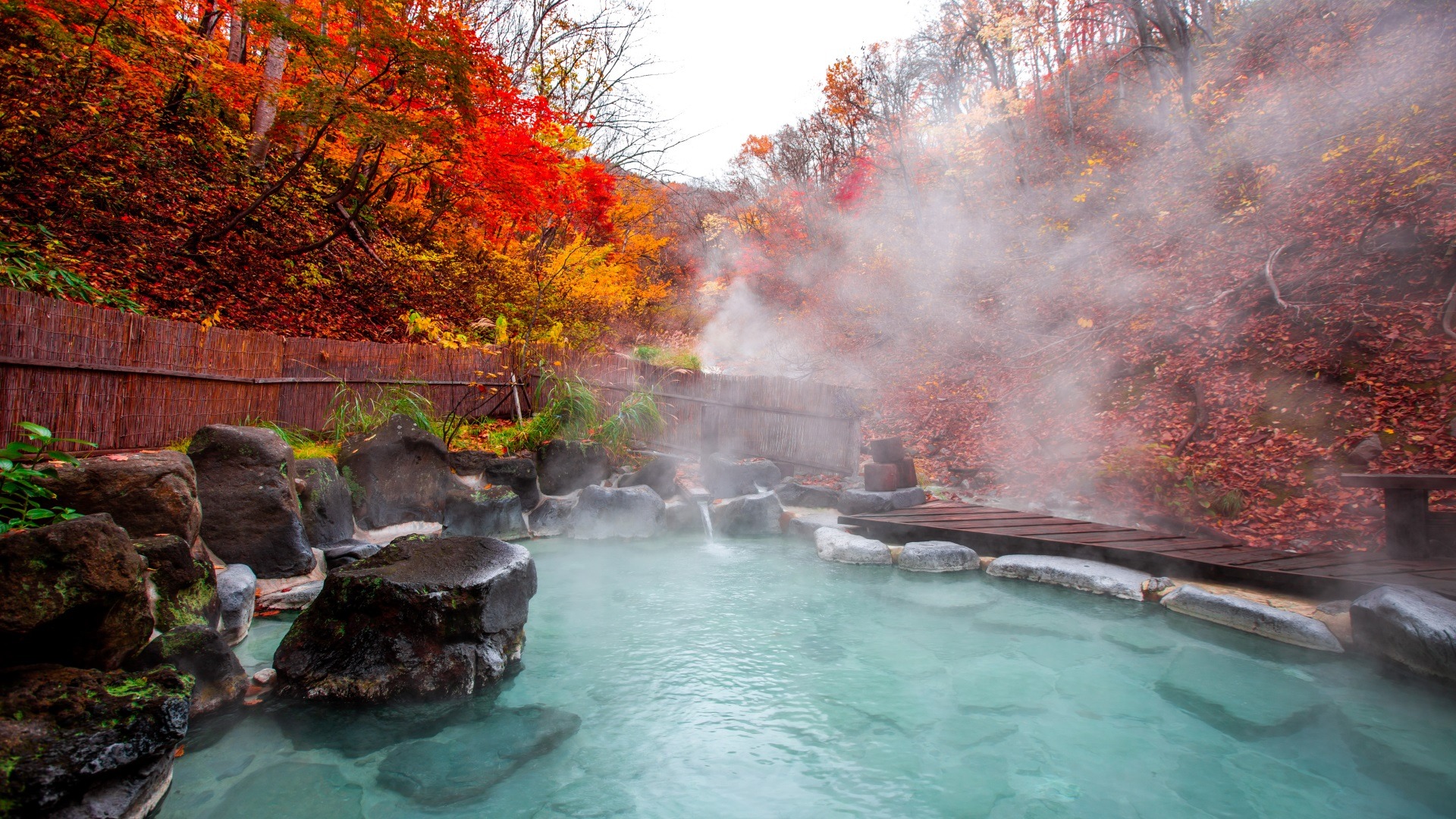
Planning to experience onsen in Japan as an Indian traveller? Here is a Japanese Onsen Guide with everything you need- etiquette, tattoo rules, best towns, and honest costs. The best onsen towns reachable from Tokyo, Kyoto, and Osaka. Includes budget public bathhouse options and tips for planning your first soak.
A note before we begin: I haven’t visited a Japanese onsen myself yet- it’s at the very top of my list for my next Japan trip. So this isn’t an experiential post. It’s a research-led planning guide for Indian travellers who, like me, have heard about Japanese hot springs for years and want the complete logistical picture before booking.
The idea of an onsen seems impossibly Japanese from the outside. Naked bathing with strangers. Geothermally heated water bubbling up from volcanic rock. Centuries-old wooden bathhouses in mountain valleys. Strict rules about towels and tattoos and silence. For Indian travellers raised on private bathrooms and modesty conventions, the entire concept can feel intimidating before it sounds appealing.
Here’s what I’ve learned researching this in detail: onsen are one of Japan’s most genuinely transformative cultural experiences, and they’re far more accessible than they appear. The rules are clear, the etiquette is learnable in 10 minutes, the tattoo situation has improved dramatically, and you can experience world-class onsen as a casual day-tripper from Tokyo, Kyoto, or Osaka without any specialist trip planning.
This is your complete guide.
If you want the full Japan trip context, read my main 10-day Japan blog here.
What Onsen Actually Are? (vs Sento)
Japan sits on one of the world’s most geologically active landscapes. The country has over 27,000 hot spring sources and over 2,300 onsen facilities– more than any other country on earth.
An onsen (温泉) is a bathing facility using natural geothermally heated, mineral-rich water. To legally call itself an onsen in Japan, the facility must meet strict standards regarding water temperature, mineral content, and source. Many onsen trace their origins back over 1,000 years.
A sento (銭湯) is a public bathhouse using regular heated tap water– not natural hot spring water. Sentos are far more common in Japanese cities and are typically much cheaper.
Both follow the same etiquette and bathing process. The difference is in the water source- and onsen water, with its mineral content, is believed to have healing benefits, while sento water is just hot water.
For your first Japan trip, you’ll likely want to try at least one onsen and one sento if you can fit both in.
The Onsen Etiquette: A Step-by-Step Walkthrough
The rules sound complicated written out, but the actual process takes about two minutes once you’ve done it once. Here it is in order:
Step 1: Take off your shoes at the entrance. Most onsen have a designated shoe storage area near the entrance, with lockers or open shelving.
Step 2: Pay at the front desk. Get your locker key (often a wristband). The price ranges from ¥400-500 for budget public sento to ¥800-2,000 for tourist-friendly onsen, up to ¥4,000+ for premium ryokan onsen.
Step 3: Enter the gender-separated changing room. Look for the colour-coded curtains at the entrance: 男 (blue) for men, 女 (red) for women. Get this wrong and there will be confusion. Inside, undress completely and store everything in your locker.
Step 4: Take only your small wash towel into the bathing area. You’ll have a large bath towel (which stays in your locker for drying afterwards) and a small wash towel (which goes in with you). The small towel is for modesty between locker and bath, and for washing, but it must never enter the bath water.
Step 5: Wash thoroughly at the showering stations. This is the single most important rule. Sit on the small wooden stool. Use the provided soap, shampoo, and shower head. Wash your entire body and hair thoroughly before approaching the bath. The onsen is for soaking, not cleaning.
Step 6: Rinse the soap off completely. No soap residue on your body when you enter the bath. Some bathers do a final rinse of their feet just before stepping into the water.
Step 7: Tie up long hair. Hair must not touch the water. Most facilities provide hair ties; bring your own to be safe.
Step 8: Enter the bath slowly. The water can be 41-43°C (hotter than most Indians are used to). Step in gradually, let your body adjust. If it’s too hot, sit on the edge with feet in.
Step 9: Place your small towel out of the water. Most bathers fold it on top of their head. Some lay it on the edge of the bath. Never let it touch the water.
Step 10: Soak quietly. Onsen are sacred-ish spaces. Don’t talk loudly, don’t splash, don’t swim, don’t dunk your head, don’t have phone conversations, don’t sing. Quiet conversation with someone next to you is fine.
Step 11: Cycle in and out. Most experienced onsen users soak for 10-15 minutes, get out to cool down for 5 minutes, then re-enter. Repeat 2-4 times. Don’t over-soak, extended exposure can cause dizziness.
Step 12: Shower off lightly when leaving. Before returning to the locker room, lightly rinse off in the shower area. Then dry yourself with the small towel before stepping into the changing room.
Step 13: Drink water and rest. Many onsen have rest areas with cold water, fans, and seating. Use them. You’ll feel surprisingly tired after a proper soak.
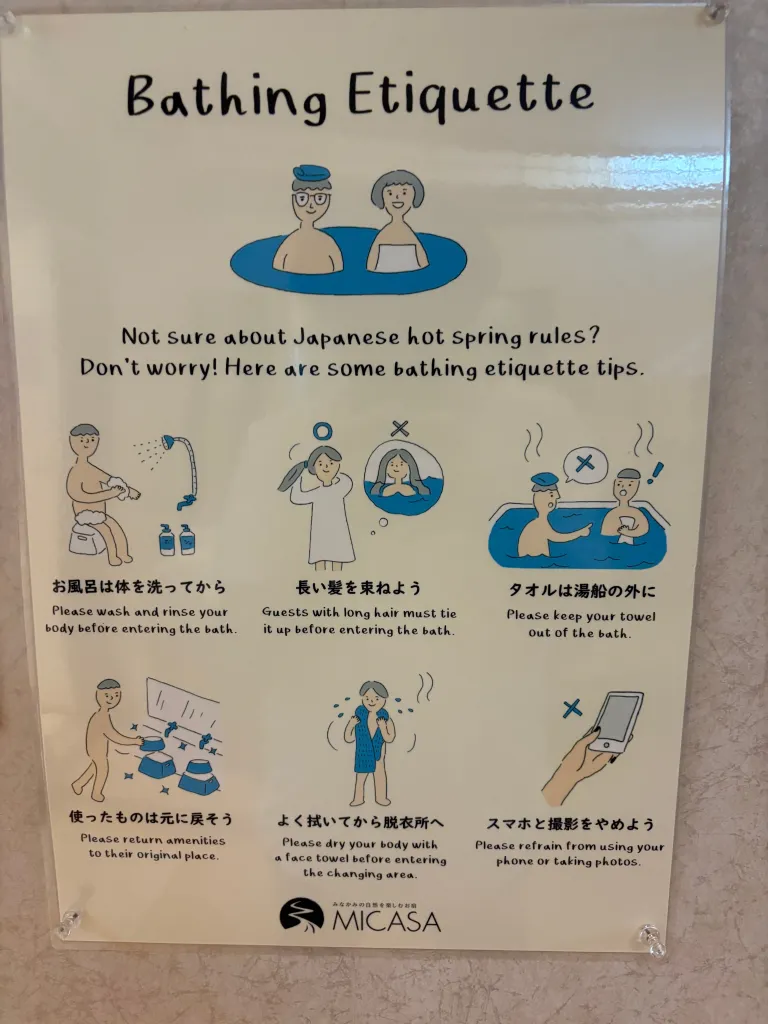
That’s it. Once you’ve done this once, the rules become automatic.
The Tattoo Reality in 2026
This is the question every Indian traveller with even a small tattoo asks first. Honest answer:
The traditional rule: Tattoos historically banned in onsen because of association with the yakuza (organised crime).
The modern reality: This rule is changing fast. There are now three categories of onsen for tattooed travellers:
1. Fully tattoo-friendly onsen. No restrictions. Mostly in tourist-heavy areas: Kinosaki Onsen, Beppu, Hakone, Kusatsu, parts of Tokyo and Kyoto, all of Hokkaido’s major resort onsen. Many advertise “タトゥーOK” or English welcome signs. Beppu alone has over 100 tattoo-friendly facilities. The Japan Tourism Agency has actively encouraged onsen to relax tattoo restrictions for international visitors.
2. Cover-with-stickers onsen. Allow tattoos if covered with waterproof patches/stickers (sold at pharmacies for ~¥500-1,000 per pack). Practical for small tattoos; not for full sleeves. The tattoo cover service in Asakusa is famous, covers last up to 5 days, painless, waterproof, cheap.
3. Strictly no-tattoo onsen. Older, traditional, often rural facilities. Will turn you away at the door if visible tattoos are spotted.
4. The universal solution: private (kashikiri) onsen. Almost every ryokan now offers private bookable baths, your own onsen room for 30-60 minutes. Tattoos are never an issue since you’re alone or with your travel partner. Costs ¥2,000-5,000 for a 45-minute slot. This is the stress-free option for any traveller with tattoos.
For Indians with small tattoos: Kinosaki Onsen and Beppu are the simplest choice, go fully tattoo-friendly. Or stay at any modern ryokan with private kashikiri onsen and avoid the question entirely.
The Best Onsen by Region (And How to Reach Them)
If your trip covers Tokyo, Kyoto, and Osaka, you have excellent onsen options without going to remote Japan.
From Tokyo
Hakone (the most popular Tokyo onsen escape)
- How to reach: 1.5-2 hours from Shinjuku via the Romancecar (Odakyu Line)
- What it is: A mountain resort area with dozens of onsen ryokan, views of Mt. Fuji on clear days, the Hakone Open-Air Museum, and Lake Ashi cruises
- Cost: Day-use onsen entry ¥1,500-3,000. Overnight at a ryokan ¥18,000-50,000+ per person
- Best for: First-time onsen travellers wanting the full ryokan + onsen experience
- Tattoo policy: Mixed; many resorts now tattoo-friendly. Always check.
- Pro tip: The Hakone Free Pass covers the train + buses + ropeway and is excellent value if you’re staying 2 days
Hakone is more than just an onsen town. Hakone makes an excellent day trip from Tokyo or is often combined with Mt Fuji and its 5 lakes. There are Fuji & Hakone day tour that can help you cover the region with a group.
[You can buy your Hakone Free Pass here] [Here is an option to book a Hakone Onsen]
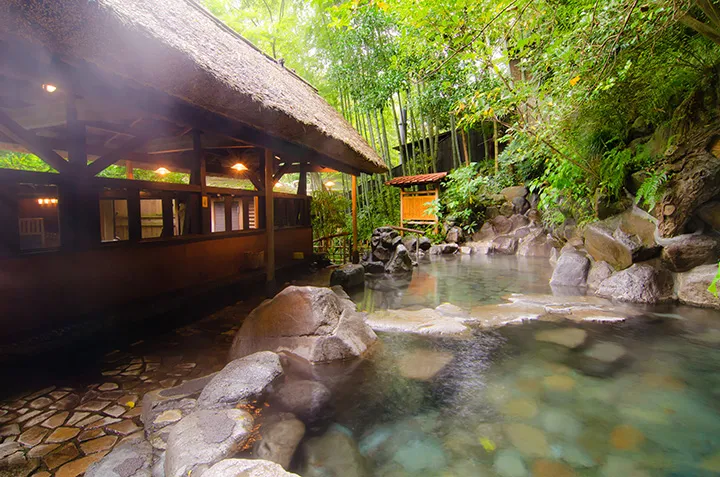
Kusatsu Onsen (one of Japan’s most famous onsen towns)
- How to reach: ~3 hours from Tokyo (Shinkansen + bus)
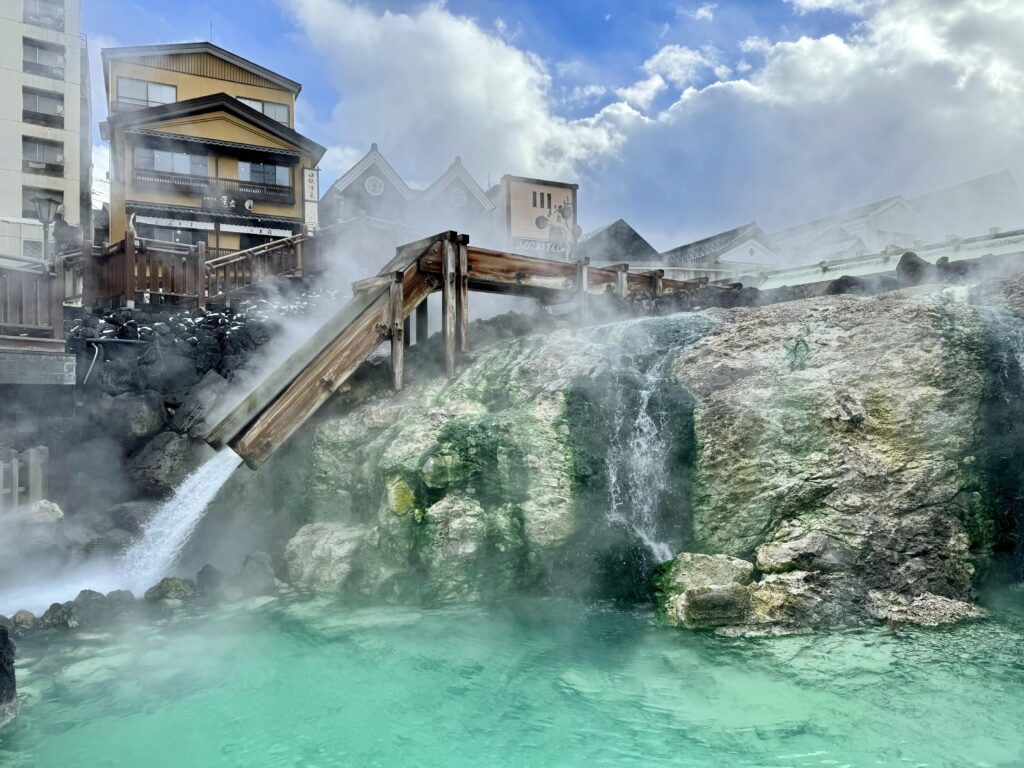
- What it is: A historic onsen town with the famous Yubatake (Hot Water Field) in the centre, plus over 100 onsen sources. Sulphuric, intense waters known for healing properties.
- Cost: Public baths ¥500-800; ryokan ¥15,000-40,000
- Best for: Authentic, less touristy onsen culture
- Tattoo policy: Some restrictions; check facility-by-facility
Tokyo’s Own Onsen Options (For Travellers Who Can’t Day-Trip)
- Oedo Onsen Monogatari (closed in 2021 but several similar facilities replaced it)
- Spa LaQua (Korakuen): modern urban onsen, ¥3,000+
- Thermae-Yu (Shinjuku): open 24 hours, ¥3,000+, central
- Local sentos (¥500-800 entry): search “sento near me” on Google Maps; many neighbourhoods have one
From Kyoto / Osaka
Kinosaki Onsen (the recommended onsen town for first-timers)
- How to reach: 2.5-3 hours by JR Limited Express from Kyoto or Osaka. Direct trains; covered by JR Pass and Kansai Wide Pass.
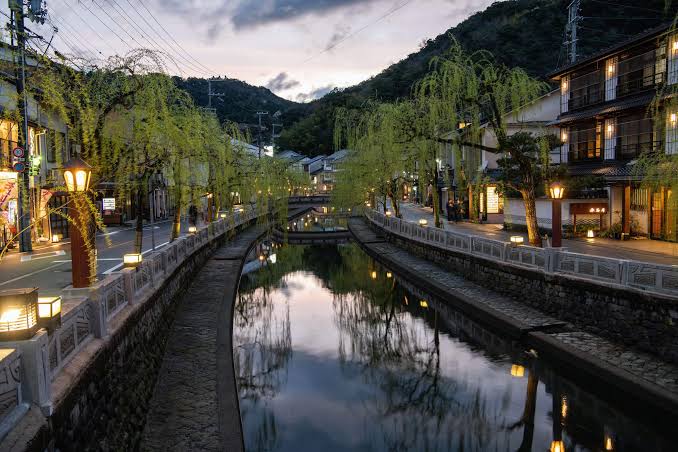
- What it is: A postcard-perfect onsen town with willow-lined canals, traditional wooden buildings, seven public bathhouses connected by a cherry-blossom path. Visitors stroll between baths in yukata and wooden geta sandals, the wooden clack-clack on the streets becoming the town’s soundtrack at night.
- Cost: Most ryokans give guests a free Sotoyu Meguri Pass to use all 7 public baths. Day visitors pay ~¥1,300 for the same pass.
- Best for: First-time onsen travellers, hands down. English signage, foreigner-friendly, relaxed pace, cherry blossom or autumn leaf seasons are stunning.
- Tattoo policy: All seven public bathhouses welcome tattoos openly. The most tattoo-friendly major onsen town in Japan.
- Pro tip: Stay overnight (1-2 nights); Kinosaki’s evenings are the magic. Day trips don’t capture the town’s atmosphere.
[Book your Kinosaki Onsen here]
Arima Onsen (one of Japan’s three oldest onsen)
- How to reach: ~1 hour from Osaka, or 30 minutes from Kobe via train + bus
- What it is: Famous for two distinctive waters- golden (kinsen, iron-rich) and silver (ginsen, carbonic acid). Smaller and more historic than Kinosaki.
- Cost: Day-use ¥1,000-2,000; ryokan ¥15,000-40,000
- Best for: A quick day trip from Osaka or Kobe
- Tattoo policy: Most public baths are tattoo-friendly
[Book Arima Onsen here]
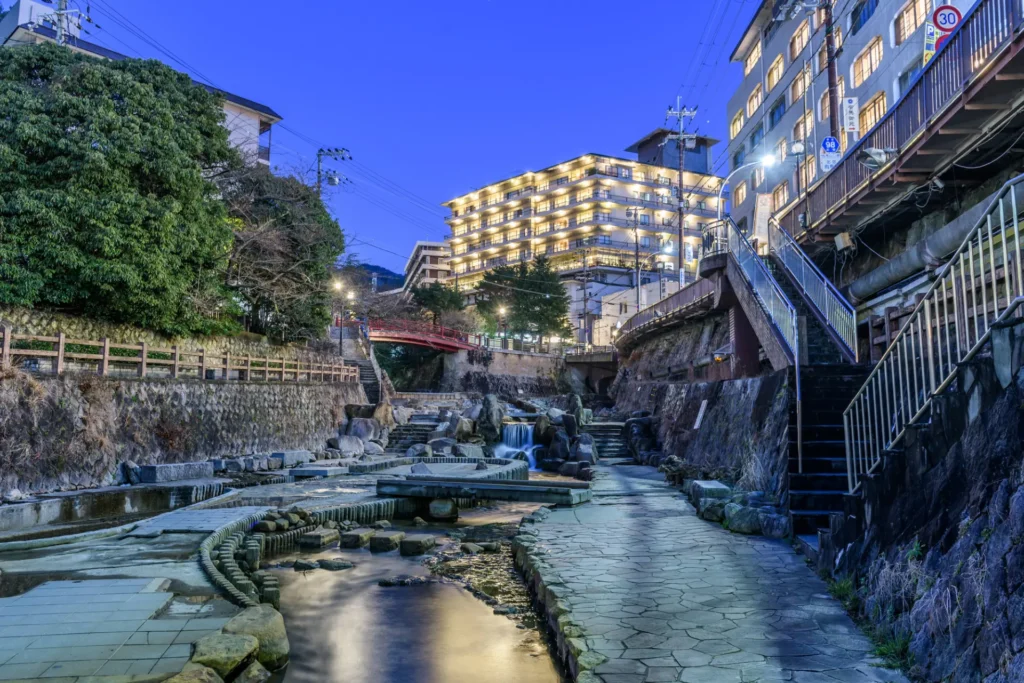
Shirahama Onsen (Wakayama coast)
- How to reach: ~2.5 hours from Osaka
- What it is: Onsen with ocean views. Beach + hot springs combination unusual in Japan.
- Best for: Travellers wanting to combine onsen with seaside scenery
[Onsen have limited capacity and run full in peak seasons. Pre-booking becomes a necessity. Here are links for pre-booking Arima, Hakone, Kinosaki & Kurama Onsen]
Beyond the Major Cities (Worth Knowing About)
If you have flexibility for a longer trip, the genuinely transcendent onsen experiences are in more remote Japan:
- Kurokawa Onsen (Kyushu): Japan’s most aesthetic onsen town, no high-rises, all wooden ryokan, considered by many the best onsen experience anywhere
- Beppu (Kyushu): Japan’s “onsen capital” with 8 distinct hot spring zones including hellish “boiling hells” (jigoku) you can visit but not bathe in
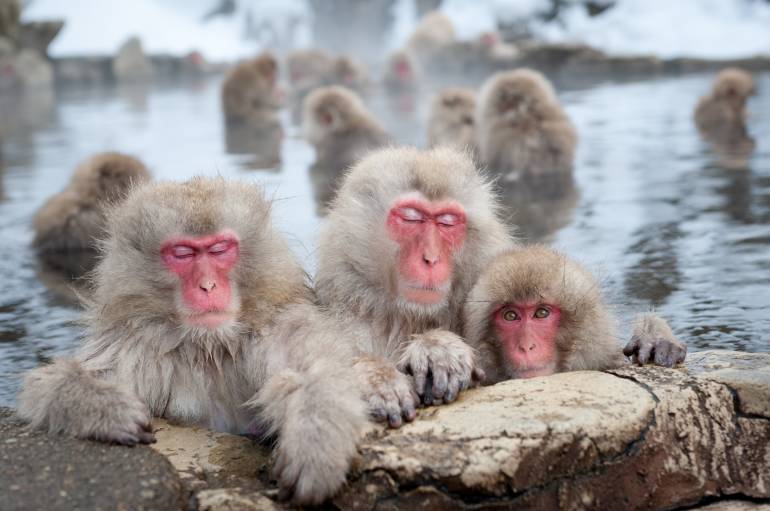
- Yudanaka Shibu Onsen (Nagano): Famous for the snow monkey onsen at nearby Jigokudani Park where wild macaque monkeys bathe in hot springs (winter only)
- Noboribetsu (Hokkaido): Volcanic, dramatic landscapes, “Hell Valley” steam vents
- Ginzan Onsen (Yamagata): Snow-covered Taisho-era buildings; the inspiration for Spirited Away‘s onsen
I believe that if you are going Beyond the major cities in Winter, you must be looking ahead to skiing in Japan on the famous “Japow”. Here is a short Skiing Guide for Japan tuned for both beginners and regular enthusiasts.
[Visit The Snow Monkeys relaxing in hot springs on a winter morning]
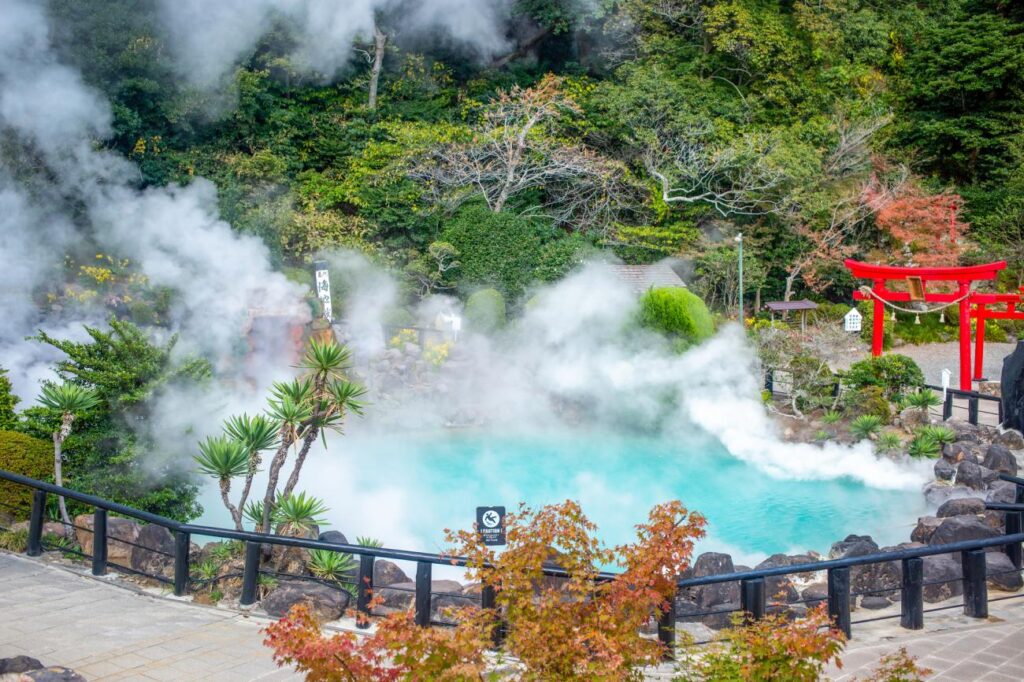
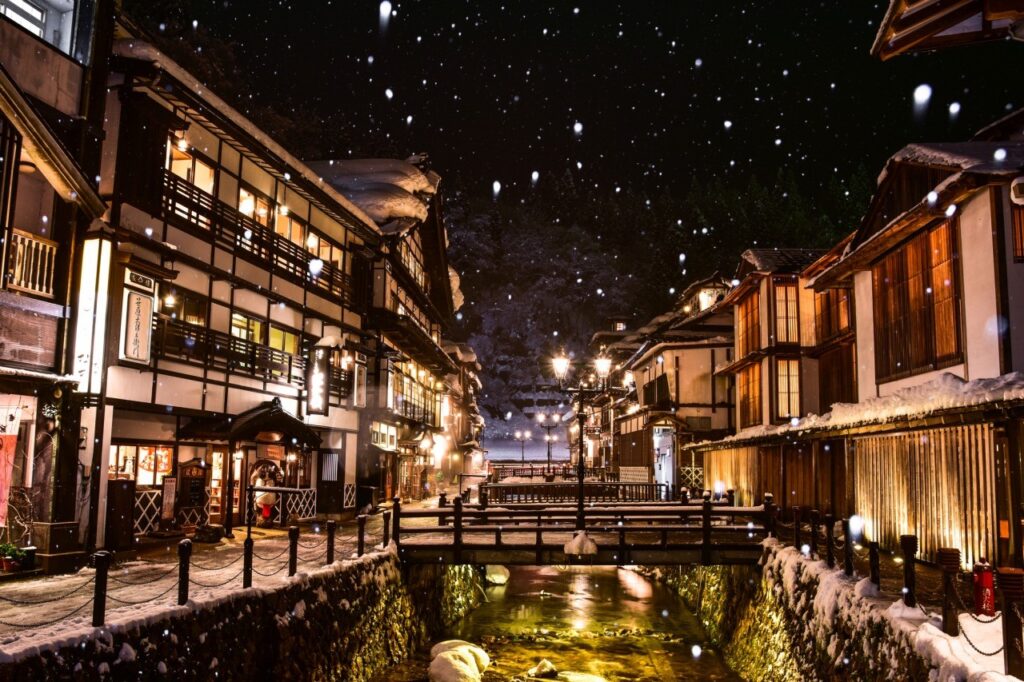
These are 2-4 hour journeys from major cities and require dedicated planning. Worth it on a future trip; skip on your first.
Budget Onsen Options: Sentos and Public Bathhouses
If a ryokan is outside your budget but you still want the experience, sentos and budget public onsens are excellent alternatives.
Sentos (urban public bathhouses):
- Cost: ¥400-800 per visit
- Where to find: Every major Japanese neighbourhood has at least one. Search “sento” on Google Maps in Tokyo, Kyoto, or Osaka.
- What to expect: No frills, often shared with locals, sometimes with traditional Japanese tile murals
- Tattoo policy: Often more flexible than tourist onsens, especially if you’re polite
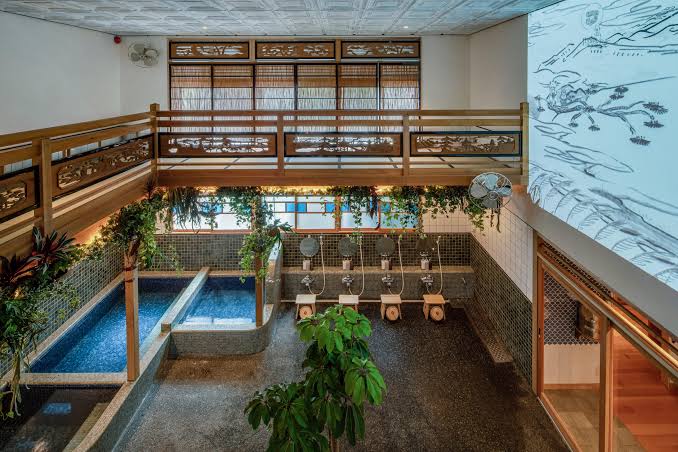
Notable budget-friendly options:
- Daikoku-yu (Tokyo): Beautifully restored sento in Adachi
- Kosugi-yu (Tokyo, Koenji): Photogenic, traditional
- Funaoka Onsen (Kyoto): One of Japan’s most beautiful sentos, registered cultural property, ¥490 entry
Super sentos: Larger commercial bathing facilities (some are technically onsen) with multiple pools, saunas, restaurants, and rest areas. Usually ¥1,500-3,000. Examples: Spa World Osaka (with international-themed baths from 9 countries), Mino Onsen Spa Garden, Solaniwa Onsen Osaka.
When Should You Visit?
Best seasons:
- Late autumn (October-November): Cool weather, autumn foliage views, ideal soaking temperatures
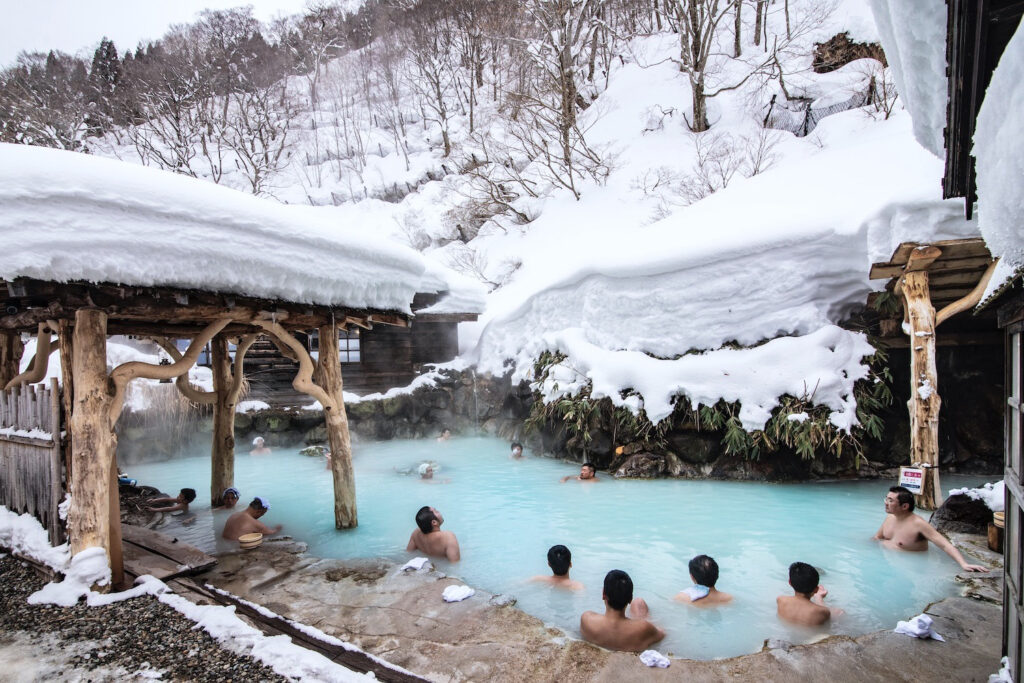
- Winter (December-February): The classic experience: snow falling around an outdoor rotenburo (open-air bath) with steam rising. Especially magical at Kusatsu, Nyuto, or Snow Monkey Park.
- Early spring (March-April): Cherry blossoms + onsen, especially at Kinosaki
Worst seasons:
- Summer (July-August): Soaking in 42°C water when it’s 36°C outside is genuinely uncomfortable. Skip.
- Rainy season (June): Functional but not aesthetic
How to Plan Your First Onsen Trip
For Indian travellers visiting Tokyo, Kyoto, and Osaka with limited time:
Option 1: Day trip from Tokyo (Hakone, 1.5 hours)
- Take the Romancecar from Shinjuku in the morning
- Spend day at the museum and one onsen ryokan’s day-use bath
- Return same evening
Option 2: One-night stay between Kyoto and Osaka (Kinosaki, 2.5 hours)
- Travel from Kyoto in the morning
- Stay at a Kinosaki ryokan (book 3-6 months ahead)
- Use the Sotoyu Meguri Pass to visit multiple public baths in yukata
- Travel to Osaka the next afternoon
- This is the highest-impact onsen experience for a limited Japan trip.
Option 3: Stay at an urban onsen hotel
- Book a Tokyo or Osaka hotel with an in-house onsen
- Less authentic, but zero travel logistics
Option 4: Book a private onsen for one evening
- Many Tokyo and Kyoto ryokans offer kashikiri (private booked) onsens for ¥3,000-8,000 for 60-90 minutes
- Ideal for couples, tattooed travellers, or those nervous about public bathing
Pre-Booking and Logistics
For onsen towns (Kinosaki, Hakone, Kusatsu):
- Ryokan bookings: 3-6 months ahead minimum, especially for autumn foliage and cherry blossom seasons
- Train tickets: JR Pass works for most routes; specific limited express trains require seat reservation (free with JR Pass)
- Day-use only: Walk-in usually fine for budget public sentos; ryokan day-use baths sometimes require reservation
You can refer to my Japan Travel Tips and Logistics for overall convenience & cost saving.
What to bring:
- A small wash towel (most onsen provide; bringing your own avoids fees)
- A change of underwear and socks (you’ll feel more refreshed)
- Hair tie if your hair is long
- A small bag for wet items afterwards
- Cash (¥3,000-8,000 for entries, snacks, vending machine drinks)
What NOT to wear:
- Swimwear (forbidden in traditional onsens, they’re for nude bathing only)
- Strong perfumes/colognes
- Makeup (wash off before entering)
Are Onsens Worth It?
Honest answer based on extensive research and the testimony of every traveller I’ve spoken to: yes, unequivocally.
The combination of mineral-rich water, geothermal heat, traditional architecture, and ritual etiquette creates a relaxation experience that genuinely doesn’t exist elsewhere in the world. After a long day of walking Japan’s cities, an evening onsen soak is reportedly the single best thing you can do for your body and mind.
The cultural depth matters too. Bathing has been part of Japanese spirituality for over 1,500 years. Visiting an onsen isn’t tourism in the same way visiting a temple is tourism, it’s participation in something that’s been continuously practised for longer than India has been a single country.
One must be cautious while visiting with pregnant women, children, people with disabilities and seniors. Here is a guide.
The verdict: Build at least one onsen experience into your Japan trip. Either as a day trip from Tokyo (Hakone) or a one-night stay between Kyoto and Osaka (Kinosaki). Don’t leave Japan without doing this at least once.
Frequently Asked Questions
Q: Do I have to be naked at an onsen? Yes, traditional Japanese onsens are nude-bathing facilities. Swimwear is forbidden. If this is a barrier, book a private kashikiri onsen or a room with private en-suite onsen at a ryokan.
Q: How much does an onsen cost? Public sentos: ¥400-800. Tourist-friendly onsens: ¥800-2,000. Premium ryokan day-use: ¥1,500-4,000. Overnight ryokan stays: ¥15,000-50,000 per person depending on season and luxury level.
Q: Can I visit an onsen as a single day trip from Tokyo? Yes. Hakone is the best day-trip onsen. 1.5-2 hours from Tokyo each way, with multiple ryokans offering day-use baths. Take the Romancecar from Shinjuku in the morning, soak for 2-3 hours, return in the evening.
Q: What’s the best onsen near Kyoto and Osaka? Kinosaki Onsen, 2.5-3 hours from either city. Seven public baths, foreigner-friendly, tattoo-friendly, beautiful walking town. Ideal as a 1-2 night stay, not a day trip.
Q: Are onsens tattoo-friendly? Increasingly yes, especially in tourist-heavy towns. Kinosaki Onsen, Beppu, parts of Hakone, and most modern ryokans with private (kashikiri) baths are tattoo-friendly. For traditional rural onsens, expect restrictions or use waterproof cover stickers.
Q: Do I need to book onsens in advance? Public sentos and most day-use onsens accept walk-ins. Ryokan overnight stays at popular onsen towns (Kinosaki, Hakone, Kusatsu) require booking 3-6 months ahead, especially for autumn and cherry blossom seasons. Private kashikiri baths usually need same-day reservation at the front desk.
Q: Are men and women separated in onsens? Yes, almost always. Look for the blue (男, men) and red (女, women) noren curtains. Mixed-gender onsens (konyoku) still exist but are rare and require swimsuit-equivalent towels.
Q: What if I’m self-conscious about being naked? Use a private kashikiri onsen or a room with private en-suite onsen. These are available at most modern ryokans and remove the public-bathing element entirely. Cost: ¥2,000-8,000 for 45-60 minutes.
Q: Can children go to onsens? Yes. Children of any age can enter same-gender onsens with a parent. Some ryokans have family onsens (kazoku-buro) designed for parents with kids of any gender to bathe together privately.
Q: Should I drink water before or after an onsen? Yes, definitely after, and ideally before too. Hot baths cause significant fluid loss. Most onsens provide free cold water in rest areas. Skipping hydration can cause dizziness, especially after multiple soaks.
Final Word
The onsen experience is what most travellers tell me is the moment Japan stopped feeling like a tourist trip and started feeling like a cultural immersion. The naked-with-strangers rule is an initial barrier; the etiquette is a small learning curve; the tattoo question is a real consideration. But on the other side of these is one of the most singular relaxation experiences anywhere on the planet.
If you’re going to Japan and the question is “should I go to an onsen?”, yes. The only real question is whether to choose a day trip from Tokyo or an overnight in Kinosaki, and whether to go full-public or private kashikiri.
Once I’ve finally done this myself on my next trip, I’ll come back and write the experiential follow-up to this guide.
For the full Japan trip experience, read my main blog here.
Drop a comment if you’ve experienced an onsen in Japan. I’d love to know which one you’d recommend most for first-timers.