 By Tarang Bansal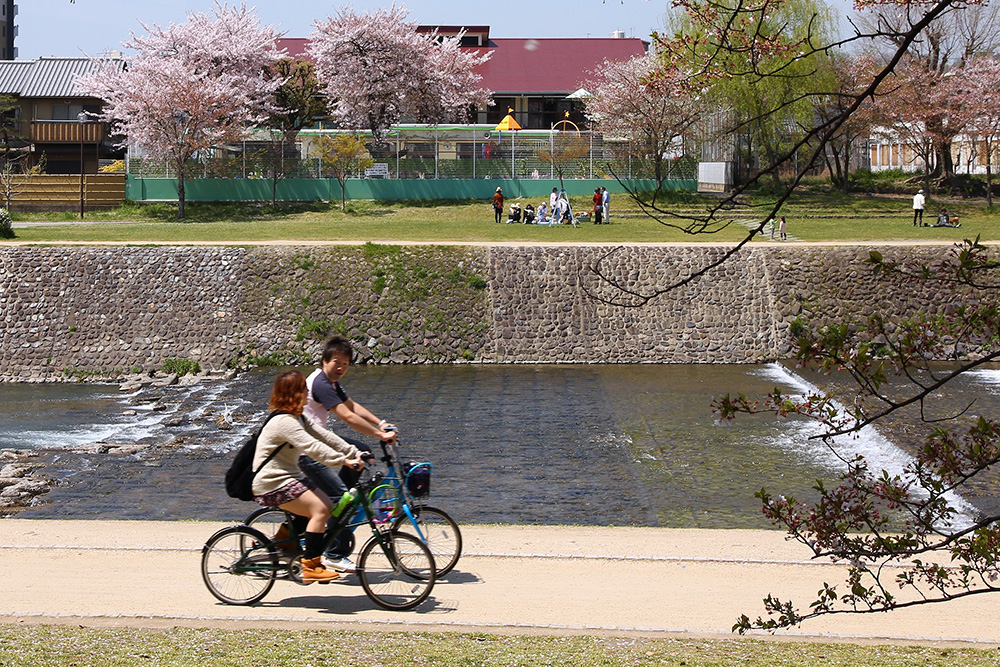

Cycling in Japan is one of the most underrated experiences any Indian traveller can have, and I discovered this too late.
It was around 11:30 PM. I was on an e-bike on a one-lane forest road outside Kyoto, somewhere between the lakeside town of Otsu and our ryokan in Higashiyama. There were no streetlights. No moonlight. Just the thin yellow beam of my bike headlight cutting through the trees.
Then I heard it. A sharp rustling in the bushes, maybe three meters from my front wheel. I instinctively swung the headlight to the right.
Two glowing eyes stared back at me from the undergrowth. Below them, a thick, dark mass, easily 80–100 kg, shifted in the leaves. A wild boar.
For about half a second, none of us moved. The boar, my friends behind me. Just a few mammals in a Kyoto forest at midnight, locked in a single moment of mutual surprise.
Then the boar bolted. Backward, deeper into the trees, away from us. Five hearts pounding so loud I’m pretty sure he heard us before we heard him.
We stood there in the silence afterwards, processing that we had not just been gored on a Japanese forest road at midnight.
Then we got back on our e-bikes and pedalled the remaining kms uphill through that same dark forest, eyes scanning for more eyes.
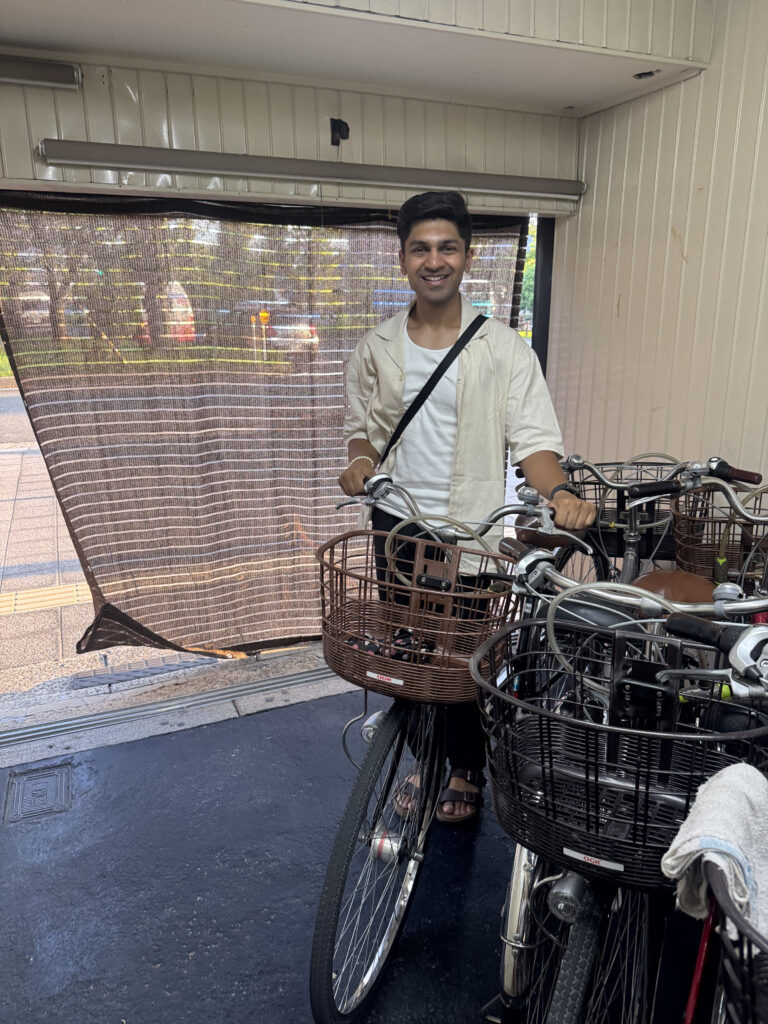
This is the story of the single best decision I made in Japan: renting an e-bike in Kyoto. And it’s why, if you read nothing else from this blog, you do this one thing when you visit.
If you want the full Japan trip context, read my main 10-day Japan blog here. This post is a deep-dive into Kyoto’s most underrated experience.
Why Cycling in Japan- Kyoto Specifically- Will Surprise Every Indian Traveller
Most Indians don’t think of cycling as a tourist activity. We associate it with school, with delivery boys, with fitness influencers, but not with travel.
Kyoto changes that. Within an hour of getting on an e-bike here, I rated it a +5 on my -5 to +5 scale, easily one of the top 3 experiences of my entire Japan trip.
Here’s why Kyoto specifically rewards cyclists:
1. The city is unbelievably bike-friendly. Smooth roads, dedicated bike paths, bike parking everywhere, traffic that respects cyclists, no potholes, gentle gradients in the city core, and signage that’s intuitive even if you can’t read kanji.
2. The temples and neighbourhoods are genuinely spread out. Walking takes forever. Buses are infrequent in Kyoto compared to Tokyo. Trains miss the in-between zones. A bike covers the gap perfectly.
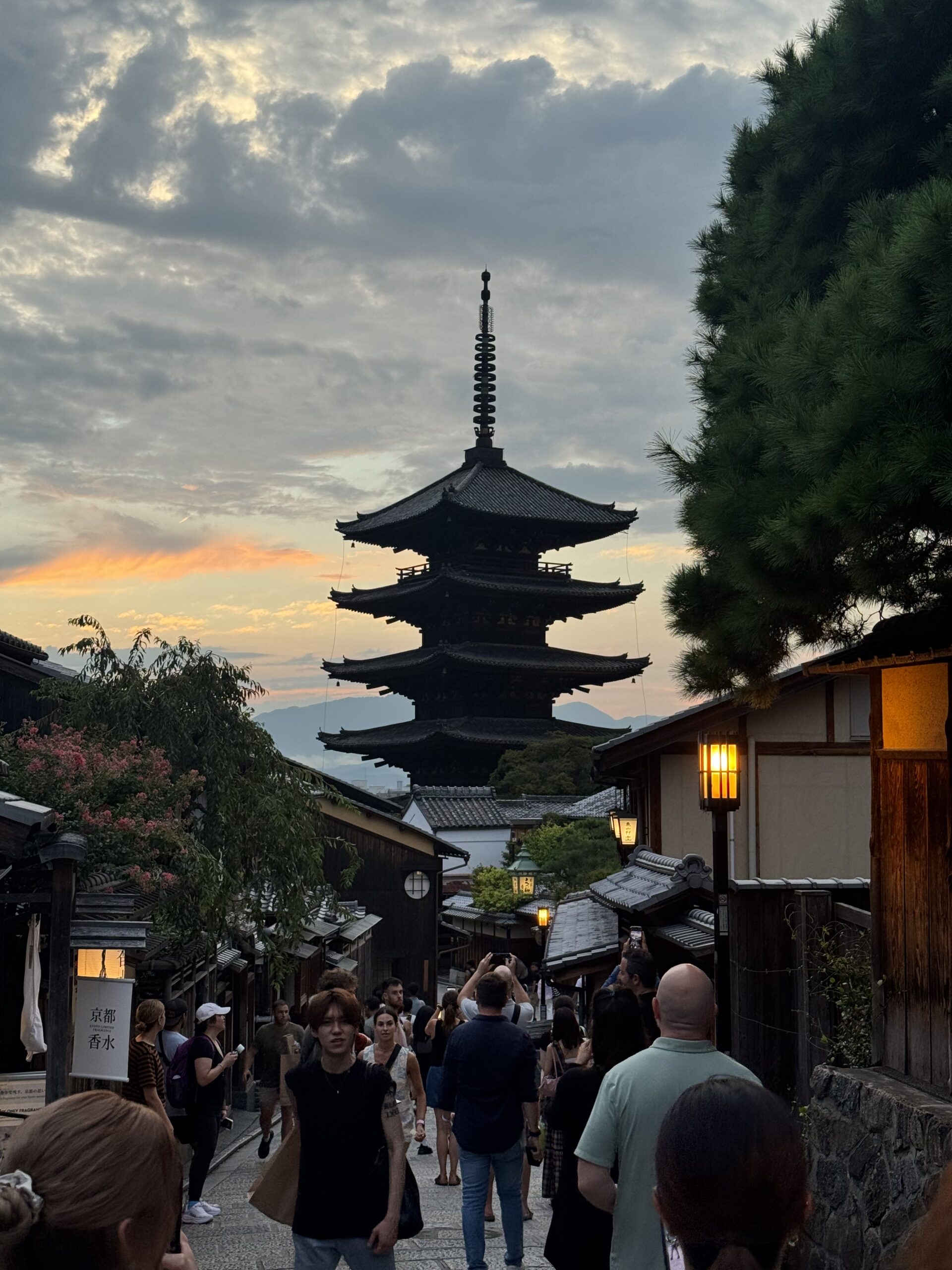
3. You see Kyoto at the right speed. Old wooden machiya houses, hidden cafés, canal-side streets, small shrines tucked between residences, these reveal themselves at bicycle pace, not from a bus window.
4. Japan’s accessibility is on a different planet. The roads, sidewalks, and bike paths in Kyoto are so well-designed that someone in a manual wheelchair can navigate the entire city without assistance. I noticed this multiple times during the day, people with disabilities cycling, wheeling, moving freely. It’s the kind of urban design India is decades away from. If you are travelling with someone who needs wheelchair assistance, here is a option to rent it during your trip.
Cycling in Japan at this level of infrastructure simply does not exist back home, and that contrast is half the joy
If you visit Kyoto without renting a bicycle for at least one day, you’ll have missed the way the city is meant to be experienced.
Why Cycling in Japan Should be on E-Bikes Only, Not Regular Bikes
I’m going to say this loudly because it matters:
Unless you are a competitive cyclist, rent an e-bike. Not a regular bike.
Kyoto looks flat on a map. It is not. The areas leading up to temples (especially Arashiyama, Fushimi Inari’s foothills, and anything heading toward Mt. Hiei or Otsu) involve sustained climbs that will destroy you on a regular bike. You’ll be tired, sweaty, and miserable within an hour, and you’ll cut your trip short.
E-bikes solve all of this. You still pedal, the motor doesn’t replace your effort, it amplifies it. Hills become flat. Distance becomes effortless. A 14 km route that would have taken us 90 minutes of agony on regular bikes took 50 minutes of relaxed pedalling on e-bikes.
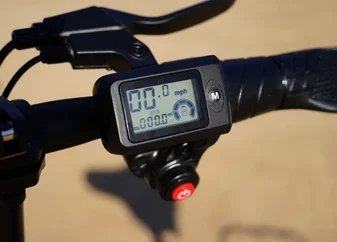
The motor assist also means you arrive at temples and viewpoints not drenched in sweat. Important if you’re visiting traditional sites where appearance and respect matter.
E-Cycling is a great option in many parts of Japan. Here are two options of joining guided cycling tours in Nara and Tokyo.
How and Where to Rent E-Bikes in Kyoto
To understand, what is unique about Kyoto, you have to read my Kyoto Guide.
Skip the rental mobile apps. Go to a physical shop instead. Better bikes, clearer communication, real human help.
What we got at our rental shop:
- Full-day (24hr) e-bike rental (until shop closing, usually 6:00–6:30 PM)
- Phone mount for navigation (essential in Kyoto’s small streets)
- Front basket for bags, water, snacks
- Battery fully charged
- Bike insurance with a small extra fee, take it. If your bike is stolen or damaged in Japan, the bill without insurance is enormous.
Cost: Around ₹2,000 per bike for a full day (24hr). For cycling in Japan, ₹2,000 is genuinely the best-value experience on any Japan trip.
If you want to pre-book your e-bike at a bike rental shop in central Kyoto (near Higashiyama/ Gion), here is an option.
A timing tip that saved us: We picked up our bikes right at 6:00 PM, just before our rental shop closed for the day. Most shops close at 6:30 PM. The bikes are given for a 24 hr window. We had return it by 6 PM on the next day. No need to book any return slots in advance. Just come, the person inspects and that’s it.
This is also how we ended up cycling at midnight through forests. Don’t say I didn’t warn you.
The Three Best Town Cycling in Japan- The Kyoto Routes
If you want to do this trip well, these are the three routes Kyoto cyclists agree on:
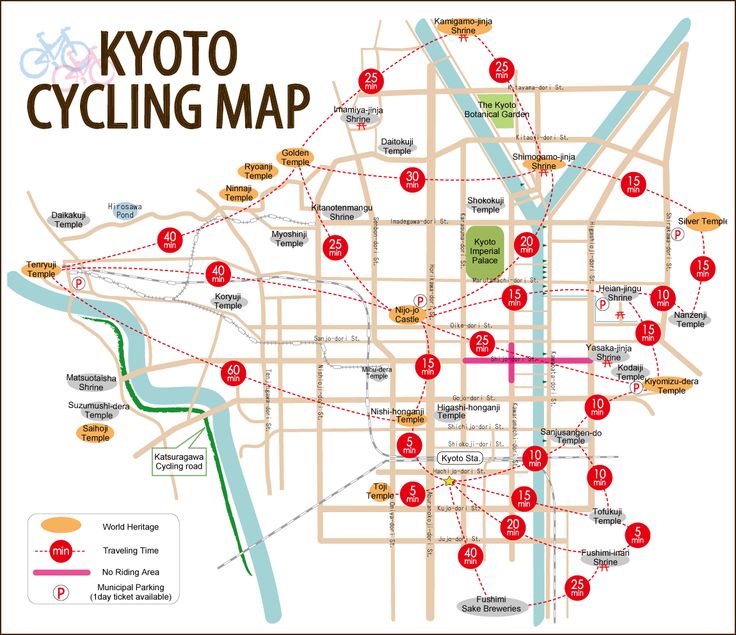
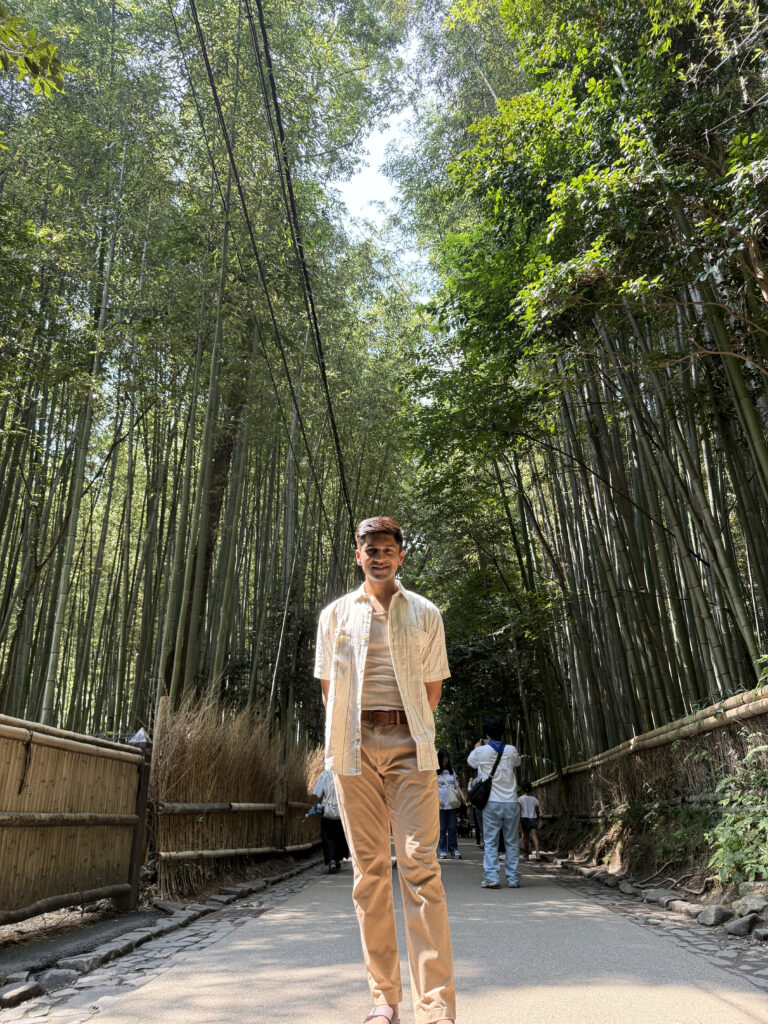
Route 1: City Center to Arashiyama
Distance: ~10 km one-way Highlights: Bamboo grove, monkey park, Tenryu-ji Temple, Togetsukyo Bridge, riverside cafés Vibe: Scenic, touristy, perfect for a half-day ride Best for: First-time visitors who want to combine cycling with major sights
The ride from central Kyoto to Arashiyama follows the Katsura River for much of the way. Smooth bike paths, beautiful river views, almost no traffic. Cycle out, spend 2-3 hours exploring Arashiyama’s bamboo grove and temples, eat a riverside lunch, cycle back. A genuinely perfect Kyoto day.
Did you know that you can tour the Arashiyama Bamboo Grove and the surrounding temples on a mechanical rickshaw?
Route 2: Higashiyama to Fushimi Inari
Distance: ~7 km one-way Highlights: Kiyomizu-dera Temple area, Gion’s eastern edge, Tofuku-ji Temple, Fushimi Inari’s thousand torii gates Vibe: Cultural, temple-heavy, photogenic Best for: Travellers who want to combine multiple iconic Kyoto sights efficiently
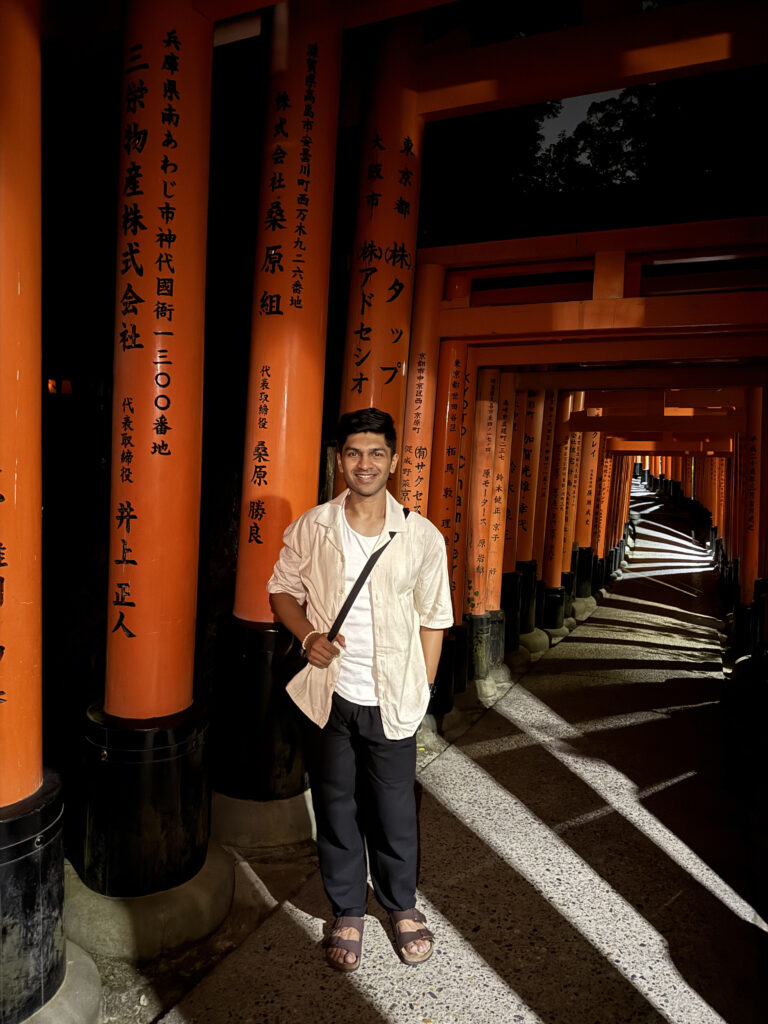
This route lets you skip Kyoto’s slow buses while connecting some of the city’s most famous landmarks. The Fushimi Inari area itself is best explored on foot once you arrive (the mountain trails aren’t bike-friendly), so park your bike at the base.
Route 3: Higashiyama Through Gion to Northern Kyoto
Distance: Variable, 8–15 km depending on how far you go Highlights: Gion (geisha district), Pontocho alley, Kamo River, Imperial Palace, Kinkaku-ji (Golden Pavilion) if you go far enough Vibe: Atmospheric, historical, river-adjacent Best for: Riders who want to feel Kyoto’s old-meets-new texture
The Kamo River bike path running through central Kyoto is one of the most pleasant urban rides anywhere in Asia. Smooth, riverside, with locals jogging and picnicking alongside you.
The sties of Kyoto are not only aesthetic but deeply contextual. If you want to get into the depths of its history, a guided tour is recommended, here are a few options to choose from-
- Kyoto Half-Day Electric Bike Tour with Guide
- Kyoto- Night- E-Bike Tour with Guide
- Kyoto 10 Shrines Half-Day Small Group Cycling
Why We Skipped All Three Routes and Cycled to Otsu Instead
Here’s where the story gets unhinged.
We had our e-bikes from 6 PM the previous evening. We did Arashiyama and the city center earlier on foot. By this evening, we wanted something different, something not on the standard tourist circuit.
Someone in our group looked at the map and pointed: “Otsu. Lakeside town. 14 km away. Let’s go.”
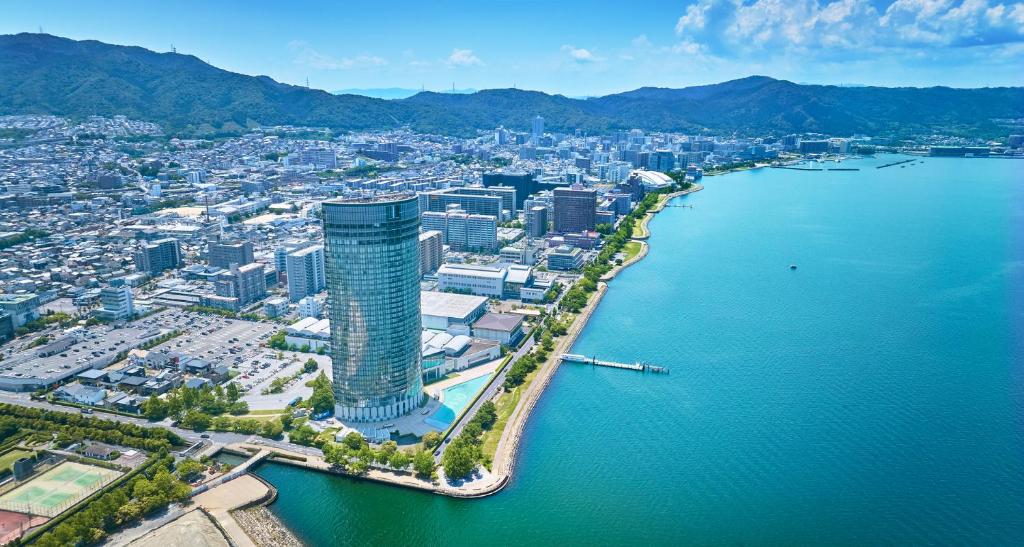
Otsu is a small lakeside town just east of Kyoto, on the shores of Lake Biwa, Japan’s largest freshwater lake. It’s not a tourist destination. There are no temples Indians have heard of. No bamboo groves. No torii gates.
What there is: a real, lived-in Japanese town that almost no foreign tourists visit. And a 14 km ride to get there that goes through highways, small villages, and stretches of dense forest.
It sounded like the perfect Kyoto-but-not-Kyoto evening. If you, like me, love outdoor experiences, here is my Guide on Japan’s Outdoor Experiences.
So at 7 PM, we pedalled out toward Otsu. The first 5 km were urban and pleasant. The next 4 km wound through small villages, with old people watering plants on their porches and waving at us as we rolled by (one oldie acted like an Indian dadaji and shooed us away as well). Pure Studio Ghibli energy.
The last 5 km were forest.
Otsu: Worth the Ride
We rolled into Otsu around 9 PM. The lake was huge, dark, and quiet. The town itself felt like a Japanese suburb that had stopped trying to impress anyone: small shops, a few salarymen heading home, a baseball field where a local school team was playing a late game with their families cheering them on.
We watched 20 minutes of that baseball game from the sidelines. Mothers shouting encouragement, fathers grilling at the edge of the field, kids running around. It was one of those moments where you realize travel isn’t always about the famous sights, sometimes it’s about catching ordinary life happening somewhere far from home.
For dinner, we found a conveyor-belt sushi place, which sounds great until you realize that as a vegetarian, only 4 dishes out of around 200 were sushi I could eat. I picked at cucumber rolls and tofu. We supplemented with a cheese pizza at Domino’s because at this point I was hungry and didn’t care.
Around 10:30 PM, we started the 14 km ride back to Kyoto.
That’s when the trip got real.
The Pitch-Dark Forest
While returning, the forest came first.
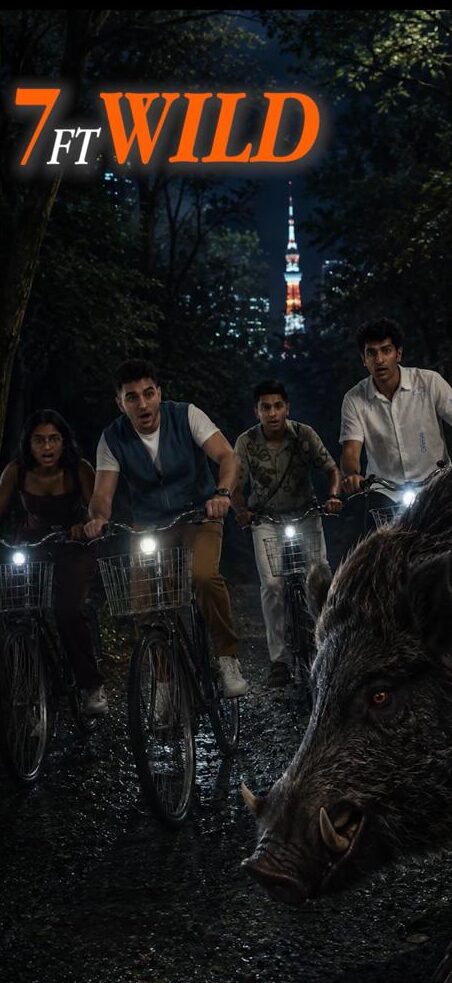
This time, it was midnight. No moonlight. No streetlights. Just the thin yellow cones of our five bike headlights sweeping across roads that felt much more remote than they had on the way out.
Japan’s forests aren’t empty. The signs we’d ignored on the way to Otsu were bilingual notices warning about black bears, wild boars, deer, monkeys, and various smaller mammals suddenly felt very relevant. We started cycling closer together. We stopped talking. The only sound was the soft electric hum of our motors and the occasional rustle of something in the trees.
Then the rustling got louder. Just to my right. Three meters away. Maybe less.
And the boar appeared.
What I Learned in That Half-Second
Here’s what I learned about wild boar in the half-second I had to think about it later:
- Wild boars in Japan are common, especially in rural and forested areas around Kyoto
- They’re large adults that weigh 50–150 kg, with razor-sharp tusks
- They’re generally not aggressive toward humans unless cornered or protecting young
- They have poor eyesight but excellent hearing and smell
- Most boar-human encounters end with the boar fleeing, but ones that don’t end badly
Our boar fled. Backward, deep into the forest, away from the road. We were lucky. If it had been a sow with piglets, or a startled male defending territory, the story ends differently.
We didn’t move for maybe 15 seconds after it disappeared. Then someone laughed nervously, and we kept pedalling. The motor assist was the only thing keeping us moving uphill, without it, we would have been pushing bikes through that forest for an hour, much more exposed.
The Last 6 km
The final stretch was a highway and then the gentle outskirts of Higashiyama Ward. We didn’t see any more wildlife, but every rustle made all five of us flinch in unison. Adrenaline doesn’t fade quickly.
We rolled back into our ryokan around 1 AM. We parked the bikes in the lot, locked them, and sat on the wooden steps for a few minutes, just absorbing what had just happened.
What This Trip Taught Me About Travel in Japan
Two things stuck with me from this night.
1. Japan’s quiet underbelly is wilder than most travel content shows. The country has this image of being meticulously controlled, every train on time, every street clean, every system efficient. But step 30 km outside any major city, and you’re in pitch-dark forests with bears and boars. The wilderness is real. It just doesn’t intrude on city life unless you go looking for it. Cycling in Japan reveals a side of the country that no bullet train, bus, or walking tour ever could
2. The best travel memories aren’t on the “must-do” lists. No travel blog or AI tool would have suggested an e-bike ride to a non-touristic lakeside town. That’s exactly why it became the most memorable night of the trip. Kyoto’s three “best” cycling routes are great. The route to Otsu was unforgettable.
Did you know that Japan has a 70km cycling track made of dedicated cycling bridges made over islands? It is considered one of the best cycling routes in the world.
Pro Tips for Cycling in Japan- Especially on Long Kyoto Routes
If you’re inspired (or scared) by this story and want to attempt something similar, here’s the advice I’d give past-me:
1. Always rent e-bikes, never regular bikes. Already covered, but worth repeating. The hills will end you.
2. Get a phone mount. Google Maps for cyclists in Japan is excellent. Without a mount, you’ll be checking your phone constantly and crashing into things.
3. Carry a powerful headlight, not just the bike’s stock one. The bike headlight is for being seen by others, not for seeing the road. A separate handlebar-mounted LED light makes night riding 10x safer.
4. Ride in groups, not alone. For night rides especially, four to six riders deter most wildlife and most accidents.
5. Tell someone your route. Your Airbnb host, your hotel front desk, a friend over WhatsApp. Just in case.
6. Avoid forests after dark if possible. I’m telling you this knowing full well that the dark forest stretch was the most memorable part of the trip. But objectively, it was the riskiest part too. Your call.
7. Carry water and a snack. Convenience stores in Kyoto are everywhere in the city. Outside the city core, less so. A small bag of trail mix and a bottle of water in your bike basket is sensible.
8. Don’t push past the bike’s range. E-bikes typically go 90-100 km on a full charge with motor assist. Beyond that, the motor dies and you’re left with a heavy regular bike. Plan accordingly.
9. Take the insurance. ₹300-500 extra. If anything goes wrong (theft, damage, accident), you’ll thank yourself.
Frequently Asked Questions: E-Biking in Kyoto
Q: Do I need an international driving license to rent a bike in Kyoto? No. Bikes don’t require any license in Japan. You’ll just sign a rental form and provide your passport and a credit card.
Q: How much does an e-bike rental cost in Kyoto? Around ₹2,000 per day for a full-day rental. Multi-day rates are usually discounted. Insurance is ₹300-500 extra and recommended.
Q: Are bikes safe to leave parked in Kyoto? Yes, generally very safe. Japan has low theft rates and dedicated bike parking zones (some free, some paid for ¥100-200) all over the city. Always lock your bike. Japanese-style locks are usually built into the rear wheel.
Q: Can I cycle on the road in Kyoto, or only on bike paths? Both. Cyclists are allowed on the road and on bike-path-marked sidewalks. Locals frequently cycle on sidewalks where bike paths are marked. Drivers are very respectful of cyclists.
Q: Is Kyoto bike-friendly compared to Tokyo? More so. Kyoto is flatter in its core, less crowded, and has slower traffic. Tokyo is bike-friendly too but harder for tourists due to scale and density.
Q: Should I cycle in Kyoto in summer? Probably not, for the same reasons as the rest of Japan in August. Brutal heat and humidity. Spring (March-May) and autumn (October-November) are ideal cycling seasons.
Q: Can a beginner cycle in Kyoto comfortably? Yes, especially on an e-bike. The motor assist makes hills manageable, the bike paths are smooth, and traffic is gentle. If you can ride a bicycle at all, you can ride one in Kyoto.
Q: What’s the longest distance I can comfortably do in a day? On an e-bike, with breaks, 30-50 km is very doable for an average rider. For comparison, our Otsu round trip was 28 km total and felt completely manageable.
Final Word
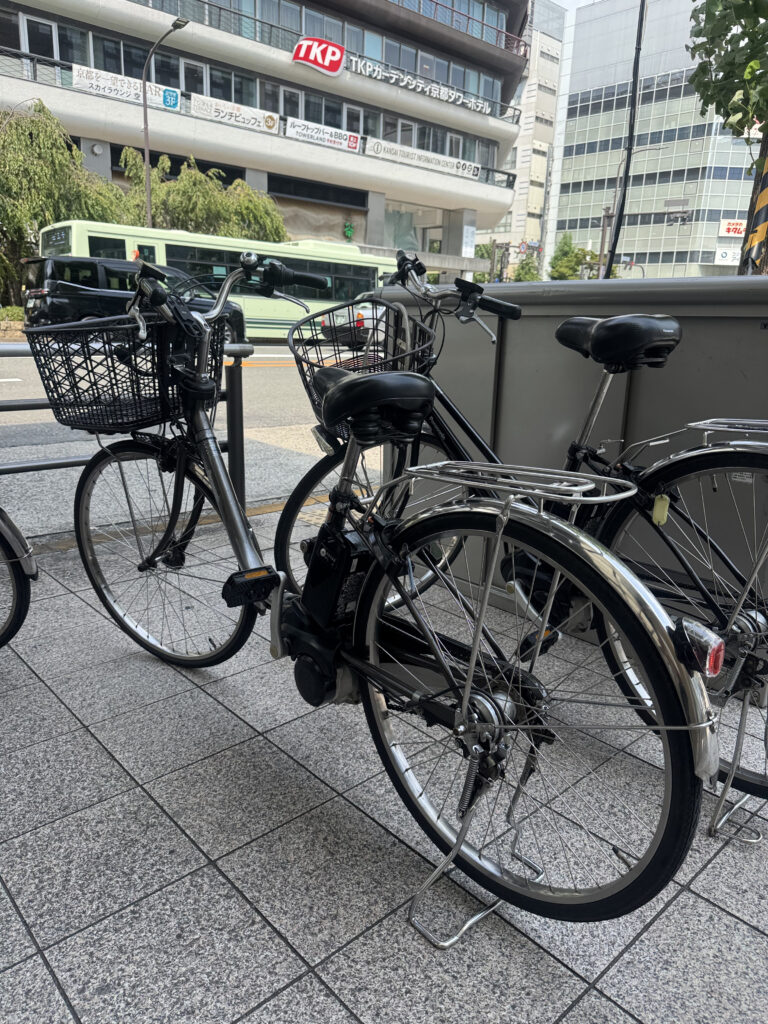
Cycling in Japan wasn’t on my pre-trip plan. It became the single best decision of the entire 10 days.
If you’re going to Kyoto, please, do not skip this. Rent an e-bike for at least one full day. Pick one of the three classic routes if you’re cautious, or invent your own to a place no tourist guide mentions. The city is built for cycling in a way Indian cities won’t be for decades, and you’ll see Kyoto at the speed it was meant to be seen.
Just maybe don’t do the forest part at midnight. Or do, the boar story is worth it.
For the full Japan trip and the things that actually were worth doing, read my main blog here.
Drop a comment if you’ve cycled in Kyoto, or are planning to. And tag a friend you’d take on a midnight forest ride and one you definitely wouldn’t.