 By Tarang Bansal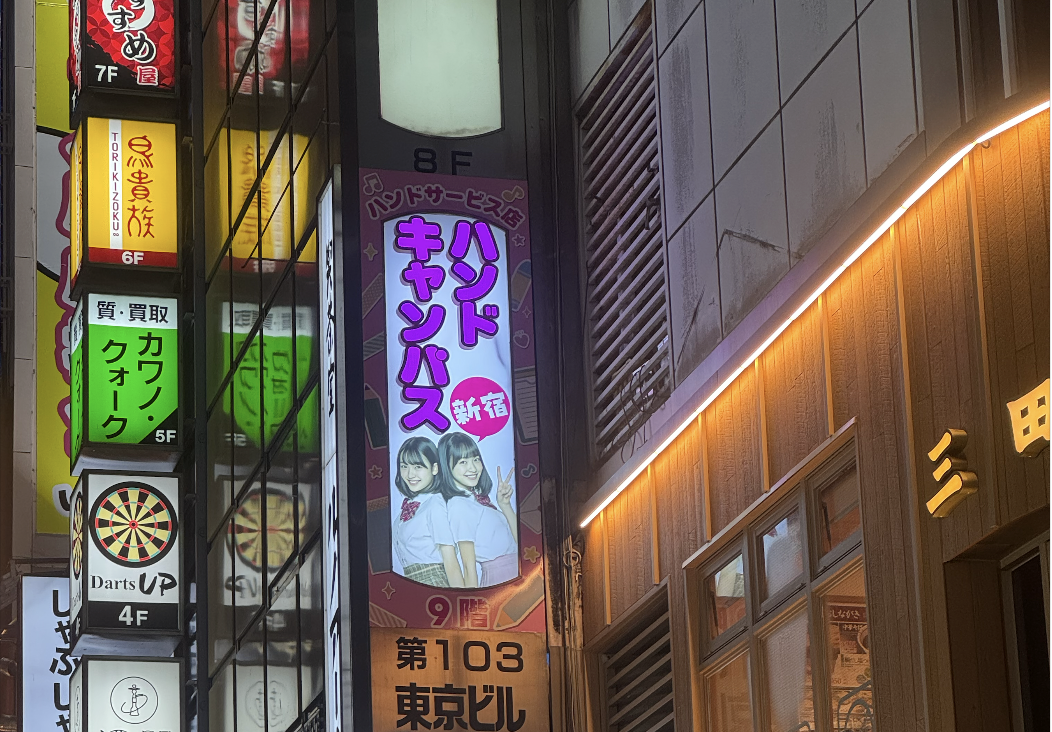

Japan adult entertainment is one of the most misunderstood aspects of the country. Japan is a country of apparent contradictions: publicly modest, privately complex. A society where couples rarely kiss in the street but where a multi-trillion adult entertainment industry operates openly. Where women in traditional dress walk the same lantern-lit alleys as establishments with names like “Fashion Health” and “Pink Salon.” Where “cuteness” (kawaii) is both a global cultural export and the subject of serious academic debate about infantilisation and exploitation.
This post is a cultural and historical analysis written in the same register as academic journalism for Indian travellers who encounter these aspects of Japanese culture and want an honest, informed framework for understanding them. It covers the historical separation of Oiran and Geisha; the legal architecture of Japan’s grey-zone sex industry after 1956; the specific categories of establishments (kyabakura, fashion health, pink salon) and how they work; male hostessing and host clubs; and the Kawaii debate.
This is not an endorsement of any part of this industry. It is information.
If you want the full Japan trip context, read my main 10-day Japan blog here.
Japan adult entertainment as it exists today cannot be understood without its history. This post starts at the beginning.
Part 1: Oiran and Geisha, The Historical Roots of Japan Adult Entertainment
These two figures have been conflated in Western imagination since at least the 19th century. They are meaningfully different, historically and functionally.
The Oiran: Japan’s Edo-Period High Courtesans
The word oiran (花魁) is written with the characters for “flower” (花) and “pioneer/leader” (魁), believed to have originated from younger women in pleasure districts affectionately calling senior courtesans “my elder sister.” The term came to describe the highest-ranking courtesans of Japan’s government-licensed pleasure districts with the most famous being the Yoshiwara district in Edo (modern Tokyo).
Yoshiwara was established in 1617 as a licensed and contained zone for prostitution in a deliberate government policy to concentrate the sex trade in regulated areas outside the main city. It was, in effect, a walled city within a city, operating under its own laws, economy, and social hierarchy.
Oiran were at the apex of this hierarchy. To become an oiran required years of education: classical Japanese poetry, the tea ceremony, musical instruments (particularly the shamisen), ikebana, calligraphy, and sophisticated conversation. They were, in the most complete sense, accomplished women and the cost of their company reflected this. A single evening with an oiran might cost the equivalent of months of a merchant’s wages. Crucially, a client couldn’t simply pay for their time on a first visit. Oiran operated on a formal introduction system where the client was expected to send gifts, make formal requests, and be evaluated before being accepted. The oiran, at her highest level, had considerable power to refuse clients she found unsuitable.
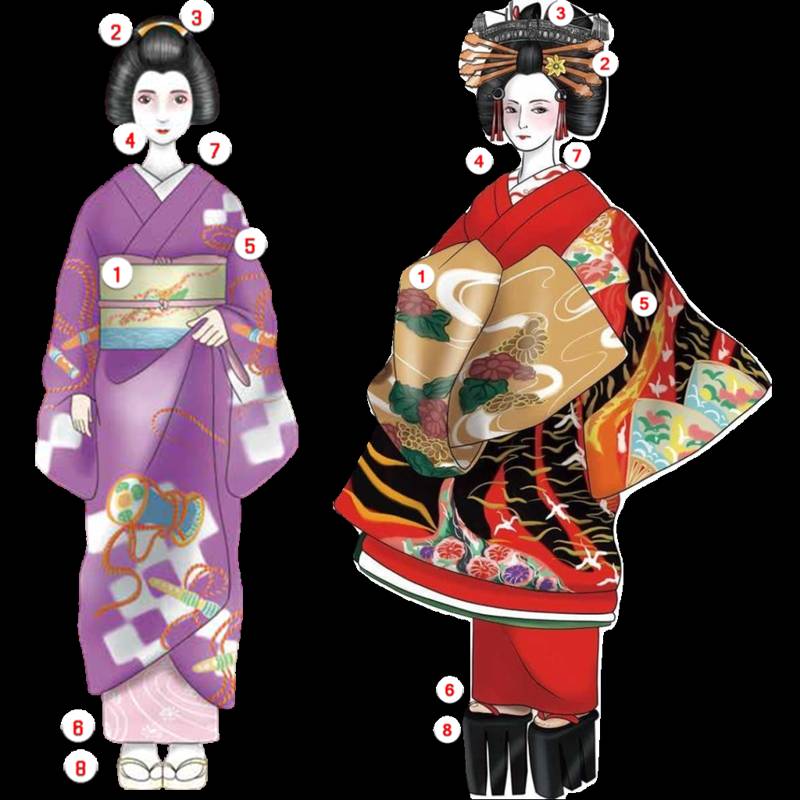
Their appearance was deliberately extravagant: towering wooden geta (sandals), elaborate multi-layered kimono in the most expensive fabrics, and a signature front-tied obi (sash) is the functional distinction that separated them from all other women, who tied their sash at the back. Their hair was an elaborate construction of tortoiseshell combs and ornamental hairpins in multiple rows.
Sex was part of the transaction at its core were oiran were, definitionally, high-ranking prostitutes. But the cultural construction around them had the courtly elaborate ritual, the months of gift-giving, the formality of acceptance had elevated the transaction into something that resembled patronage as much as commerce.
Below the oiran was a rigid hierarchy: the tayu (specifically in Kyoto’s Shimabara district, the equivalent rank), and below them successively lower ranks of courtesans, working in progressively less formal conditions.
There were also kagema, the male prostitutes who served both male and female clients. Historical sources note that kagema commanded higher prices than even senior female courtesans because the boys admired for their youthful beauty had a very short earning window.
The oiran profession ended with the 1956 Prostitution Prevention Law. The last formal Yoshiwara operations closed in 1958. Today the oiran exists only in historical performance and tourism: several annual festivals in Tokyo and Niigata feature oiran processions (dochu) where women dress in authentic reproductions of the costume, walking in the distinctive figure-eight gait that was the mark of the highest rank.
The Geisha: A Completely Different Role, Often Confused
The confusion between oiran and geisha has deep roots but a specific historical cause.
Geisha (芸者 “arts person”) were not prostitutes. They were, and remain, professional entertainers trained in music (shamisen, koto, taiko), classical dance, poetry, calligraphy, the tea ceremony, and the art of social conversation. The word itself makes this plain: “gei” means art or skill; “sha” means person. They sell their artistry, not their bodies.
The geisha institution emerged in the 18th century, initially as male entertainers (taikomochi or drum carriers) who provided comic entertainment at parties. Women began to enter the profession by the mid-1700s, and within a generation the female geisha had largely replaced the male in the entertainment role. Their territory was the okiya (geisha house) and the ozashiki (banquet room), not the pleasure district.
Critically, the pleasure districts (where oiran worked) and the entertainment districts (where geisha performed) were geographically adjacent and governed by the same urban zone rules which led early Western observers to assume proximity meant equivalence. It did not.
The other historical cause of confusion: in the period following WWII, some Japanese women working in entertainment or adjacent industries introduced themselves to American soldiers as “geisha girls”, a term those women used loosely and which embedded the prostitute-geisha conflation firmly in Western popular culture. Arthur Golden’s novel Memoirs of a Geisha (1997) deepened this further, presenting a version of the geisha world that professional geisha organisations in Kyoto publicly disputed as inaccurate.
The clearest visual distinction:
- Geisha tie their obi sash at the back
- Oiran/courtesans tied their sash at the front (for practical reasons of repeated dressing and undressing)
- Geisha have minimal, elegant hair ornamentation with typically one or two simple combs
- Oiran had dramatically ornate hairpieces with multiple tortoiseshell pins in several rows
Geisha today is also called geiko in Kyoto (the most traditional region) who still operate professionally. Kyoto’s Gion district has approximately 200-300 active geiko and maiko (apprentice geisha). They are booked through established okiya for private banquets, corporate entertainment, and cultural events. Their income is substantial. Their professional code strictly prohibits sexual relations with clients as part of their professional role- a geisha’s patron relationship, if it existed historically, was a private personal arrangement entirely outside her professional identity.
The distinction in one sentence: an oiran sold pleasure and cultivated art; a geisha sold art and might occasionally be associated with pleasure.
Part 2: The 1956 Law and the Grey-Zone Architecture
In 1956, Japan passed the Baishun Bōshi Hō (Prostitution Prevention Law). This single law is the foundation on which all modern Japan adult entertainment was architecturally engineered. The law’s central prohibition: “No person may either do prostitution or become the customer of it.” Prostitution was defined specifically and narrowly as vaginal intercourse between an unspecified person in exchange for compensation.
The word “unspecified” is the legal pivot on which the entire modern industry turns. Intercourse between a person and their established partner or sponsor was not covered. The law also, crucially, set no punishment for the prostitute or customer themselves, but only for organised facilitation.
What emerged in the following decades was a sophisticated ecosystem of businesses designed around what the law prohibited. The 1956 Prostitution Prevention Law technically bans paid intercourse but defines illegal conduct so narrowly that a massive industry operates in technical compliance with the law.
The underlying logic: if the law only prohibits vaginal intercourse, then a business offering everything else, like bathing, massage, manual stimulation, oral sex, conversation, companionship is technically legal. Services such as erotic massage, oral sex, and paid companionship do not fall under its definition of prostitution. Many businesses operate within legal ambiguities by classifying transactions as payment for time, bathing services, or entertainment rather than for sexual acts.
The result is a taxonomy of euphemistically named establishment types that the Japanese government regulates under the Businesses Affecting Public Morals Regulation Law (1948, amended 1985, 1999, 2005).
The Japan Adult Entertainment Industry Taxonomy
Soapland (ソープランド): The direct descendant of the post-war public bathhouse. A customer pays for a “bathing service” in which a female attendant washes them using her body in a foam-filled room. The nominal fiction of a “bathing transaction” is maintained. Soaplands operate in designated red-light districts in major cities (Yoshiwara in Tokyo, Tobita Shinchi in Osaka, Susukino in Sapporo). Soapland, which first developed following the criminalisation of compensated sexual intercourse with unacquainted persons in the late 1950s, began as a simple bathhouse service where women washed men’s bodies. Full sexual services are available in practice, which is why soaplands exist in a persistent legal ambiguity. Prices range from ¥15,000 to ¥50,000+ per session. Most soaplands do not accept foreign customers.
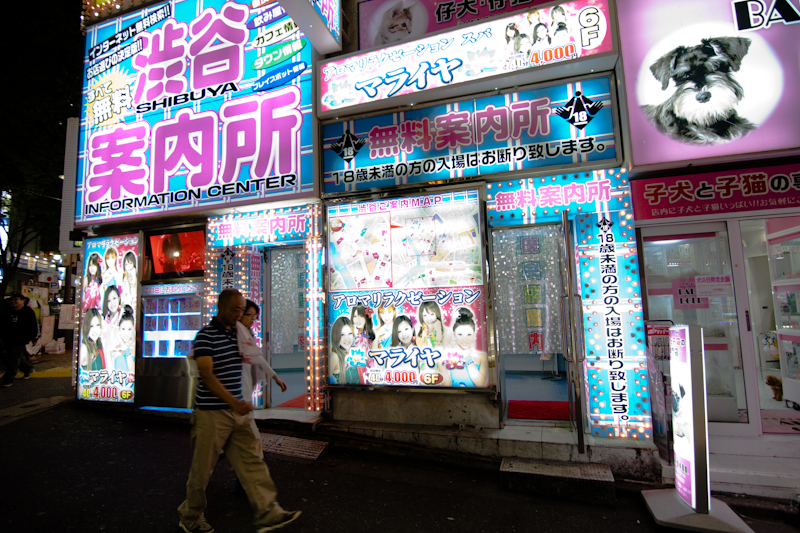
Fashion Health (ファッションヘルス): A massage parlour offering services short of intercourse, like manual stimulation, oral sex, and frottage. The “fashion health” industry, which is perfectly legal in most places, brings in approximately $8 billion. Fashion health establishments are the most common type, operating throughout Japan’s entertainment districts.
Pink Salon (ピンクサロン): Establishments specialising in oral sex, typically in a bar or club setting with curtains rather than private rooms. Pink salons avoid criminalisation under Japanese law by: serving food, often drinks; operating without showers or private rooms; and not providing vaginal sex. Cheaper than fashion health establishments; most do not accept foreign customers.
Image Club (イメージクラブ): A variation on fashion health where the establishment provides themed costumes and environments like nurse, schoolgirl, office worker, train carriage, etc. The same services are offered within a theatrical setting. These are the establishments that draw the most international commentary for their costume categories, some of which (schoolgirl uniforms) are the subject of serious child protection concerns.
Delivery Health (デリヘル): A call-out service where the client arranges via phone or app for a woman to be sent to their hotel room or apartment. Legal because no permanent establishment is maintained. One of the fastest-growing sectors.
Escort Bars / Deai-Kissa: Meeting places where clients pay for time with female companions without explicit sexual services. The precursor to the modern hostess club.
Kabukicho is Japan’s largest adult district with 5000+ establishments side-by-side. I got a first-hand observer’s experience of these places on a guided walking tour. Trust me, it was one of the best tours that I have ever taken- The Dark Side of Tokyo.
Part 3: Kyabakura and the Hostess World
Kyabakura (キャバクラ, from the English words “cabaret” + “club”) are a category of hostess bar that emerged in the 1980s and represent the most mainstream and visible layer of Japan adult entertainment for any first-time visitor to Tokyo or Osaka
The basic format: a male customer enters and is seated. A female host (called a kyabajo) is assigned to sit with him for the duration of his visit. She pours his drinks, engages him in conversation, laughs at his jokes, lights his cigarettes, and provides attentive, flattering company. The customer pays by the hour or the drink, and the kyabajo earns a percentage of the bill she generates plus tips.
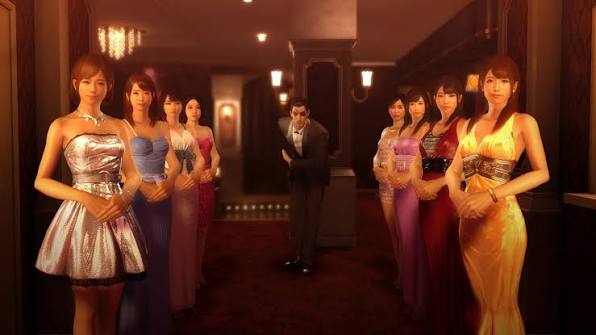
Hostess clubs and their more casual counterparts, kyabakura, offer companionship and conversation rather than explicit services, at least officially. The industry operates on a spectrum, from upscale clubs catering to wealthy businessmen to more casual venues targeting younger clientele.
Sex is officially not part of the transaction, the kyabakura environment is nominally a legal entertainment business. In practice, the spectrum of what happens outside the club (clients pursuing hosts for personal relationships) varies enormously.
The industry is large: Estimates suggest several hundred thousand women work as kyabajo across Japan. The earnings for top performers at premium establishments in Tokyo’s Kabukicho or Osaka’s Kitashinchi district can reach millions of yen per month. For this reason, kyabakura is a genuine career path that many young Japanese women enter voluntarily and strategically.
Osaka has its own night alleys and neighbourhoods, here is nightlife and street food tour in Osaka.
Omise (shops/premium hostess clubs): A step above kyabakura, exclusive, expensive, requires personal introduction. Prices start at ¥30,000-50,000 per sitting and rise without apparent ceiling for premium clients.
Part 4: Male Roles in Japan Adult Entertainment, Host Clubs and Beyond
Japan has a substantial and culturally visible male paid-entertainment industry that operates in parallel to the female one.
Host Clubs (ホストクラブ)
The male equivalent of kyabakura. A female customer (or occasionally male, at some establishments) enters and is attended by a male host are typically young, heavily styled, immaculately dressed. His job is identical to the kyabajo’s: pour drinks, provide flattering conversation, make the customer feel desired and special.
Tokyo’s Kabukicho district in Shinjuku contains the highest concentration of host clubs in Japan; hundreds of establishments on a few densely packed streets. Osaka’s entertainment district is second. The aesthetic is distinctively theatrical: hosts wear designer fashion, have elaborate hairstyles, and many achieve a kind of local celebrity with their faces on promotional banners, their names in lights.
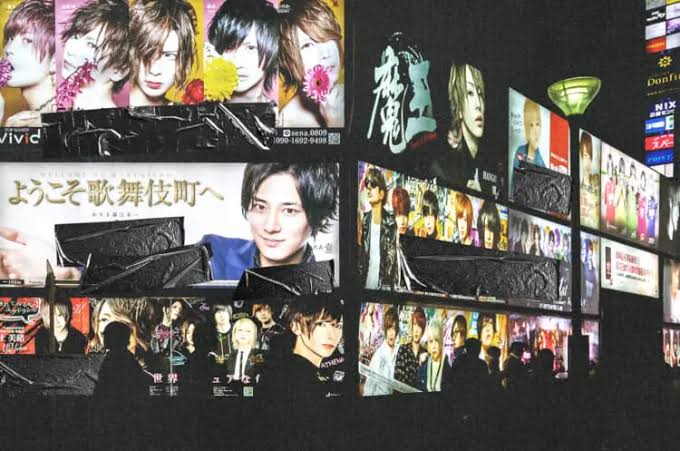
The economics are identical to hostess culture: customers pay by the hour and by drink, and hosts are ranked by the revenue they generate. Top hosts earn extraordinary incomes. The Legend hosts, i.e. the top earners have their rankings displayed publicly and attract a following of regular customers who form emotional attachments and spend enormous sums maintaining the relationship.
The host industry is not without documented harm: a subset of customers disproportionately young women, including some working in the sex industry themselves, develop compulsive spending relationships with specific hosts and incur catastrophic debt. Consumer advocacy organisations in Japan document this cycle regularly.
If you have come this far in the blog, do read my detailed guide on my guided walking experiences in these neighbourhoods.
Male Sex Work
Distinct from host clubs, Japan has an industry of men who provide direct sexual services to female, male, and non-binary clients.
Delivery health services for women: Some delivery health operators offer male escorts to female clients, though the market is much smaller than the female-facing equivalent.
Gay-specific services: The gay male sex industry in Japan operates primarily through apps (Grindr, 9monsters), through specific establishments in Shinjuku Ni-chome and Osaka’s Doyamacho, and through dedicated services. See LGBTQ+ Japan guide.
The cultural visibility of male sex work is lower than female, and it operates with less regulatory structure, but it exists and is documented.
Part 5: The Kawaii Debate- Innocent Aesthetic or Problematic Infrastructure?
This is the most nuanced section and requires careful framing. The relationship between kawaii culture and the sexualisation of minors is a genuine academic debate, not a settled question, and not a simple one.
What Kawaii Actually Is
Kawaii (可愛い, literally “can be loved” or “adorable”) is Japan’s culture of cuteness. It emerged as a mainstream phenomenon in the 1970s, rooted in girls’ subcultures that celebrated rounded, soft, childlike aesthetics, like big eyes, small mouths, pastel colours, infantilised fonts. By the 1980s it had become a national cultural export, embedded in Sanrio, Hello Kitty, character goods, fashion, and the self-presentation culture of Japanese women.
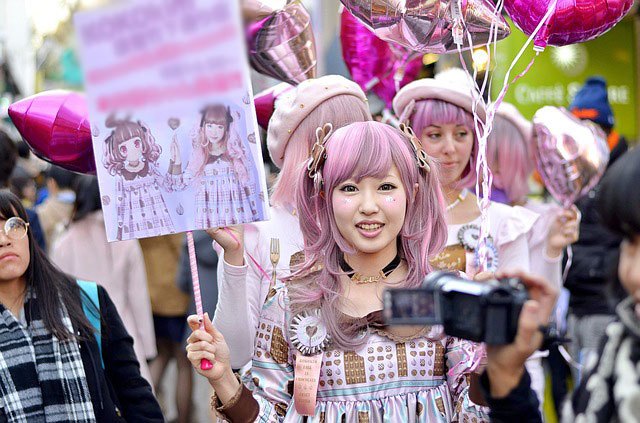
At its core, kawaii is a genuine aesthetic philosophy; an embrace of vulnerability, softness, and innocence as positive qualities. Scholars like Sharon Kinsella and Inuhiko Yomota have argued that kawaii represented a form of resistance by young Japanese women against the rigid social expectations placed on them: by performing childlikeness, they refused adult female roles centred on marriage and productivity.
This reading of kawaii as resistant, subversive, and ultimately empowering is well-supported and mainstream in Japanese cultural studies.
The Darker Layer: Erokawaii and Lolicon
The debate enters more complicated territory at the intersection of kawaii aesthetics and sexuality.
Erokawaii (erotic + kawaii) describes adult women performing a cute-and-sexy combination, typically applied to women in their late teens and twenties who combine childlike aesthetics with explicit or suggestive presentation. Many Japanese scholars argue this simply reflects a cultural definition of female attractiveness different from Western norms, not a paedophilic impulse.
A genuinely more serious concern is lolicon (ロリコン, short for “Lolita complex”), a subculture and form of manga/anime content in which drawn characters who are visibly underage are sexualised. Lolicon content is legal in Japan if it is drawn and does not involve real children. Child pornography involving real minors was prohibited from creation and distribution in 1999, and possession was criminalised only in 2015, later than most developed countries. The drawn content remains largely unregulated.
Lolicon is not kawaii. The distinction matters enormously. Most kawaii culture, the vast majority of it, has nothing to do with sexual content of any kind. The aesthetic of Hello Kitty, the fashion subcultures of Harajuku, the character goods sold at Sanrio; these are genuinely innocent.
But lolicon represents a documented subculture in which the kawaii aesthetic framework (childlike appearance, large eyes, small stature) is explicitly sexualised in drawn media. Lolicon is a sexual deviance but also a subculture that flourishes legally, mainly through underground comic books with explicit sexual depictions involving characters who are visibly underage. This tendency is marginal but such products are nevertheless easily accessible as many Akihabara shops sell them in their adult sections.
The academic concern raised by Sharon Kinsella, Anne Allison, and others is whether the broader cultural normalisation of infantilised female aesthetics creates a social environment in which the boundary between “cute” and “sexualised child” is insufficiently maintained. This is a serious argument that deserves engagement, not dismissal.
The counter-argument made by scholars like Patrick Galbraith is that lolicon content, being entirely drawn and fictional, functions as fantasy containment rather than real-world harm, and that conflating it with real-child abuse misunderstands both.
This debate has not been resolved. Japan continues to be an outlier in permitting drawn sexualisation of child-presenting characters, and it continues to be the subject of periodic international pressure to change this policy.
The distinction for Indian travellers encountering this in Japan:
If you visit Akihabara and enter one of the multi-floor anime/manga stores, the adult sections do contain lolicon-category content. This is legal in Japan, separated from general merchandise, and behind age verification at the counter. Understanding what it is and that it is a marginal subculture within, not representative of, Japanese culture is the correct frame.
Part 6: How Foreigners Are Affected
A few practical notes for travellers:
Most Japan adult entertainment establishments don’t accept foreigners. Soaplands, fashion health shops, pink salons, and most hostess clubs and host clubs operate with a Japanese-language-only clientele policy. Signs reading Nihonjin nomi (Japanese only) or Gaikokujin okotowari (foreigners refused) are common. This is driven partly by language logistics and partly by concerns about different social norms.
The risk for tourists who do engage: Travellers caught in a police operation on a soapland or similar establishment during a raid will be questioned, their passport information recorded, and they may appear on an immigration watchlist. Customers are rarely charged, but the risk is real.
JK culture and its concerns: JK (joshi kousei or high school girl) refers to a grey-zone industry where adult men pay for time with teenage girls (aged 16-18) for conversation, hand-holding, or walking together is defined carefully to avoid the age-of-consent law. The practice has been widely criticised; Tokyo and several other prefectures have banned establishments that facilitate it explicitly. Read more about Tokyo in my exclusive Tokyo neighbourhood Guide.
A Note on Ethics and Representation
The sex industry described in this post employs hundreds of thousands of Japanese women, some entirely voluntarily and strategically, some under significant economic pressure or outright coercion. Japan’s labour protections for sex workers are inadequate, and documentation of exploitation, debt bondage, and trafficking exists alongside documentation of agency and professional choice. The industry is not monolithic.
This post has presented the architecture of the industry factually. Whether parts of it represent exploitation requiring reform, or legitimate commercial adult entertainment reflecting genuine choices, is a question reasonable people disagree on and one that Japan’s own feminist and labour movements are actively engaged with.
Frequently Asked Questions
Q: Are geisha prostitutes? No. Geisha are professional entertainers trained in classical arts, music, dance, poetry, conversation. The confusion arose from geographic proximity with actual pleasure districts in the Edo period, and was deepened by post-WWII encounters between American soldiers and sex workers who used the word “geisha” loosely. A geisha’s professional role is artistic, not sexual.
Q: What is the difference between oiran and geisha? Oiran were licensed high-ranking courtesans in Japan’s government-sanctioned pleasure districts ; sex was part of their professional transaction, alongside artistic cultivation. Geisha were professional entertainers operating in separate entertainment districts, art was their transaction. The clearest visual marker: oiran tied their sash at the front; geisha at the back.
Q: Is prostitution legal in Japan? Vaginal intercourse in exchange for payment is illegal under the 1956 Prostitution Prevention Law. However, the law’s narrow definition has allowed a massive industry offering other sexual services to operate legally and openly. Soaplands, fashion health establishments, and pink salons all operate within technical legal compliance.
Q: What is kyabakura? A hostess bar (cabaret club) where female hosts provide flattering conversation, drink-pouring, and attentive company to male customers for hourly fees. Official services don’t include sexual contact. A mainstream entertainment format in Japan, employing hundreds of thousands of women.
Q: Is kawaii culture related to pedophilia? Mainstream kawaii culture, like Hello Kitty, Harajuku fashion, character goods is a genuine innocuous aesthetic celebrating softness and cuteness. It has no inherent connection to pedophilia. A separate and marginal subculture called lolicon, involving drawn sexualisation of child-presenting characters in manga and anime, does exist and has been the subject of legitimate academic concern and international criticism. The two are not the same thing.
Q: Do host clubs and kyabakura include sex? Officially, no, both are licensed entertainment businesses selling time and conversation. In practice, the degree to which relationships between clients and hosts extend beyond professional transactions varies, and neither industry is without documented harm to vulnerable participants.
Final Word
Japan adult entertainment is complex precisely because it is old. A society that built elaborate licensed pleasure districts alongside strict everyday modesty codes deserves a more honest framework than most travel writing provides. A society that built elaborate licensed pleasure districts alongside strict everyday modesty codes, that developed geisha as a sophisticated arts profession in direct proximity to high-end courtesans, that banned prostitution in 1956 while engineering legal frameworks that allowed essentially the same industry to continue under different names, this is a society with a sophisticated and morally complicated relationship with this subject.
Understanding it honestly requires neither condemnation nor romanticisation. The historical Oiran was a remarkable figure- educated, powerful within her constraints, culturally elevated and also a woman whose position was built on a transaction that, at the lowest rungs of her hierarchy, constituted exploitation of the most vulnerable women in Edo society. The geisha was, and is, a genuine artist whose work deserves respect and whose professional identity has been systematically misrepresented for 200 years by observers who could not distinguish proximity from equivalence.
The modern industry is legal, large, and complicated. The kawaii debate is real and serious but routinely overstated. The history is worth knowing.
For the full Japan trip context, read my main blog here.