 By Tarang Bansal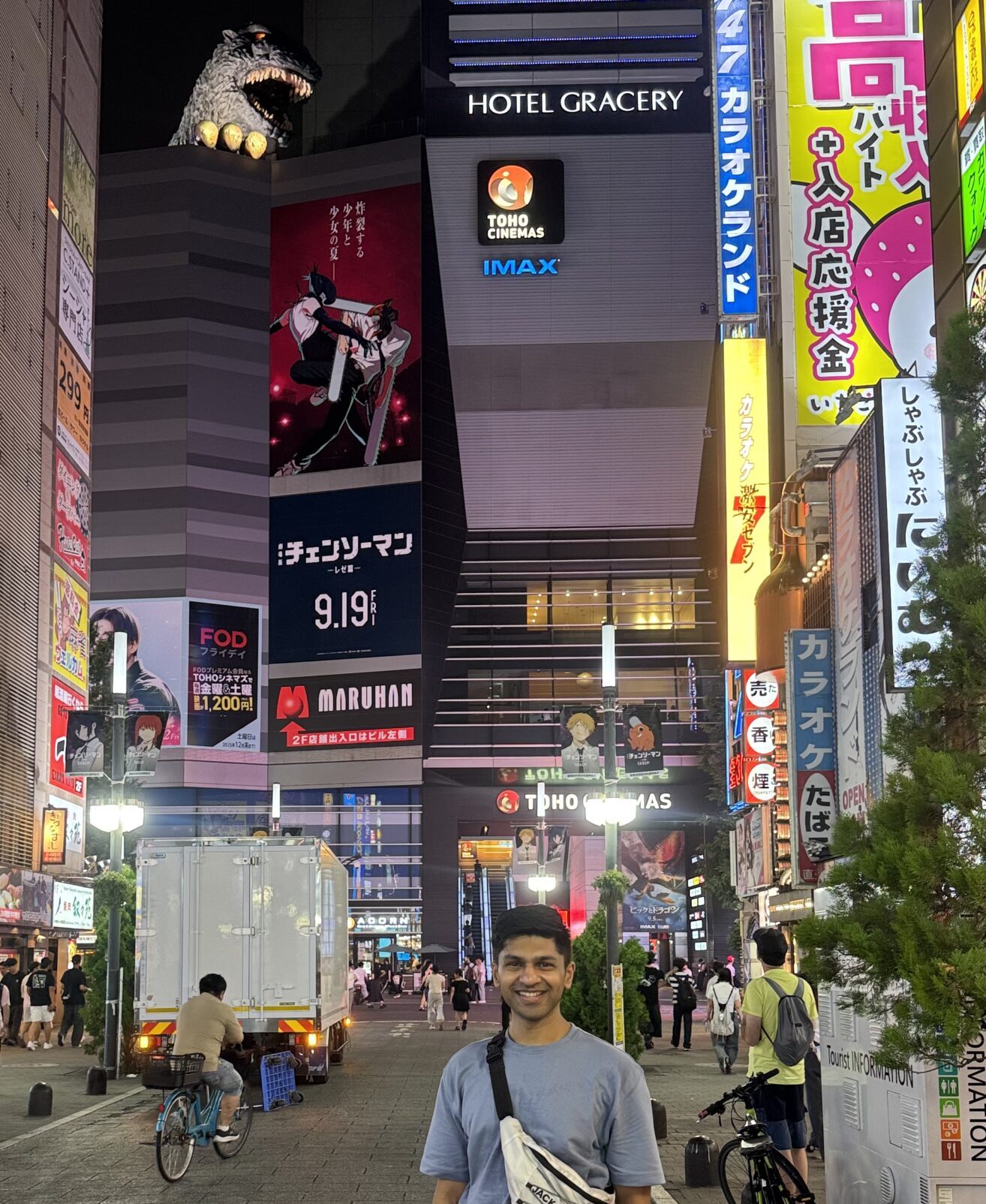

A first-person account of “The Dark Side of Tokyo” night walking tour through Shinjuku, Kabukicho, Golden Gai, and Tokyo’s LGBTQ+ district- the hidden social layers most tourists never see. What hostess bars, pachinko parlors, and neon-lit Buddhist temples reveal about Japan.
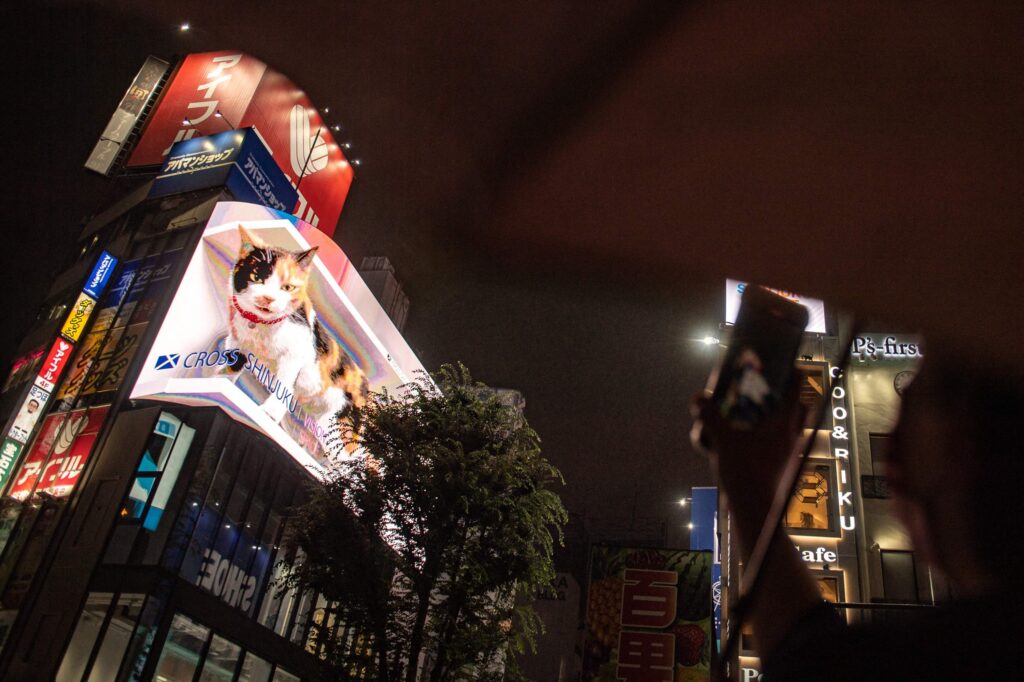
It was around 7:30 PM in Shinjuku. The neon had just kicked in. Salarymen were spilling out of office towers, schoolgirls in uniforms walked past pachinko parlours without a glance, and a giant 3D cat was meowing from a billboard above me.
I was standing outside the East Exit Police Box at Shinjuku Station, waiting for a guide I’d never met to take me into the parts of Tokyo that no Lonely Planet writes about.
Earlier that day, I had walked out of Tokyo DisneySea exhausted, frustrated, and ₹10,000 poorer for what I’d eventually rate the worst experience of my Japan trip. I had a few hours to kill before the night ended. On a hunch, I’d booked a Viator walking tour called “The Dark Side of Tokyo”– a 2-hour night walk through Shinjuku’s Kabukicho red-light district, Omoide Yokocho’s smoky alleys, the Golden Gai bar street, the Hanazono Shinto Shrine tucked in among the chaos, and Shinjuku 2-Chome, Tokyo’s small but visible LGBTQ+ neighbourhood.
By the time the tour ended around 10 PM, I had a completely different mental model of Tokyo than what 4 days of conventional sightseeing had given me. I rated it +4.5 on my -5 to +5 scale.
Trust me you are going to thank me for this. You don’t need to be a museum nerd to enjoy this, you just need to be someone who enjoys interesting stories. Here is the link to book the tour.
If you want the full Japan trip context, read my main 10-day Japan blog here. This post is a deep-dive into Shinjuku’s hidden layers, the Tokyo most tourists never see.
Why Most Tokyo Tours Miss the Real City
Most tourists “do Shinjuku” by taking a photo at the giant Godzilla head, eating ramen at Ichiran, and walking through Kabukicho during the day. They see signs they can’t read, glance into windows they don’t understand, and leave with a memory of “yeah, it was busy.”
Shinjuku’s actual character- Dark Side of Tokyo- the hostess clubs, host clubs, “comfort women” venues, Korean-style room salons, hidden gambling parlors, LGBTQ+ bars catering to specific client types, kawaii subculture’s intersection with adult entertainment, and the centuries-old Buddhist and Shinto temples sitting silently inside this neon ecosystem, which is invisible to anyone walking through without a guide.
This is what the Dark Side of Tokyo tour exists for. It’s a small-group walking tour (usually under 12 people, often around 4–7), led by guides who actually live in Tokyo and speak both English and the cultural fluency to explain what you’re walking past.
The Dark Side of Tokyo – Night Walking Tour Shinjuku Kabukicho on Viator
The Meeting Point: Already a Lesson
The tour starts at the East Exit Police Box of Shinjuku Station, which sounds simple until you realize Shinjuku Station is the busiest railway station in the world by passenger count- over 3.5 million people pass through daily. There are 53 platforms, 200+ exits, and a level of organized chaos that needs the IC card system to even function.
The “police box” itself is a tiny, prefabricated building barely the size of an Indian neighborhood medical store. You’d walk past it 10 times before noticing. One reviewer on the Viator listing wrote that he was looking for a phone box and couldn’t find it. I sympathize.
This is also where you first meet the giant 3D cat- a digital advertisement on a curved building above the station. Tokyo’s most famous landmark you’ve never heard of. If you can see the cat, you’re at the right meeting point.
Layer 1: Kabukicho is Tokyo’s Most Famous “Dark” District
Our guide led us first into Kabukicho, often called Tokyo’s red-light district, though that label undersells what it actually is.
Kabukicho is a maze of about 30 streets where roughly 5,000 bars, restaurants, hostess clubs, host clubs, massage parlors, “image clubs,” karaoke joints, gaming arcades, and adult businesses operate side-by-side with normal restaurants and convenience stores. It’s not seedy in the way Western red-light districts are- there’s no overt crime feel, no sex workers visible on the street, no aggressive solicitation.
What there is, instead, is systemic, regulated adult commerce hidden in plain sight.
Hostess Bars and the “Comfort Women” Industry
Our guide walked us past streets lined with bars where young women- often from smaller Japanese towns or other Asian countries- work as hostesses. The model: a man pays an entry fee plus drink charges to sit at a bar where a woman pours him drinks, talks with him, lights his cigarettes, and listens to his sorrows.
The framing is emotional companionship, not sex work. Many salarymen visit the same hostess weekly for years, building genuine emotional bonds. But the line is famously blurred. Some hostesses do enter paid intimate relationships with clients outside the bar. Some don’t. The system itself is ambiguous by design.
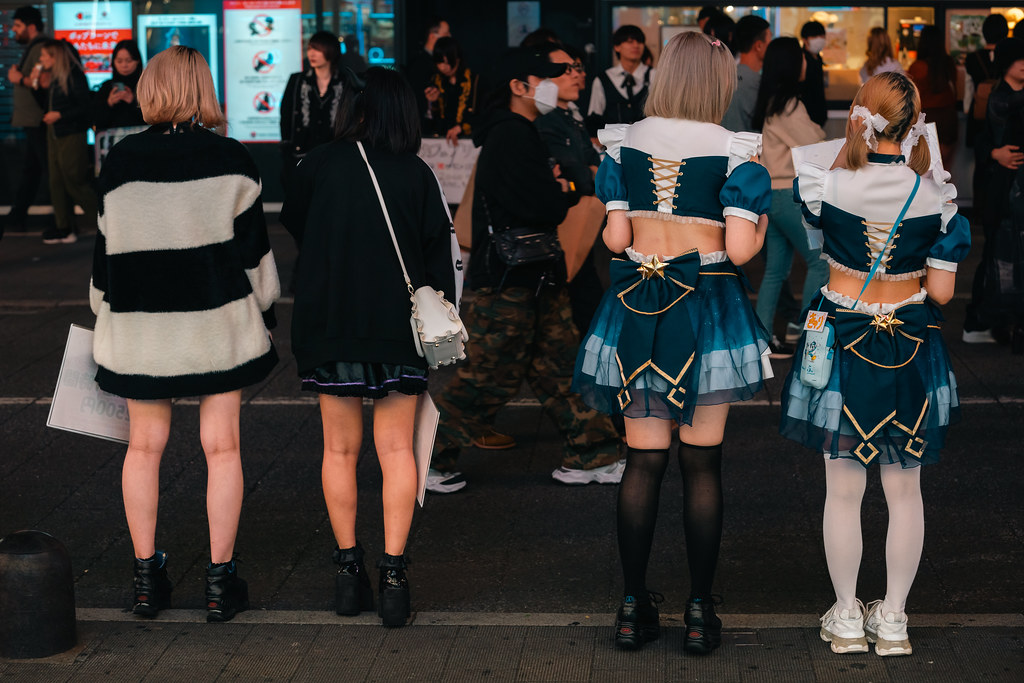
What made it uncomfortable to hear was the age component. Some hostesses are very young- Japan’s age of consent has historically been low, and while it was raised from 13 to 16 in 2023, the cultural patterns around “barely legal” hostess work persist. Our guide explained this without sensationalizing it, but also without pretending the ethical questions weren’t there.
I have written a whole separate blog explaining the pink economy around comfort women, men, geisha vs oiran here.
Host Clubs- The Reverse Industry
Then he walked us to a different street- the host club district, where the same model runs in reverse. Beautiful, often effeminate-styled young men work as hosts, and women (and some men) pay to spend evenings being charmed by them.
The economics are fascinating. Top hosts can earn millions of yen per month. The most desired hosts have their faces plastered on giant LED billboards on Kabukicho buildings- a kind of celebrity culture invisible to anyone outside this world. Female clients spend savings, take loans, and sometimes destroy their finances to keep their favourite hosts at the top of the rankings.
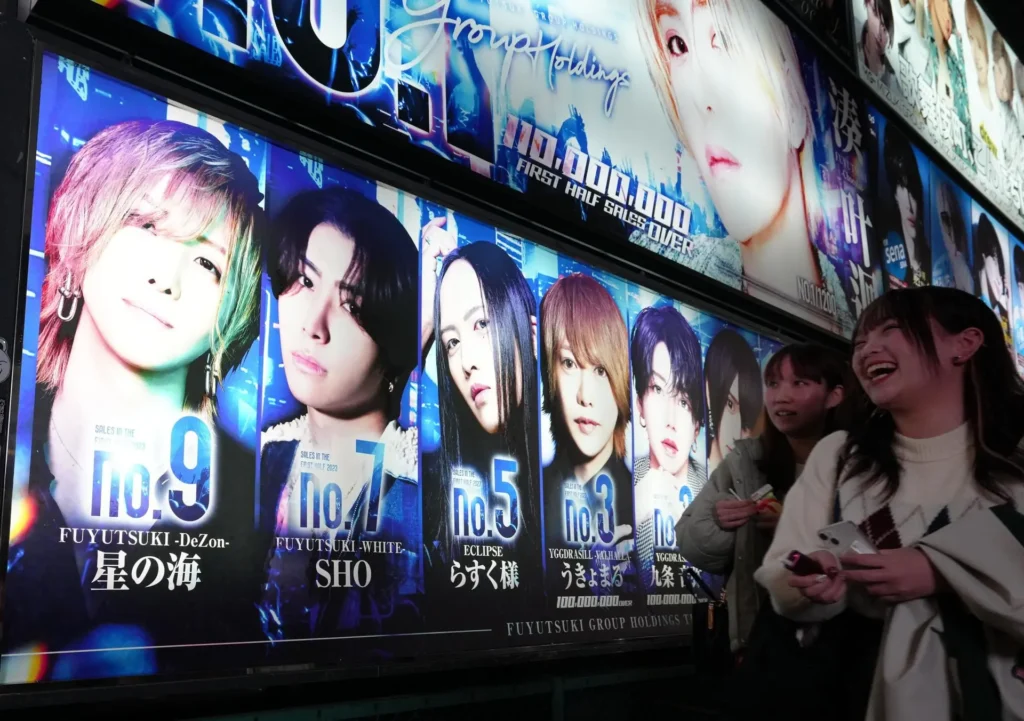
Our guide pointed at one billboard and casually mentioned: that host charges ₹50,000+ per evening of “champagne service.” There’s a queue.
The Yakuza Question
Kabukicho has historically been associated with the yakuza– Japan’s organized crime syndicates. While the yakuza presence has reduced significantly under Japan’s organized crime exclusion laws, much of Kabukicho’s adult industry still operates under yakuza-influenced ownership structures. Our guide pointed out specific buildings and streets where the influence is visible if you know what to look for. He was careful- this is a topic guides handle with discretion- but the layer is there.
Layer 2: The “Massage” and “Handjob” Parlours
Tokyo has strict laws against prostitution as legally defined. So the entire adult industry has evolved around technicalities.
Our guide showed us small storefronts marketed as “massage parlours,” “image clubs,” “soaplands,” and “delivery health” services- each operating under specific legal definitions that allow certain physical services but technically prohibit penetrative sex. The result is a vast adult entertainment industry that is legal, regulated, and often quite open, while still calling itself something other than prostitution.
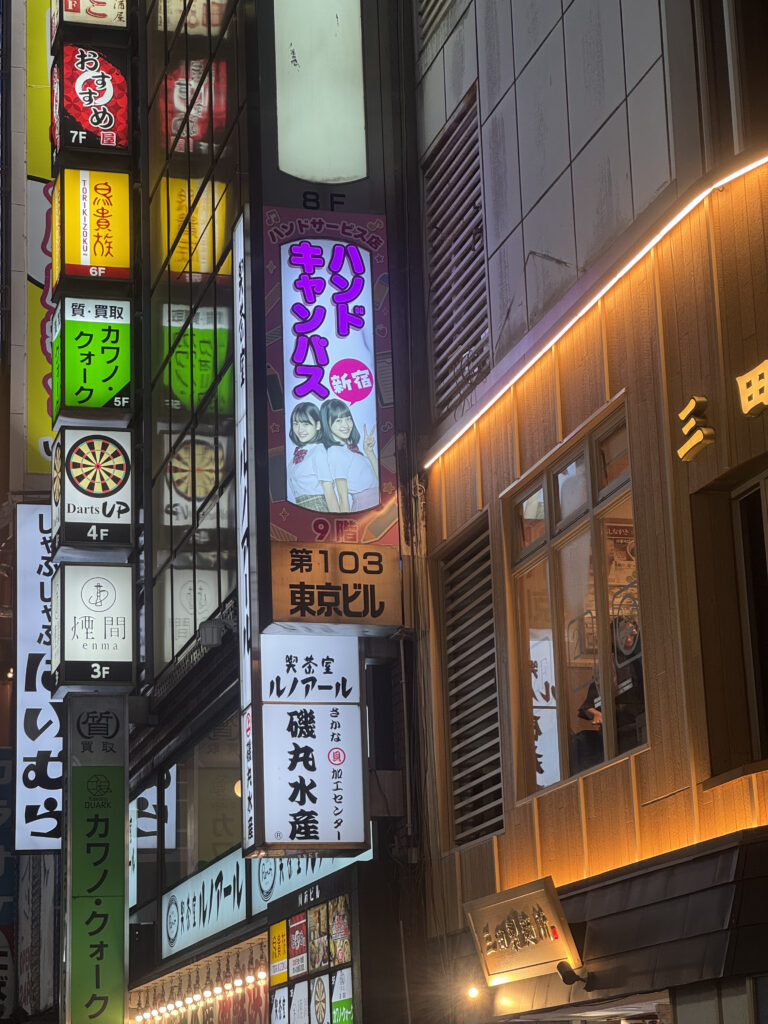
He pointed out a small entrance with a discreet logo. “Handjob parlour,” he said matter-of-factly. “Around ₹4,000 for 30 minutes. The girls are mostly Japanese, college students, working part-time.”
I am personally pro-prostitution if there is no angle of human trafficking or under-aged people involved. Poor people often do a lot of jobs which are tough and dangerous but making them legal improves safety & pay. So, why not do the same with prostitution? Well, my opinion doesn’t make it legal in Japan.
The whole tour kept producing this exact feeling: Japan’s surface and Japan’s underground sit a few feet apart, and most people walking through never realize.
Layer 3: Shinjuku 2-Chome- Tokyo’s LGBTQ+ District
A few blocks east of Kabukicho, the streets get quieter. The neon softens. The crowds thin out.
Welcome to Shinjuku 2-Chome– Tokyo’s small but historic LGBTQ+ neighbourhood, often called “Gay Town” by tour guides. By global standards (Castro in San Francisco, Soho in London, Chueca in Madrid), it’s a small district- maybe 4–5 blocks of bars, and clubs catering to the queer community. But in a country where queerness still operates largely underground, even this much visibility matters.
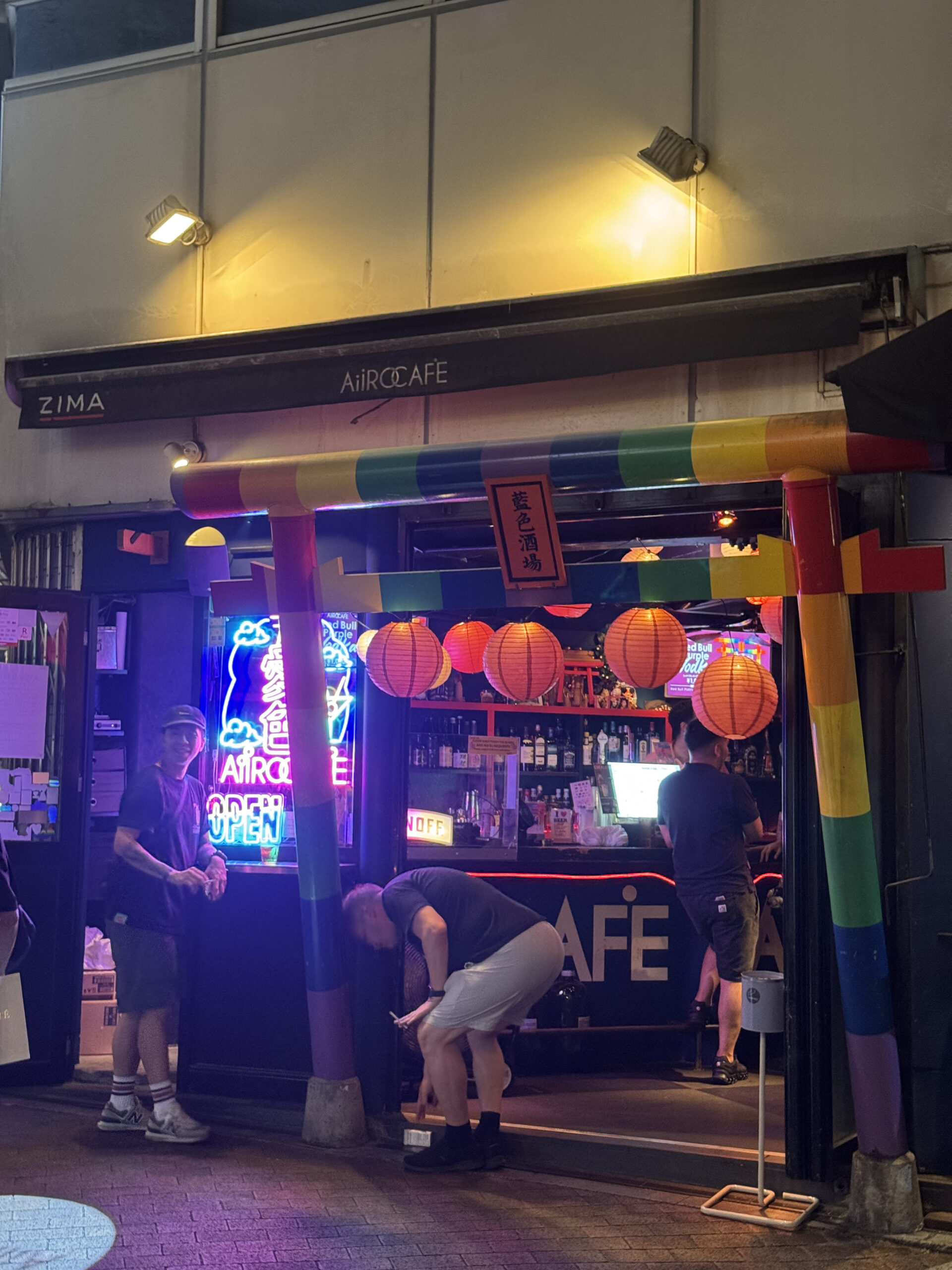
Our guide showed us:
- Bars catering specifically to gay men of different age preferences (younger, older, etc.)
- Bars catering to lesbian women
- Bars catering to trans communities
- A famous drag bar with weekend performances
The district was much smaller than I expected- you can walk through it in 10 minutes. But it’s important context. Japan’s society remains conservative on LGBTQ+ rights (same-sex marriage isn’t legal at the national level), and Shinjuku 2-Chome is one of the few public spaces where queer Japanese people can socialize openly. Tucked between the heterosexual hostess economy of Kabukicho and the salaryman bars of Golden Gai, it feels like a different country.
If you are interested in knowing/ exploring the small but vibrant LGBTQ spaces, read my complete blog.
Layer 4: Pachinko, Slot Machines, and Japan’s Legal Gambling Loophole
The next layer was the pachinko parlours– those neon-bright, deafeningly loud halls filled with rows of vertical pinball-style machines and slot machines.
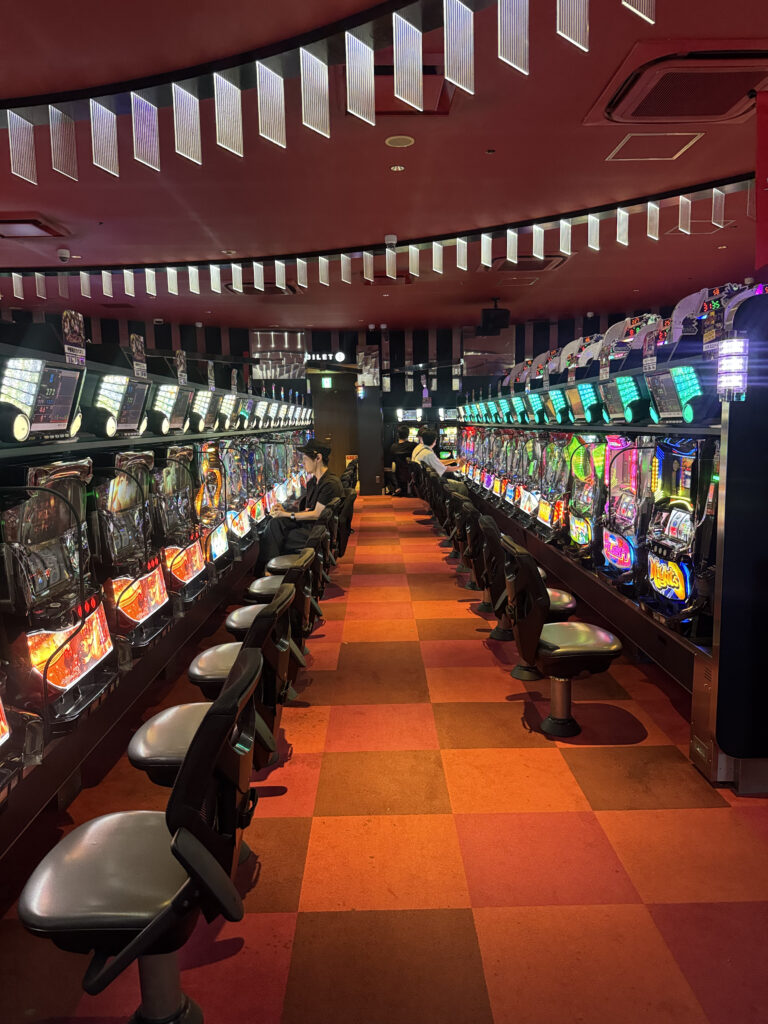
Gambling for cash is illegal in Japan. So pachinko parlours evolved a workaround:
- You insert money and play pachinko or slots.
- You earn metal balls or tokens based on how well you do.
- You exchange those for “prizes”- usually small gold or silver bars, or vouchers.
- You then walk out of the parlour, around the corner, into a completely separate (but conveniently located) “exchange shop” that buys those prizes from you for cash.
Two separate businesses. One transaction. The exchange shop has nothing to do with the pachinko parlour- legally. Practically, it’s the same operation. This loophole has built a multi-billion-dollar industry.
Pachinko culture is also deeply tied to Japan’s working class. Many older men spend hours in these parlours after work- partly for entertainment, partly out of loneliness, partly out of habit. It’s an industry that quietly absorbs an enormous amount of social isolation.
Layer 5: Hanazono Shrine- A Shinto Shrine in the Middle of Neon
Now here’s the part that broke my brain.
Right in the middle of all this- the hostess bars, the host clubs, the pachinko, the LGBTQ+ district, the Korean room salons- sits Hanazono Shrine, a centuries-old Shinto shrine. Quiet, candle-lit, with a wooden torii gate and stone foxes guarding its entrance.
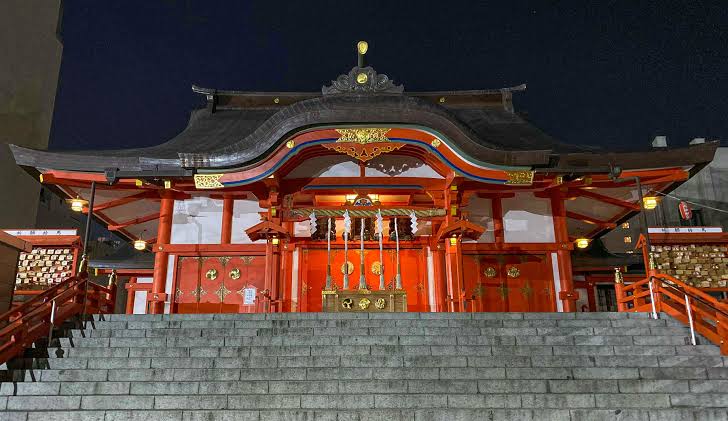
Our guide stopped here and explained something I’d never thought about before.
“All Japanese people are both Shinto and Buddhist,” he said. “Shinto is for the living- birth, marriage, daily life. Buddhism is for death and what comes after. Most Japanese never feel a contradiction between the two. They’re functions, not identities.”
“Watching salarymen walk out of a pachinko parlour, drop a ¥100 coin into the shrine’s offering box, clap twice, bow, pray, and walk straight into a hostess bar- this single sequence captured something about Japan I hadn’t understood until that moment. The sacred and the carnal don’t compete here. They coexist.”
Layer 6: Omoide Yokocho- Memory Lane
We then walked through Omoide Yokocho (“Memory Lane”), a tiny alley packed with maybe 60 small bars and yakitori stands, each big enough to seat 4–6 people. Smoke hung in the air from grills. Lanterns glowed orange. Every stool was full.
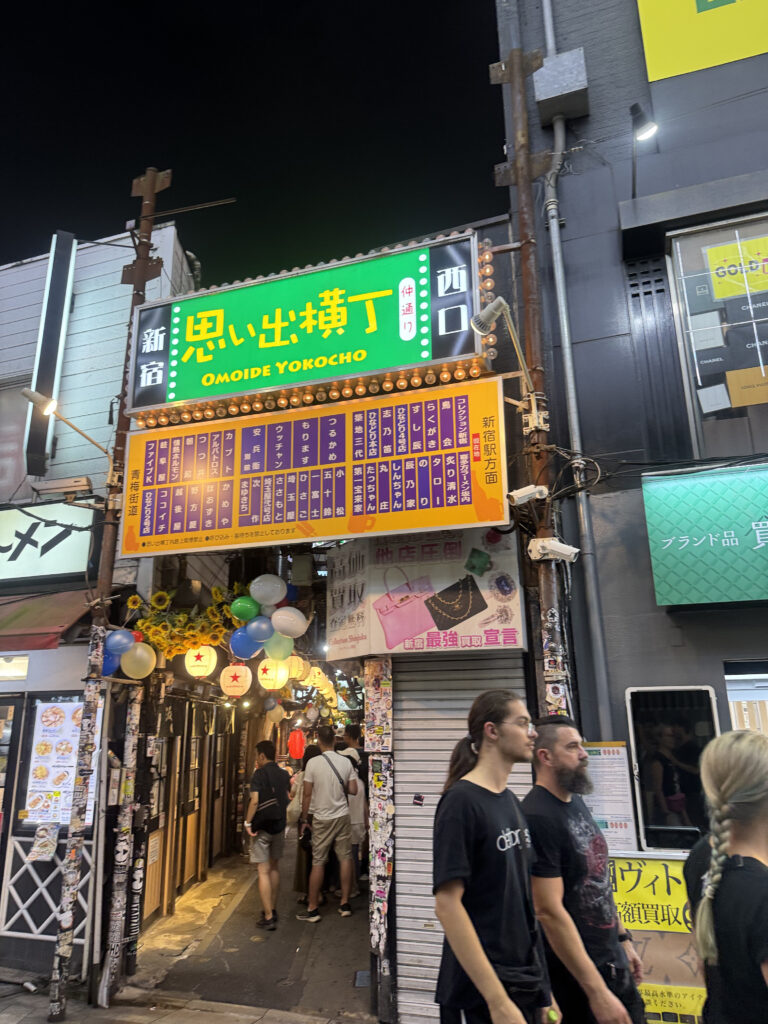
This is post-war Tokyo preserved in 50 square meters. The alley dates back to the 1940s, when it served black-market food in the years after WWII. Today, it’s been thoroughly rediscovered by tourists, but the soul is still there. Our guide pointed out specific stands that have been run by the same families for three generations.
If you want to drink in Shinjuku without any of the dark-side complexity, Omoide Yokocho is the simplest answer. Pick a stool. Order yakitori (note for vegetarians: most spots are heavily meat-focused). Drink Sapporo. Repeat.
Layer 7: Golden Gai is The Most Famous Bar Alley in the World
The tour’s final stop: Shinjuku Golden Gai.
Six narrow alleys. About 200 bars. Each bar fits 4–10 people. Each has a distinct theme- jazz, punk, ’80s anime, literature, vintage rock, drag, cinema.
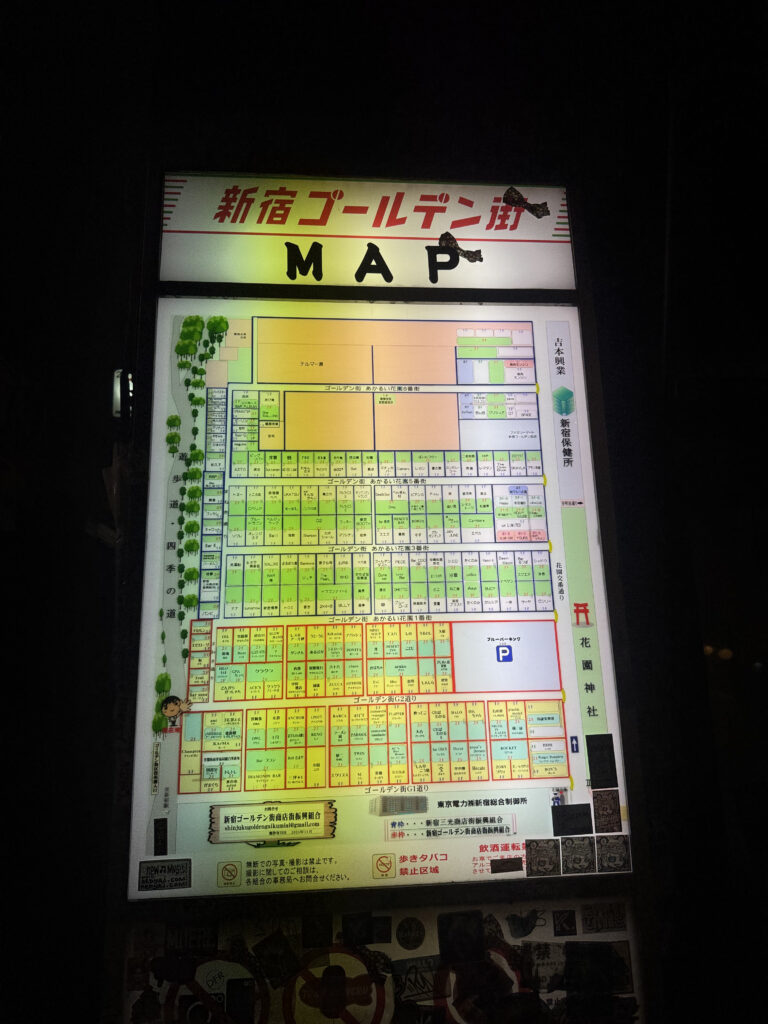
This is the most photographed bar district in Tokyo for good reason. Walking through Golden Gai feels like stepping out of modern Tokyo into a 1960s neon film set. The most famous bar, Albatross, is recognizable from a hundred Tokyo travel videos.
If whiskey is your thing, Japan is big on it. Check out this Premium Japanese Whiskey Experience.
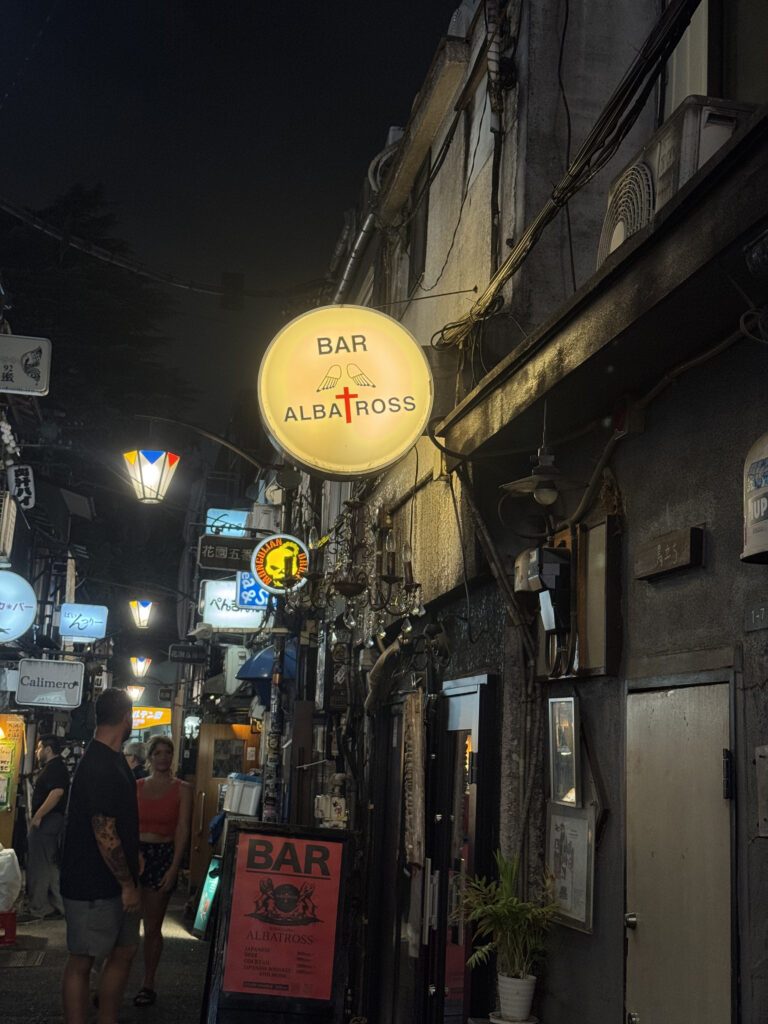
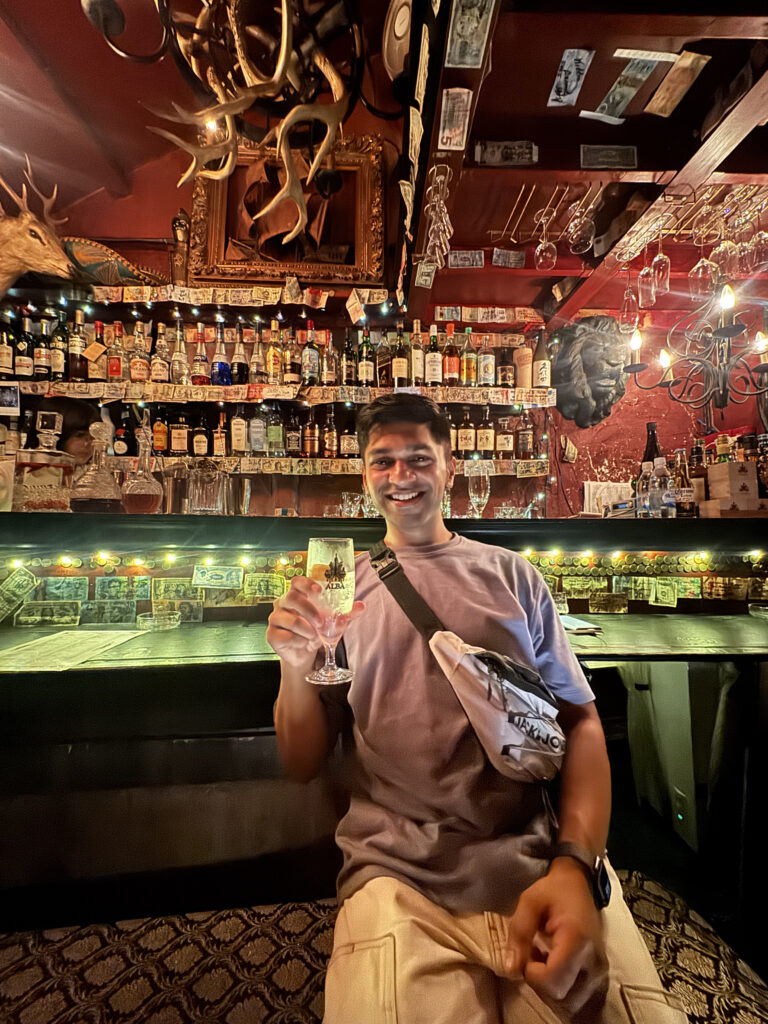
Our guide gave us a critical piece of advice that I’m passing on:
- Many Golden Gai bars have a cover charge of ¥500–¥1,000 per person (₹300–₹600).
- Some bars are locals-only and politely refuse foreign customers, especially those that don’t speak Japanese.
- Look for bars with English menus visible at the door if you don’t speak Japanese, these are tourist-friendly.
- Don’t walk in expecting an empty seat, most bars are full by 9 PM.
Golden Gai is the single most concentrated dose of “old Tokyo bar culture” you’ll get. Don’t skip it.
Layer 8: Godzilla Road and Kawaii Culture
Throughout the walk, we passed the iconic Godzilla Road, the street where a giant Godzilla head looms over a hotel-cinema building. It’s overrun by tourists with cameras, but it’s worth seeing once.
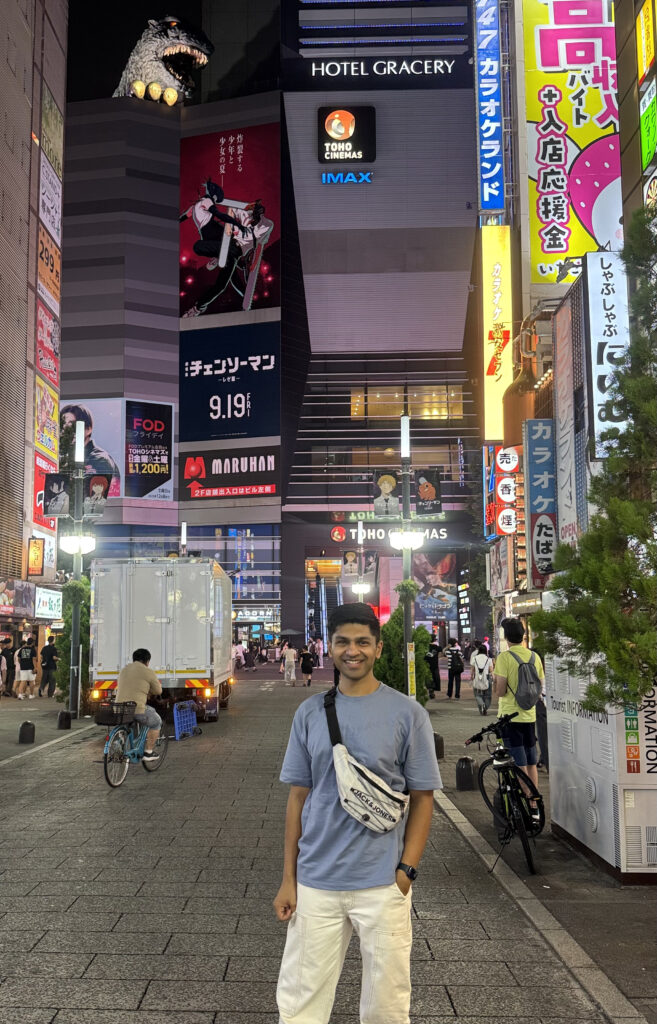
Our guide also unpacked the kawaii (“cute”) aesthetic that pervades Tokyo, like Hello Kitty, anime girls, “soft” effeminate male idols. He explained how kawaii intersects uncomfortably with the adult industry: certain hostess clubs and host clubs lean into childlike aesthetics, schoolgirl-style uniforms, and “cute” personas. Some of this is harmless cosplay culture. Some of it sits closer to ethically uncomfortable territory, like cute girls and cat-like aesthetics that, our guide hinted, can attract clientele with troubling preferences.
This was the most uncomfortable part of the tour, but it would have been dishonest to skip it. Tokyo’s kawaii culture is globally exported as harmless and adorable. The reality has more layers.
How to Book the Dark Side of Tokyo Tour
The tour I took was “The Dark Side of Tokyo – Night Walking Tour Shinjuku Kabukicho” on Viator. Here are the key details:
- Duration: ~2 hours (some guides extend to 2.5 hours)
- Group size: Maximum 12 people, often smaller (4–7 in my experience)
- Language: English
- Price: From around ₹2,000–₹2,500 per person
- Meeting point: Shinjuku Station East Exit Police Box
- End point: Around Shinjuku 3-Chome (be aware: the tour does not loop back to the meeting point, plan your return commute)
- Booking: Through Viator. Cancellation is free up to 24 hours before.
- Recommended booking lead time: Around 26 days in advance, per Viator data, but slots sometimes open last-minute.
The Dark Side of Tokyo – Night Walking Tour Shinjuku Kabukicho on Viator
The tour has 357+ reviews on Viator with a 4.8 average rating. Recurring praise for guides like Polina, Danny, Loc, Gray, and Dani- all locals or long-term Tokyo residents with deep cultural fluency. Common feedback themes: “wouldn’t have known this side of Tokyo without a guide,” “felt safe even in unfamiliar areas,” and “honest about the adult industry without being sensational.”
What to Wear, Bring, and Know Before You Go
A few pieces of practical advice:
1. Wear comfortable shoes. You’ll walk 4–5 km across 2 hours, often on uneven streets and through crowded alleys.
2. Bring cash. Many bars and shops in Kabukicho and Golden Gai are cash-only. ₹3,000–₹5,000 in yen on you is sensible.
3. Don’t go in summer. Like the rest of Tokyo, the heat and humidity from June to September make outdoor walking tours brutal. Spring and autumn are ideal.
4. The tour is not for kids. It openly discusses adult industries, prostitution, host/hostess clubs, and LGBTQ+ culture. Most operators recommend 18+ or accompanied teens with parental judgment.
5. Tip if your guide deserves it. Tipping isn’t standard in Japan, but Viator’s English-speaking guides often appreciate small tips at the end of a great tour. ¥1,000–¥2,000 is generous.
6. Plan dinner around it. The tour starts at 7:30 PM and ends around 10 PM. Eat a heavy snack before. Most guides drop hints about good restaurants and bars at the end of the tour.
If walking tours are your thing, let me share 3 more walking tours across different Tokyo neighbourhoods and 1 e-cycling tour.
1. Old Quarter of Tokyo- Yanaka Walking Tour
2. Tsukiji, Asakusa & Meiji-jingu- Tokyo Tour
3. Local Guide, Custom Stops & Hidden Gems
4. 3-Hour Bike/E-Bike Tour of the City’s Highlights
Frequently Asked Questions: The Dark Side of Tokyo Tour
Q: Is the Dark Side of Tokyo tour safe? Yes, very safe. Japan in general is one of the safest countries in the world. The tour goes into legal-but-discreet adult-industry zones, but at no point does it enter dangerous areas or interact directly with the businesses themselves. You’re observing, not participating.
Q: Is this tour suitable for women solo travelers? Yes. Many reviewers are solo women, and they consistently describe feeling safe. The guides are mindful, the group size is small, and Shinjuku- even Kabukicho- is generally safe for women at night by global standards.
Q: How much does the Dark Side of Tokyo tour cost? Around ₹2,000–₹2,500 per person ($25 starting price on Viator), depending on the day and operator. It’s one of the best-value experiences in Tokyo on a per-rupee basis.
Q: Do I need to speak Japanese? No, the tour is conducted entirely in English.
Q: Will the tour take me into hostess bars or adult businesses? No. The tour is observational. You walk past these establishments, learn about their structures, but don’t enter them.
Q: What’s the difference between Kabukicho and Golden Gai? Kabukicho is the broader red-light district covering 30+ streets- hostess bars, host clubs, pachinko, adult entertainment. Golden Gai is a tiny 6-alley bar district within Shinjuku- about 200 small themed bars. They’re adjacent but feel completely different.
Q: What’s the best time of year to take this tour? Spring (April-May) and autumn (October-November)- pleasant weather and the neon hits hardest at dusk. Summer is brutal due to humidity. Winter is fine if you bundle up.
Q: How does this tour compare to a regular Shinjuku tour? Standard Shinjuku tours focus on Godzilla Road, Tokyo Metropolitan Building views, and shopping. The Dark Side tour focuses on social structures- adult industry, LGBTQ+ history, gambling laws, religious coexistence. It’s deeper but less Instagram-y.
Final Word
I went on the Dark Side of Tokyo tour as a way to salvage a day that DisneySea had ruined. I came out of it feeling like I had finally seen Tokyo- the actual one, not the version curated for tourists.
What stayed with me wasn’t the shock value (though there was plenty). It was the reminder that every world city has these layers, and most travellers, including me usually, walk straight through them without ever noticing. We see what we’re shown. The Dark Side tour shows you what most guides hide.
If you’re going to Tokyo and you have one evening to spare, please- skip whatever generic dinner cruise or rooftop bar a chatbot recommended you. Take this walk instead. Also, if you want my Tokyo neighbourhood wise guide, click here.
If you like out of the box experiences, here is a list of Special 16 from Japan. For the full Japan trip, including how the rest of the trip stacked up, read my main blog here.
Drop a comment if you’ve taken this tour or want to ask about specific neighborhoods. And tag the friend you’d take to Golden Gai if you ever had the chance.