 By Tarang Bansal

This Japan family travel guide covers the six traveller categories that standard Japan guides completely ignore. Most Japan travel content assumes you’re a fit adult in your 20s or 30s, travelling with friends, and happy to spend 10 hours on your feet. Change one variable in that equation- add an infant, a senior parent, a wheelchair, a pregnant partner, or a dog, and the entire planning calculus changes.
Japan is, in many respects, exceptionally well-equipped for non-standard travellers. About 95% of Japan’s train stations are entirely accessible, with elevators, ramps, and tactile paving. The healthcare system is outstanding. The culture of public consideration is extraordinary. But Japan also has 1,600 temples with stone staircases, a walking culture that averages 20,000 steps per day for tourists, and a food culture where vegetarian and Indian palate options require specific planning.
This guide addresses each special travel category honestly: the real challenges, practical solutions, and specific tips that make the difference.
If you want the full Japan trip context, read my main 10-day Japan blog here. This Japan family travel guide addresses each special category honestly with real solutions and specific tips.
1. Infants: What This Japan Family Travel Guide Gets Right First
Japan’s Biggest Advantage for Infant Travellers
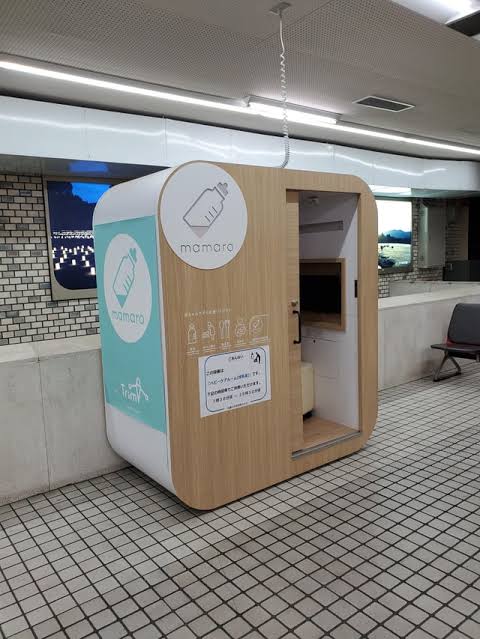
Japan is, surprisingly, one of the world’s most infant-friendly countries. Public nursing rooms (授乳室, junyū-shitsu) are standard infrastructure at every major train station, airport, department store, and shopping mall. They typically contain a private nursing chair, changing table, bottle warmer, and a small play mat. The quality is consistently excellent & far better than most countries’ equivalent facilities.
Konbini (convenience stores) stock nappies, formula, baby food, wet wipes, and baby products at all hours. A mid-night nappy emergency has a solution within 5 minutes in any Japanese city.
The Challenges
Walking: Japan’s tourist rhythm of 15,000-20,000 steps per day is, obviously, not for infants. You’ll be in a carrier or stroller the entire day. This means planning routes around elevator-accessible station exits.
Stroller logistics on trains: Japan’s trains accommodate strollers through designated spaces marked with wheelchair/stroller pictograms on platform floors indicating which carriages offer extra room for prams and luggage. Compact, foldable strollers work best as trains can become crowded during rush hours (7-9 AM, 5-7 PM) when parents may need to fold strollers to accommodate other passengers.
A lightweight compact stroller (Babyzen Yoyo or similar) is the correct tool for Japan. A bulky travel system will make every train journey stressful.
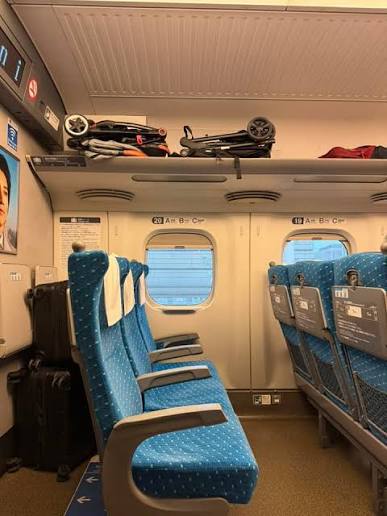
Station navigation: Elevators are available at most large stations but require finding them, even with Google Maps’ wheelchair accessible routing turned on, there were still moments of walking in circles trying to find the elevator. The fix: turn on wheelchair-accessible routing in Google Maps before your trip. It automatically routes you to elevator-equipped exits.
Rush hour: Avoid all train travel between 7-9 AM and 5-7 PM with an infant. Trains reach standing-room-only density where strollers become impossible.
Fares: Children under 6 ride free nationwide on all trains, subways, and buses when accompanied by paying adults, while ages 6-12 pay half the adult fare.
Practical Tips
- Bring your own breast pump if nursing; Japanese pharmacies have limited international-brand stock
- Carry a baby carrier as backup for crowded trains or staircase-heavy temple areas
- Konbini (7-Eleven, Lawson, FamilyMart) stock Morinaga and Meiji infant formula are reliable Japanese brands
- Baby food (BF series by Kewpie and Morinaga) is widely available but in Japanese-diet flavours (taro, kabocha pumpkin, bonito soup base), bring familiar food from India for the first few days
- Major ryokan accommodations can provide baby baths, cribs, and similar support, mention in your booking
- The Shinkansen has baby care rooms; request a family seat in advance
Recommended Cities/Pacing for Infants
Osaka and Tokyo are the most stroller-friendly (flat city terrain, excellent elevator coverage). Kyoto is manageable but has more cobblestone lanes that become stroller-unfriendly. Nara is excellent, is flat, no crowded trains needed. Avoid multi-day temple circuits with a young infant.
2. Toddlers (1-5 Years)
The Specific Challenge
Toddlers can walk but tire unpredictably, have zero appetite for temples, and will require entertainment every 45-60 minutes. The 20,000-step tourist day doesn’t work. You need a fundamentally different itinerary structure: shorter days, longer lunches, afternoon nap logistics, and the willingness to let a 30-minute duck-feeding session at a park be the day’s highlight.
What Japan Gets Right for Toddlers
Japan has a deep child-entertainment infrastructure with character culture, interactive museums, playgrounds of extraordinary quality, and an entire café ecosystem (petting zoos, cat cafés, rabbit cafés, aquariums) that toddlers find magical.
Best Japan experiences specifically for toddlers:
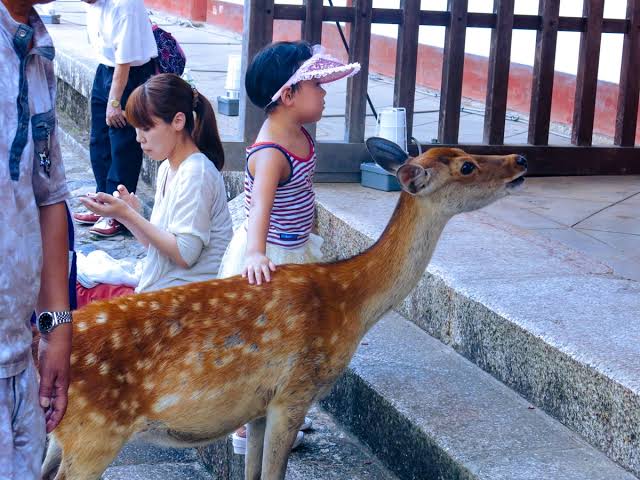
- Nara deer– feeding the bowing deer is perhaps the single best toddler activity in Japan. Flat, outdoor, interactive, cheap, and completely safe. See Nara deer guide.
- Kaiyukan Aquarium, Osaka is one of the world’s great aquariums; the whale shark viewing tank is a once-in-a-lifetime sight for children.
- Ueno Zoo, Tokyo is Japan’s oldest zoo; ¥600; pandas.
- Robot Restaurant-style entertainment has various themed experiences in Tokyo and Osaka.
- Konbini– toddlers universally love Japanese convenience stores.
- Theme Parks like the Ghibli Studio, Legoland, Universal Studios (Express Pass) or Disney Parks. Though, I don’t recommend the latter due to massive queues.
Toddlers love cycling around and in my opinion, adults should too. Here is a Nara E-bike Tour but do check for toddler bikes.
Practical Tips
- Bring a compact carrier. When legs give out, you’ll be carrying them. Plan accordingly.
- Eat early. Japanese restaurants often open for dinner at 5:30-6 PM. Arriving at opening avoids the 7 PM crush and gets you seated faster with a tired child.
- Build park days. Ueno Park, Shinjuku Gyoen, Maruyama Park (Kyoto), Osaka Castle Park, all have good grass and open space for running.
- Google Translate camera is essential for reading Japanese allergen labels on snacks. See Google Translate Guide.
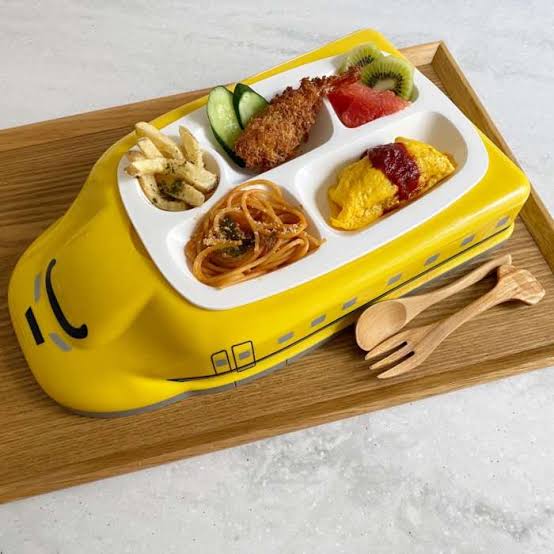
- Children’s happy meals aren’t universal, “okosama lunch” (kids’ set) is available at family restaurants (Gusto, Denny’s Japan, Royal Host), McDonald’s, and department-store restaurant floors.
- Pull-up nappies are widely available at pharmacies (yakkyoku) and konbini.
Itinerary Advice
Plan maximum 3-4 hours of active touring per morning, then an afternoon that allows downtime. A Japan trip with toddlers is not a temple marathon, it’s Tokyo’s teamLab Borderless, Nara’s deer, Osaka’s aquarium, and Kyoto’s Arashiyama Monkey Park. That’s a great trip for a 3-year-old. Plan around what they’ll remember, not what’s on the UNESCO list.
3. Senior Citizens
The Honest Challenge
This is the most nuanced section because “senior” covers an enormous range. A fit, adventurous 68-year-old will handle Japan completely differently from a 75-year-old with joint problems. Be realistic about your specific senior’s capacity before planning. Senior citizen travel is the most requested topic in any Japan family travel guide for Indians planning multigenerational trips.
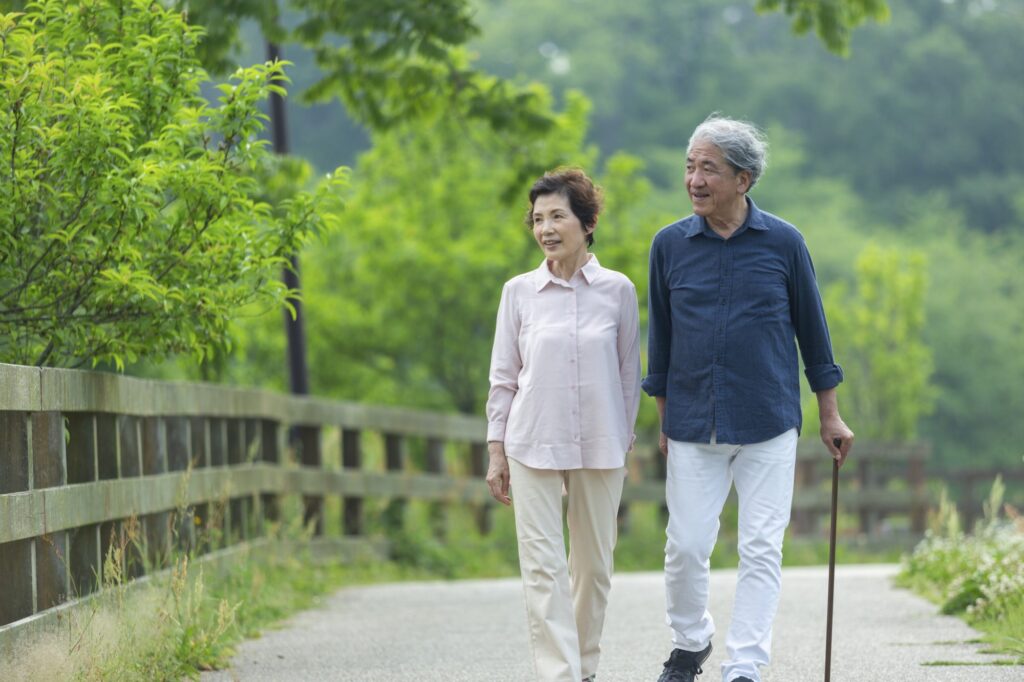
Japan’s tourist experience assumes 15,000-25,000 steps per day. Most major temples, like Kinkaku-ji, Kiyomizu-dera, Fushimi Inari, Ryoan-ji etc. involve significant walking, uneven stone paths, and staircases. This is manageable for most mobile seniors but requires pacing and honest itinerary building.
The Indian senior’s specific challenge: food.
This is the most consistently reported difficulty. Indian seniors travelling to Japan often have: strict vegetarian diets, taste preferences built around Indian spice profiles, and difficulty adapting to Japanese flavour profiles (dashi broth, raw fish, strong umami, noodle-heavy meals). A 70-year-old from Gujarat who is unfamiliar with soy sauce may find Japanese food unpalatable after 2-3 days.
Practical food strategy for Indian seniors:
- Ikebukuro, Tokyo has the highest concentration of Indian/Nepalese restaurants in Tokyo is a 15-minute metro ride from Shinjuku. See Tokyo neighbourhoods guide. Food planning is the single most important chapter of any Japan family travel guide for families traveling with older parents.
- Namba/Shinsaibashi, Osaka has multiple Indian restaurants within walking distance of the main tourist zone.
- Kyoto’s Kawaramachi area has Indian restaurants near the main tourist corridor.
- Carry these from India: Ready-to-eat dal/sabzi packets (MTR, ITC), dry snacks (mathri, chakli, chivda), pickle pouches, instant khichdi. Japanese customs allow sealed food items that are plant-based.
- Indian grocery stores exist in Tokyo– Delhi Bazaar (Edogawa), Asha Groceries (Nishi-Kasai), others in Shin-Okubo Korean-Indian zone.
- Rajasthani/Gujarati jain food: Very challenging to find. Bring from India.
Practical mobility strategy:
- Plan temple days as half-days maximum. Two major temples in a morning with a long lunch is the right pace.
- Hire a taxi for full-day explorations. Not a Shinkansen day, a day where you park near a temple cluster and move by taxi between sites. ¥20,000-30,000 for a full-day taxi is expensive but transforms the experience.
- Take the temple ropeway or paid lift where available. Kurama, Mt Tenjo (Kawaguchiko), Mt Hakodate- all have ropeway access to views that would otherwise require hiking.
- Prioritise accessible sites: Kyoto Imperial Palace (flat, beautiful), Nijo Castle (largely flat), Kinkaku-ji (flat approach), Nara Park (flat), Hiroshima Peace Memorial Park (completely flat). Leave Fushimi Inari, Kiyomizu-dera’s full circuit, and Arashiyama for the more mobile members of the group.
Japanese healthcare is excellent and well-organised if something goes wrong. Most large hospitals in Tokyo, Kyoto, and Osaka have English-speaking staff or translation services. Keep travel insurance active.
A note- Sagano Scenic Railway & Hozugawa River Boat are ideal for Seniors with limited mobility. The autumn colours or the cherry blossom, both are the sight to behold without the need to hike, queue up or even stand.
Shopping as an Engagement Activity
Many Indian seniors enjoy shopping more than temple-hopping. Japan’s department store basement food halls (depachika), Nishiki Market in Kyoto, Kuromon Ichiba in Osaka, and the neighbourhood shopping streets are low-walking, high-interest activities that work well at any mobility level.
4. Physically Challenged Individuals
Japan’s accessibility infrastructure is among the world’s best at the infrastructure level. This is the area where any Japan family travel guide with mobility-challenged members must be most specific.The state of accessibility in Japan has improved dramatically in recent decades with a push towards “barrier-free” facilities navigable by wheelchairs, non-step buses, multipurpose toilets and wide elevators with lowered buttons.
Wheelchair Users
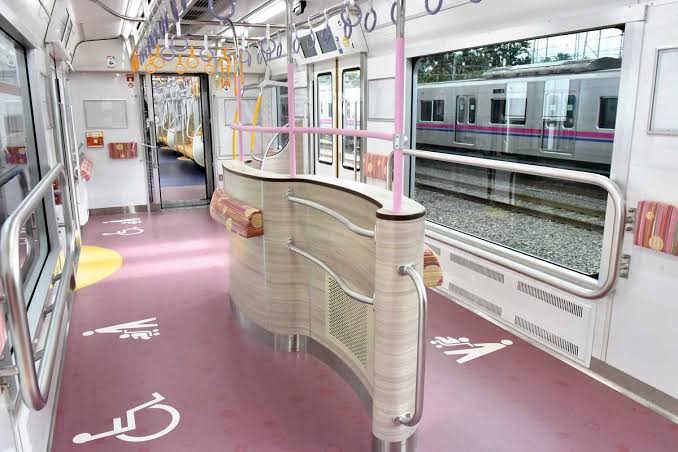
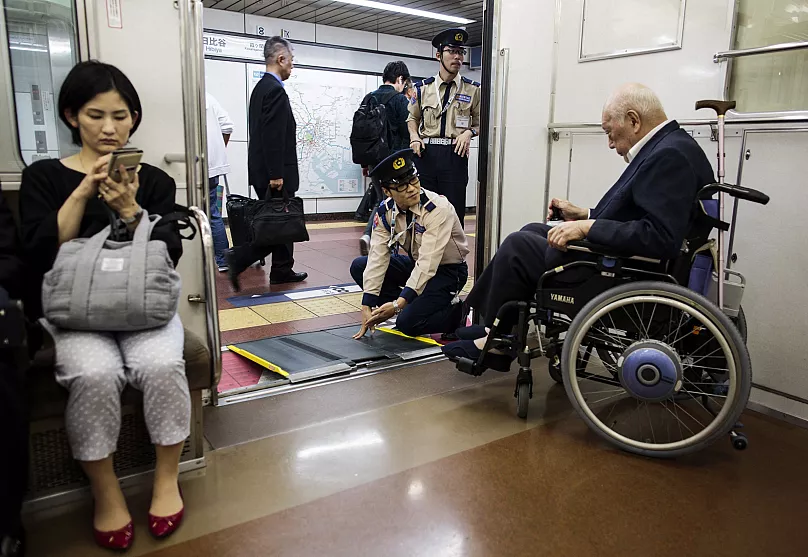
Most trains have at least one car with space for wheelchairs. When using trains, wheelchair users should approach the staff at the ticket gate. Station staff will guide passengers to the platform, help boarding and disembarking using ramps, and call ahead so that there will be staff waiting at transfer points and the destination.
When using long-distance and Shinkansen trains, it is highly recommended to make a seat reservation for a wheelchair-friendly seat in advance. Wheelchair dimensions for trains: maximum 120cm in length/height, 70cm width.
Practical tips for wheelchair users:
- Use Google Maps wheelchair-accessible routing. Toggle on “wheelchair accessible” in the route options, this automatically routes via elevator-equipped stations.
- Accessible Japan (accessible-japan.com) is the single best English-language resource for wheelchair users in Japan; has station-level accessibility data for thousands of stations.
- Most modern shopping malls, hotels, and major tourist sites are wheelchair accessible. Older temples, traditional restaurants, and rural sites may not be.
- Hire a wheelchair-accessible taxi (fukushi sharyō) in advance, not all taxis accommodate non-folding chairs. Book through accessible taxi services or through your hotel.
- Compact manual wheelchairs navigate Japan far more easily than large motorised chairs. If your wheelchair is oversized, consider hiring a compact local one.
The temple challenge: Many of Japan’s most famous sites involve staircases with no elevator alternative, Kiyomizu-dera’s approach, Fushimi Inari’s trails, Arashiyama’s bamboo grove. However, significant alternatives exist: Kinkaku-ji (Golden Pavilion) is almost entirely flat and wheelchair accessible. Nijo Castle has accessible paths through most of its grounds. Nara Park is flat and fully navigable. Hiroshima Peace Memorial Park is completely flat. Tokyo’s Ueno Park complex is largely accessible.
Did you know that you can actually rent wheelchairs for your stay duration with hotel pick-up and drop services as well.
Visually Impaired Travellers
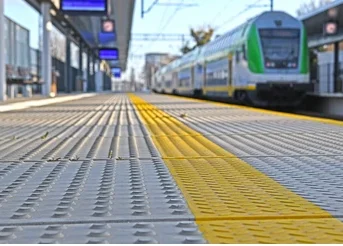
For anybody with a visual impairment, raised yellow tiles indicate safe walking paths. Japan’s tactile paving system (tenji blocks) is the global standard, yellow bumpy tiles on station platforms, yellow directional strips on pavements, audible signals at pedestrian crossings. The coverage is comprehensive throughout major cities.
Practical notes:
- Audio guides are available at major museums (Hiroshima Peace Memorial, Tokyo National Museum, teamLab) in English
- Station announcements are in Japanese and English at major Shinkansen stations
- Sighted companion guidance works seamlessly in Japan, staff are trained to assist
Hearing Impaired/Deaf Travellers
Japan is, in some ways, ideal for deaf travellers. Train information is almost entirely visual, digital displays on all trains and platforms show station names, next stops, and service information in English at major stations. Payment is contactless (IC card). Menu ordering at many restaurants uses visual menus or ticket machines. The Japanese cultural norm of minimal verbal interaction with strangers reduces hearing-related friction significantly.
Practical notes:
- JR East and major metro lines have visual alert systems for emergencies
- Most museums have written materials; some have JSL (Japanese Sign Language) interpretation for specific events
- VRS (Video Relay Service) interpretation apps (like hand sign interpretation apps) are not widely standardised in Japan, carry a translation app as backup
Mobility Impaired (Stairs/Walking Difficulty)
Addressed in part in the wheelchair section. The key additions:
- Walking sticks and crutches are completely acceptable in all tourist areas
- Seating is often insufficient at Japanese tourist sites, carry a small folding camp stool for long queues at temples
- Non-slip footwear is essential, many temple paths are smooth stone that becomes extremely slippery in rain
- Shoe removal at temples and traditional restaurants requires flexibility in footwear choice, slip-on shoes are significantly more practical than lace-ups
Mute or Non-Verbal Travellers
Japan is exceptionally accommodating here. The majority of commercial transactions in Japan require zero speech, IC card tap, QR code ordering, ticket machine, visual menu pointing. The cultural comfort with non-verbal communication (bowing, pointing, nodding) makes Japan far less communicatively demanding than English-speaking countries.
Carry a pre-written communication card with key phrases in Japanese covering dietary needs, medical information, and basic navigation requests. Google Translate camera handles most reading independently.
5. Pregnant Women: The Japan Travel Family Guide Section Most Sites Skip
Japan’s System: The Maternity Mark
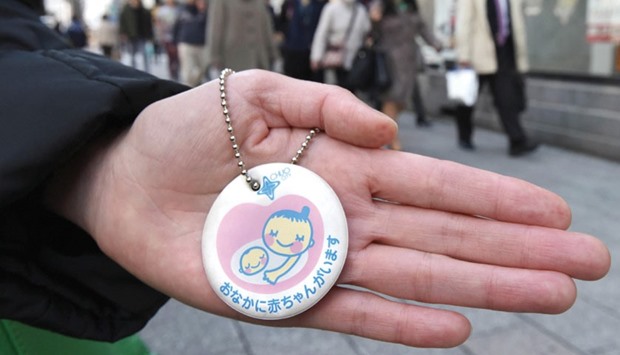
Japan has a thoughtful, nationally standardised system for pregnant women in public transport: the maternity mark (マタニティマーク), a small pink badge with a pregnant figure icon. Available free from train station staff or city hall. When clipped to a bag, it signals to other passengers that priority seating is appropriate. JR East’s priority seating policy gives priority to the elderly, people with disabilities, people with children, and pregnant women, who often carry a special maternity icon.
Collect one from the station staff on Day 1- Japanese commuters understand it immediately.
Medical Care
Japan’s obstetric medical system is world-class. However:
- Travel insurance must cover pregnancy– most standard travel insurance excludes pregnancy-related claims after 28-32 weeks (varies by policy). Verify before flying.
- Most travel insurers and airlines recommend flying before 36 weeks for domestic flights, 32 weeks for long-haul international flights. Confirm with your airline and doctor.
- Hospitals in Tokyo, Osaka, and Kyoto with English-speaking obstetric services: St Luke’s International Hospital (Tokyo), Osaka University Hospital, Kyoto University Hospital.
Practical Considerations
Walking: Japan’s daily step count (15,000-25,000 for tourists) is substantial. In the second trimester with no complications, most of this is manageable with regular breaks. In the third trimester, reduce the target significantly, plan no more than 3-4 hours of active touring per day.
Food:
- Raw fish (sashimi, sushi) is generally avoided during pregnancy. Japan’s food culture is heavily raw-fish-oriented, but alternatives (cooked dishes, ramen, soba, vegetarian options) are abundant. See vegetarian Japan guide for ordering strategies.
- Caffeine: Japanese matcha has significant caffeine content. Monitor intake.
The Onsen Question: Traditional wisdom and most Japanese medical guidance advises pregnant women to avoid hot onsen (above 38°C raises core body temperature). Many onsen facilities will ask women not to enter if visibly pregnant. Footbath (足湯, ashiyu)- shin-deep warm water, widely available at onsen towns, is safe and a pleasant compromise. See onsen guide.
Summer heat (July-August): Japan’s summer heat and humidity are genuinely dangerous for pregnant women in the third trimester. See Japan August warning. If travel is necessary in summer, plan indoor-heavy days, carry water constantly, and use taxis more than walking.
Seat on trains: Pregnancy is covered by the priority seating policy. Use the maternity mark. Don’t hesitate to ask for a seat; Japanese commuters will give it immediately when they see the badge.
Ryokan stays: Many traditional ryokan are very pregnancy-appropriate, futon on the floor (warm, low-pressure), multi-course meals served in-room, quiet atmosphere, and access to private onsen baths where temperature can be controlled.
6. Pets- Dogs and Cats
The Honest Warning: Don’t Bring Your Pet to Japan on a Holiday Trip
This is the clearest advice in this entire post: bringing your dog or cat on a Japan holiday trip is not practical for most Indian travellers. Here’s why:
The quarantine requirement is severe:
Your dog or cat must have two rabies vaccinations, a rabies antibody titre test at an approved lab, and then wait at least 180 days between the blood draw and arrival in Japan. If you arrive earlier, your pet will complete the remaining days in quarantine in Japan at your expense.
The full timeline requires 7-9 months of advance planning minimum. For a holiday trip, this is functionally impossible unless you begin the process before even deciding to travel to Japan.
Pets must be microchipped for entry into Japan. If your pet has a non-ISO microchip, you must bring a microchip scanner that can read it.
Japan Airlines does not allow pets in the cabin on international flights. Whether you have a tiny kitten or a lap-sized dog, they must travel as checked baggage in the climate-controlled cargo hold or via JAL Cargo.
If all requirements are perfectly met, most pets clear quarantine in approximately 12 hours. If anything is missing: quarantine can be up to 180 days in Japan at your cost.
If You’re Relocating to Japan (Not a Holiday)
For those genuinely moving to Japan with a pet, the process is manageable with 7-9 months of preparation:
- ISO-compliant microchip implanted before any vaccination
- Two rabies vaccinations given no more than 31 days apart and within the effective period of the previous shot
- Rabies antibody titre test at a MAFF-approved laboratory after both vaccinations
- Wait 180 days after the blood draw date, this is the long pole in the tent
- Advance notification to Japan’s Animal Quarantine Service (AQS) at least 40 days before arrival
- Health certificate from a government-accredited vet within 10 days of departure
- Arrive during AQS office hours (Mon-Fri, 8 AM-5 PM) at your port of entry to minimise processing
Once in Japan with your pet: Dog owners are expected to pick up poop every time and rinse away urine with water. Annual rabies vaccination is required (fines can be up to ¥200,000 if your pet does not get their annual rabies vaccine). Dogs must wear their licence tag and rabies tag on their collar in public.
What to Do If You Encounter Japan’s Pet Culture as a Visitor
If you want animal experiences in Japan without bringing your own pet:
- Cat cafés: throughout Tokyo, Kyoto, and Osaka; 30-60 minutes with well-cared-for cats for ¥1,000-1,500 + drinks
- Shiba Inu cafés and dog cafés: in Harajuku, Shibuya, and other major areas
- Rabbit and hedgehog cafés: various Tokyo locations
- Owl cafés: popular but ethically mixed reviews; research individual venues
- Nara’s deer: the best free animal experience in Japan. No café required. See Nara deer guide.
- Jigokudani Snow Monkeys: wild monkeys in their own natural onsen. See my Japanese Alps guide (though this is in Nagano, covered in the skiing section).
Japan’s pet culture is extraordinary, beautiful pet supplies, dedicated pet-friendly cafés and parks, a serious domestic dog-walking culture, but it is designed for resident pets, not visiting ones.
The One Universal Challenge: Luggage Forwarding
For all special travellers, seniors, parents with infants, wheelchair users; Japan’s luggage forwarding service (Yamato Transport, Sagawa) is the single most useful logistical tool. Every Japan family travel guide should lead with this tip because it transforms difficult journeys into manageable ones.
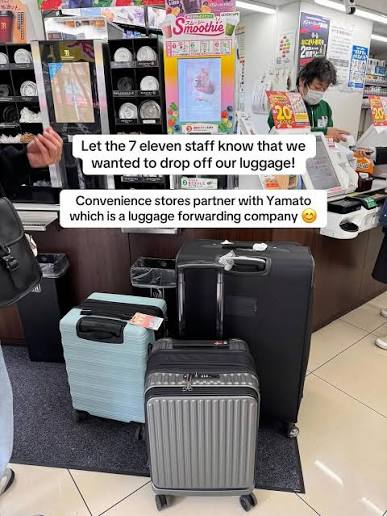
Drop your suitcases at any 7-Eleven before 11 AM; they arrive at your next hotel the same day or next morning. Cost: ¥1,500-2,500 per bag. This transforms a difficult train journey with a stroller, a wheelchair, and two suitcases into a manageable one. Every member of every group described in this post benefits from this service.
Quick Reference: Japan’s Universal Accessibility Assets
| Feature | Usefulness |
|---|---|
| Nursing/changing rooms | In every major station, mall, department store |
| Priority seating | All trains; covers elderly, disabled, pregnant, families |
| Maternity mark (free from station staff) | Signals priority seating need on trains |
| Tactile paving | Nationwide on platforms and pavements |
| Google Maps wheelchair routing | Routes via elevator-equipped stations |
| Luggage forwarding (konbini dropoff) | Ships bags station-to-station same day |
| Station staff assistance | Universal; trained for wheelchair, stroller, and language support |
| Children under 6 | Free on all trains and buses |
| 95% station elevator coverage | Most major and many minor stations |
| Konbini baby products | Nappies, formula, food at all hours |
*Travelling with most of these sets of people will need taxi/ cab/ pre-booked bus services, esp from airports for transfers with luggage. You can pre-book your airport transfers from Kansai, Narita and Haneda airports for convenience & savings.
Frequently Asked Questions
Q: Is Japan good for families with young children? Yes, exceptionally so. Nursing rooms, stroller-accessible trains, children-free transport, and an enormous range of child-targeted experiences make Japan one of the world’s most family-considerate travel destinations once you understand the infrastructure.
Q: Can elderly Indian tourists manage Japan? Yes, with planning. The key adjustments: shorter daily distances, taxi use for multi-temple days, and deliberate sourcing of Indian food. Carry MTR/ITC ready-to-eat packets as backup. Build rest time into every day. Avoid the hottest months (July-August).
Q: Is Japan wheelchair accessible? Substantially yes for major cities and tourist sites. 95% of train stations have elevators. Modern buildings are fully accessible. Older temples and rural areas have limitations. Use accessible-japan.com and Google Maps wheelchair routing for pre-trip planning.
Q: Can I bring my pet dog or cat to Japan on holiday? Practically, no, the quarantine process requires 7-9 months of preparation and the pet travels in cargo, not cabin. For holidays, leave your pet at home. The regulations are among the strictest in the world.
Q: Can pregnant women visit Japan? Yes, with sensible precautions. Avoid raw fish, limit onsen to footbaths, use the free maternity mark for priority seating, stay cool in summer, and have comprehensive travel insurance covering pregnancy. Confirm your airline’s cut-off weeks for pregnancy travel.
Q: Is the maternity mark actually useful? Very. Japanese commuters understand and respect it immediately. Request one free from station staff on arrival.
Q: Which Japanese cities are best for travellers with mobility limitations? Tokyo and Osaka for infrastructure and flat terrain. Hiroshima for Peace Memorial Park (completely flat). Nara for its deer park (entirely flat). Kyoto requires more care- cobblestone streets, steep temple approaches but accessible alternatives exist for most major sites.
Final Word
Japan is not the easiest destination in any Japan travel guide for Indian families stepping outside the standard tourist profile. But it rewards the effort of planning genuinely.
The country’s cultural instinct towards care, for the elderly, for children, for people in difficulty, is more developed than almost anywhere else in the world. Station staff will personally escort a wheelchair user across the platform. A stranger will help carry a stroller up stairs before being asked. Priority seating is actually used for its intended purpose. The infrastructure, where it exists, is impeccably maintained.
What Japan requires is preparation, not strength. Know your group’s specific needs, plan the right itinerary for that reality, carry the right supplies, and use the services that exist. The country does the rest.
For the full Japan trip experience, read my main blog here.
Drop a comment with the category that applies to your group and any specific question that this guide didn’t answer, I’ll do my best to respond.