 By Tarang Bansal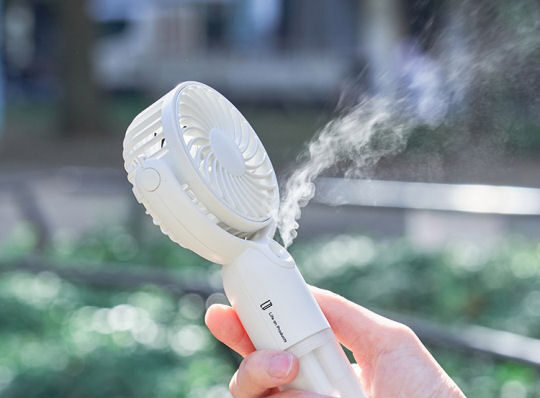

This is the honest, ranked answer to the best time to visit Japan, built from a trip I would not repeat in the same month.
I went to Japan in August and would not go again even for free. 36°C, brutal humidity, 20,000 steps a day with no escape. Here’s exactly why summer in Japan is harder than summer in India, and the months you should book instead.
I want to start with the strongest version of this advice, because softer versions clearly aren’t working.
I would not go to Japan in August again. Not even for free. Not even with a free hotel. Not even with a free Shinkansen pass thrown in.
This is coming from someone who genuinely loved Japan. Rated the place in the top 5 of my life. Considers it one of the most well-functioning countries on the planet. And still, would never repeat the August timing. The heat, the humidity, and the way they interact with how you’re forced to actually experience Japan as a tourist made for the only meaningful disappointment in an otherwise excellent ten days.
This post is for the version of you who’s about to book a Japan trip in August because flights are cheaper, school holidays line up, or some travel guide told you “summer is fine.” It’s not fine. Let me explain.
If you want the full Japan trip context, read my main 10-day Japan blog here. Everything below is built around one goal, helping you pick the best time to visit Japan for your specific trip
What the Numbers Actually Look Like
Tokyo in August:
- Daily highs: 32-36°C, peaking around 38°C on heat-wave days
- Humidity: 75-85%, frequently above 90%
- Real-feel temperature: Often 40-43°C
- Rainfall: Frequent, heavy, sudden; typhoon season starts mid-August
- Sunrise: ~5:00 AM
- Heat starts being intolerable: From around 7:00 AM
- Heat starts cooling: Around 5:00 PM
- Active sweat hours: 9 AM to 5 PM = 8 hours of daily torture
Kyoto and Osaka are slightly worse than Tokyo, because both are inland and trap heat in their basins. These numbers alone should settle most of the best time to visit Japan debate for outdoor heavy itineraries.
“But I Live in Delhi/Chennai/Mumbai. I Can Handle Heat”
This is what every Indian traveller tells themselves before booking August. I told myself the same thing. We are wrong.
Here’s the critical distinction:
In India in summer, you spend most of the day indoors in air conditioning. You’re at home, at the office, in a mall, in a movie theatre, in a restaurant, in an Uber. You step out for 10-30 minutes between AC environments and rush back in. You experience summer in short, controlled doses.
In Japan in summer, you are a tourist. You are walking outdoors for 6-10 hours daily. Temples are outdoors. Bamboo groves are outdoors. Shrines are outdoors. The Tokyo skyline tour is outdoors. Walking from station to station is outdoors. The “Disney Sea rides” I hated are outdoors. The e-bike rides through Kyoto I loved are outdoors.
You’re not avoiding the heat for 30 minutes. You’re inside it for 8 hours straight, sweating through your clothes by 10 AM, your phone too hot to use, your water bottle drained every 90 minutes and water is expensive too.
Indian summer is endurance you escape from. Japanese summer is endurance you are submerged in.
The Step-Count Reality Nobody Warns You About
Japan is a walking-tourism country in a way India isn’t.
A typical day in my August trip averaged 18,000 to 25,000 steps. Most days were in the 20,000-22,000 range. That’s 14-17 km of walking, much of it in direct sun, much of it on hot pavement, much of it without seating or shade.
Your knees feel it. Your back feels it. Your feet feel it. But the heat is what amplifies all of it. By Day 4, my body was running a small low-grade fever from cumulative dehydration despite drinking 4-5 litres of water daily.
Compare that to a typical India touristy day: maybe 8,000-10,000 steps, half of it indoors, plenty of cab rides between sights. Japan doesn’t work like that. Cabs cost ₹3,000-5,000 per use (you’ve seen me complain about this before), and the entire travel rhythm is built around walking + trains.
In April, this is wonderful. In August, it nearly broke me.
The Umbrella Story: The Mistake You’ll Probably Repeat
Here’s a small specific example of how unprepared I was.
On Day 2, I bought an umbrella from a 7-Eleven to deal with the relentless sun. I picked the first one I saw, an umbrella for ¥1000.
It looked fine in the store. It looked terrible 10 minutes into my walk. It was a see-through plastic umbrella. A see-through umbrella does nothing against the sun. It’s designed for rain. The clear plastic lets every UV ray through. I was effectively walking under a magnifying glass. But you can’t figure that out from the packaging as it seems opaque when rolled and I can’t read Kanji.
I paid ¥1000 for the see-through one, then ¥1200 more for an opaque printed umbrella on Day 3. Lesson learned ¥2,200 too late.
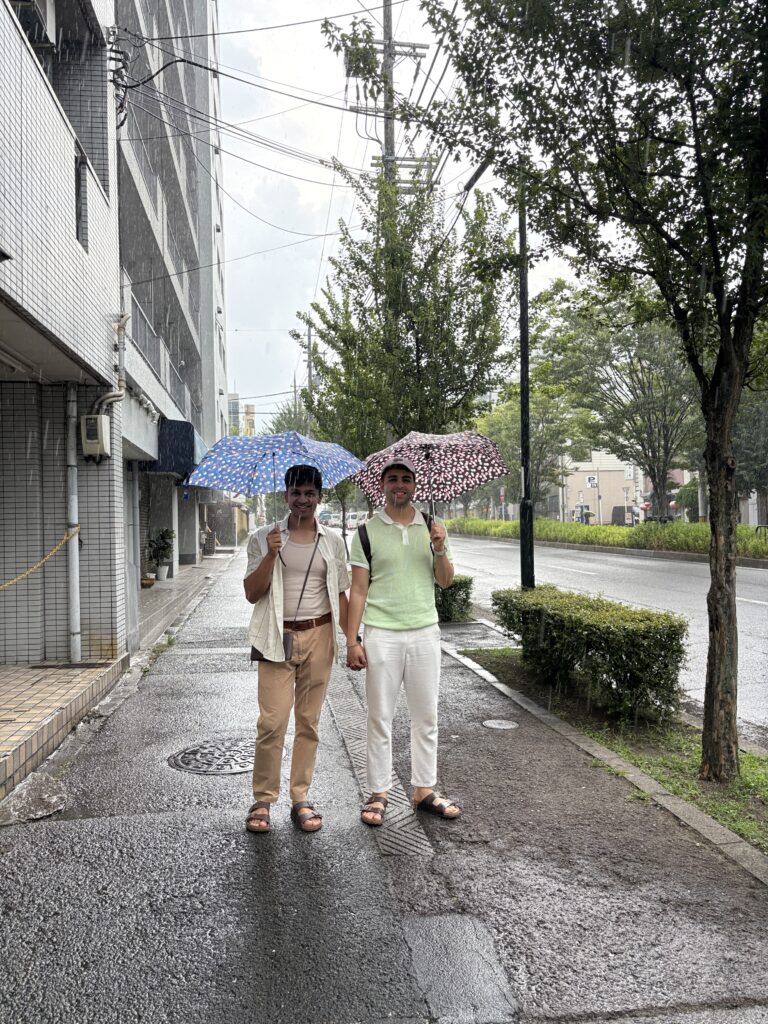
If you go in August anyway: get a proper opaque, UV-blocking umbrella before you leave India, or buy one immediately at the airport. Japanese women carry these year-round in summer; they’re called “parasols” and they’re non-negotiable. Add a small handheld electric fan (¥800-1,500 at any konbini), a cap, sweat-absorbing wristbands, and 50 SPF sunscreen.
Here are a few shopping link that can provide discount on everyday items, electronics, merchandise and more.
- BIC is the largest electronics retailer in Japan. Here is a 5-7% discount coupon for you.
- a 5-10% discount code across all Mitsui-operated shopping destinations.
- Here is a Special Don Quijote Discount code across all Donki stores.
You will still be miserable. But less miserable.
The Daily Window That Actually Works
If August is somehow non-negotiable for you (school holidays, work calendar, fixed dates), here’s the only daily rhythm that makes it survivable:
- 5:30 AM – 7:00 AM: Quiet, manageable. Best time for outdoor temple visits and street photography. Almost nobody is awake yet, including most tourist crowds.
- 7:00 AM – 5:00 PM: Hellscape. Plan indoor activities- museums, shopping malls, teamLab Borderless, the bigger department stores, Akihabara’s anime stores, M’s Pop Life, hotel pools, cafés.
- 5:00 PM – 6:30 PM: Heat starts breaking. Tolerable outdoor walks become possible.
- 6:30 PM – 11:00 PM: Genuinely pleasant. This is when Japan opens up: Shibuya, Shinjuku, Pontocho, Gion, izakaya alleys, neon districts. Most of my favourite memories happened in this window.
Here is link to book- teamLab Borderless, teamLab Planets, teamLab Biovortex (Kyoto)
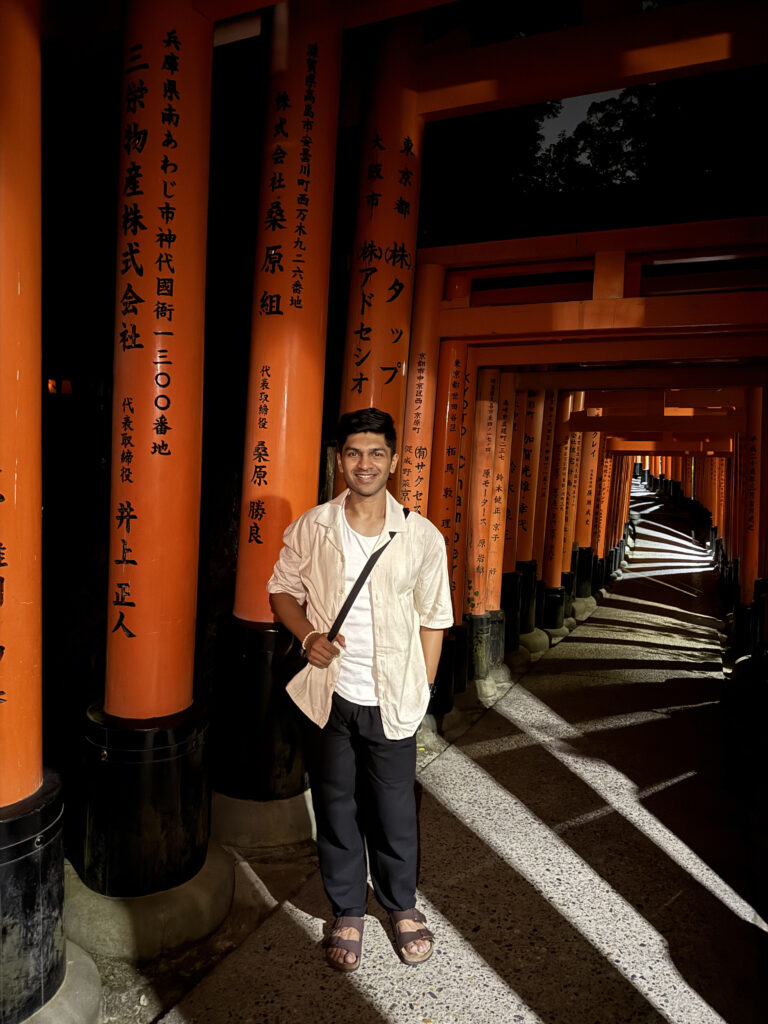
So in an August trip, you’re effectively losing the most “tourist-perfect” window, i.e. the 9 AM to 5 PM block when temples are open, when light is best, when most attractions are designed to be visited. You’re working around the weather, not with it.
In April or October, the entire 9 AM to 11 PM is yours.
The Best Time to Visit Japan Instead, Ranked by Tier
Here’s the actual calendar, ranked from best to worst:
Tier 1: Genuinely Excellent
- Late October to mid-November. Autumn colours (koyo), cool dry weather, low humidity. Nights are cool but bearable. Daytime around 18-22°C. The Japan you see in postcards.
- Late March to mid-April. Cherry blossoms (sakura), temperatures around 15-20°C, warm sunshine. Crowds peak around the cherry blossom forecast; book 2-3 months ahead.
These two windows are consistently ranked the best time to visit Japan by returning travellers.
Tier 2: Solid Choices
- Mid-November to early December. Late autumn, fewer crowds, cooler than October but still pleasant. Temperatures 8-15°C.
- Mid to late May. Just before rainy season starts. Warm, fresh, green. 18-25°C.
- Late February to mid-March. End of winter, plum blossoms, very few tourists. Cold (5-12°C) but dry.
Tier 3: Functional but Not Special
- Early to mid-October. Tail end of typhoon season. Some risk of disrupted travel.
- December to early January. Cold (1-10°C in Tokyo). Clear skies, good for snow regions like Hokkaido. Avoid New Year week (Dec 28-Jan 5) when domestic prices double and many shops close.
- January to early February. Cold but quiet. Cheaper flights. Snow festivals in Hokkaido.
Tier 4: Avoid
- June to mid-July. Tsuyu is Japan’s official rainy season. Daily heavy rain. Humid even before the heat hits.
- Mid-July to August. Brutal heat + humidity + typhoon risk. The trifecta. This is when I went.
- September. Typhoon season peaks. Some years are fine, some have multiple flight cancellations. High variance.
When August Is Actually Acceptable
Even within a guide about the best time to visit Japan, there are two honest exceptions worth naming.
1. You’re going to Hokkaido only. Northern Japan stays cooler, e.g. Sapporo in August is 22-28°C with much lower humidity. If your trip is exclusively Hokkaido, August is genuinely pleasant. Just don’t combine with Tokyo or Kyoto in the same trip.
2. You’re going to Japan for a specific August event. Major summer festivals like Aomori Nebuta Matsuri (early August), Awa Odori in Tokushima (mid-August), and the Sumida River Fireworks in Tokyo (late July) are once-a-year experiences. If you’re chasing a specific festival, the heat is the cost of admission.
Here is a link to book a tour to see the wonders of Hokkaido.
For everyone else: pick a different month.
The Cost of Going in the Wrong Month
A small note that might convince the budget-conscious among you:
The savings on August flights are typically ₹8,000-15,000 per person versus October or April. That sounds like a lot until you realize:
- You’ll buy umbrellas, cooling gear, and electrolyte drinks in Japan: ₹3,000+
- You’ll cab more than planned because walking becomes unbearable: ₹5,000-10,000
- You’ll eat more meals indoors at premium restaurants because you can’t sit at outdoor cafés: ₹3,000-5,000
- You’ll cut some outdoor experiences short and lose value: incalculable but real
Net: the August savings are largely eaten by the August adjustments. Plus you’ve had a worse trip. Going in April or October at a slightly higher flight price is almost always the better economic decision once you account for the experience.
This is the hidden math nobody includes when they debate the best time to visit Japan purely on flight price.
Frequently Asked Questions
Q: Is Japan really that bad in August? For an outdoor-heavy tourist itinerary covering Tokyo, Kyoto, and Osaka, yes. Daytime heat (32-36°C) combined with extreme humidity (75-90%) makes 6-8 hours of daily walking genuinely punishing. Indoor-only or Hokkaido-only trips work fine.
Q: What is the best time to visit Japan? Late October to mid-November (autumn colors, cool, dry) and late March to mid-April (cherry blossoms, mild). Both offer ideal weather for the country’s outdoor-heavy tourism rhythm.
Q: Can I cope with Japanese summer with AC and air-conditioned trains? Trains and metros are well air-conditioned, but you spend most touring time outdoors & walking between stations, visiting temples, exploring neighborhoods. AC inside venues doesn’t fix 8 hours of outdoor exposure.
Q: What should I pack for Japan in August if I’m going anyway? Opaque UV-blocking umbrella, handheld electric fan, sweat-wicking shirts, two pairs of comfortable walking shoes, salt tablets or electrolyte powders, 50 SPF sunscreen, a refillable insulated water bottle, and quick-dry towels.
Q: Is Hokkaido a good escape from the August heat? Yes, northern Japan stays 8-10°C cooler. Sapporo in August is 22-28°C with much lower humidity. A Hokkaido-only trip in August can actually be pleasant.
Q: What time of day is bearable in Japan in August? Roughly 5:00-7:00 AM for early outdoor activity, and after 5:00-6:30 PM until late night. The 7 AM to 5 PM window is the worst.
Q: How much do flights to Japan cost in August vs October? August flights from India are typically ₹8,000-15,000 cheaper per person than October. The savings are largely offset by additional costs (cabs, gear, premium dining) and a worse experience.
Final Word
I love Japan. I’d go back tomorrow. But I’d go in October or April, not August.
If you’re reading this while planning an August trip and the dates are still flexible, please move them. Two weeks in Japan in October will give you a completely different country than two weeks in August. The temples you’d skip in August because of the heat will be the highlights of your October trip. The walking tours you’d cut short in August will be the ones you remember in October.
If your dates are fixed, treat this post as your warning. Pack the umbrella. Buy the fan. Plan indoor mornings and outdoor evenings. Drink twice as much water as you think you need. And forgive yourself when, by Day 5, you cancel the temple visit in favor of a 4-hour shopping mall AC retreat. That’s just survival.
If this post changes one thing, let it be your answer to the best time to visit Japan question. For the full Japan trip experience, read my main blog here.
Drop a comment if you’ve been to Japan in summer, I want to hear who agrees, who survived better than I did, and who’s about to dodge a bullet because of this post.