 By Tarang Bansal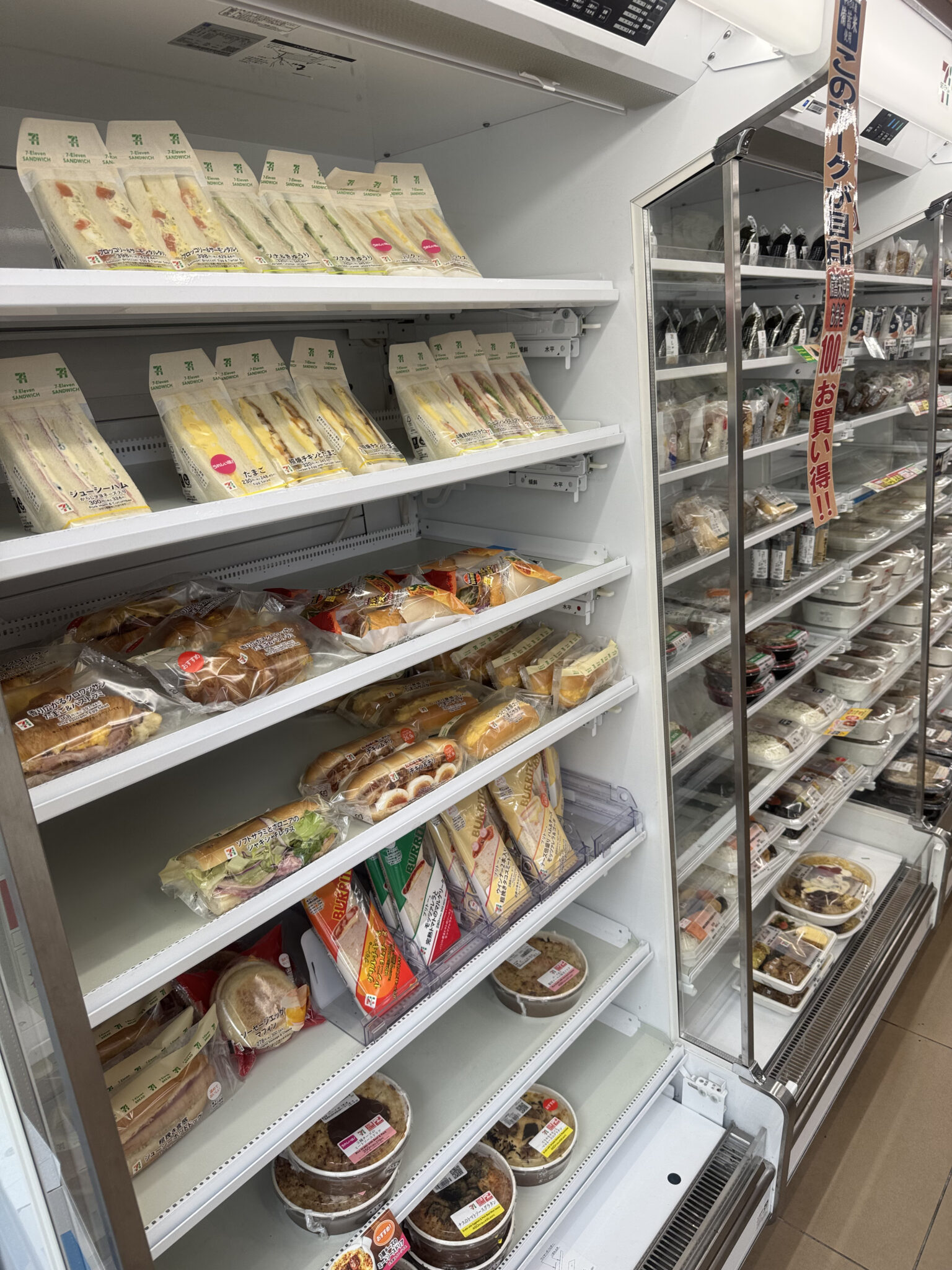

I rated DisneySea a flat -5 on my trip. I rated a 7-Eleven a perfect +5. Here is my Japan 7-Eleven Guide.
A Japanese 7-Eleven is not a 7-Eleven. It’s a fresh-food restaurant, ATM, post office, smoothie bar, ticket counter, toilet, umbrella store, and IC card top-up point- all in one immaculate space. An Indian’s deep-dive into the magic of Japan’s konbini culture.
The first 7-Eleven I walked into in Tokyo was right opposite our Airbnb in Ueno. It was around 11 PM on Day 1. I went in to grab a bottle of water before sleep.
I came out 25 minutes later having shopped, eaten, observed, and rated the entire experience a +5 on my -5 to +5 scale.
A +5. For a convenience store.
I want you to understand what an absurd statement that is. I rated DisneySea -5. I rated some restaurants -3. I rated the Shibuya Scramble- the most Instagrammed pedestrian crossing in the world- a flat 0. And here I was, on Day 1, giving a perfect score to a 24-hour shop next to my Airbnb.
By Day 10, I was no longer surprised. Japanese convenience stores- collectively called konbini– are the secret backbone of Japanese daily life, and easily one of the country’s biggest soft-power exports. If you only understand one thing about modern Japan, understand the konbini.
This is what you’ll actually find inside a Japanese 7-Eleven, Lawson, or FamilyMart. And why every Indian walks out of one quietly questioning what we’ve been settling for back home.
If you want the full Japan trip context, read my main 10-day Japan blog here. This post is a deep-dive into the convenience store experience that defined my trip.
First, the Names: 7-Eleven vs Lawson vs FamilyMart
Three brands dominate Japan’s konbini scene. They’re all roughly equivalent in quality, all immaculate, all open 24/7, and all worth trying.
- 7-Eleven– The largest chain, with around 21,000+ stores in Japan. Strongest in Tokyo. Famous for its sandwiches and onigiri.
- Lawson– Identifiable by its blue milk-bottle logo. Strong presence in Kansai (Kyoto, Osaka). Known for its desserts and “Premium Roll Cake.”
- FamilyMart– Yellow-and-green logo. Excellent dessert section.
In Tokyo, you’ll see 7-Eleven on every corner. In Kyoto and Osaka, Lawson and FamilyMart dominate. Use whichever is closest. They all do the same job at the same level.
For the rest of this post, I’ll just say “konbini”- it covers all three.
The Sandwich Wall: Where the Magic Begins
Walk into any konbini and the first thing you’ll notice is a refrigerated wall of pre-packaged fresh food. Sandwiches in plastic triangles. Pasta salads in clear bowls. Fruit cups. Onigiri (rice triangles). Everything is fresh, made daily, and clearly dated.
For vegetarians, the safe bets here are:
- Egg salad sandwiches (tamago sando)– fluffy white bread, creamy egg filling, surprisingly addictive. The 7-Eleven version is the most famous internationally and there’s a reason. Anthony Bourdain called it “inexplicably good.”
- Cucumber sandwiches
- Vegetable wraps with lettuce, cucumber, tomato, sometimes potato salad
- Fruit sandwiches– yes, sweet sandwiches with whipped cream and fresh fruit. Sounds weird, tastes incredible.
- Pasta salads– check the label for fish, but plain vegetable pasta salads exist
- Onigiri with vegetarian fillings: umeboshi (pickled plum), konbu (kelp), wakame (seaweed)
Indian context: imagine a Britannia bread aisle that magically refreshes its stock multiple times a day, with food that tastes like it came from a small café and not a factory. That’s the konbini sandwich wall.
The Smoothie Machine That Genuinely Changed My Day
Here’s the feature that broke my brain on Day 2.
Konbinis stock frozen fruit smoothie cups in the freezer aisle. You pick one- strawberry, mango, mixed berry, banana, green smoothie- pay at the counter, and then walk over to a small countertop blender machine in the store.
You pop your cup into the machine, press a button, and 90 seconds later you have a thick, fresh, ice-cold smoothie. No barista. No queue. No mess. The machine handles everything.
A typical smoothie cost me around ¥250–¥350 (₹150–₹220). I had one almost every day of my trip. Some days, two.
For Indians used to ₹400 smoothies at chains like Chaayos or Theobroma, the konbini smoothie is an embarrassment of value. It’s also genuinely good- fresh fruit, no preservatives, no artificial flavouring. Yeh cheez India mein chahiye, abhi.
The Hot Food Counter
Behind the cashier or to one side, every konbini has a small hot food counter with steam-warmed snacks. For vegetarians, look for:
- Veggie steamed buns (yasai-man, pizza-man)– soft white buns with vegetable or pizza-style fillings
- Hash browns and french fries– usually fine, though oil sharing is a concern for strict vegetarians
- Boiled corn cups– surprisingly common, surprisingly satisfying
- Edamame– boiled and salted, ready to eat
- Onsen tamago (hot spring eggs)– soft-boiled eggs for ovo-vegetarians
This counter alone makes a konbini a viable lunch spot. I had multiple lunches that were just a steamed bun, a smoothie, and a coffee for under ¥600 (~₹360).
The Drinks Aisle: A Wall of Liquid Innovation
Konbini drinks aisles are a cultural rabbit hole. You’ll find:
- Hot and cold canned coffee– yes, the cans themselves are heated, sitting in a temperature-controlled section. Genius.
- Bottled green tea, oolong, jasmine tea– varieties India has barely heard of
- Fruit juices, milk teas, soy milk drinks in flavors like matcha, sakura, melon
- Pocari Sweat and Aquarius– Japanese sports drinks, like Gatorade but lighter
- Calpis– a milk-based fermented drink that takes some getting used to
- Frozen iced coffee cups– pour cold coffee into the frozen cup, instant iced coffee
- Hard liquor– Japanese whiskies (Yamazaki, Hakushu, Hibiki, Suntory), shochu, sake- at prices Indian importers can’t match. A bottle of Hibiki for the equivalent of ₹2,500 that costs ₹15,000+ in India duty-paid.
The alcohol section in a konbini is essentially a small wine-and-spirits store inside the convenience store. Buy here, save 60-80% versus restaurant prices. We later found out that they were cheaper then ever Japan’s duty free. I don’t know how!
The Cigarette Section: Behind the Counter, 200+ Options
Here’s a small thing that says a lot about how Japan does retail.
Cigarettes in konbinis are kept entirely behind the cashier counter, displayed on a tall vertical rack with small numbered slots- sometimes 200+ different variants. You can’t pick them up. You point or speak the number, the cashier hands the pack across, and you pay.
The reason: Japan strictly enforces age limits on tobacco (20+), and removing self-service access means underage buyers can’t pocket a pack and walk out. It also discourages impulse purchase. You have to deliberately ask for cigarettes- making the act conscious rather than passive.
It’s a small design choice with a big public-health impact. India still has cigarettes within arm’s reach of any kirana checkout counter. Worth thinking about.
The Magazine and Adult Section
This one always surprises Indians.
Konbinis stock a small section of magazines- fashion, manga, lifestyle, sports- and historically, also adult magazines. The display has been getting more discreet over the years (covered, sometimes blurred, sometimes shifted to top shelves), but the section exists.
The cultural framing is different from India. Adult content in Japan operates under a complex set of legal and social codes- some explicit content is legal and openly sold, while other categories are heavily restricted. Konbini magazines tend to sit at the milder end. Many newer konbinis have removed them entirely after public discussion.
If you walk in and see a covered section with magazines, that’s likely it. Notice and move on. Indian travellers are sometimes shocked, but it’s not as prominent as it once was.
The ATM and Forex Counter
Most konbinis have a 24/7 ATM, and for foreign tourists, this is a lifesaver.
Why it matters: Many Japanese ATMs at banks don’t accept foreign cards. Konbini ATMs (especially 7-Eleven’s “Seven Bank” ATMs and Lawson’s) do accept international cards– Visa, Mastercard, American Express, JCB. They have an English language option, transaction fees are reasonable, and they’re available at 1 AM if you suddenly run out of yen at a bar.
Some konbinis (particularly in tourist areas) also have forex exchange machines that accept USD or other major currencies and dispense yen. The rates are usually fair- better than at airports.
Combined with the IC card top-up function, the konbini ATM essentially means you never have to find a bank in Japan. The convenience store handles all your money needs.
👉 [INSERT AFFILIATE LINK: Forex cards for Japan via Niyo / IDFC FIRST WoW]
IC Card Top-Up
Speaking of IC cards- every konbini lets you top up your Suica, Pasmo, or ICOCA card directly at the cashier counter. Hand the card and cash to the cashier, say the amount, done in 10 seconds.
This is essential because most train station IC card top-up machines only accept cash, but if you’re already paying for a smoothie at the konbini cashier, they can recharge your card in the same transaction.
The Toilets- Cleaner Than Most Indian Hotels
Almost every Japanese konbini has a public toilet, free to use, no purchase required.
And here’s the unbelievable part: these toilets are fully equipped Japanese Washlets– heated seats, multiple jet settings, deodorizer, and often warm-air drying. In a 24-hour convenience store. At 2 AM. Free.
For travel context: a public toilet at a busy Indian railway station typically charges ₹5–₹20 and has neither soap nor toilet paper consistently. A 7-Eleven toilet in Tokyo at 2 AM has heated seats and a control panel.
If you ever need a clean bathroom while exploring Japan, your move is simple: find the nearest konbini.
Coin Changers and Payment Innovations
A small thing that quietly improves the experience:
Most konbinis have automatic coin-counting trays at the checkout. You drop your paper notes into the machine, the machine counts them, displays the total, and applies it to your bill. Returns the change. No manual counting. No errors. No “do you have ₹2 chillar” awkwardness.
Many konbinis also accept:
- IC cards (Suica, Pasmo, ICOCA- tap and pay)
- Credit cards (international cards work)
- PayPay, LinePay, RakutenPay (Japan’s UPI equivalents)
- Apple Pay and Google Pay
You can essentially pay any way you want. Cashiers don’t blink.
Heating, Cooling, and Other Equipment Available
Konbinis double as small public infrastructure points. You’ll find:
- Microwaves at the customer counter for heating bento boxes, hot meals, coffee
- Hot water dispensers for cup noodles
- Free Wi-Fi in most stores (with a quick registration)
- Power outlets at small standing counters in some larger stores- useful for charging phones briefly
- Indoor seating at certain konbinis, where you can sit and eat your meal in air-conditioned comfort
- Ticket machines for concert tickets, train tickets, even Studio Ghibli Museum tickets (limited slots- they sell out, but the machine is there)
- Photocopy and fax machines (yes, fax machines- Japan is one of the last places where fax is still used)
- Postal counter– you can mail packages, send international letters, and even drop off Amazon Japan returns at konbini counters
- Luggage forwarding services (Yamato, Sagawa)- drop a suitcase at one konbini, pick it up at your next city’s konbini for ¥1,500–¥2,500 per bag. Genius for Shinkansen travellers.
This last one- the luggage forwarding service– deserves its own mention. You can be in Tokyo, drop your suitcase at a 7-Eleven, and pick it up at a 7-Eleven in Kyoto the next morning. Cheap, reliable, hands-free travel. We didn’t use it on our trip due to schedule constraints, but it’s perfect for most travellers.
Other Things You Can Buy at a Japan 7-Eleven (Guide)
Beyond food and drinks, the average konbini stocks:
- Umbrellas– different types for ¥500-1500, perfect for sudden rain or sun shade.
- Phone chargers, power banks, USB cables– emergency tech essentials
- Toiletries– toothbrushes, mini toothpaste, deodorant, razors, sanitary products, condoms
- Stationery– pens, notebooks, envelopes
- Stockings, undergarments, basic clothing in emergency-replacement sizes
- Disposable raincoats and ponchos
- Hand and body warmers (kairo)- small chemical heat pads for cold weather
- Cooling pads and wet sheets for summer relief
- Disposable face masks
- Light reading material, manga, gifts, souvenirs
I genuinely could have lived for two days without ever leaving a konbini. Food, water, hygiene, money, transport top-ups, basic clothing- all sorted within 200 square feet.
The Hidden Reason Konbinis Are This Good
A few cultural notes that explain why Japanese konbinis are this much better than convenience stores anywhere else:
1. Absurdly high service standards. Cashiers bow when you enter. They greet every customer with “Irasshaimase!” They handle credit card transactions with both hands. The labor culture in retail makes Indian customer service look like an afterthought.
2. Daily fresh delivery. Most konbinis receive multiple food deliveries per day. The fresh sandwich you eat at 9 AM was made overnight and delivered at 5 AM. Stock that doesn’t sell within 12-24 hours is removed and discarded. Quality is preserved through brutal supply chain discipline.
3. Geographic density. Japan has more konbinis per capita than almost any other country in the world. In Tokyo, you’re never more than 200 meters from one. This density only works because each store turns over enough volume to justify the operating cost.
4. Government-set quality standards. Food safety, labelling, ingredient disclosure, and refrigeration standards are strictly regulated. The konbini bento you buy at midnight has been quality-checked at 5 different points before reaching the shelf.
5. The cultural weight of “hospitality” (omotenashi). Japan treats hospitality as a cultural duty, not a commercial transaction. Even a 24-hour convenience store is supposed to feel like a small act of public service.
The Indian Comparison
Let me end with the comparison every Indian will quietly make.
An Indian konbini typically stocks:
- Packaged biscuits, chips, namkeen
- Maggi, ready-to-eat curries, frozen samosas
- Cold drinks, juices, water bottles, beer
- Basic toiletries
- A small bread aisle that hasn’t been restocked in 3 days
- A grumpy cashier
- Possibly a non-functional ATM
- A bathroom you absolutely don’t want to use
A Japanese konbini stocks:
- Fresh sandwiches, salads, hot meals
- Fresh-blended fruit smoothies
- 200+ alcohol options with prices that beat duty-free
- An ATM that accepts foreign cards
- A clean Washlet toilet
- Phone chargers, umbrellas, undergarments
- IC card top-ups
- Luggage forwarding to other cities
- Concert and museum tickets
- Postal services
- A cashier who bows when you enter
Both are convenience stores. They’re not playing the same sport.
Indian retail has come a long way in the last 10 years- Reliance Smart Bazaar, DMart, Hypercity, Foodhall have all raised the bar. But the konbini remains in a different league entirely.
Frequently Asked Questions: Japanese 7-Eleven
Q: Is the food at a Japanese 7-Eleven actually good? Yes, surprisingly so. Most Japanese people eat from konbinis daily. The food is fresh, restocked multiple times a day, and meets very high quality standards. The egg sandwich and onigiri have international cult followings.
Q: What can a vegetarian eat at a Japanese 7-Eleven? Plenty. Egg salad sandwiches, cucumber sandwiches, fruit sandwiches, vegetarian onigiri (umeboshi, konbu, wakame fillings), pasta salads (check labels), edamame, fruit cups, smoothies, coffee, and pizza buns.
Q: Can I withdraw money at a Japanese 7-Eleven? Yes. 7-Eleven’s “Seven Bank” ATMs accept international debit and credit cards (Visa, Mastercard, Amex, JCB). They have English instructions and are open 24/7.
Q: Are 7-Eleven toilets in Japan clean? Extremely. Most have full Washlet (heated, jet-spray) toilet seats, are cleaned multiple times daily, and are free to use without purchase. They’re often cleaner than hotel bathrooms in India.
Q: How much does food cost at a Japanese 7-Eleven? A typical breakfast (sandwich + smoothie + coffee) costs ¥500–¥700 (₹300–₹420). A full lunch with hot food ¥700–¥1,000 (₹420–₹600). Significantly cheaper than restaurants.
Q: What’s the best Japanese convenience store: 7-Eleven, Lawson, or FamilyMart? All three are excellent. 7-Eleven is dominant in Tokyo. Lawson and FamilyMart dominate in Kansai (Kyoto, Osaka). Lawson is famous for desserts. FamilyMart for its dessert section. Try all three across your trip.
Q: Can I top up my Suica or ICOCA card at a 7-Eleven? Yes. Hand your card and cash to the cashier, mention the amount, and they’ll top it up at the counter in seconds.
Q: Are Japanese 7-Elevens open 24 hours? Yes, almost all of them. Some smaller ones in residential areas close for a few hours overnight, but in Tokyo, Kyoto, and Osaka, you can rely on 24/7 availability.
Final Word
If someone asked me what I miss most about Japan, my honest answer wouldn’t be the temples or the bullet trains or the Kazubar speakeasy in Kyoto.
It would be the konbini.
Standing in a clean, well-lit Lawson at 11 PM, choosing between three flavours of sandwich and four types of frozen smoothie, with a Washlet bathroom available, an ATM ready to dispense yen, and a friendly cashier waiting to bow as I left- that was the most Japanese thing about my trip. Civilization solved at small scale, replicated 50,000+ times across the country, available 24/7 to anyone.
The next time someone tells you Japan is “expensive” or “complicated for tourists,” you tell them about the konbini. The country has built a public utility for travellers, lifelong residents, and 2 AM impulse buys, and it costs almost nothing to use.
For the full Japan trip experience, read my main blog here.
Drop a comment if you’ve been to a Japanese konbini; and tag the friend who’d lose their mind in the smoothie section.