 By Tarang Bansal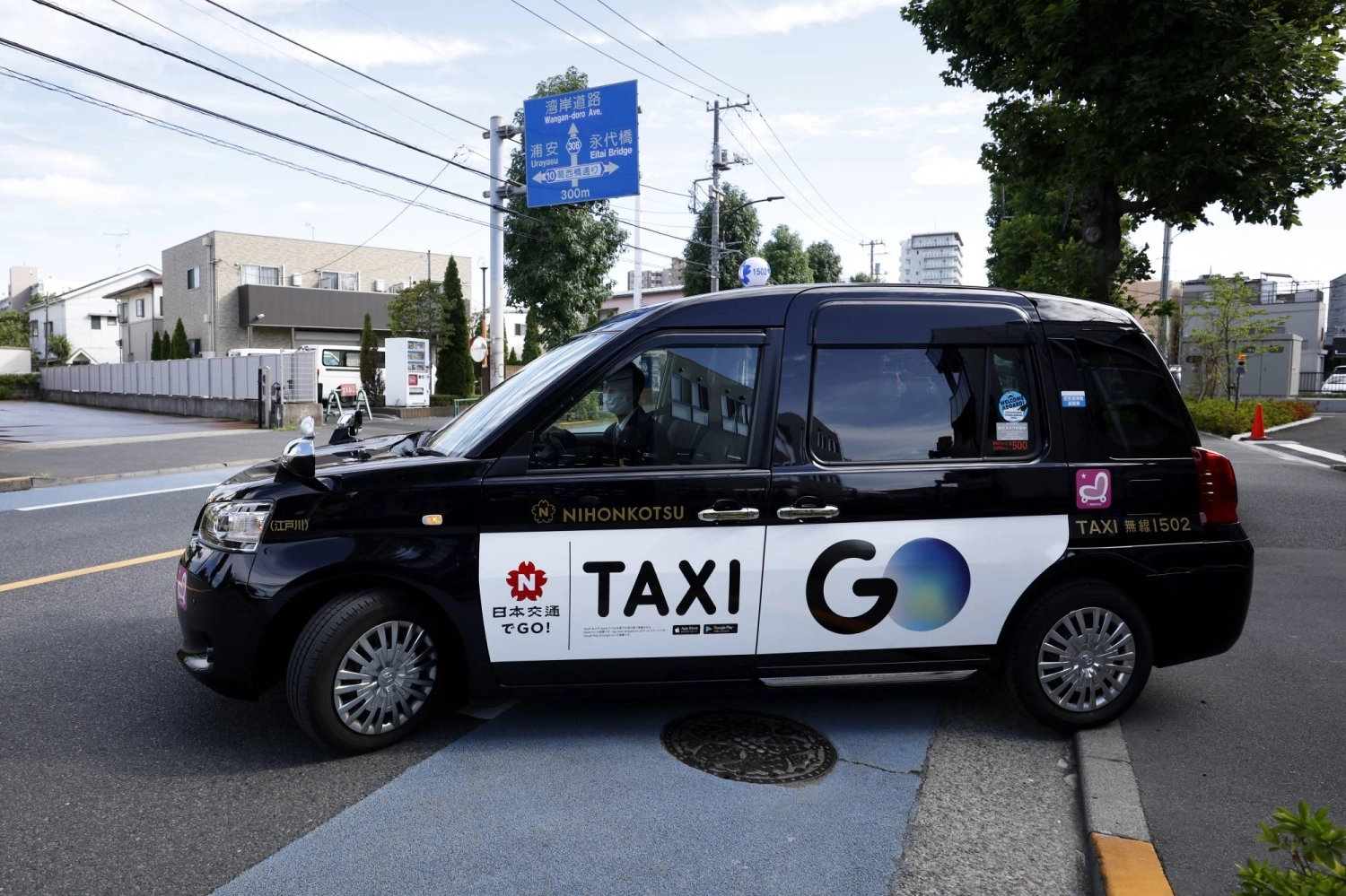

Japan cab vs train cost. A friend paid ₹15,000 for a 50 km cab ride in Japan. The same distance on the train would have cost ₹600. Here’s the brutal math of Japanese transport, why public transit shuts down between midnight and 5 AM, and how to plan flights and stays so you don’t get financially destroyed.
A friend of mine took a cab in Japan once. Just one cab. About 50 kilometers, late at night, when public transport had stopped running.
The fare? ¥25,000. Around ₹15,000.
For a single ride.
For context, that’s roughly the cost of a one-way flight from Bangalore to Singapore. Or a small AC for an Indian apartment. Or six nights in a decent Tokyo Airbnb. He paid all of that for 45 minutes in a Toyota Crown sedan, at 4 AM.
If you’ve ever been to Japan, you’ve heard a version of this story. If you haven’t, you need to understand the math right now- before you book your flight, before you book your hotel, before you make plans for late-night drinking in Shinjuku. Because Japan has the world’s best public transport system AND some of the world’s most expensive taxis, and the gap between those two realities can financially ruin your trip in a single ride.
This post is the math. The timing. And the four planning rules that will save you from being the next ₹15,000 cab story.
If you want the full Japan trip context, read my main 10-day Japan blog here. This post is a focused guide to Japan’s transport economics.
The Brutal Math: Japan Cab vs Train Cost
Let’s break down what each kilometer costs in Japan.
Cabs in Japan
- Base fare (first 1-1.5 km): around ¥500 (₹300)
- Per kilometer after that: roughly ¥400-500 (₹240-300)
- Late-night surcharge (10 PM-5 AM): +20-30% on top of regular fares
- Heavy traffic surcharge: yes, this exists too
For a 50 km late-night ride: roughly ¥25,000 (₹15,000), as my friend learned. For a 14 km Tokyo-suburb ride: roughly ¥6,000-8,000 (₹3,600-4,800). For a 5 km Shibuya-to-Shinjuku hop at midnight: roughly ¥2,500-3,000 (₹1,500-1,800).
Trains and Subways in Japan
- Tokyo metro: Most rides ¥170-310 (₹100-185)
- Tokyo Station to Haneda Airport (~25 km): ~¥600-700 (₹360-420)
- Osaka station to Kansai Airport (~50 km): ~¥1,200 (₹720)
- Tokyo to Yokohama (28 km): ~¥500 (₹300)
The Multiplier
Cabs in Japan cost roughly 20-25x more than trains for the same distance.
In India, an Uber from Bangalore Airport to MG Road (~35 km) costs around ₹500-700, while the metro is around ₹100. So a 5-7x premium for cab convenience. That feels reasonable.
In Japan, cabs cost 20-25x what trains do. That isn’t a premium for convenience- it’s a different financial universe. Bhai, ek cab ride mein poori Japan trip ka 10% jaa sakta hai.
The Real Killer: Transport Stops at Midnight
Now here’s what makes the cab vs train math suddenly urgent:
Japan’s public transport shuts down between midnight and 5 AM.
Specifically:
- Last trains: Around 11:30 PM-12:30 AM depending on the line and city
- First trains: Around 5:00-5:30 AM
- Buses: Even more limited- most stop running by 10-11 PM
- No 24-hour metro anywhere in Japan, not even in Tokyo
This means there are roughly 5 hours every night where the only way to get anywhere in Japan is by cab. And cabs at night come with a 20-30% night surcharge on top of an already eye-watering base rate.
If you’re out partying in Shibuya at 12:30 AM and your hotel is in Ueno, your options are:
- Last train: ~₹150. (You missed it 30 minutes ago.)
- First train: ~₹150. (Wait at the station for 4 hours.)
- Cab home: ~₹3,500-5,000. (Pay the price.)
- Walk: 3-4 hours through Tokyo at night.
You will end up choosing option 3. Most travelers do. And that single decision adds ₹4,000+ to your night out.
The Airport Disaster Scenario
The worst version of this math hits at the airport.
Tokyo’s airports are far from the city:
- Haneda Airport: ~25 km from central Tokyo
- Narita Airport: ~80 km from central Tokyo
- Kansai Airport (Osaka): ~50 km from Osaka city center
A late-night cab from Narita to your Tokyo hotel = roughly ₹24,000. A late-night cab from Kansai Airport to Osaka hotel = roughly ₹15,000.
A train from Narita to Tokyo = ~₹1,500-2,000. A train from Kansai to Osaka = ~₹1,200.
The difference between “I just landed at 10 PM and can take the airport train” and “I just landed at 1 AM and have to take a cab” is ₹15,000-20,000 per cab.
This is why flight booking strategy matters more for Japan than for almost any other country.
👉 [INSERT AFFILIATE LINK: Tokyo airport train tickets via Klook]
Rule 1: Don’t Land in Japan After 10 PM
Plan your flights so you arrive at any Japanese airport by 10 PM at the latest.
Here’s why 10 PM is the cutoff:
- You’ll clear immigration and baggage claim in 30-60 minutes
- That puts you at the train station by 10:30-11 PM
- You’ll have 30-90 minutes to catch the airport train into the city
- You’ll be at your hotel by midnight, before public transport stops
Land at 11 PM, and you’re cutting it close. Land at midnight or later, and you’ve automatically lost ₹15,000-25,000 to a forced cab ride.
If you’re flying from India, this means choosing flights that:
- Land between 4 PM and 9 PM ideally
- Avoid the late-night flights from Singapore, Bangkok, or KL connections that arrive after 11 PM
For my trip, I flew Singapore Airlines BLR-SIN-HND, landing at Haneda around 4:30 PM. That gave me 6+ hours of public transport availability. Worth choosing the right flight even if it’s slightly more expensive- the savings on cabs alone justify it.
Rule 2: Don’t Fly Out Before 8 AM
The reverse problem is just as expensive.
Public transport in Japan starts around 5:00-5:30 AM. The first trains aren’t always to airports- connections and transfers can mean it takes 90-120 minutes to actually get from your hotel to the airport via train.
For a flight check-in 2 hours before departure:
- 6 AM flight: Check-in at 4 AM. You need a cab. ₹15,000+.
- 7 AM flight: Check-in at 5 AM. You need a cab. ₹15,000+.
- 8 AM flight: Check-in at 6 AM. First trains are running. You can use public transport. ₹600-2,000.
- 10 AM flight: Easy. Trains are fully running.
So the rule:
No flights from Japan before 8 AM.
Your flight from KIX to Singapore Airlines connection? Make sure it’s at 8 AM or later. Anything earlier and you’ve added ₹15,000+ to your “cheap” early-morning departure. The savings on the cheap flight are wiped out by the cab.
Rule 3: Calculate the Real Cost of “Cheap” Flights
A cheap red-eye flight from India that lands in Japan at 1 AM looks great on Skyscanner. ₹35,000 instead of ₹50,000. Save ₹15,000, right?
Wrong.
You’ll spend ₹15,000-25,000 on the airport-to-hotel cab because trains aren’t running. You’ve broken even at best, and traveled in worse conditions.
Same applies in reverse: a 6 AM flight out that costs ₹40,000 instead of an 11 AM flight at ₹50,000. Sounds like a ₹10,000 saving. Actually a ₹5,000 loss after the forced cab ride.
The actual rule:
Always factor airport transport into your flight cost. A flight that lands between 4 PM and 9 PM, or departs after 9 AM, is worth ₹10,000-15,000 more than a flight that lands or departs in the dead zone.
Rule 4: Don’t Optimize Your Hotel for Train Stations
Here’s a piece of advice that might sound counterintuitive: don’t pick your hotel based on proximity to a train station.
In Japan, every neighborhood is within walking distance of a station. Every. Neighborhood. Tokyo has roughly 880 stations across its metro system. Kyoto has 80+. Osaka has 100+. You are essentially never more than 500-700 meters from a station, anywhere a tourist would stay.
So station-proximity is not a meaningful differentiator. They’re all close.
What you SHOULD optimize for:
1. Nightlife alignment. If you want to drink in Shibuya, stay near Shibuya. Not because the trains don’t reach Shibuya- they do- but because you’ll inevitably stay out past midnight at some point, and the difference between a 10-minute walk back to your hotel and a ₹4,000 cab home is significant.
If you want to wander Shinjuku at night, stay in Shinjuku. If you’re a Roppongi-bar person, stay near Roppongi. The savings on emergency cabs alone will pay for the marginally higher hotel cost.
2. Vibe alignment. Tokyo neighborhoods have very different feels:
- Ueno/Asakusa: Traditional, residential, cheaper, quieter at night
- Shibuya/Harajuku: Young, trendy, crowded, expensive
- Shinjuku: Nightlife heavy, lots of variety, can feel intense
- Roppongi: International, expat-heavy, English-friendly, expensive
- Ginza: Upscale, polished, quiet at night
- Akasaka/Akihabara: Specific subcultures (business, otaku)
Pick a neighborhood whose vibe matches your travel style. Trust me, the Shibuya person will hate Ueno, and the Asakusa-and-temples person will hate Roppongi.
3. Same hotel for the whole stay. Switching hotels mid-trip in Japan involves luggage logistics that are genuinely tedious. Stay in one Tokyo hotel for the full Tokyo portion of your trip. Use coin lockers and luggage forwarding services for shorter excursions.
4. Walk-friendly streets. Japan in summer (June-September) is brutal heat. Japan in winter (Dec-Feb) can be cold. A hotel on a covered shopping arcade or with a metro entrance directly inside its lobby is worth a small premium.
👉 [INSERT AFFILIATE LINK: Japan hotels via Booking.com / Agoda]
What If You Genuinely Need a Cab?
Sometimes a cab is unavoidable. Here’s how to minimize the damage:
1. Use ride-hailing apps when possible. Uber works in major Japanese cities (Tokyo, Osaka, Kyoto). GO is the local app most Japanese use- same model, similar prices, sometimes better availability. Both show fare estimates upfront, which prevents the meter-running shock.
2. Avoid late-night surcharges. A 9 PM cab is significantly cheaper than a 1 AM cab. If you can squeeze your night out to end by 9:30 PM, you save 20-30% on any unavoidable cab ride.
3. Split with friends. Cabs in Japan are priced per ride, not per person. A 4-person split on a ₹4,000 cab is ₹1,000 each- much more bearable.
4. Don’t take a cab from the airport. Just don’t. Always use the airport train (Keisei Skyliner from Narita, Tokyo Monorail from Haneda, Haruka from Kansai). Save ₹10,000-20,000 by default.
5. Note the destination in Japanese on your phone. Cab drivers usually don’t speak English. Have your hotel address in Japanese kanji ready to show on your phone. Saves time, saves stress, saves money (no detour fares).
A Real Example: Our Tokyo Late-Night Math
Here’s what happened to us on Day 2 of our trip.
We were drinking in Shibuya bars after dinner. Our Airbnb was in Ueno- a 30-minute train ride away. The last metro from Shibuya to Ueno was around 11:30 PM.
We had a choice at 11:00 PM:
- Run for the last train: ~¥200 each (₹120). 30 min ride.
- Stay another hour and cab home: ~¥4,500 split 5 ways (~₹540 each). 25 min ride.
The smart move was the train. We made it onto the last metro by 11:25 PM, completely drunk but in the right direction. ₹120 each.
If we’d missed it: ₹540 each- 4.5x the cost. For a single night. And this was a “small” Tokyo cab- not even a long airport ride.
This is the calculus you’re constantly running in Japan. Plan for it.
Frequently Asked Questions: Japan Transport Costs and Timing
Q: How much does a cab cost in Japan? Base fare around ¥500 (₹300) for the first 1-1.5 km, then about ¥400-500 (₹240-300) per additional km. Late-night surcharge (10 PM-5 AM) adds 20-30%.
Q: When does Japan’s public transport stop running? Trains and subways generally run until 11:30 PM-12:30 AM and start again at 5:00-5:30 AM. There’s no 24-hour metro in Japan.
Q: Should I take a cab from Narita Airport to Tokyo? Almost never. A cab from Narita to central Tokyo costs ₹20,000-25,000. The Keisei Skyliner train takes 41 minutes and costs ₹1,500. Take the train.
Q: What’s the best time to land in Japan? Between 4 PM and 9 PM. This gives you time to clear immigration, get to the airport train, and reach your hotel before public transport stops.
Q: What’s the best time to fly out of Japan? After 9 AM departure. This means check-in at 7 AM, when first trains are fully operational. Avoid flights before 8 AM.
Q: Are Uber and ride-hailing apps available in Japan? Yes. Uber operates in major cities (Tokyo, Osaka, Kyoto). GO is the dominant local ride-hailing app. Both work like Indian Uber/Ola.
Q: How do I avoid expensive late-night cabs in Japan? Plan to be home before 11:30 PM, or stay near your nightlife area so you can walk back. Track the last train of the line you’ll use- it’s printed at every station.
Q: Should I rent a car in Japan? Generally no. Cities are too dense, parking is extremely expensive (¥3,000-5,000 per day), and traffic in Tokyo is brutal. Trains and walking are faster and cheaper. Cars only make sense for rural areas like Hokkaido or Okinawa.
Final Word
The Japan transport puzzle is worth understanding because the country is so expensive at its worst that one bad decision adds the cost of a whole travel day.
Land at 1 AM = ₹15,000 cab ride. Fly out at 6 AM = ₹15,000 cab ride. Stay near a station nobody you care about, then take cabs to nightlife = ₹3,000-5,000 nightly cabs.
Land at 5 PM, fly out at 11 AM, stay near where you actually want to spend time = ₹2,000 total in airport transport for the entire trip.
That’s a ₹30,000+ swing from a few decisions made before you even pack your suitcase.
This is the part of Japan trip planning that no influencer talks about because it isn’t sexy. It’s just math. And the math is the difference between coming home with ₹50,000 in your pocket vs ₹0.
Plan accordingly.
For the full Japan trip experience and the planning decisions that actually matter, read my main blog here.
Drop a comment if you’ve taken an expensive cab in Japan- and tag the friend who’s about to fly to Japan and needs to read this before booking.