 By Tarang Bansal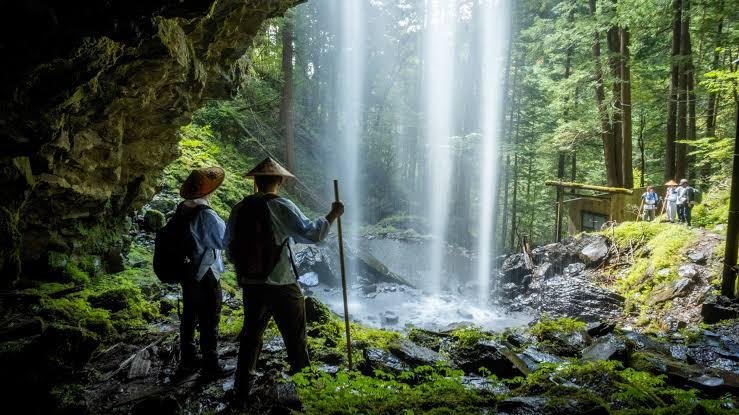

This guide to outdoor activities in Japan for Indians covers the 12 best experiences beyond the standard temple and neon itinerary.
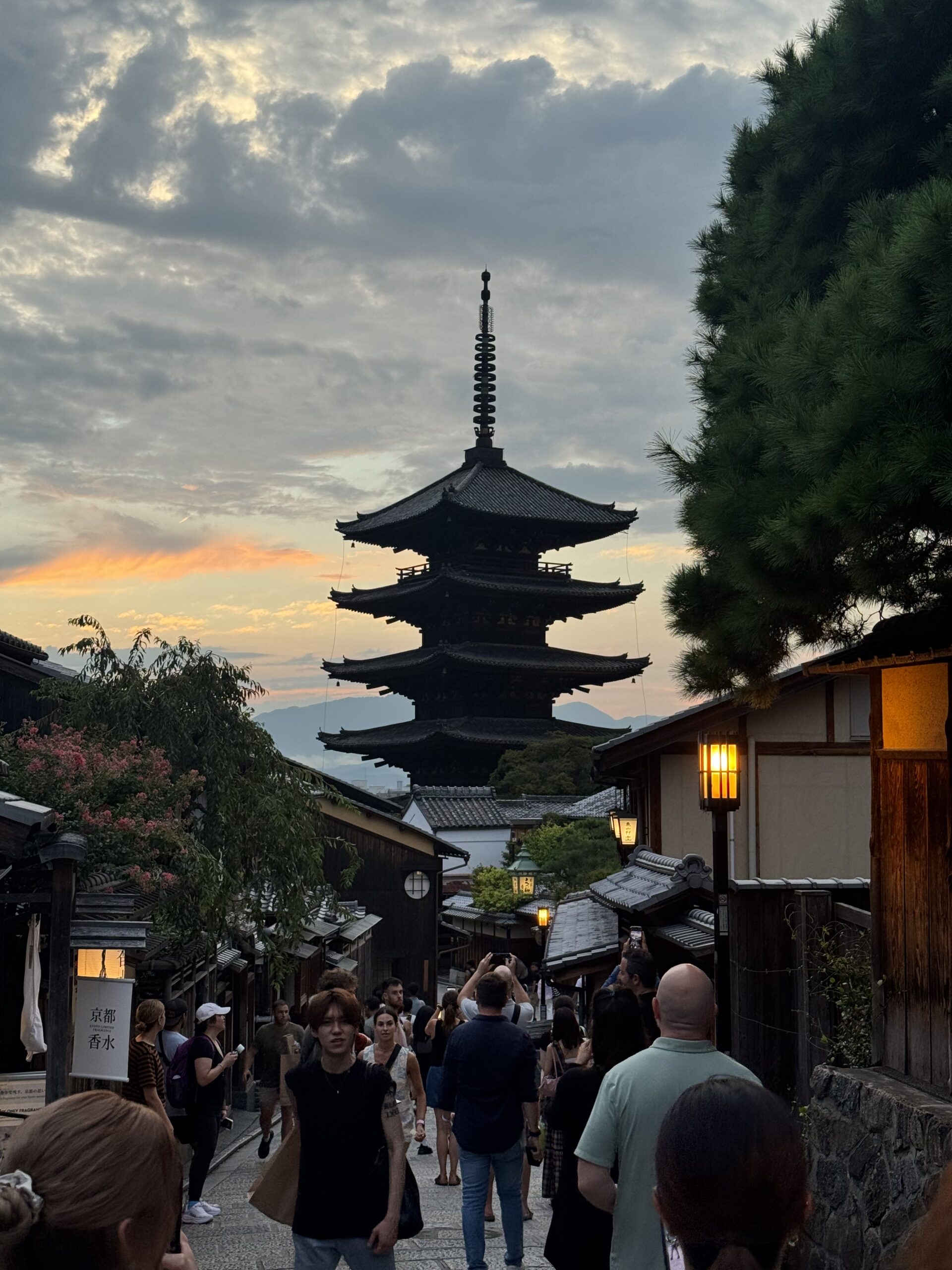
Most Japan itineraries are variations of the same template: Tokyo → Shinkansen → Kyoto → Nara → Osaka. All man-made. All excellent. And none of them featuring the country’s extraordinary outdoor dimension.
Japan is a volcanic archipelago stretching from subarctic Hokkaido to subtropical Okinawa is 3,000 kilometres of varied latitude covering rainforest, alpine tundra, coral reef, volcanic desert, ancient cedar forest, and drift ice. The outdoor infrastructure is world-class: English-friendly guides, excellent gear rental, well-maintained trails, and train access to most starting points.
This guide covers 12 outdoor activities, presenting only the very best location in Japan for each, plus one strong alternative. If you’re planning an outdoor-focused Japan trip or want to add a day or two of genuine nature to a standard itinerary, this is your reference.
For the skiing deep-dive, see my Japan Beginner Skiing Blog. For Mt Fuji, see my Mt Fuji & The Lakes Around Blog. For Okinawa diving, see my blog on Okinawa. For Hokkaido wildlife, see my Sapporo & Hokkaido Blog.
If you want the full Japan trip context, read my main 10-day Japan blog here. Every outdoor activity in Japan for Indians listed here comes with the best location, the best alternative, and the actual cost in INR.
1. Skiing and Snowboarding
The Best: Niseko United, Hokkaido
Niseko is, without argument, the premier ski destination in Asia and among the top five globally for powder quality. Niseko is the first name on any outdoor activities Japan for Indians list that includes winter sports. The combination of cold Siberian air masses and moisture from the Sea of Japan produces an average of 15+ metres of dry, light powder snow annually. Four interconnected resorts- Grand Hirafu, Hanazono, Niseko Village, Annupuri, all operate under a unified lift pass.
The international crowd (heavily Australian and Southeast Asian) means English is spoken everywhere. The runs are varied, the après-ski infrastructure is sophisticated, and the mountain has a dedicated beginner park.
When: December to March. January is peak powder month. How to reach: New Chitose Airport (Sapporo) → 90-minute direct shuttle. Niseko Shuttle buses from ¥2,500. Cost: All-mountain day pass ¥9,800 (~₹5,900). Beginner lesson ¥8,000-14,000 for 2-4 hours. E-bike/lift-based mountain biking available in summer. Beginner-friendly: Very. Extensive English-speaking ski school.
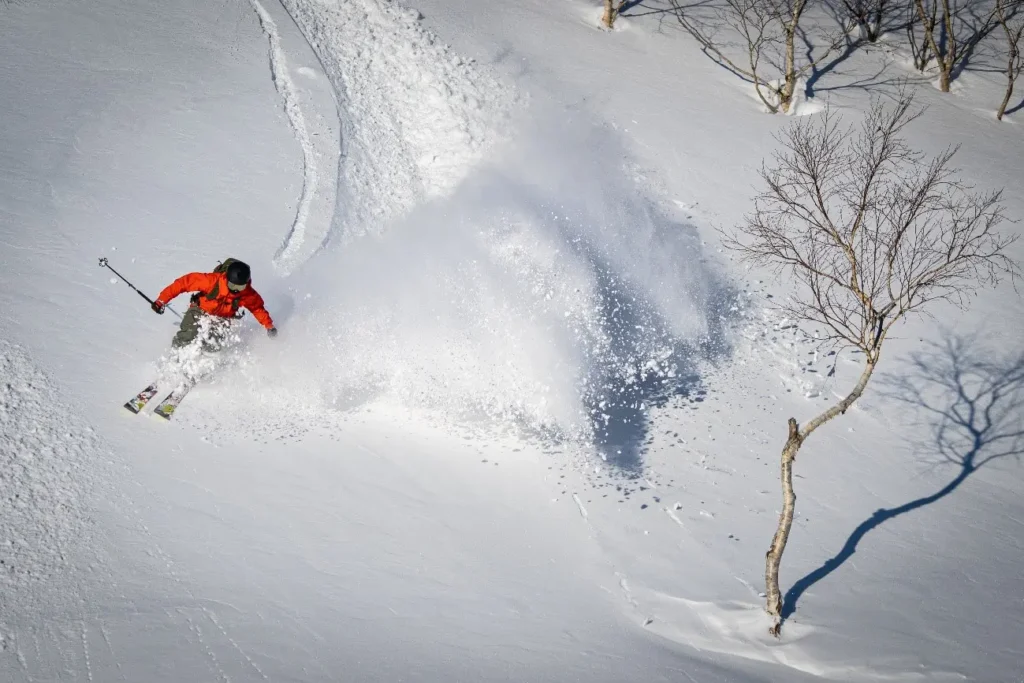
The Alternative: Hakuba Valley, Nagano
Ten interconnected resorts. Hosted 1998 Winter Olympics. Only 3 hours from Shinjuku by train is the most accessible major ski destination in Japan. Better for Indian travellers who don’t want to fly internally to Hokkaido. See my Japanese Alps Skiing Blog for the full comparison.
Not skiing, but if you’re doing Nagano, might as well visit the famous Snow Monkey soaking up in natural hot springs.
2. Cycling: The Best Outdoor Activity in Japan for Indians
The Best: Shimanami Kaido, Hiroshima to Ehime
A 70-kilometre cycling route crossing six islands and six bridges across the Seto Inland Sea. CNN ranked it the fourth best cycling route in the world. Dedicated bike lanes on every bridge, a painted blue line on the road from start to finish, and around ten cycle terminals along the route for bike rental and drop-off. One of Japan’s few cycling routes specifically engineered for tourists with no prior cycling experience. The bridges are 50-70 metres above sea level, offering panoramic views of the inland sea, fishing villages, and citrus orchards on every island. See the full guide of this experience.
When: Late October-November (autumn colours, cool weather) and March-May (cherry blossoms). Avoid July-August heat. How to reach: Shinkansen to Fukuyama, local train to Onomichi. About 1.5 hours from Osaka. Cost: E-bike rental ¥4,000/day (strongly recommended over standard bikes). One-way drop-off included. Beginner-friendly: Designed for beginners. E-bike recommended.
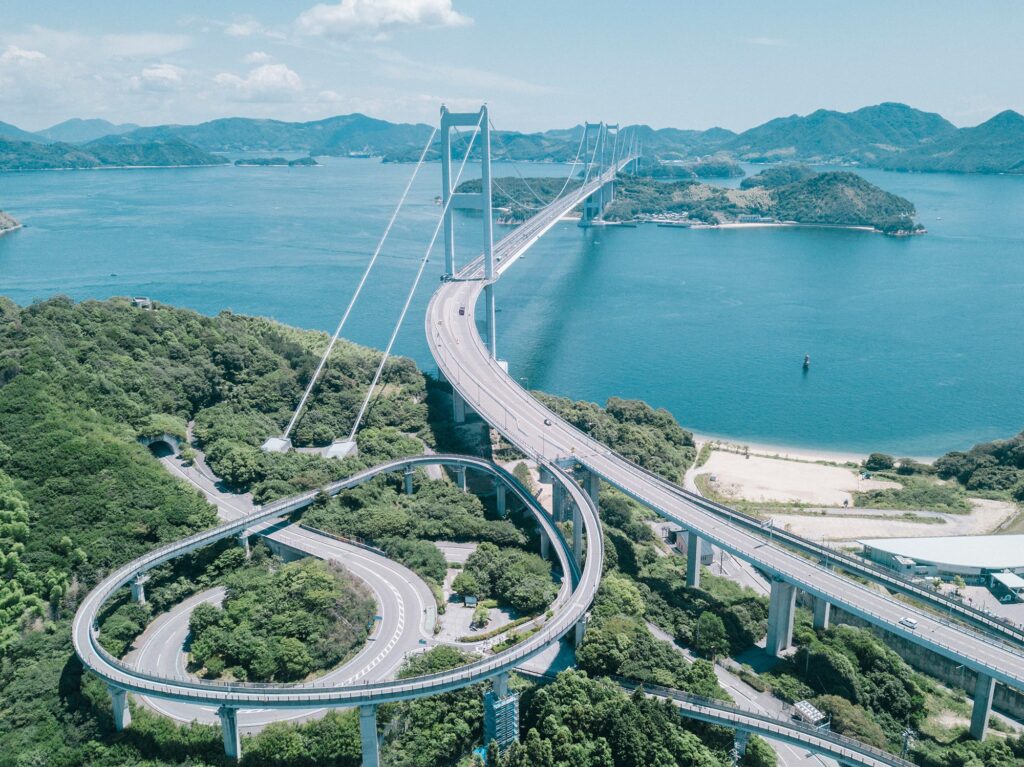
The Alternative: Fuji Five Lakes Circuit, Yamanashi
60-kilometre circuit of five lakes around Mt Fuji with the mountain as the constant backdrop. Start from Kawaguchiko station. Flat terrain on the lake shores; some inclines between lakes. See my Fuji & Around Blog for routes. Best in October-November or early April. You can even book a guided tour with transfers from Tokyo.
3. Forest Hiking
The Best: Yakushima Island, Kagoshima
Yakushima is one of Japan’s three UNESCO Natural Heritage Sites. The island’s central mountains receive up to 10 metres of rain annually, producing an ancient forest of extraordinary density with moss-carpeted cedar trees estimated at 2,000-7,000 years old. The Jomon Sugi, Japan’s oldest and largest living tree, is at the end of a 10-hour return hike through a forest that inspired Hayao Miyazaki’s Princess Mononoke. The island has multiple hiking options ranging from a 90-minute beginner walk through the Shiratani Unsuikyo Ravine to multi-day overnight treks.
When: March-May and September-November for best conditions. Avoid June-July (heavy rain season). How to reach: Fly Kagoshima → Yakushima (35 min) or high-speed ferry (1h50m from Kagoshima). Cost: Free trail access. Guided Jomon Sugi trek ¥8,000-12,000. Overnight mountain hut ¥5,000. Beginner-friendly: Shiratani Unsuikyo is accessible. Jomon Sugi trek requires good fitness is 10 hours, steep sections.
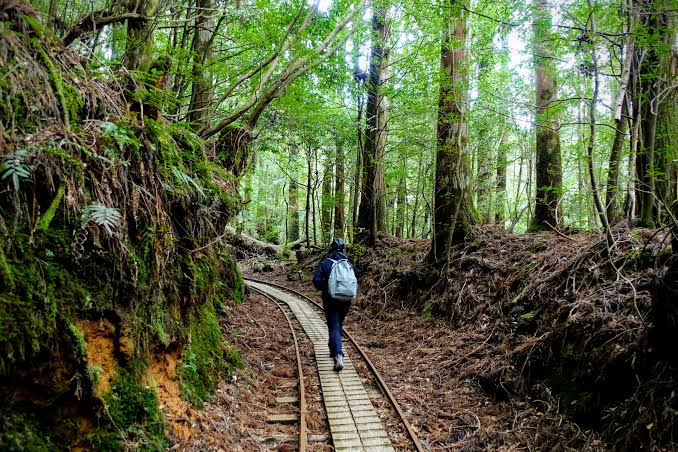
The Alternative: Aokigahara Forest (Sea of Trees), Yamanashi
Dense 30-sq-km volcanic forest at the base of Mt Fuji. Entirely flat, unlike Yakushima. Famous for its absolute silence (lava underground absorbs sound), complete disorientation (compasses malfunction due to iron-rich rock), and unusual beauty. Guided tours available. Do not enter alone or without a guide. 2 hours from Shinjuku by bus.
4. Scuba Diving and Snorkelling
The Best: Kerama Islands, Okinawa
Kerama is the single best entry point for scuba diving as an outdoor activity in Japan for Indians who have never dived before. The Kerama Islands are 40 kilometres west of Naha and have water clarity so extraordinary that the local tourist association coined the term “Kerama Blue” to describe it. The coral coverage, fish biodiversity, and sea turtle population are among the finest in Asia.
More than 70% of divers who visit Kerama for the first time cite sea turtle encounters as their highlight, the turtles are so habituated to divers that they swim alongside rather than fleeing. The Kerama National Park protects the reef, keeping boat traffic limited. From November to March, humpback whales pass through the surrounding waters.
When: May to October for warm, clear water (24-30°C). November-March for whale watching but cooler water (20-24°C). How to reach: High-speed ferry from Naha (35-70 min depending on island), ¥2,150-3,200. Cost: Snorkelling day tours ¥4,000-8,000. Beginner discover dives ¥12,000-18,000. Beginner-friendly: Very. Multiple beginner-oriented dive shops in Naha and on the islands.
Here is a link to book your Kerama Underwater Experience.
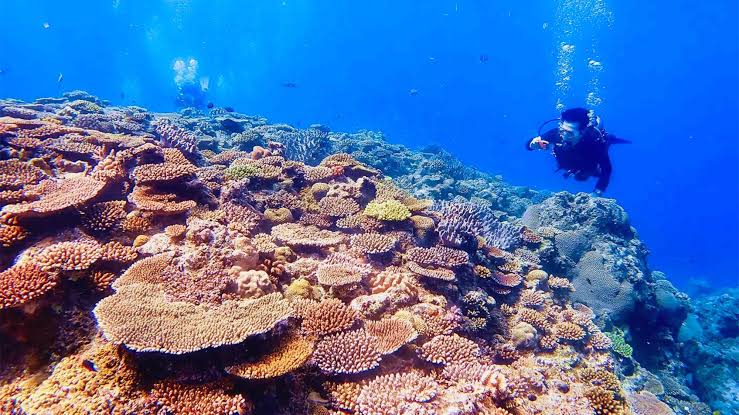
The Alternative: Miyako Island, Okinawa
Japan’s most praised diving destination among experienced divers for featuring cave diving, wall diving, and an extraordinary population of manta rays (accessible year-round from Ogami Island). The Yoshino Beach snorkelling site is one of Japan’s best no-gear snorkelling locations. 1-hour flight from Naha. See my Okinawa Blog.
5. Mountain Trekking
The Best: Northern Japan Alps, Nagano (Tateyama-Kurobe Alpine Route)
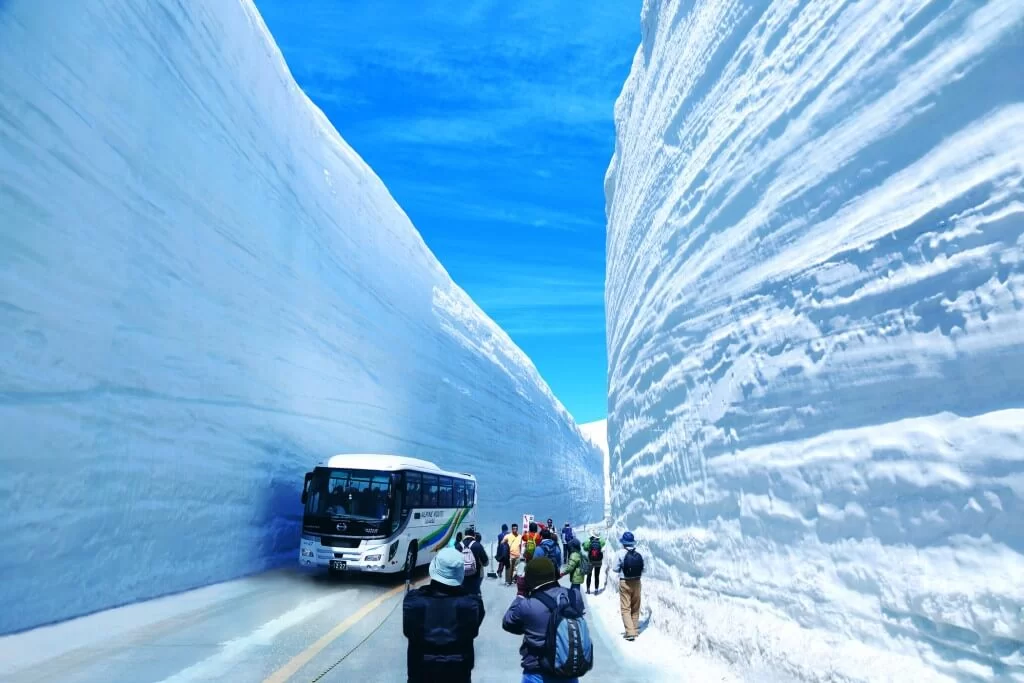
The Tateyama-Kurobe Alpine Route is one of Asia’s great mountain traversals a 37-kilometre crossing of the northern Japan Alps that uses ropeways, trolley buses, cable cars, and snow corridors on foot, connecting Toyama on the Sea of Japan side with Omachi-Shinano in Nagano. The route passes through the Murodo Plateau at 2,450 metres, past volcanic steam vents, across snow walls up to 20 metres high (a unique sight even in late April), and offers panoramic views of peaks over 3,000 metres. It is not a technical mountaineering route, it can be done in walking shoes, but the altitude and exposure are genuine.
When: Late April to mid-November. The famous snow corridor walls are highest in late April-May. How to reach: Train to Toyama (2.5 hours from Osaka by Shinkansen) → Tateyama Cable Car. Or approach from Shinano-Omachi side. Cost: Full one-way Alpine Route pass ~¥12,400 (~₹7,400). Book in advance, especially for late April. Beginner-friendly: Yes. no technical climbing. Good walking shoes required.
The Alternative: Mt Fuji Summit Climb
The classic Japanese trekking experience. 3,776m, open July 1-September 10, ¥4,000 mandatory fee, mountain hut reservation required. The goraikō (summit sunrise) is the payoff. See Mt Fuji Hike Guide for the full 2026 permit and logistics guide.
You can book a 2-Day guided group hike here.
6. Wildlife Exploration
The Best: Shiretoko Peninsula, Hokkaido (UNESCO)
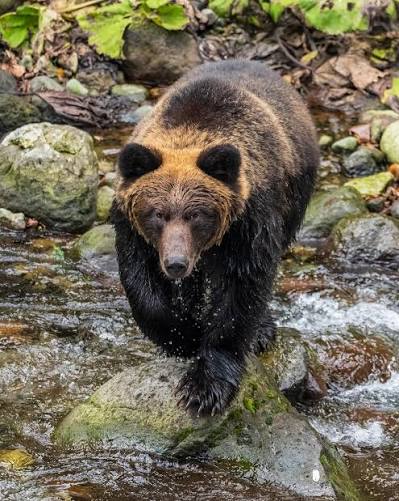
Shiretoko is Japan’s most remote and ecologically significant wildlife destination. A small peninsula jutting into the Okhotsk Sea in eastern Hokkaido, it has one of Japan’s largest concentrations of brown bears commonly sighted along rivers during salmon season (August-October). The forest also supports Blakiston’s fish owls (the world’s largest owl, population ~140 individuals), Steller sea eagles, red foxes, and Ezo deer.
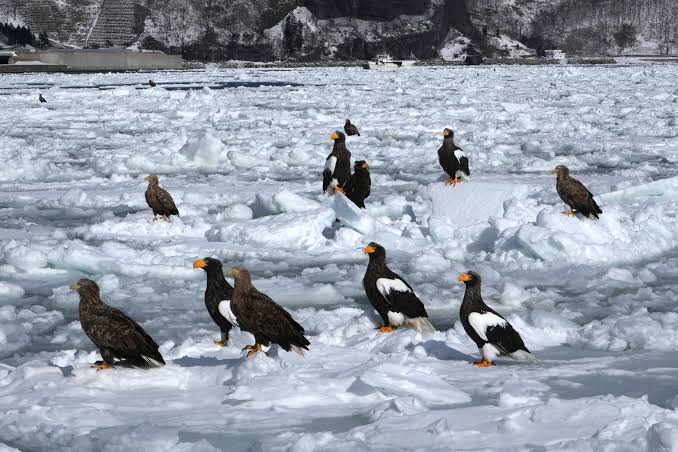
In winter (January-March), drift ice forms along the coast, carrying Steller sea eagles perching on ice floes, one of wildlife photography’s most remarkable spectacles. Boat tours from Utoro operate year-round with different seasonal wildlife.
When: June-October for bears and active wildlife. January-March for drift ice + sea eagles. How to reach: Fly Sapporo → Memanbetsu Airport (~1 hour), then 1.5-hour drive to Utoro. See my Hokkaido Guide. Cost: Wildlife boat tours ¥5,000-12,000. Guided bear walks ¥8,000-15,000. Beginner-friendly: Boat tours require no fitness. Guided coastal walks are gentle.
Here is a link for Hokkaido: Lake Toya, Bear Ranch, Otaru.
The Alternative: Kushiro Marshland, Hokkaido
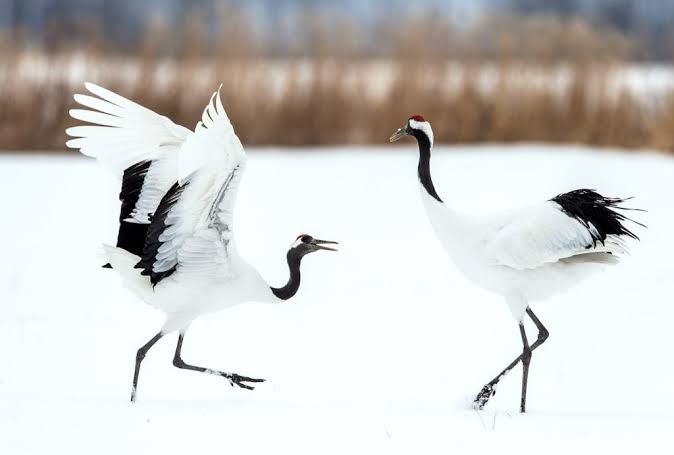
Japan’s largest wetland is a 26,000-hectare national park that is the winter home of the Japanese red-crowned crane, one of the world’s rarest birds (global population ~1,700). Canoe tours through the marsh in summer (July-September); crane viewing at feeding stations in winter (December-March). 40 minutes from Kushiro by bus.
While you are in Hokkaido, you can even experience Biei Furano Flower Sea Tour Blue Pond
7. White-Water Rafting
The Best: Yoshino River, Tokushima (Shikoku)
The Yoshino River is Japan’s most celebrated white-water rafting destination is 194 kilometres long, cutting through the mountain gorges of Shikoku with rapid classifications ranging from Grade 2 to Grade 4 in peak season. The scenery along the river involves vertical limestone cliffs, forested gorges, and clear turquoise water. The Oboke and Koboke gorge sections offer the most dramatic combined white-water and scenery experience. The best tours combine 2-3 hours of rafting with gorge boat rides at calmer sections.
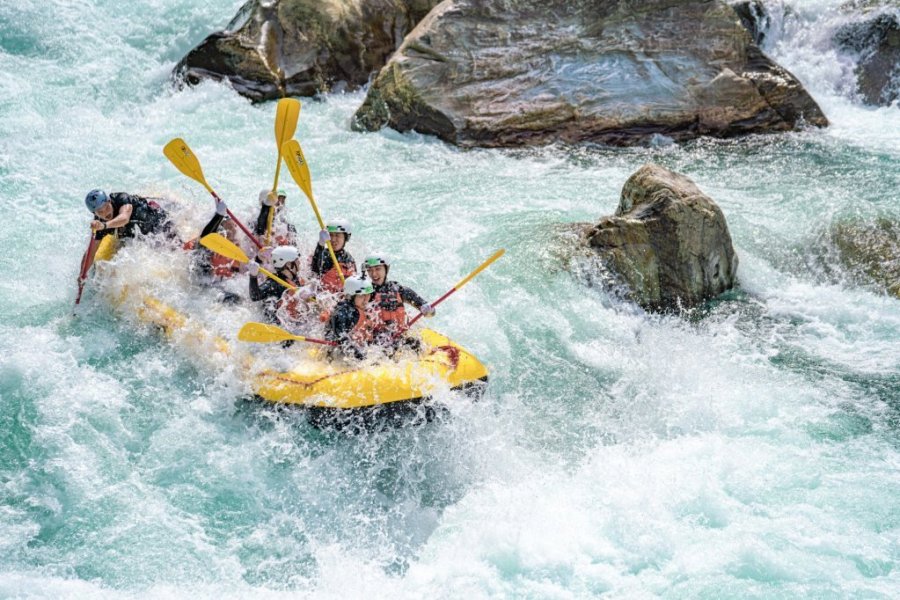
When: April-October. Spring snowmelt (April-June) produces the highest rapids. How to reach: JR Dosan Line from Kochi to Oboke Station (~1 hour). From Osaka, 2.5 hours by express train. Cost: Half-day rafting tours ¥5,000-7,000. Full-day ¥10,000-14,000. Beginner-friendly: Grade 2-3 tours are accessible to non-swimmers with life jackets (mandatory). Grade 4 for experienced only.
The Alternative: Minakami, Gunma
Japan’s most accessible white-water rafting destination is under 90 minutes from Tokyo Shinjuku. The Tone River and Nakatsu River offer Grade 2-3 rapids through forested gorges in Gunma Prefecture. Multiple English-friendly operators (including the well-established Canyons Japan company). ¥5,500-8,000 for half-day tours. Ideal for travellers based in Tokyo who want a one-day outdoor adventure.
8. Sea Kayaking
The Best: Iriomote Island, Okinawa
Iriomote is the most remote inhabited island in Japan is 90% dense subtropical rainforest, 45 minutes by ferry from Ishigaki. The coastal kayaking here combines mangrove river paddling (the Urauchi River, Japan’s longest mangrove river) with open sea routes around pristine untouched coastline. The biodiversity encountered while kayaking includes the Iriomote wildcat (one of Japan’s rarest animals), kingfishers, sea turtles in the water, and remarkable coral visibility from the kayak. Multi-day kayaking tours can be arranged with camping on uninhabited beaches.
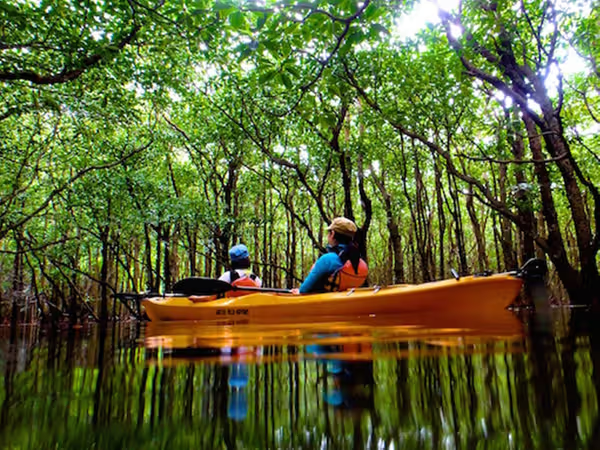
When: April-June and October-November. Avoid typhoon season (August-September). How to reach: Fly Naha → Ishigaki (1 hour), ferry Ishigaki → Iriomote (35-45 min). See my Okinawa Guide. Cost: Half-day mangrove kayaking ¥6,000-10,000. Multi-day tours from ¥25,000. Beginner-friendly: Mangrove tours are calm and guided. Ocean kayaking requires basic fitness.
The Alternative: Tottori Coast, San’in Region
The Uradome Coast in Tottori offers dramatic sea kayaking through sea caves, rock arches, and karst formations carved by the Sea of Japan. Some operators use transparent kayaks for visibility of the seabed below. Less tropical than Okinawa, dramatically different character. 2.5 hours from Osaka by train.
There is also a Blue Cave Private Snorkel at Okinawa in case you want to add it with your Kayak experience.
9. Surfing
The Best: Chiba Coast, near Tokyo (Ichinomiya / Shida Beach)
Shidashita and Ichinomiya in Chiba Prefecture are Japan’s most consistent surf breaks, just 90 minutes from Tokyo. The area hosts the Japan Open of Surfing annually and was the location of the 2020 Olympic surfing competition. The consistent beach breaks work for beginners and intermediates, and the infrastructure around Ichinomiya is world-class: multiple surf schools, equipment rental, and English-friendly instructors. The surf culture here is genuine, this isn’t a tourist activity but a local lifestyle.
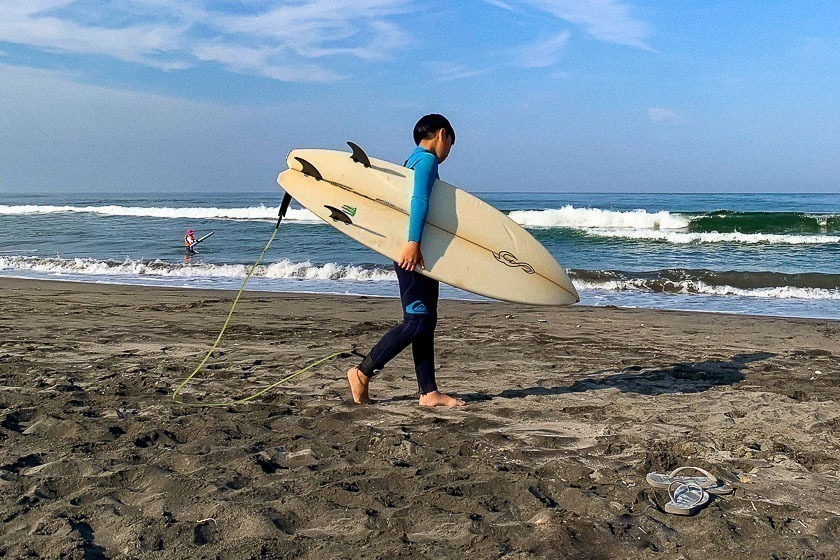
When: September-November (late typhoon swells) and March-May. Summer can be flat; winter is cold but glassy. How to reach: JR Sotobo Line from Tokyo’s Soga Station to Kazusa-Ichinomiya (~75 min, ¥1,320). Cost: Half-day lesson with board and wetsuit ¥4,000-7,000. Board rental alone ¥2,000-3,000/day. Beginner-friendly: Very. Some of Japan’s best surf schools for beginners.
The Alternative: Miyazaki, Kyushu
Japan’s warm-water surf capital. Miyazaki City’s beaches (Aoshima, Kisakihama) offer warm subtropical water (22-27°C in summer), consistent beach and reef breaks, and a genuine local surf culture built over 40 years. Less crowded than Chiba. Accessible by Shinkansen from Hakata (Fukuoka).
10. Paragliding
The Best: Hakuba, Nagano
Hakuba is best known as a world-class ski resort that transforms in summer into one of Japan’s premier paragliding destinations. Taking off from the upper mountain slopes, flights soar over the Hakuba Valley with the Northern Japan Alps rising as a wall of 3,000-metre peaks on one side and the valley floor spreading below. Tandem paragliding (no experience needed) is available through multiple operators from July to September. Clear mountain air, thermals generated by the warm valley below, and the backdrop of snow-capped peaks create the best paragliding conditions and views in Japan.
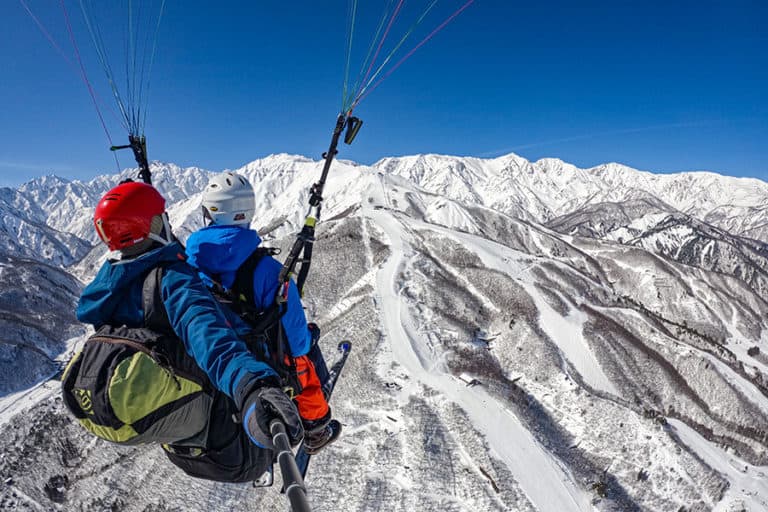
When: July to early October. How to reach: Shinkansen to Nagano, then bus to Hakuba (~1 hour). 3 hours from Tokyo. Cost: Tandem paragliding ¥15,000-22,000 (~₹9,000-13,200) for a 20-40 minute flight. Beginner-friendly: Tandem flights need no experience whatsoever. You just run off a slope strapped to a licensed pilot.
The Alternative: Aso, Kumamoto (Kyushu)
Paragliding over the Aso Caldera, the world’s largest volcanic caldera gives a view unavailable anywhere else: smoke rising from the active Nakadake crater, the vast caldera floor below, and mountain ridges stretching to the horizon. The combination of active volcano + flight is genuinely unlike anything. 1.5 hours from Kumamoto by bus.
11. Canyoning
The Best: Hakuba, Nagano
Hakuba’s rivers, fed by snowmelt from the Northern Alps, pour through steep volcanic gorges, creating some of Japan’s most spectacular canyoning terrain. The activity is known locally as “shower climbing” which involves swimming, scrambling, sliding down natural water chutes, and jumping into pools through narrow rock corridors.
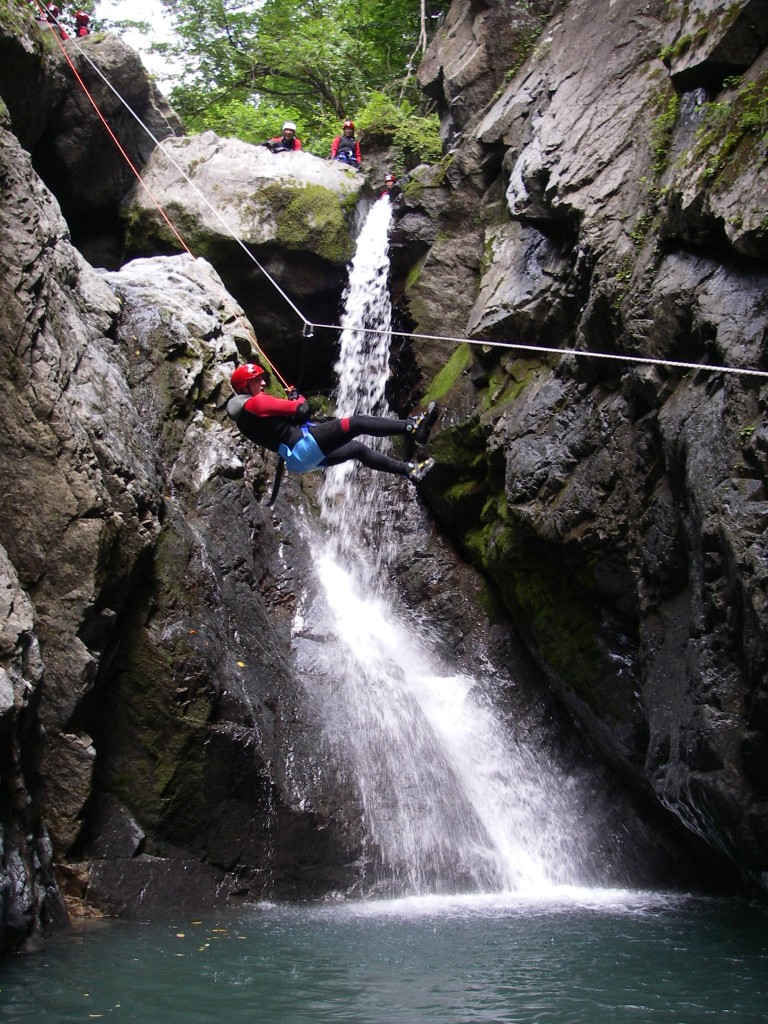
Guides from operators like Evergreen Outdoor Center run tours at multiple difficulty levels from June to October, with some tours accessible to children as young as 5. The water is cold (snowmelt), the scenery extraordinary, and the natural infrastructure is narrow gorges, pools, and waterfalls, rivals anything in Europe or New Zealand.
When: June to October. July-August is warmest water. How to reach: Same as Hakuba paragliding, bus from Nagano Station. Cost: Half-day guided canyoning ¥8,000-12,000 (~₹4,800-7,200). Beginner-friendly: Beginner tours available; no prior experience needed. Swimming ability required.
The Alternative: Minakami, Gunma
Under 90 minutes from Tokyo. The gorges of Minakami are shallower and less dramatic than Hakuba but genuinely accessible and excellent for first-timers. Canyons Japan runs English-language tours through the Dogashima Canyon from ¥8,000.
12. Drift Ice Walking- Japan’s Most Unique Outdoor Experience
The Best: Abashiri and Utoro, Hokkaido (Nowhere Else in the World Below 44°N)
This is Japan’s most unusual outdoor activity and one of the most unique in the world. Every winter (January to March), the sea surrounding northeastern Hokkaido freezes, and drift ice from the Sea of Okhotsk flows south to create a frozen landscape extending to the horizon. Drift ice walking involves wearing a dry suit and walking, and often floating across ice floes in the open sea, stepping from floe to floe, observing sea eagles overhead, and occasionally breaking through into the icy water (the dry suit keeps you perfectly safe).
The closest equivalent globally requires travelling to the Arctic. Japan offers this experience 2.5 hours from Sapporo.
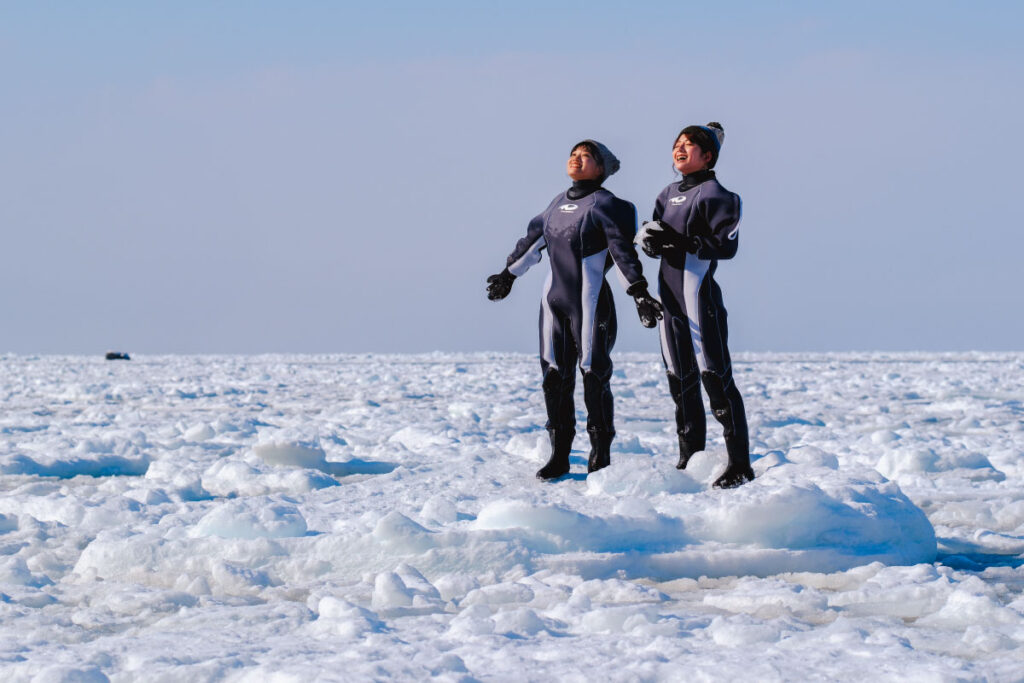
When: Late January to mid-March. February is peak ice season. How to reach: JR Senmo Line from Sapporo → Abashiri (~4.5 hours) or fly from Sapporo to Memanbetsu (~1 hour), then bus. Cost: Drift ice walking tours ¥6,000-8,000 (~₹3,600-4,800) for 90-minute guided walks. Dry suit included. Beginner-friendly: No fitness or experience required. Guided and dry-suit equipped.
The Alternative: Garinko/Aurora Icebreaker Cruises, Monbetsu
If walking across ice feels too adventurous, board the Garinko or Aurora II icebreaker vessels from Monbetsu and Abashiri, which physically crash through the drift ice while you watch from the warm deck or lean over the bow. ¥3,500-4,500. Family-friendly.
Bonus Activities Worth Knowing About
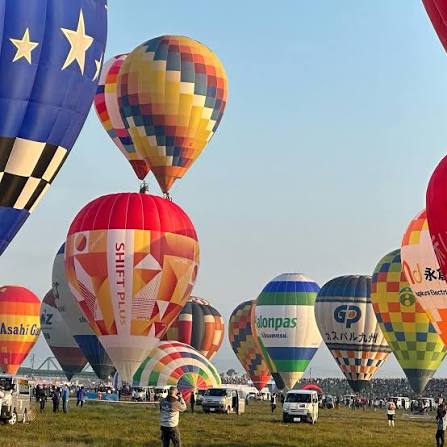
Hot Air Ballooning in Saga, Kyushu: The Saga International Balloon Fiesta (October-November) is Asia’s largest balloon festival. Tethered and free-flight rides available. Extraordinary sunrise flights over the Saga Plain.
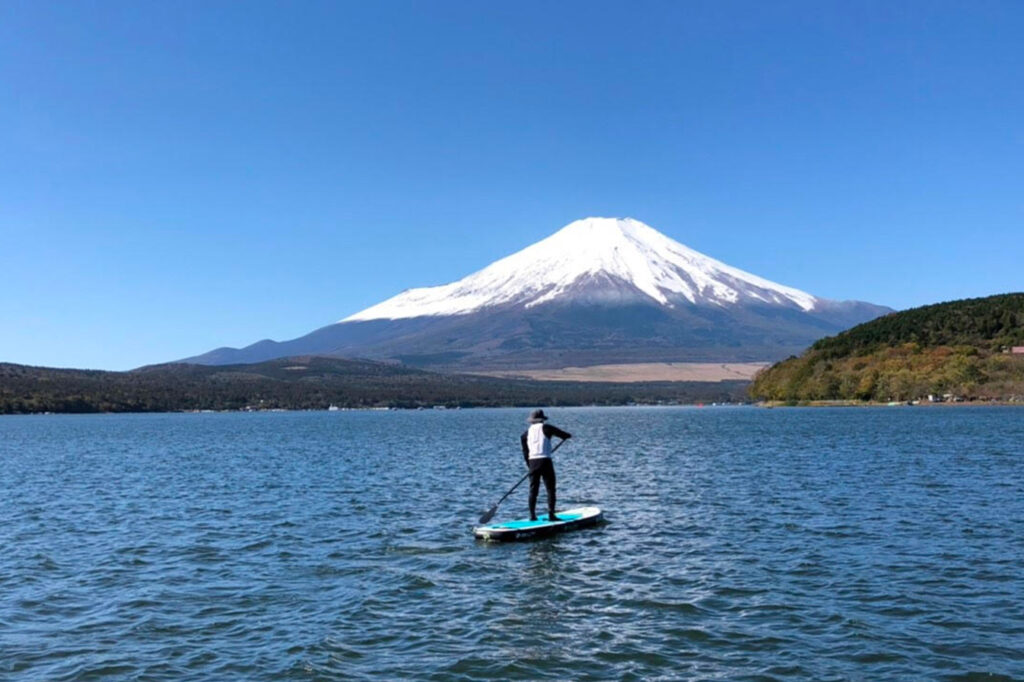
Stand-Up Paddleboarding (SUP) in Lake Kawaguchi, Yamanashi: Paddleboard on the surface of Lake Kawaguchi with Mt Fuji rising above you. Several operators near the lake. ¥3,000-5,000. See my Mt Fuji and the Surrounding Lakes Guide.
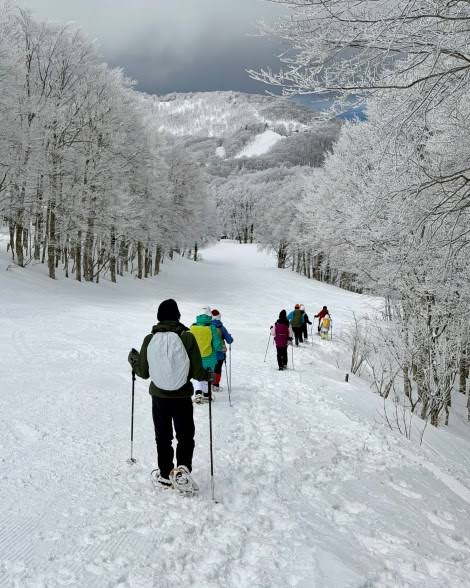
Snowshoeing in Nagano Highlands / Daisetsuzan, Hokkaido: Walk through silent winter forests on snowshoes, following animal tracks. No skiing fitness required. ¥5,000-8,000 for guided half-day tours.
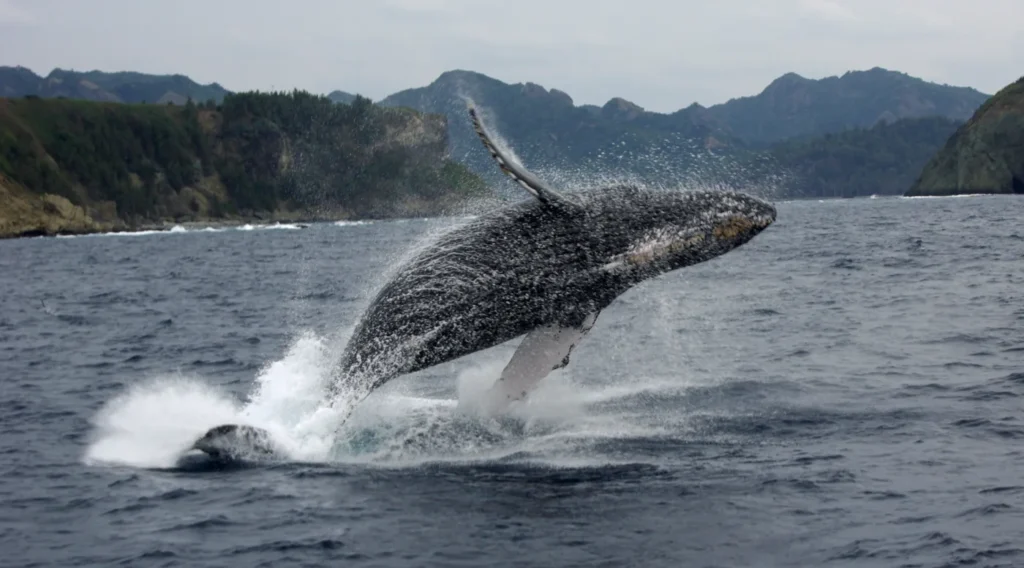
Whale Watching in Ogasawara Islands: Humpback whale season January-April. The Ogasawara Island chain is one of the world’s best whale watching locations. Accessible only by 25-hour ferry from Tokyo, see UNESCO guide. ¥8,000-12,000 for half-day whale watching.
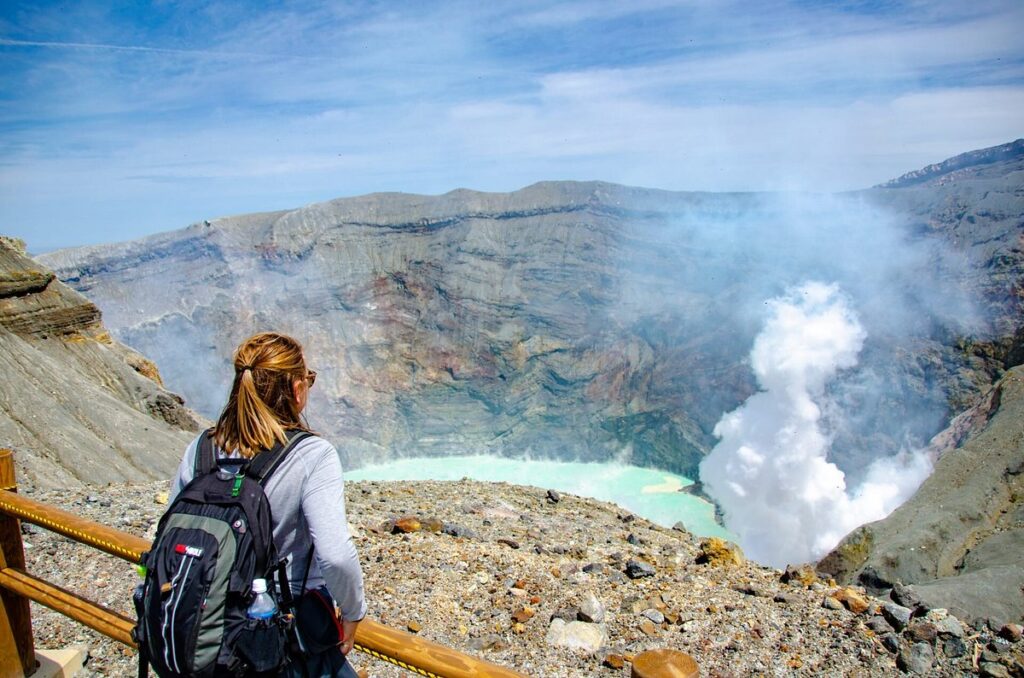
Volcano Hiking at Mt Aso, Kumamoto: Walk around the rim of the Nakadake crater is an active volcano with a glowing acid lake at its centre. Access depends on volcanic activity levels; check before travelling. Free to observe when open. ¥200 to access the crater observation area.
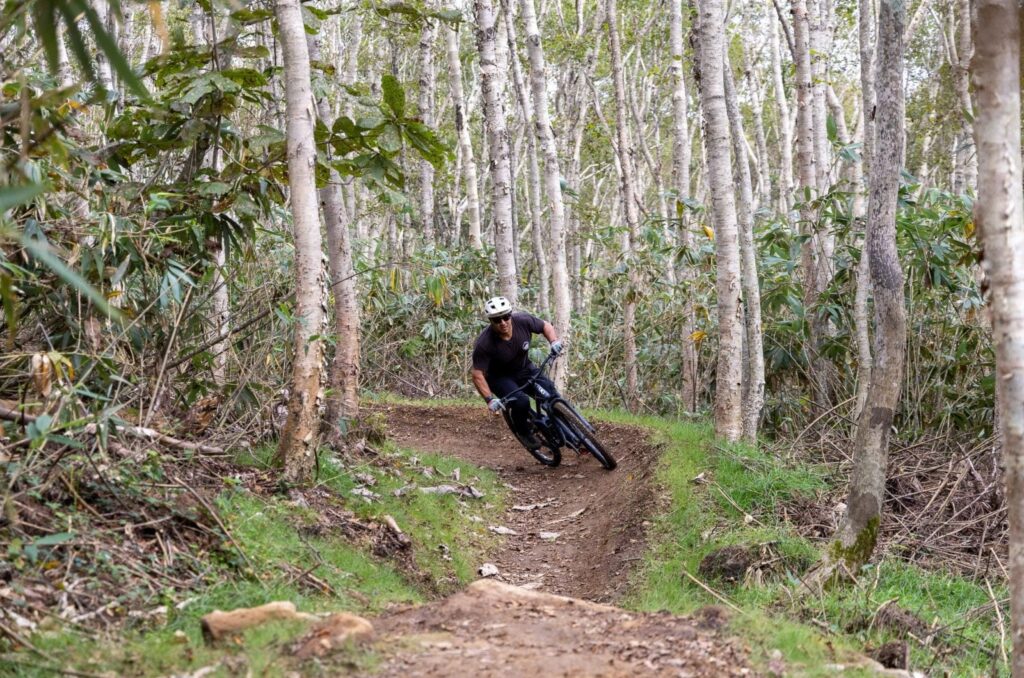
Mountain Biking in Niseko / Hakuba Summer Season: Both major ski resorts operate summer mountain biking seasons using the lift network to reach the top. Full-suspension bikes, skills parks, and downhill runs for all levels. ¥5,000-8,000/day including lift.
Seasonal Overview: When to Do Each Outdoor Activity in Japan for Indians
| Activity | Best Season | Location |
|---|---|---|
| Skiing / Snowboarding | December-March | Niseko, Hakuba |
| Drift Ice Walking | January-March | Abashiri, Hokkaido |
| Snowshoeing | December-March | Nagano, Hokkaido |
| Cycling (Shimanami) | April-June, October-November | Hiroshima-Ehime |
| Forest Hiking (Yakushima) | March-May, September-November | Kagoshima |
| Mountain Trekking (Tateyama) | Late April-November | Nagano-Toyama |
| Surfing (Chiba) | September-November | Ichinomiya, Chiba |
| Canyoning (Hakuba) | June-October | Nagano |
| Paragliding (Hakuba) | July-October | Nagano |
| White-Water Rafting | April-October | Shikoku, Gunma |
| Sea Kayaking (Iriomote) | April-June, October-November | Okinawa |
| Scuba / Snorkelling (Kerama) | May-October | Okinawa |
| Wildlife (Shiretoko Bears) | August-October | Hokkaido |
| Wildlife (Cranes) | December-March | Kushiro, Hokkaido |
Cost Summary in INR: What Each Outdoor Activity in Japan Costs for Indians
| Activity | Entry Level Cost (Per Person) |
|---|---|
| Skiing (half-day lesson + lift) | ¥15,000-20,000 (~₹9,000-12,000) |
| Cycling (Shimanami e-bike, 1 day) | ¥4,000 (~₹2,400) |
| Yakushima guided hike | ¥8,000-12,000 (~₹4,800-7,200) |
| Scuba discover dive (Kerama) | ¥12,000-18,000 (~₹7,200-10,800) |
| Mt Fuji climb (full cost) | ¥20,000-25,000 (~₹12,000-15,000) |
| Wildlife boat tour (Shiretoko) | ¥5,000-12,000 (~₹3,000-7,200) |
| White-water rafting (half day) | ¥5,000-7,000 (~₹3,000-4,200) |
| Sea kayaking (Iriomote half day) | ¥6,000-10,000 (~₹3,600-6,000) |
| Paragliding tandem | ¥15,000-22,000 (~₹9,000-13,200) |
| Canyoning (half day) | ¥8,000-12,000 (~₹4,800-7,200) |
| Drift ice walking | ¥6,000-8,000 (~₹3,600-4,800) |
| Surfing lesson + board | ¥4,000-7,000 (~₹2,400-4,200) |
Frequently Asked Questions
Q: Is Japan good for outdoor activities for Indians? Exceptionally so. The combination of volcanic geology (dramatic landscapes), island geography (diverse coastal environments), subarctic to subtropical latitude (massive activity variety), and world-class infrastructure makes Japan one of the most underrated outdoor destinations on Earth.
Q: Which outdoor activity is most unique to Japan? Drift ice walking near Abashiri in Hokkaido; walking across frozen sea ice in the Okhotsk Sea is a genuinely one-of-a-kind experience unavailable in any other easily accessible destination. Second uniquely-Japan: volcanic hiking at Mt Aso’s active crater.
Q: Can beginners do these activities? Most activities on this list have beginner-friendly options: tandem paragliding, discover scuba dives, guided canyoning tours, E-bike cycling, and beginner ski lessons are all designed for people with no prior experience. The exceptions are Mt Fuji summit climbing (requires physical fitness) and Grade 4 rafting (experience needed).
Q: What’s the best outdoor activity within a day trip of Tokyo? White-water rafting in Minakami, Gunma (90 min from Shinjuku) or surfing in Ichinomiya, Chiba (90 min). Both offer full outdoor experiences without an overnight stay.
Q: Can I combine multiple outdoor activities in one Japan trip? Yes, the most natural combinations: Okinawa diving + snorkelling + kayaking (all in one region), Nagano/Hakuba skiing + canyoning + paragliding (summer/winter at the same destination), Hokkaido wildlife + drift ice + skiing (all winter activities), and Shimanami Kaido cycling + Okinawa beaches (split trip).
Q: Is vegetarian food available at outdoor activity bases? Most activity bases are in rural or semi-rural Japan where vegetarian options are limited. Standard advice: carry convenience store supplies, communicate dietary needs in advance, and reference the vegetarian Japan survival guide.
Final Word
Outdoor activities in Japan for Indians remain one of the most under-explored travel opportunities in Asia. Japan is often sold as a cultural destination, and that cultural dimension is extraordinary. But the same country that has the world’s best powder snow also has tropical coral reefs, ancient cedar forests, drift ice wilderness, and volcanic calderas you can walk around.
The outdoor Japan is a different country from the one most Indian travellers experience- wilder, more demanding, and just as extraordinary. Pick one activity from this list and add it to your next Japan trip. You won’t regret the detour.
For the full Japan trip experience, read my main blog here.
Drop a comment with the activity you’d pick first, and the one you wouldn’t have thought of if this list hadn’t told you about it.