 By Tarang Bansal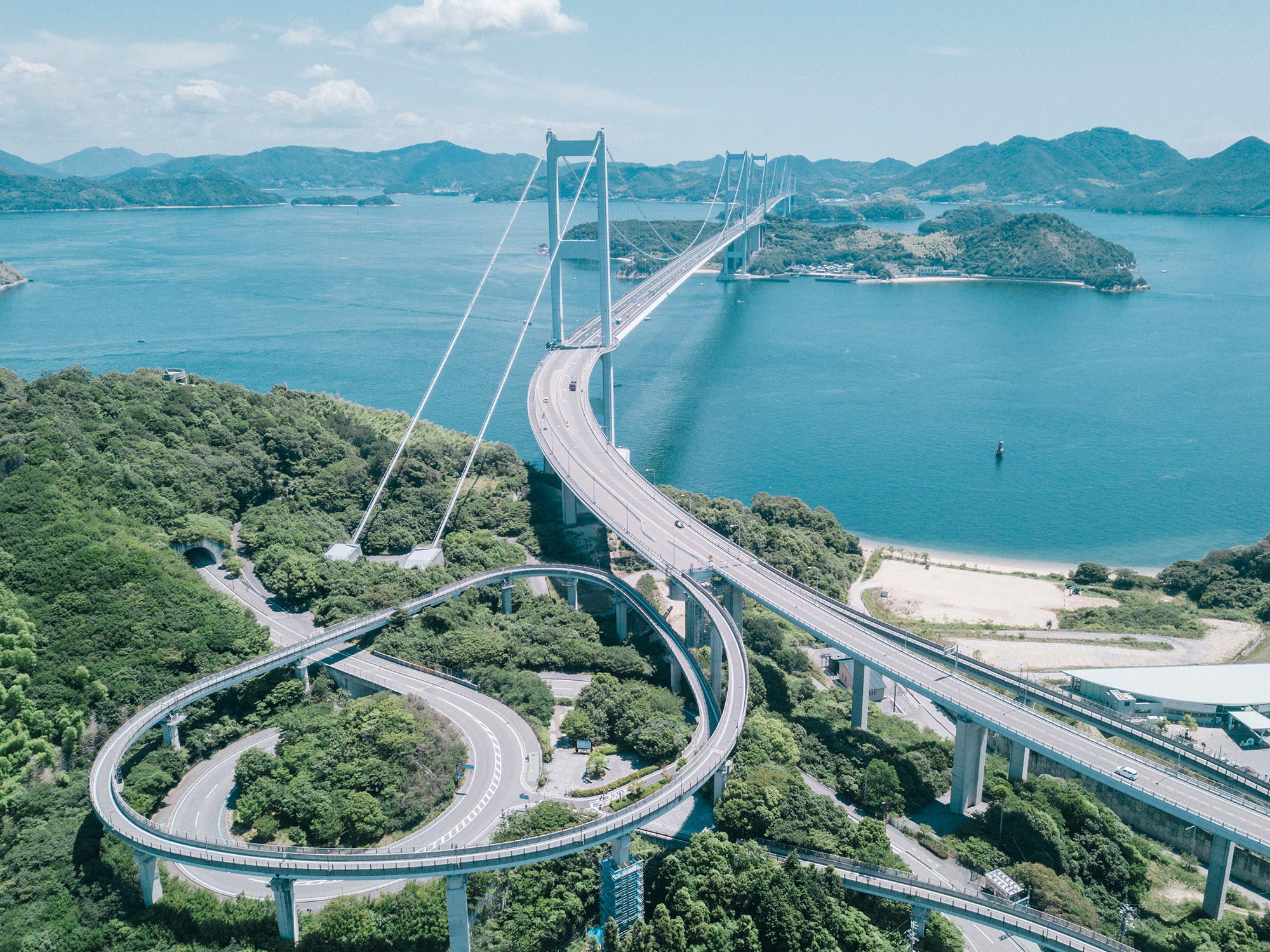

This Shimanami Kaido cycling guide covers the full 70km route, costs, bike rental and how to reach it from Osaka or Kyoto in under 90 minutes. The 70 km island-hopping cycling route across the Seto Inland Sea, ranked among the world’s best. Routes, costs, luggage transfer, time estimates for non-cyclists, kids and pets, safety, and how to reach from Osaka or Kyoto.
A note before we begin: I haven’t cycled the Shimanami Kaido myself yet, it’s high on my next-Japan-trip list. So this isn’t a personal experience post. It’s a research-led planning guide for Indian travellers who, like me, have heard this route mentioned every time someone says “best cycling route in the world” and want the complete logistical picture before booking flights.
The Shimanami Kaido (しまなみ海道) is a 70-kilometer cycling route in southern Japan that crosses 6 islands and 6 bridges, connecting Onomichi in Hiroshima Prefecture (on the main island of Honshu) to Imabari in Ehime Prefecture (on the island of Shikoku). It crosses the Seto Inland Sea via dedicated bike lanes built into massive suspension bridges, with ocean views at every turn.
CNN ranked it the 4th best cycling route in the world. Over 300,000 cyclists ride it every year. It’s been called Japan’s most beloved bike route, and unlike most cycling destinations globally, it’s designed to be ridden by complete beginners on rented bikes with no equipment of their own, which makes it ideal for Indian travellers who don’t have a cycling background.
This guide covers everything you need to plan it.
If you want the full Japan trip context, read my main 10-day Japan blog here.
What Makes Shimanami Kaido Special
Most cycling tourism in the world requires you to bring your own bike, plan multi-day logistics, and usually involves uncomfortable terrain. Shimanami flips all of this:
- Dedicated bike lanes on every bridge and most island roads, separated from car traffic, with their own ramps designed for cyclists
- A blue line painted on the road from start to finish that you simply follow, no map needed
- Around 10 cycle terminals along the route where you can rent OR drop off your bike
- Hundreds of “Cycle Oasis” rest stops marked by blue-and-white signs at shops, cafes, convenience stores, and shrines, where cyclists get free water, restrooms, and bike pumps
- Ferries, buses, and taxis available throughout if you want to bail at any point
- Excellent infrastructure for non-cyclists: e-bikes, kids’ bikes, tandem bikes, child seats, helmets, and luggage transfer all built into the system
The route is genuinely engineered to be tourist-proof.
How Long Does It Take? Time Estimates for Average Adults
This is the question most first-timers get wrong, so here are honest numbers based on local guides:
For an average adult on a regular cross bike (no e-assist):
- Pure cycling time only (no stops): 6-7 hours
- With realistic stops for photos, lunch, rest breaks: 8-10 hours straight
- Comfortable single-day pace: start by 8 AM, finish by 6 PM
For an average adult on an e-bike:
- Pure cycling time: 4-5 hours
- With stops: 6-8 hours
- Bridge climbs become effortless
For someone who hasn’t cycled in years:
- Strongly recommend an e-bike, no exceptions
- Plan 2 days minimum, with overnight stay on Omishima or Ikuchijima (the halfway islands)
- Average rolling speed will be 12-15 km/h on flats, slower on bridge approaches
For experienced cyclists:
- Single-day blast: 4-5 hours hard riding
- Many do it as a sub-4-hour challenge
Honest recommendation: unless you cycle weekly back home, don’t try to do it in one day. The bridges have steep ramps. You’ll want to stop for lemon ice cream on Ikuchijima, ramen on Omishima, and a temple visit on Innoshima. A 2-day, 1-night trip with overnight on Omishima or Ikuchijima (the midway islands) is the sweet spot.
How to Reach Shimanami Kaido from Osaka, Kyoto, or Tokyo
This is where Indian travellers often miscalculate. Most plan their Japan trip around Tokyo, Kyoto, and Osaka and Shimanami is closer to Osaka/Kyoto than to Tokyo. Plan accordingly.
From Osaka or Kyoto (Recommended)
- Sanyo Shinkansen from Shin-Osaka to Fukuyama Station: ~1 hour, ~¥9,000-10,000
- From Fukuyama, transfer to JR Sanyo Line local train to Onomichi Station: ~20 minutes, ~¥420
- Total: ~1.5 hours, ~₹6,000
If starting from Kyoto, the Shinkansen leg is roughly the same time and cost. Shimanami can be done as a 2-day trip from Osaka or Kyoto, with no need to involve Tokyo at all.
From Tokyo
- Tokaido-Sanyo Shinkansen to Fukuyama: ~4 hours, ~₹11,000-12,000
- Then local train to Onomichi: 20 minutes
- Significantly more time and cost from Tokyo. Only worth it if Shimanami is the trip’s main goal.
After Finishing in Imabari
- Shimanami Liner bus from Imabari to Fukuyama Station: ~1 hour 20 minutes
- From Fukuyama, take Shinkansen back to Osaka, Kyoto, or onward to Hiroshima/Tokyo
- Or: continue exploring Shikoku from Imabari (Matsuyama is ~40 min by train, with the famous Dogo Onsen)
👉 [INSERT AFFILIATE LINK: Shinkansen tickets via Klook / Japan Rail Pass calculator]
Bike Rental: Costs, Types, and How It Works in our Shimanami Kaido Cycling Guide
The official public rental system is operated by Shimanami Japan with about 10 terminals along the route. It’s the most popular, the cheapest, and the most flexible.
Standard Rental Costs (per calendar day)
- Cross bike (recommended for most adults): ¥3,000 (~₹1,800)
- City bike (with basket): ¥3,000 (~₹1,800)
- Battery-assisted bike (e-bike, beginner-friendly): ¥4,000 (~₹2,400)
- Sports e-bike (most powerful, fastest): ¥6,000 (~₹3,600)
- Kids’ bike: ¥1,000 (~₹600)
- Tandem bike (for couples/parents): ¥4,000 (~₹2,400)- but only available at limited terminals (Setoda Sunset Beach, Omishima, Imabari Itoyama) and only for single-day rental, returned to the same terminal
- Helmets: Free, mandatory on the route
Plus a Refundable Deposit
- ¥1,000-1,100 deposit per bike, returned when you drop the bike off
One-Way Drop-Off
- Included in the rental price, pick up in Onomichi, drop off in Imabari (or vice versa) at any of the 10+ terminals at no extra cost
- Exception: Tandem bikes must be returned to the original terminal
Reservations
- Strongly recommended in spring (March-May) and autumn (October-November), especially for e-bikes and kids’ bikes
- Book through the official Shimanami Japan website (visitshimanami.com)
👉 [INSERT AFFILIATE LINK: Shimanami Kaido bike rental via Klook]
Bridge Tolls and Fees
The good news: bridge tolls for cyclists have been waived since 2014, and the waiver is being extended periodically by Hiroshima and Ehime prefectures to promote tourism. Verify the current status when you book- historically tolls only added up to about ¥500 across all bridges anyway.
The Onomichi-to-Mukaishima bridge is the only segment without a cycling lane. Skip it by taking the Onomichi-Mukaishima ferry instead, ¥110 per adult (with bicycle), runs every 10-15 minutes, takes 5 minutes. This is the official recommended start of the route.
Luggage Transfer: How “Hands-Free Cycling” Works
Cycling 70 km with a backpack is miserable. Cycling 70 km with a 20kg suitcase is impossible. So Japan has built a luggage forwarding system specifically for Shimanami cyclists:
Sagawa Express “Cycling Without Baggage” Service
- How it works: Drop your bag at a participating hotel or terminal in Onomichi in the morning. Sagawa transports it the same day to a partner hotel in Imabari.
- Cost: ~¥1,500-2,500 per bag
- Drop-off cutoff: Usually before 10-11 AM
- Arrival: Bags reach destination by 7 PM the same day
- Available between: Selected hotels in Onomichi, on the islands, and in Imabari
Wakka Door-to-Door
- A specialty service operating between any accommodation along the route
- Better suited for multi-day “slow travel” (e.g., night 1 on Innoshima → night 2 on Oshima)
- Slightly more expensive than Sagawa
- Also offers emergency “taxi-back” pickup if you can’t finish the ride
Yamato TA-Q-BIN (Standard Luggage Forwarding)
- For larger luggage you want to send ahead to your next major destination (e.g., Tokyo or Kyoto)
- Drop at any 7-Eleven; arrives at destination 7-Eleven within 1-2 days
- ~¥1,500-2,500 per suitcase
- Use this if you’re coming from a longer Japan trip with a big suitcase
The Smart Approach
- Carry a small daypack with water, snacks, sunscreen, phone, wallet, and a change of clothes
- Send your main suitcase via Sagawa Express to your Imabari hotel
- Coin lockers at both Onomichi and Imabari stations handle anything in between (¥400-1,000 per locker)
Best Time of Year and What You’ll See
The Seto Inland Sea is genuinely beautiful, with blue-green water, fishing villages, citrus orchards, and a string of small islands stretching to the horizon. The bridges sit 50-70 meters above sea level, giving you panoramic views from the ride itself.
Best Months
- Late October to mid-November: Cool weather (15-22°C), autumn foliage on the islands, peak cycling season
- Mid-March to mid-May: Cherry blossoms, mild temperatures, also peak season
- September: Calmer weather post-typhoon, fewer tourists than spring/autumn
- Avoid: Mid-July to August (brutal heat + humidity), late June (tsuyu rainy season)
Winter (December-February)
- Cycling possible but cold; strong crosswinds on bridges
- Significantly fewer tourists, cheaper accommodation
- Bring proper windbreaker, gloves, and full-body coverage
Views You’ll Encounter
- Onomichi cityscape from the ferry
- Innoshima Bridge (steel truss, the first major crossing)
- Ikuchi Bridge with views of citrus groves
- Tatara Bridge– one of the world’s largest cable-stayed bridges, with the famous “Tatara Thunder Dragon” echo spot
- Citrus orchards on Ikuchijima (“Lemon Island”)- try lemon soft serve
- Kosanji Temple on Ikuchijima- colorful, eclectic temple complex
- Oyamazumi Shrine on Omishima– houses Japan’s largest collection of samurai armor and weaponry
- Kurushima Kaikyo Bridge at 4,015 meters, the longest suspension bridge structure in the world when measured by total length, the dramatic finish on the Imabari side
Cycling with Kids: What Works, What Doesn’t
Shimanami is genuinely family-friendly. Here’s what’s available:
For Older Kids (Approximately 7+, Heights from 114 cm)
- Kids’ bikes in 20-inch (114-137 cm), 22-inch (126-145 cm), and 24-inch (137 cm+) sizes
- ¥1,000/day
- Available at: Onomichi Station, Mukaishima, Innoshima, Setoda Tourist Information, Setoda Sunset Beach, Omishima, Hakata Beach, Oshima, Imabari Itoyama
- Not all terminals have kids’ bikes– check the Shimanami Japan official site
For Younger Kids (Toddlers and Preschoolers)
- Battery-assisted bikes with child seats are available in limited quantity for parents to ride with kids on the back
- Reserve well in advance (3 months for peak season)
- The e-bike’s motor neutralizes the weight of carrying a child
For Couples or Parent-Child Riding Together
- Tandem bikes for ¥4,000/day, but only at limited terminals and single-day return
- Less flexible than separate bikes- confirm pickup terminal in advance
Family Cycling Rules
- Helmets mandatory for everyone, all ages
- Ride single-file, especially on bridges (cross-winds can be strong)
- One adult leads, one adult sweeps the back of the formation
- Plan a relaxed schedule, 2-3 days minimum with kids, with stops at parks and ice cream shops
- Plenty of “bail-out” points if a child gets tired (ferries, buses, terminals)
Cycling with Pets: What’s Possible
Pet-cycling on Shimanami isn’t formally promoted by the official rental system, but it’s done by some cyclists with their own bikes:
- Small dogs in basket-style city bikes: Possible, the rental city bikes have front baskets
- Pet trailers/carriers attached to bikes: Need to bring your own setup
- Larger dogs: Will likely need their own running pace, not feasible for the full 70 km
- Pet-friendly accommodations: Limited but growing along the route, especially specialty cycle hotels like Wakka on Omishima
If pet cycling is critical to your trip, contact rental shops and accommodations in advance. Most are pet-tolerant in Japan but rarely set up specifically for pet-cycling.
Safety: Solo, Female, and General Safety
Japan is one of the safest countries in the world, and Shimanami is one of its safest cycling routes:
General Safety
- The bike route is fully separated from car traffic on every bridge with dedicated lanes
- Roads are well-paved, well-marked, and patrolled
- Cycle Oasis stops every few kilometers for rest, water, and assistance
- Emergency contact via Shimanami Japan (0848-22-3911) for breakdowns or accidents
- Free helmets, mandatory wearing
- Standard rental insurance covers hospitalization (¥4,500/day)- worth checking outpatient coverage before relying on it
Solo Female Safety
- Multiple female bloggers and solo travelers describe Shimanami as completely safe for solo female cyclists
- Hostels, guesthouses, and hotels along the route routinely accommodate solo women
- Plenty of fellow cyclists in spring/autumn- you’re rarely alone on the route
- Locals on the islands are welcoming and used to lost or struggling tourists
Solo General
- Same- easy to do solo
- Group dinners at cyclist-focused guesthouses (Cyclo No Ie, etc.) make it social if you want company
- Wakka and similar hotels offer solo-friendly setups
Things to Watch For
- Bridge crosswinds: Strong, especially in winter and on long suspension bridges. Slow down.
- Ramp gradients: Bridges have long, gradual ramps that can tire you out faster than expected
- Heat in summer: Brutal, like the rest of Japan. Carry a lot of water; consider e-bike
- Don’t ride at night: Officially discouraged. Bikes have small lights for visibility but not for illuminating dark rural roads
- Don’t ride drunk: Same fines as drunk driving in Japan
Where to Stay Along the Route
Hotels and guesthouses cluster around the islands:
- Onomichi: Hotel Cycle (inside the U2 complex, cyclist-themed), Green Hill Hotel
- Innoshima: Family minshuku and small hotels
- Ikuchijima/Setoda: Hotel Tsutsui (mid-range modern ryokan), guesthouses
- Omishima: Wakka Hotel– the most cyclist-tailored option, with glamping tents, dome rooms, bike services, and a halfway location making it ideal for 2-day riders
- Imabari: Cyclo No Ie guesthouse, business hotels near the station
Most are bike-friendly– they accept bike storage, offer luggage transfer, and have English-speaking or English-accommodating staff.
Costs Summary for an Indian Traveler
For a 2-day, 1-night Shimanami trip from Osaka or Kyoto, budget roughly:
- Train (round trip Osaka-Onomichi-Imabari-Osaka): ₹12,000-15,000
- Bike rental (2 days, e-bike): ¥8,000 = ₹4,800
- Luggage transfer (Sagawa one-way): ¥2,000 = ₹1,200
- Hotel (1 night, mid-range Omishima or Ikuchijima): ¥10,000-15,000 = ₹6,000-9,000
- Food (2 days): ¥5,000-8,000 = ₹3,000-4,800
- Misc (Cycle Oasis donations, snacks, ice cream): ₹2,000
Total per person: Roughly ₹30,000-37,000 for a 2-day Shimanami trip.
👉 [INSERT AFFILIATE LINK: Shimanami Kaido cycle hotels via Booking.com / Agoda]
Frequently Asked Questions
Q: Where is the Shimanami Kaido? The Shimanami Kaido is a 70 km cycling route in southern Japan connecting Onomichi (Hiroshima Prefecture) to Imabari (Ehime Prefecture, on Shikoku island), crossing 6 islands and 6 bridges across the Seto Inland Sea.
Q: How long does it take to cycle the Shimanami Kaido? For an average adult, 6-9 hours of pure cycling for the full 70 km. Most beginners do it as a 2-day trip with one overnight stop.
Q: How do I reach Shimanami Kaido from Osaka or Kyoto? Take the Sanyo Shinkansen to Fukuyama Station (~1 hour), then a local JR train to Onomichi Station (~20 minutes). Total: about 1.5 hours one way.
Q: How much does it cost to cycle Shimanami Kaido? Bike rental ranges from ¥1,000 (kids) to ¥6,000 (premium e-bike) per day. Adults pay ¥3,000-4,000 for a standard rental. Helmets are free. Bridge tolls are currently waived for cyclists.
Q: Can beginners cycle the Shimanami Kaido? Yes, it’s specifically designed for beginners. Use an e-bike, plan 2 days, and you’ll be fine even if you haven’t cycled in years.
Q: Is luggage transfer available? Yes. The Sagawa Express “Cycling Without Baggage” service moves luggage between hotels for ¥1,500-2,500 same-day. Wakka offers more flexible door-to-door options.
Q: Can I cycle with kids? Yes. Kids’ bikes are available from ¥1,000/day for ages 7+. Battery-assisted bikes with child seats are available for younger kids- reserve in advance.
Q: Is it safe for solo female cyclists? Yes. Multiple solo female travelers report it as completely safe. Japan is one of the world’s safest countries; Shimanami is well-trafficked, well-marked, and has emergency support.
Q: When is the best time to cycle Shimanami Kaido? Late October-November (autumn colors, cool weather) and late March-May (cherry blossoms). Avoid August (brutal heat) and June (rainy season).
Q: Do I need to bring my own bike? No. The public rental system has 10+ terminals along the route with bikes available for one-way trips, including helmets.
Q: Can I cycle with my pet/dog? Possible with a small dog in a basket or trailer, but not formally supported by the rental system. Bring your own setup if pet-cycling is essential.
Final Word
The Shimanami Kaido is one of those rare travel experiences that rewards both the casual day-tripper and the serious cyclist. It’s accessible without being dumbed down. It has world-class infrastructure without losing its rural Japanese character. And from Osaka or Kyoto, it’s a perfectly bookable 2-day side trip from a standard Japan itinerary.
For anyone planning Japan and looking for something beyond the Tokyo-Kyoto-Osaka loop, this is genuinely worth carving out 2-3 days. I’m planning to do it myself on my next Japan trip and when I do, I’ll come back and write the experience version of this post.
For the full Japan trip context and the rest of my Japan content, read my main blog here.
Drop a comment if you’ve cycled Shimanami. I want to hear which island stop, which view, and which bridge stayed with you.