 By Tarang Bansal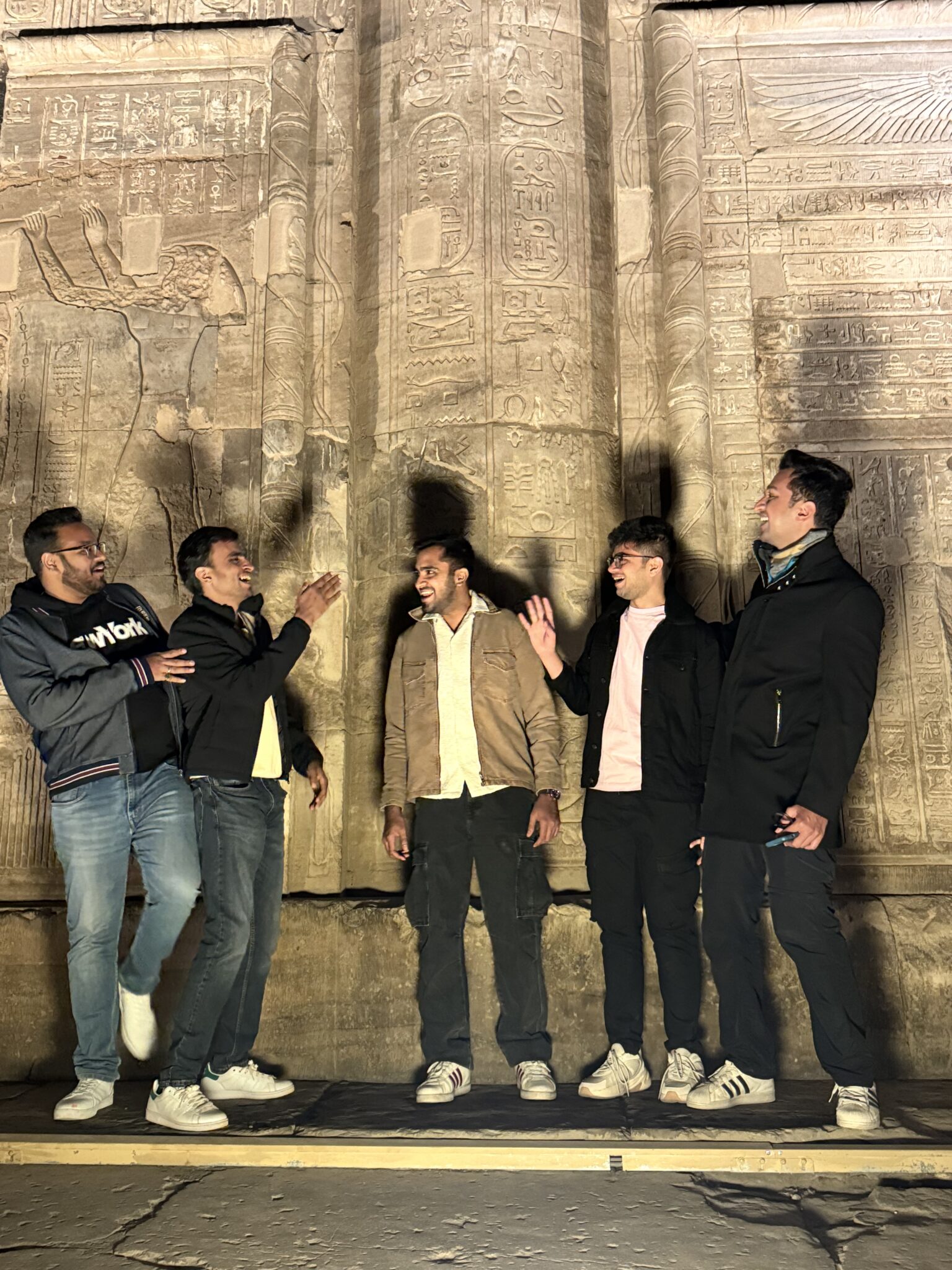
Words like mummies, pyramids, pharaohs, Egyptian gods (Isis, Ra, Seth, Horus, Amun-Ra, Osiris), the Nile, and Cleopatra, most Indians grew up hearing or seeing these in some form, whether through school textbooks or the dozens of Hollywood movies built around ancient Egypt. The connection runs so deep that Indian languages still call the country “Misr,” not Egypt.
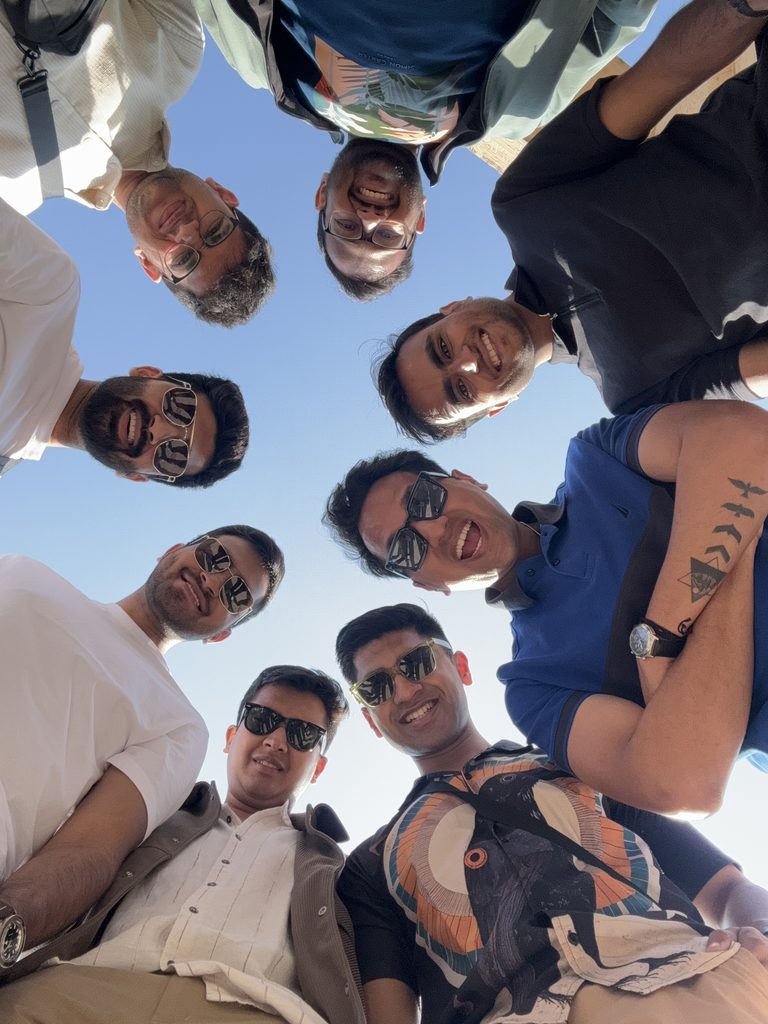
We were 8 friends who put together this Egypt itinerary for Indians while travelling from 23rd December 2023 to 1st January 2024. Here’s how our 9-day trip looked:
| Date | Day | When Awake | Night in |
|---|---|---|---|
| 23rd Dec | Sat | Koshari & the Old City | Cairo |
| 24th Dec | Sun | The Pyramids, Papyrus & Perfume | Aswan |
| 25th Dec | Mon | Philae Temple, Reservoir, Nubian Village | Cruise |
| 26th Dec | Tue | Abu Simbel, Kom Ombo, Crocodile Museum | Cruise |
| 27th Dec | Wed | Edfu Temple, Light-Sound show at Karnak | Cruise |
| 28th Dec | Thu | Karnak & Luxor Temples, Valley of the Kings | Luxor |
| 29th Dec | Fri | Water Park & Resort Stay | Hurghada |
| 30th Dec | Sat | Scuba with dolphins in Red Sea | Hurghada |
| 31st Dec | Sun | Zamalek & Casino at Marriott | Cairo |
| 1st Jan | Mon | Returned to India |
Tourist Landmarks in Egypt
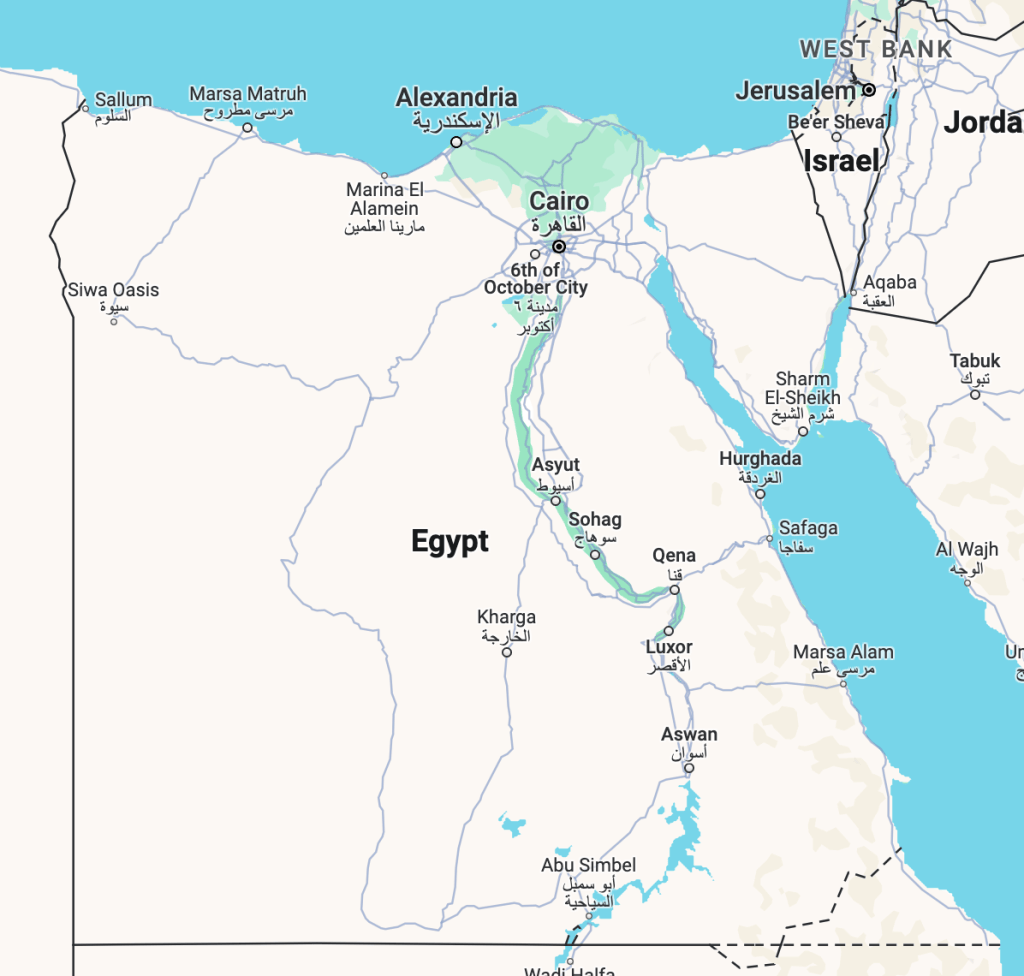
Tourist Landmarks Along an Egypt Itinerary
Following the map from left to right, then top to bottom along the Nile:
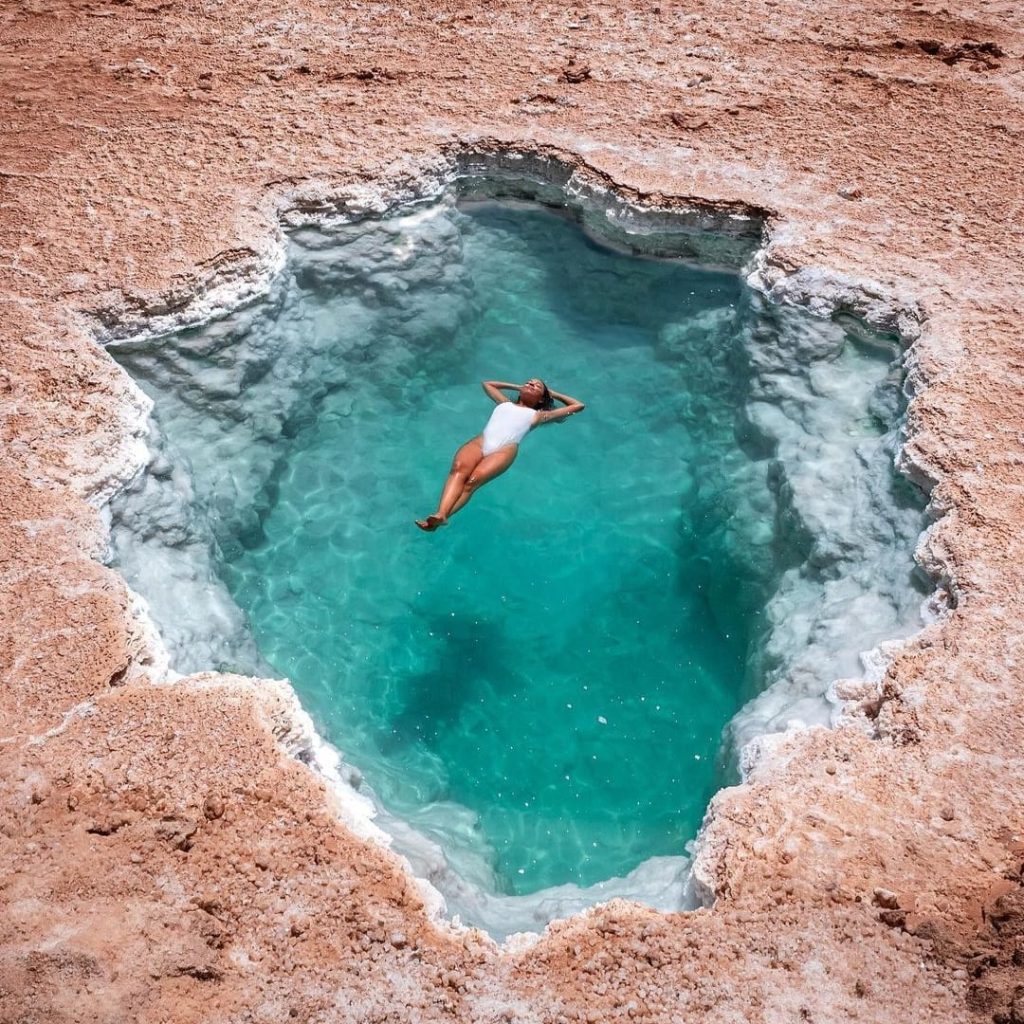
- Siwa Oasis: Saltwater pools in a distant, arid setting
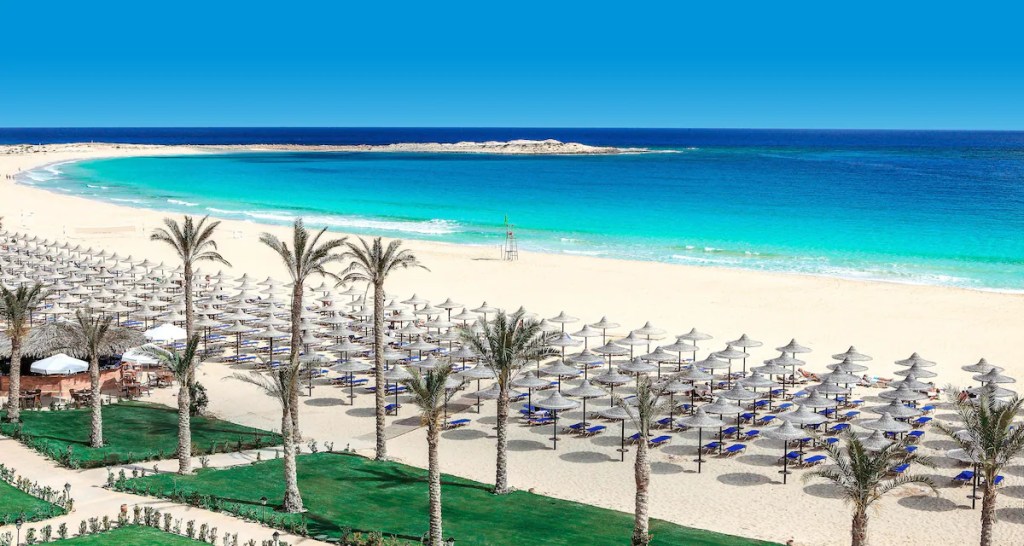
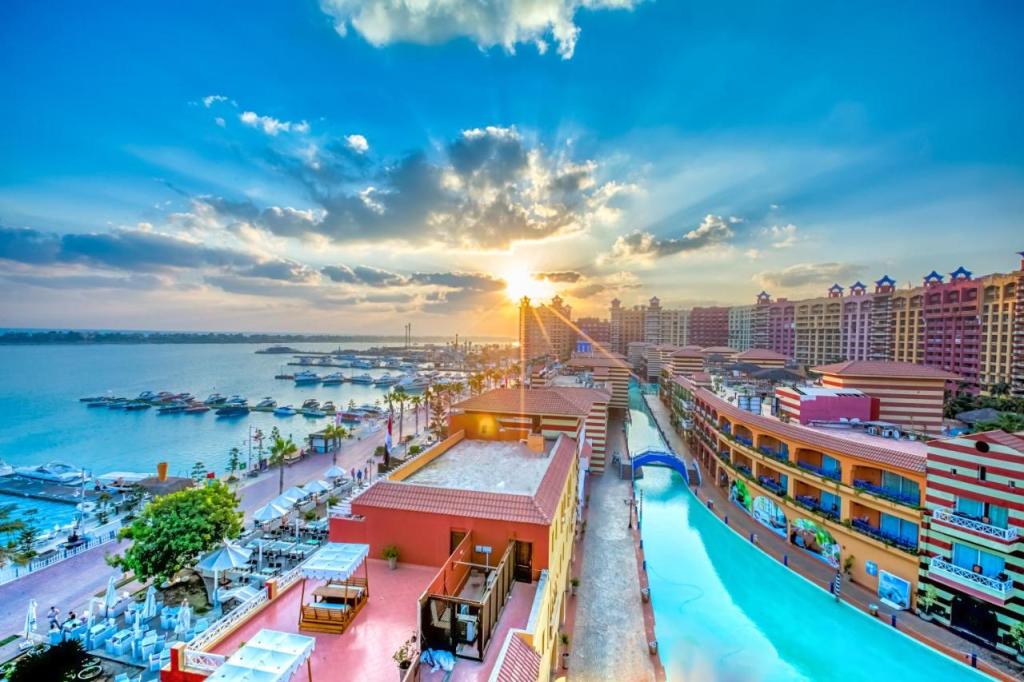
- Marsa Matruh & Marina El Alamein: Resort towns along the Mediterranean
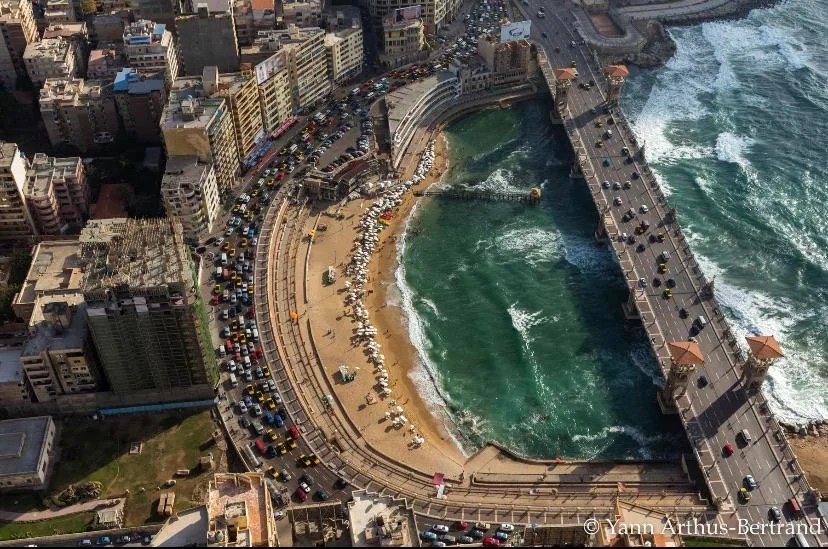
- Alexandria: A city layered with ancient history
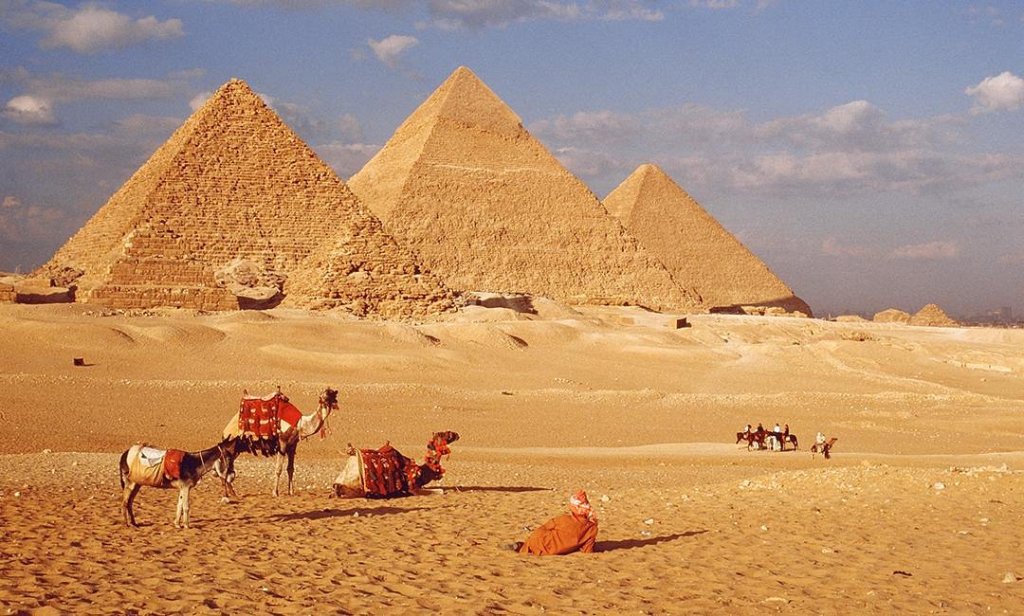
- Cairo: The capital, and home to the Pyramids
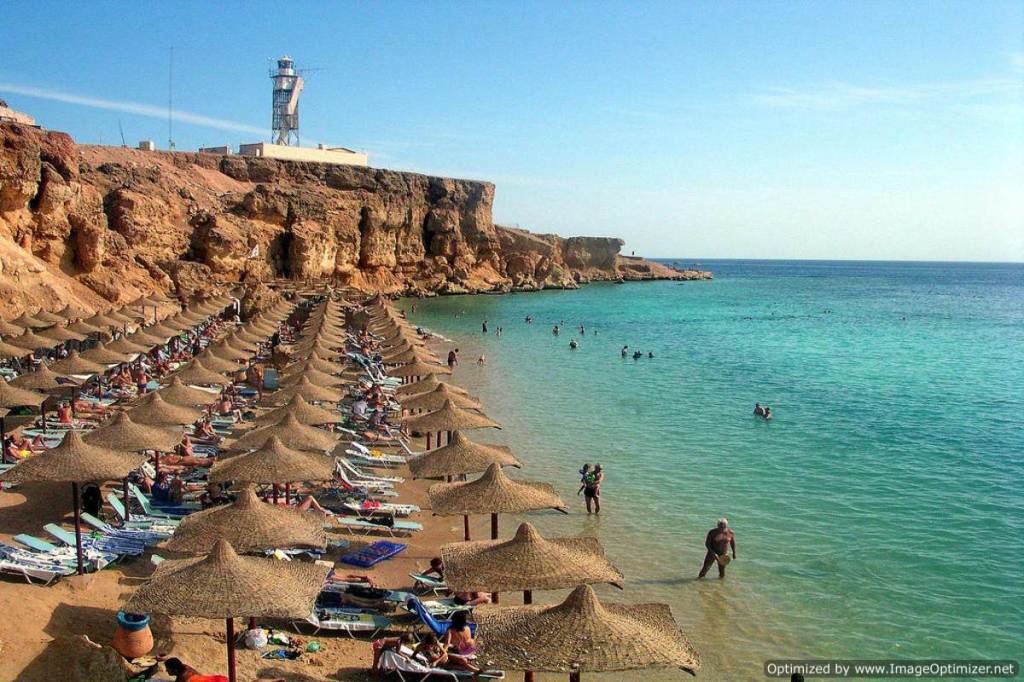
- Sharm El-Sheikh: A resort town on the Sinai Peninsula
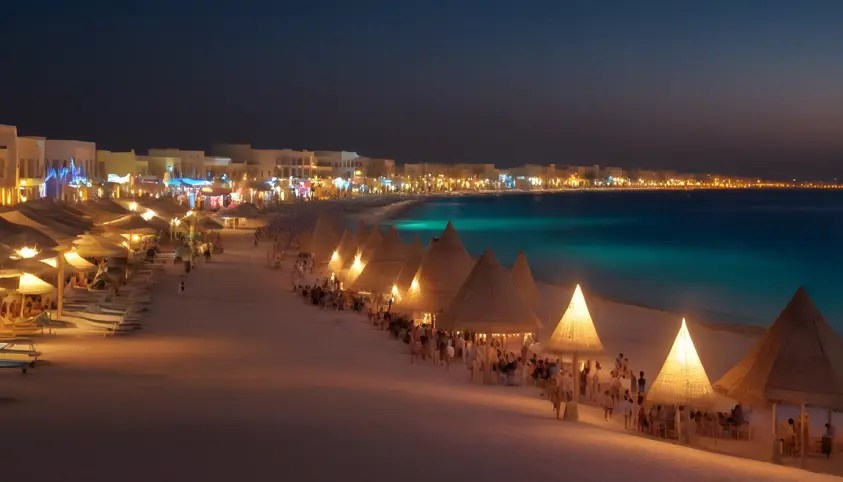
- Hurghada & Marsa Alam: Resort towns along the Red Sea
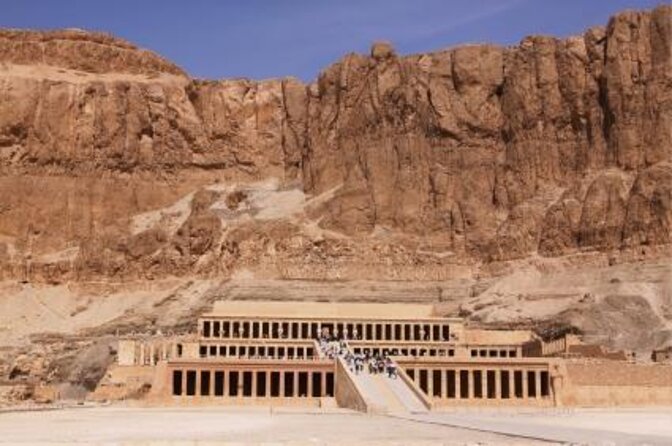
- Luxor: An ancient city home to the Karnak Temple and Valley of the Kings
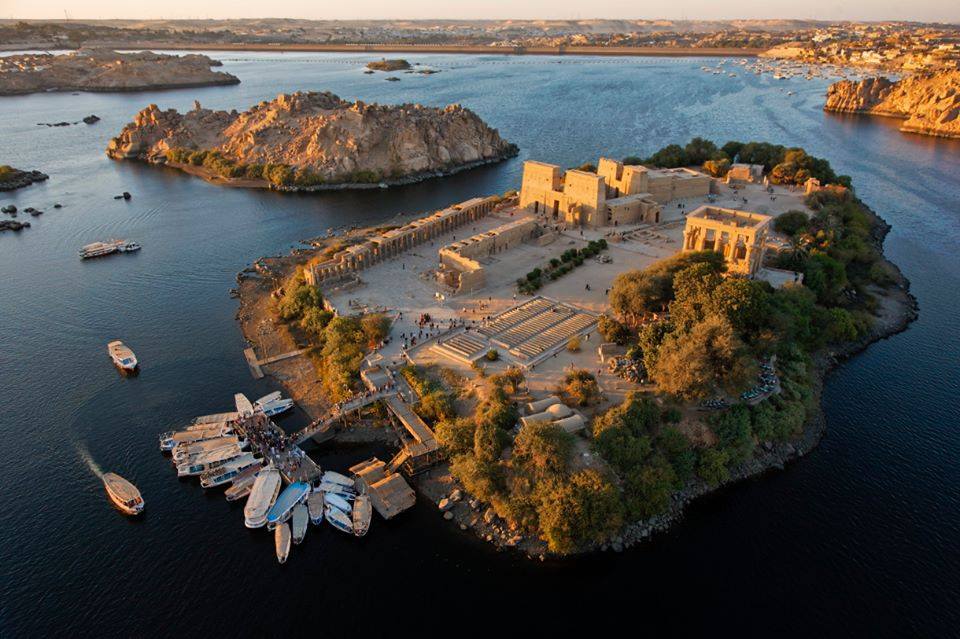
- Aswan: An ancient city with the Philae Temple and Nubian Village
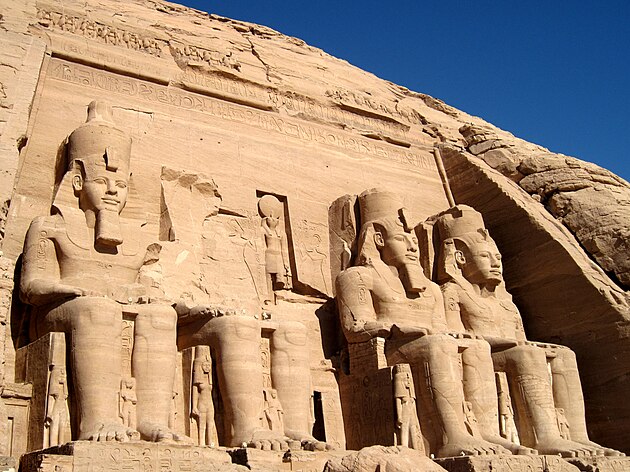
- Abu Simbel: One of Egypt’s most iconic landmarks
Little About Today’s Egypt
Egypt is largely desert, sitting in the north-eastern corner of the African continent. Most of the population lives along the Nile, the longest river in the world.
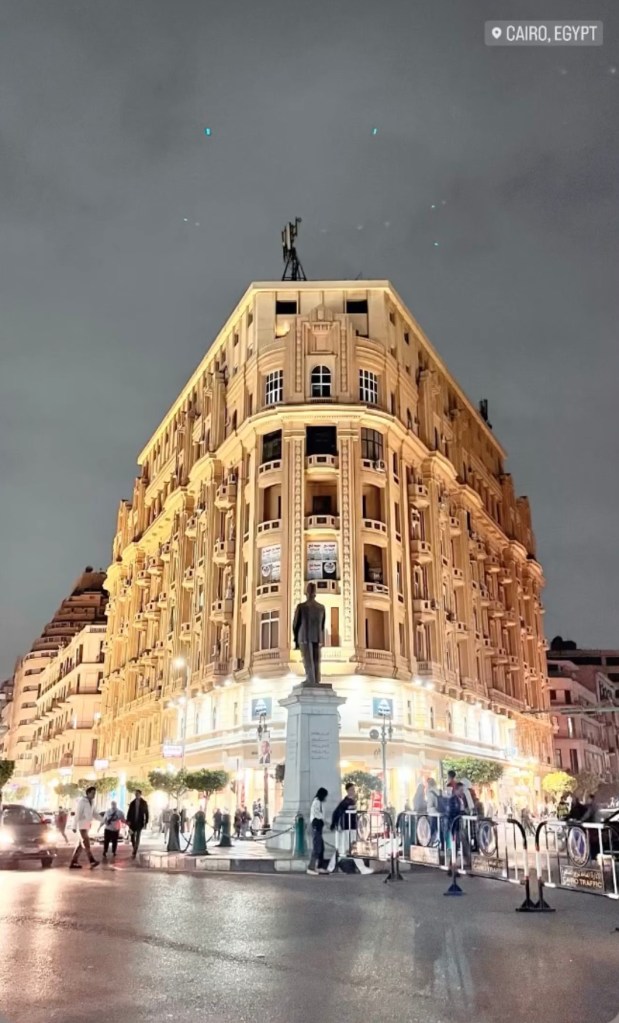
Cairo is the capital and largest city. Alexandria, about 2.5 hours north, is the second largest. Both have an ancient side and a modern side existing right next to each other.
Currency and the Black Market Rate
The Egyptian Pound is the official currency, and while it’s accepted everywhere, a black market for USD runs alongside it, since demand for dollars far outpaces supply. When we visited, the official USD:EGP rate was about 1:30, but street retailers were offering conversions up to 1:51. On 6th March 2024, two months after our trip, the government devalued the EGP to match the black-market rate, so the official rate today sits around 1:50.
Language
Only Arabic is spoken throughout the country. English is limited to tourist-facing roles, guides, hotel staff, and tour operators. Even car number plates are in Arabic, which makes matching an Uber’s plate number to the app genuinely tricky. Of every country I’ve visited, I’d rank Egypt’s English proficiency the lowest, lower than Southeast Asia.
Coastlines and Resort Towns
With a long coastline on both the Mediterranean and Red Seas, Egypt has built lavish resort towns around tourism. Hurghada and Sharm El-Sheikh, both on the Red Sea, are the largest and most popular, with local economies built almost entirely around European tourists.
What Cairo Actually Feels Like
Cairo, the country’s biggest city, feels like an Indian metro from about 15 years ago, maybe closer to Kolkata today. The tangle of overhead wires, unplanned construction, footpath encroachment, and dusty air are the rough edges. But hundreds of food joints, clothing stores, small cafés, and genuinely helpful, simple people balance it out.
Roads, Cars, and the Value of the Rupee Here
Unlike anywhere in India, we didn’t encounter a single pothole, the roads were smooth and well-built throughout. The cars, on the other hand, were old, roughly 90% looked older than I am, past 30 years of use.
Most Indian international trips head to more developed countries, Singapore, Thailand, the UAE, EU nations. Visiting a comparatively poorer country has its own charm: you stop checking menu prices, and tour costs stay easy on the wallet throughout.
Weather and Daylight
It gets dark early in Egypt, around 5:30-6 pm during our visit near New Year’s. Weather was on the colder side during our trip; October-November or February-March are likely the ideal months. April through September gets too hot for serious sightseeing.
Common Scams to Know Before Your Egypt Itinerary
It’s genuinely rare to visit Egypt and not get scammed, or at least have someone attempt it, at least once. Here’s what we ran into and how we handled it:
Everyday overcharging (not quite a scam): Metered taxis rarely run on the meter and just quote inflated flat rates instead. Shopkeepers who’ve already overcharged you will still ask for a tip, one vendor quoted 30 EGP for a 15 EGP chips packet, then acted surprised when asked to return correct change.
The currency-note switch: We handed a driver a 100 EGP note; he swapped it with a 10 EGP note already in his other hand and claimed that’s all we’d paid. Being 8 people and equally confident, we called him out and walked away. (Aswan)
USD quoted as EGP: A meter taxi offered us a ride at “70,” verbally, after we’d shown him a 50 EGP Uber fare. On arrival, we paid 70 EGP in two counted notes. He then claimed he’d meant 70 USD (roughly ₹2,100 EGP-equivalent) for a 10-minute ride the Uber app had priced at 1.7 USD. Naming the nearby police ended the argument quickly. (Luxor)
Mugging risk vs. genuine safety: Women walked alone freely, even at night, even in smaller towns like Aswan, in a way that felt safer than India on that front. That said, groups of local boys loitering around tourist areas seemed focused on petty theft rather than anything worse. Worth staying alert, especially in a smaller group.
The “just 5” souvenir trick: Vendors quote “just 5” for a souvenir, only to claim they meant “500” once you’ve handed over money, banking on the ambiguity to push you into overpaying or arguing to get your change back.
The Visa & Flights for Your Egypt Itinerary
Indians do need a visa to enter Egypt, but getting one is genuinely simple. Head to the Atlys app, upload a soft copy of your passport, and pay the fee (~₹2,000). Approval typically comes through in 4-5 business days.
In December 2023, there were no direct flights to Egypt from India. Some of us connected through Bahrain, others through Saudi Arabia, Kuwait, or Qatar. As of mid-2024, Air Cairo now runs direct flights to and from Cairo out of both Delhi and Mumbai.
Cost of This Egypt Itinerary
| Cost (INR) | Comment | |
|---|---|---|
| Flights | 50,000 | BLR-BAH-CAI (Gulf) CAI-DOH-BLR (Qatar) |
| Nile Cruise + Hurghada transfer + 4-days sightseeing | 51,000 | Entire Cruise Stay, All private transfers, site entry tickets, guides |
| Visa | 2,000 | Atlys |
| Internal Flights | 20,000 | CAI-ASW & HRG-CAI |
| Food & Drinks | 25,000 | |
| Experience & Tours | 11,000 | Casino, Bowling, Pyramids, etc |
| Scuba Diving | 3,500 | With pick-drop & lunch |
| Stay | 22,000 | Cairo 2, Aswan 1, Luxor 1, Hurghada 2 |
| SIM & Insurance | 1,500 | |
| Shopping | 5,000 | |
| Total | 1,90,000 |
Our 9D9N Egypt Itinerary
23rd Dec 2023, Saturday – Cairo Old Lanes & Koshari
We flew Gulf Air from Bangalore to Bahrain, then Bahrain to Cairo, landing around 1 pm. Immigration was simple and quick.
A quick tip: Cairo airport’s duty-free is small, so make any alcohol purchases at your layover airport instead. We’d already stocked up in Manama, which turned out to be the right call.
Getting a SIM Card
Three SIM providers operate just before the airport’s last gate, Orange, Vodafone, and Etisalat. E-SIMs are available too. All three had long queues, and the whole process took about an hour. We picked Vodafone’s 20GB plan, plenty for the trip, mainly because their queue looked shorter (it wasn’t). Orange is equally reputed if you want an alternative.
Getting to the City
We booked an Uber right outside the airport gate. As in India, plenty of local taxi drivers will approach you quoting 2x to 10x the Uber fare, and some will falsely claim your Uber pickup point is a 2 km walk away. It isn’t, check the app and hold your ground.
Choosing Where to Stay
Cairo splits clearly into Old Cairo and New Cairo. Since both our entry and exit flights were through Cairo, and we’d already booked Old Cairo for the end of our trip, we chose New Cairo for the start. This was the wrong call. New Cairo has little for short-term tourists, mostly high-rises, offices, and amenities for locals, while nearly everything worth seeing sits an hour’s drive away in Old Cairo.
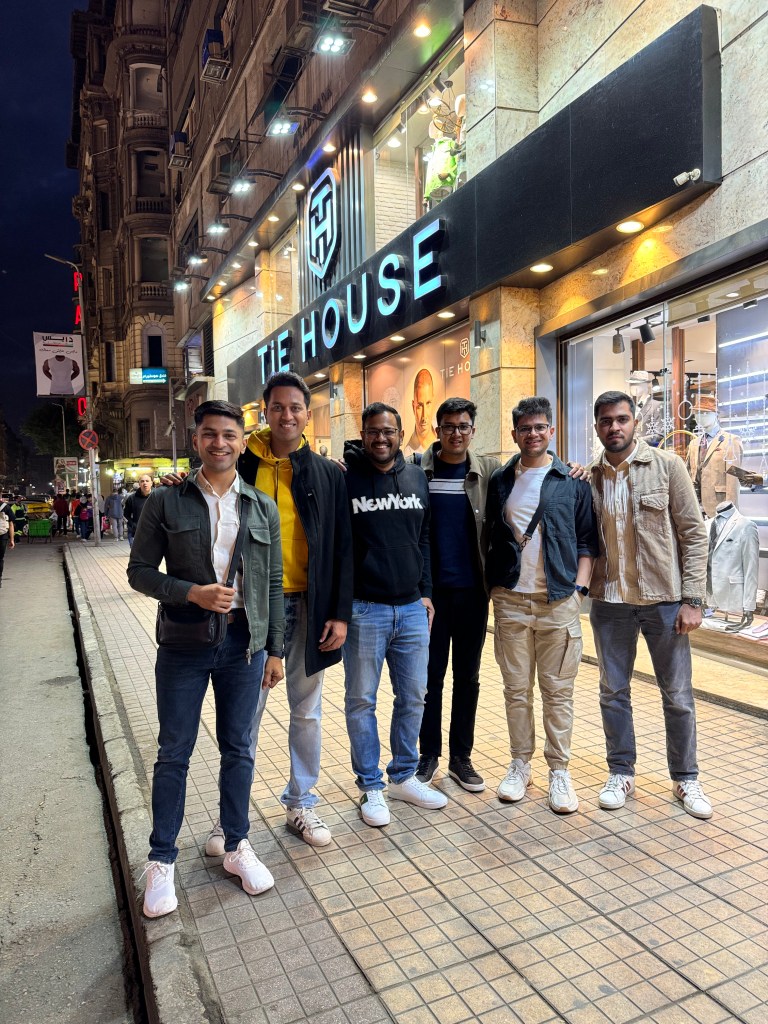
First Evening: Koshari and Old Downtown
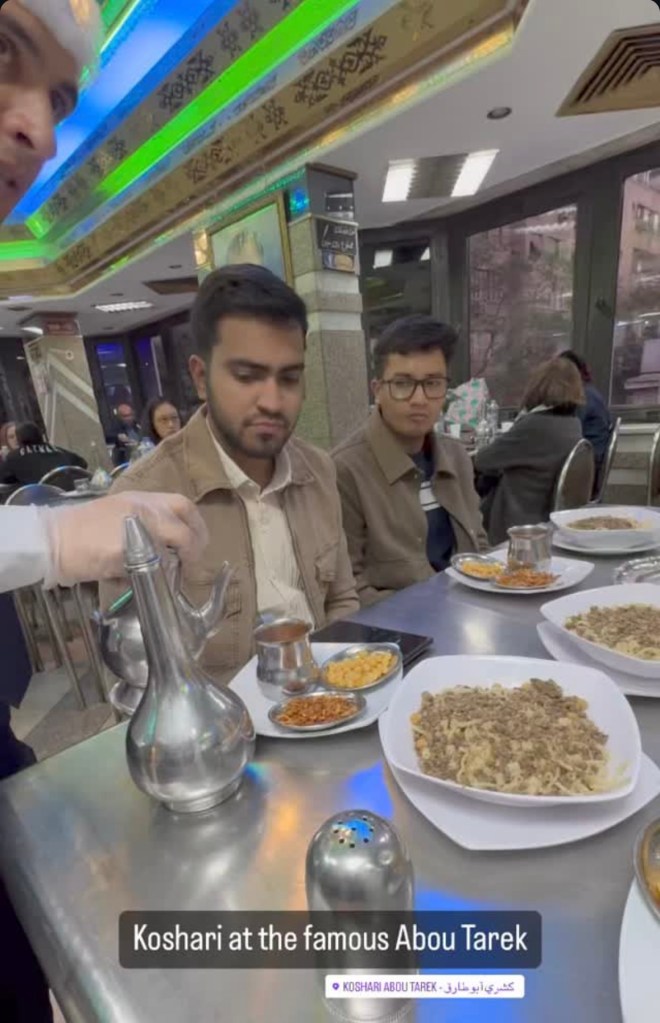
We settled into a duplex BnB in a high-rise, showered, and headed to Abou Tarek, the most famous koshari spot in Egypt. Koshari is vegan and Egypt’s national dish, a solid first meal.
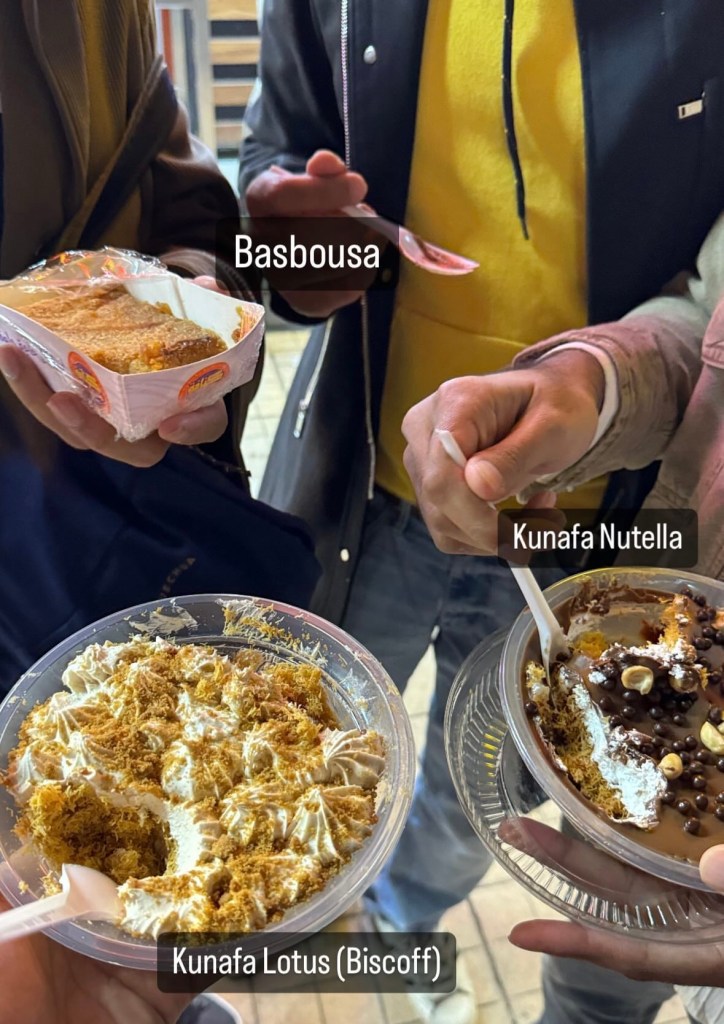
From there, we wandered the old downtown alleys just behind Abou Tarek, packed with food stalls and shops selling sweets, including vegetarian options. Good vibe, easy to just eat and shop your way through.
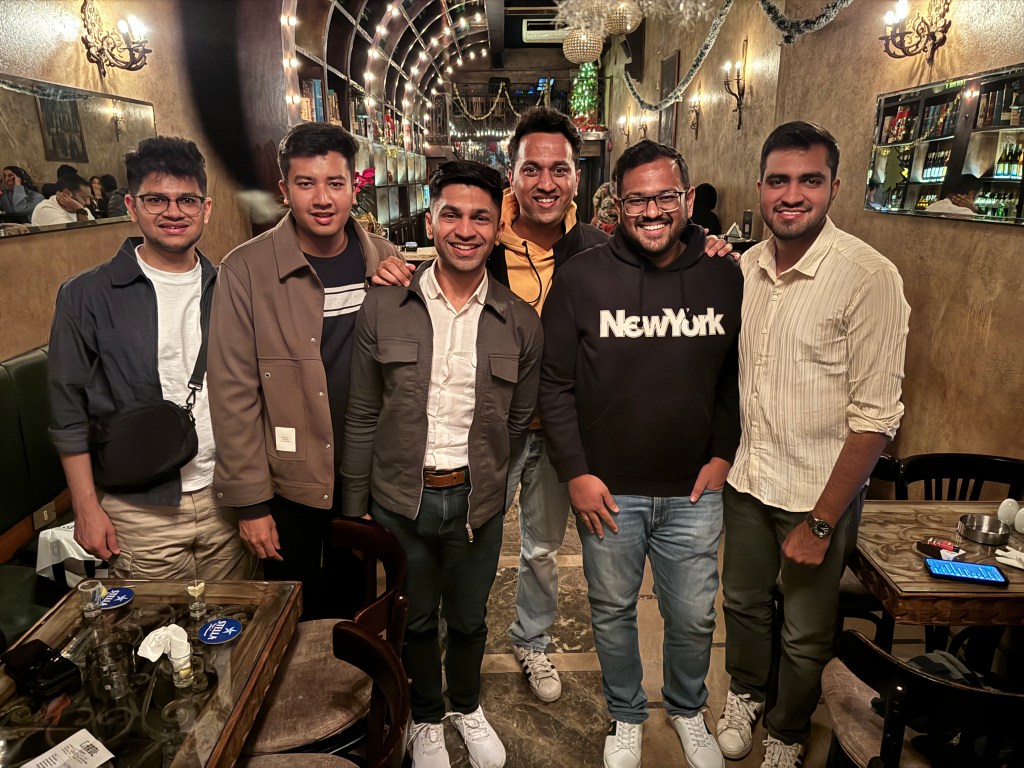
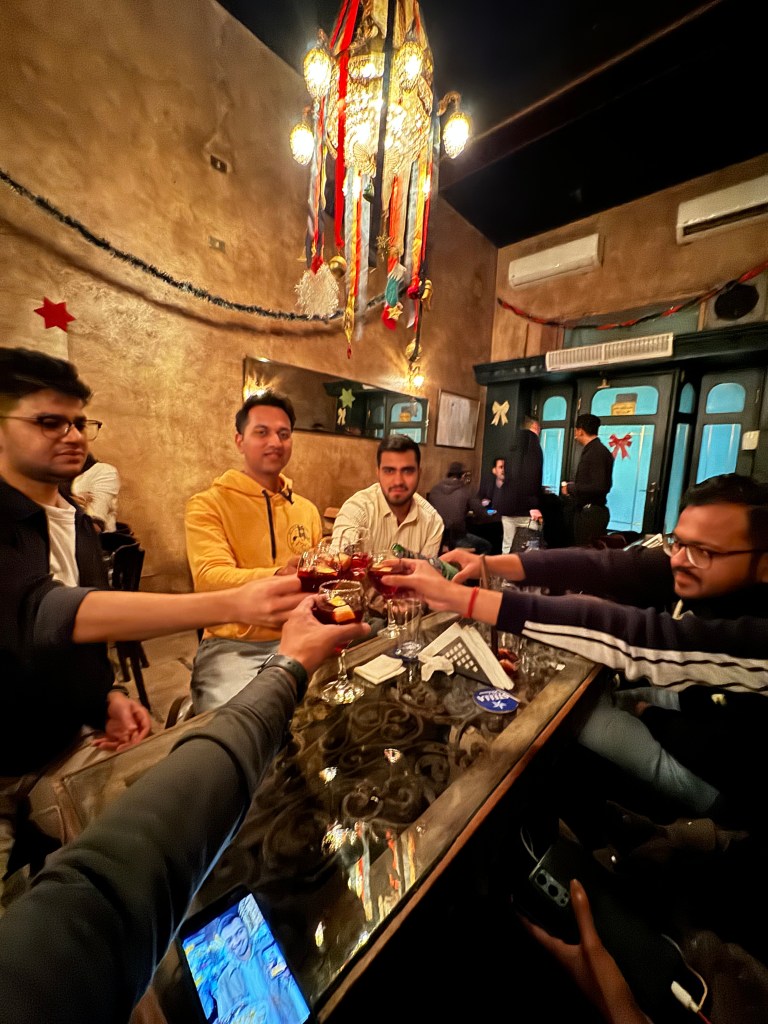
It being a Saturday, we expected some nightlife, but Islam being the state religion means Egypt’s bar and pub scene is fairly limited, similar to how Gujarat or Bihar’s liquor bans flatten their nightlife back home. We found Carol’s Bar, one of Cairo’s better-known spots, and the drinks were genuinely decent, we’d gone in with low expectations.
Dinner took us to the Zamalek area, where we stumbled onto the Cairo Opera House (worth searching up separately, it’s meant to be a spectacle, though we weren’t dressed for entry). We ended up at L’Aubergine Zamalek instead, solid vegetarian tomato pasta, though the service ran slow.
Day 1 ratings (out of -5 to +5): Abou Tarek: +2 | Old City street experience: +2.5 | Carol’s Bar: +1 | L’Aubergine Zamalek: +0.5
24th December, Sunday- Pyramids Day
We’d pre-booked a half-day pickup-and-guide tour of the Pyramids through Dahab Day Tours. Reliable service, but expect them to quote high initially, haggling is expected, and booking ahead beats arranging on the spot.
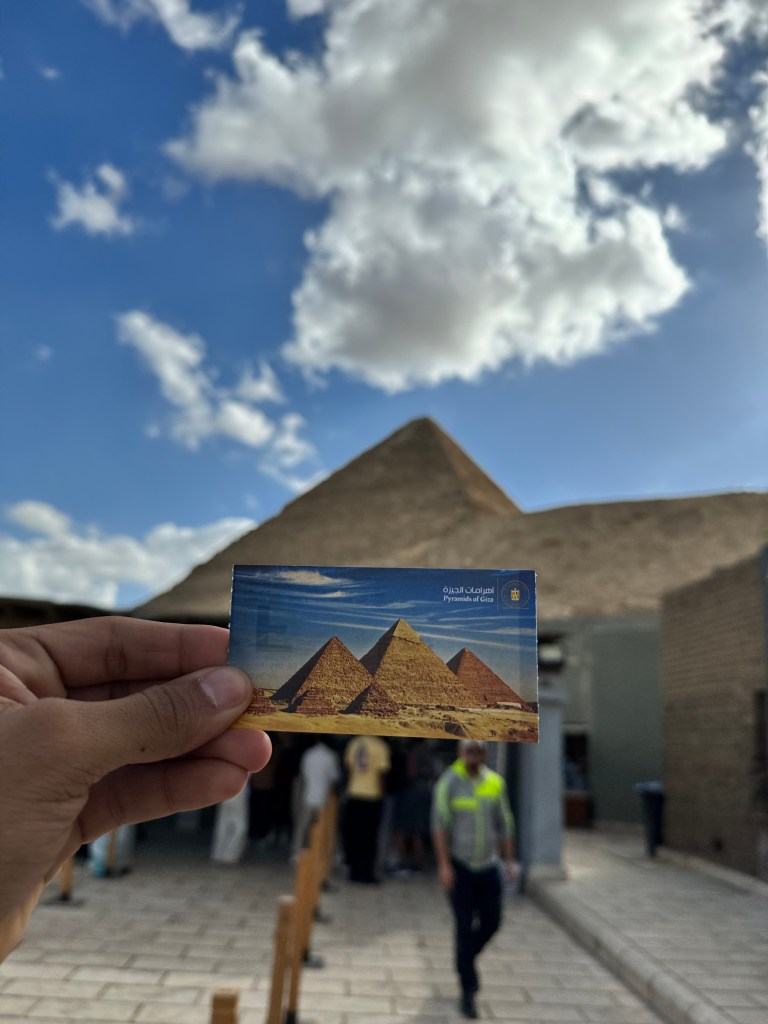
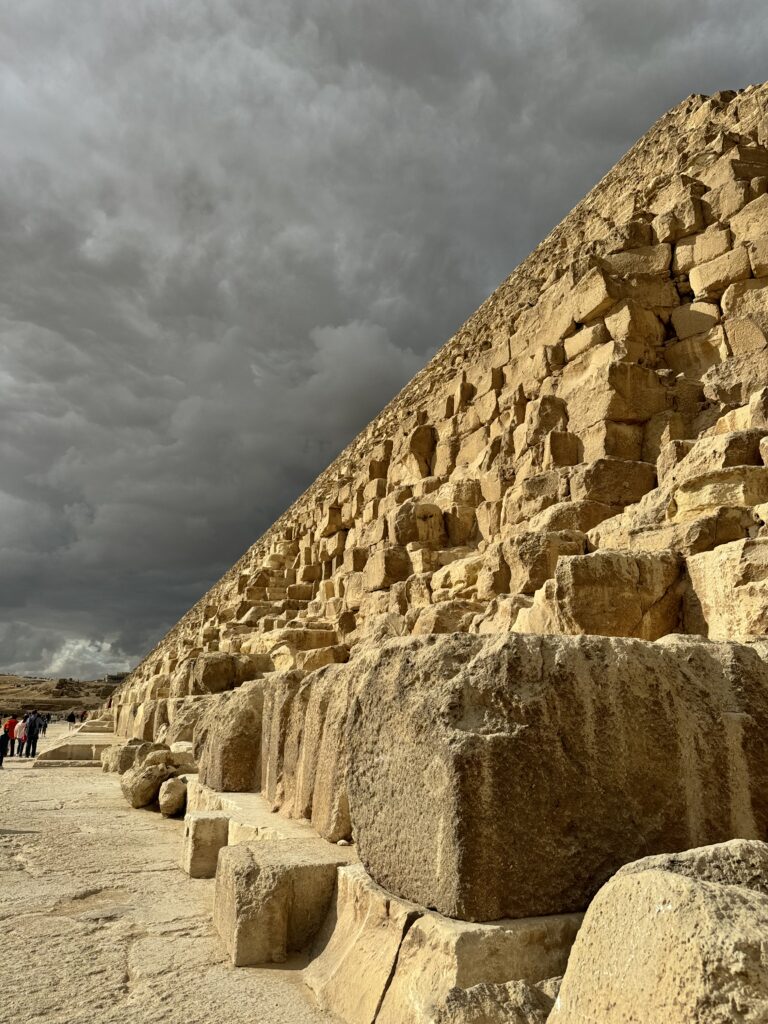
The Pyramids of Giza
Our guide arrived at 10:30 am. After checking out and grabbing more koshari for breakfast, we headed to the Pyramids, more for the photos than the history, honestly, and our guide was happy to accommodate.
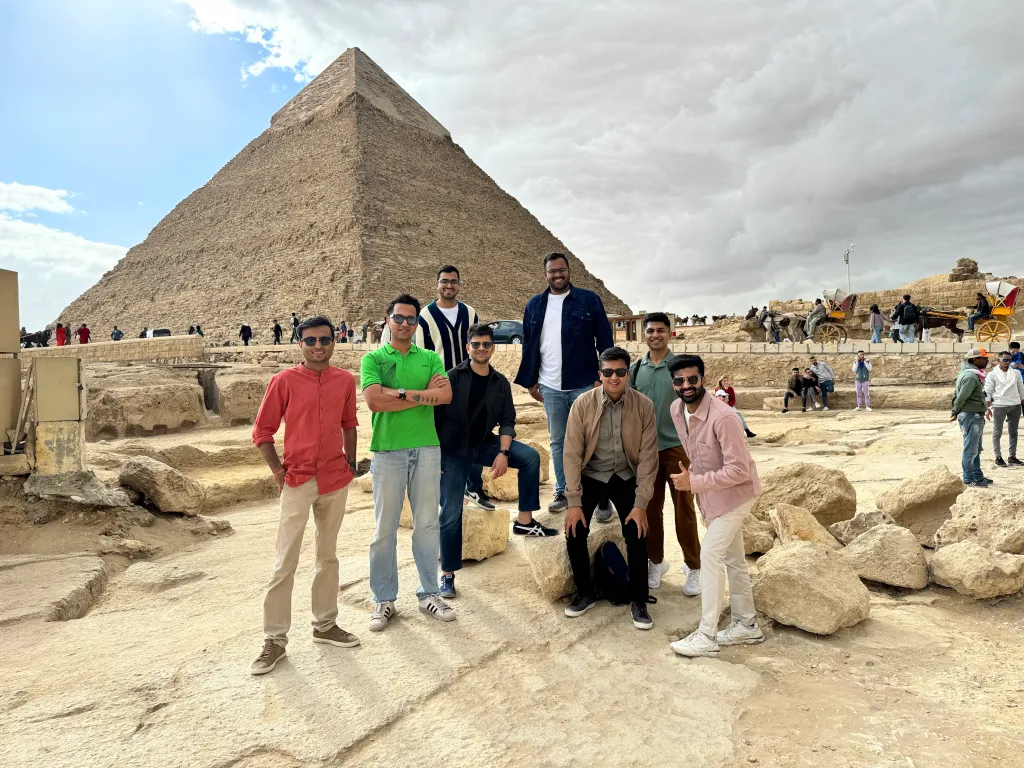
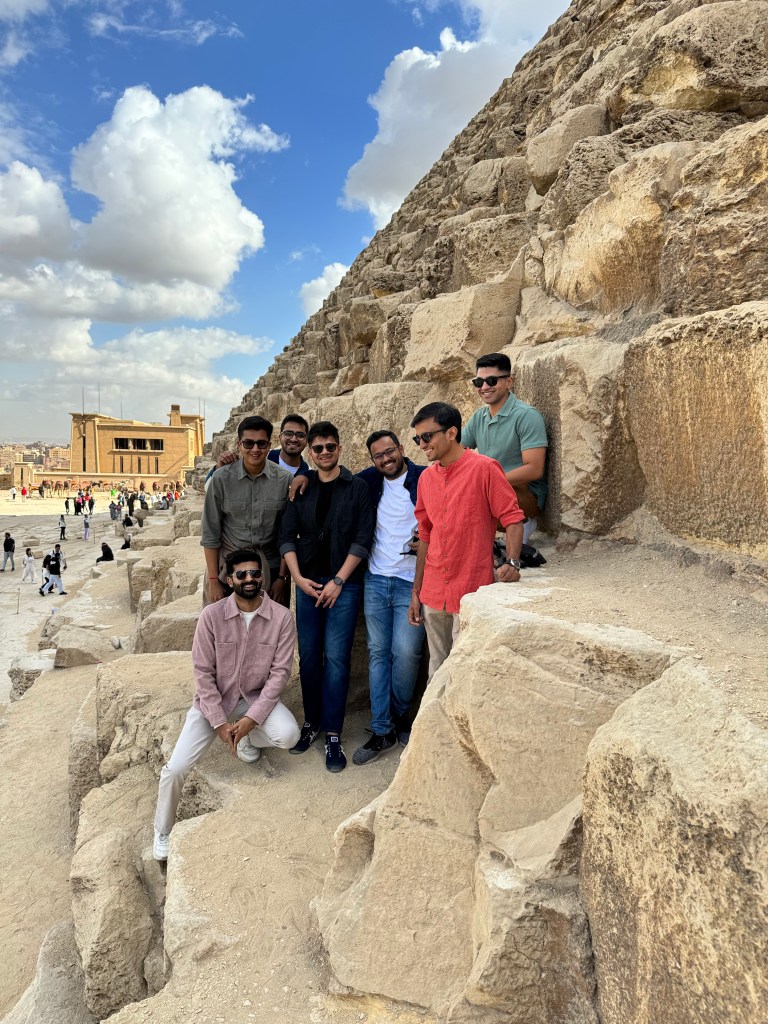
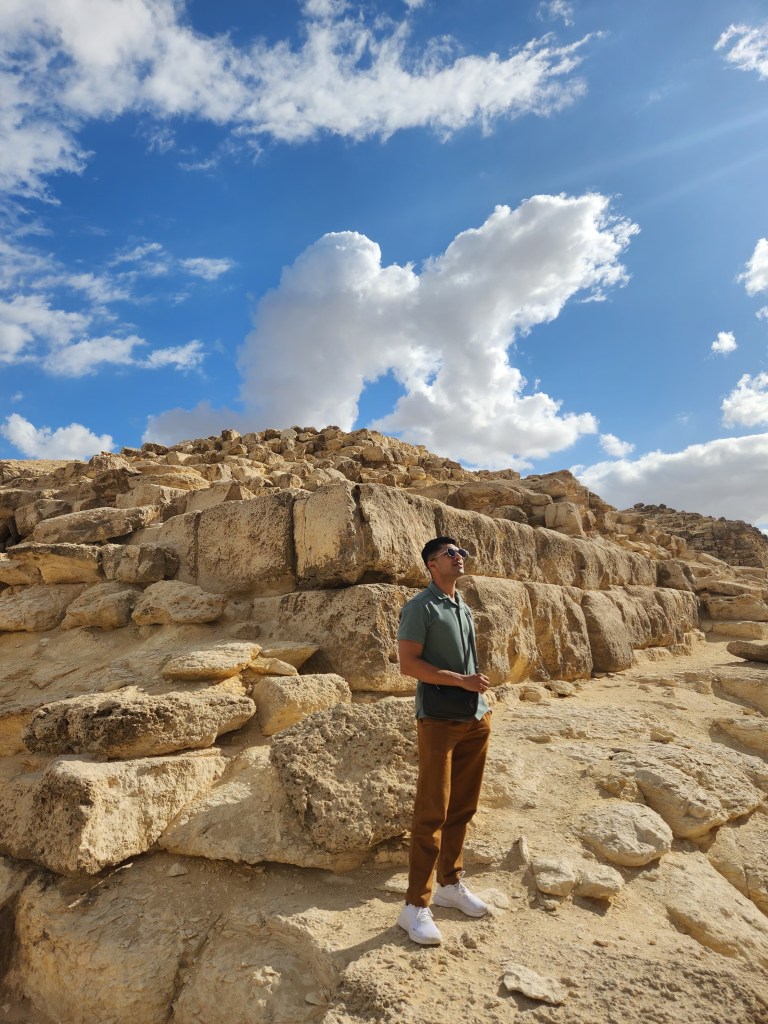
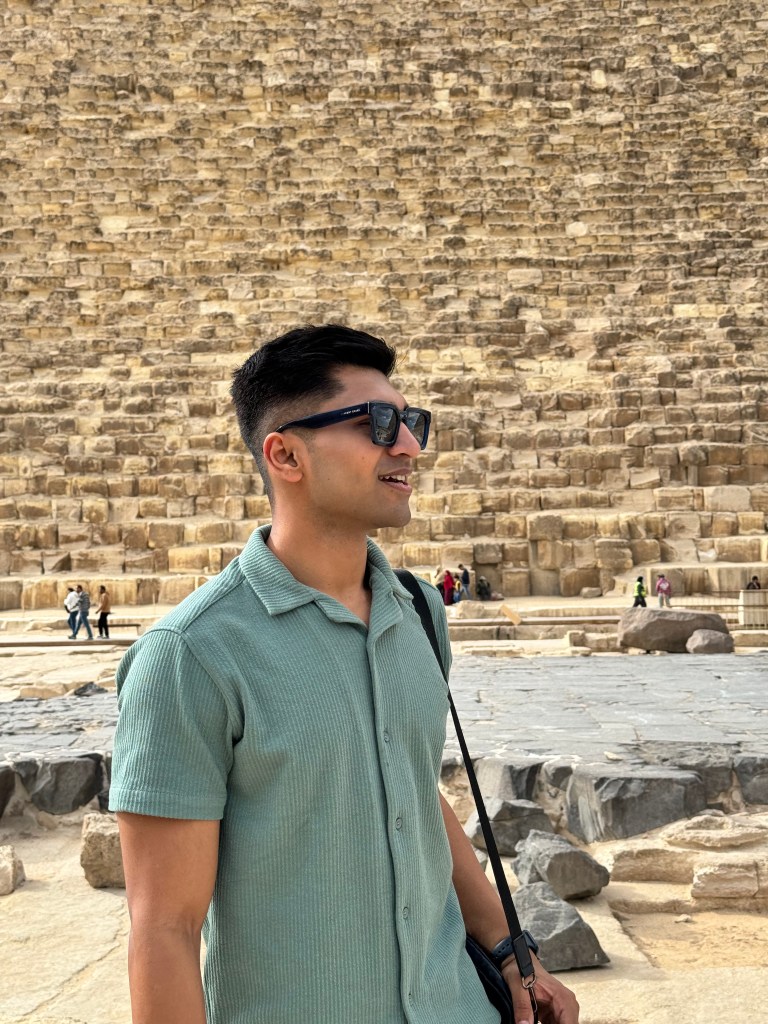
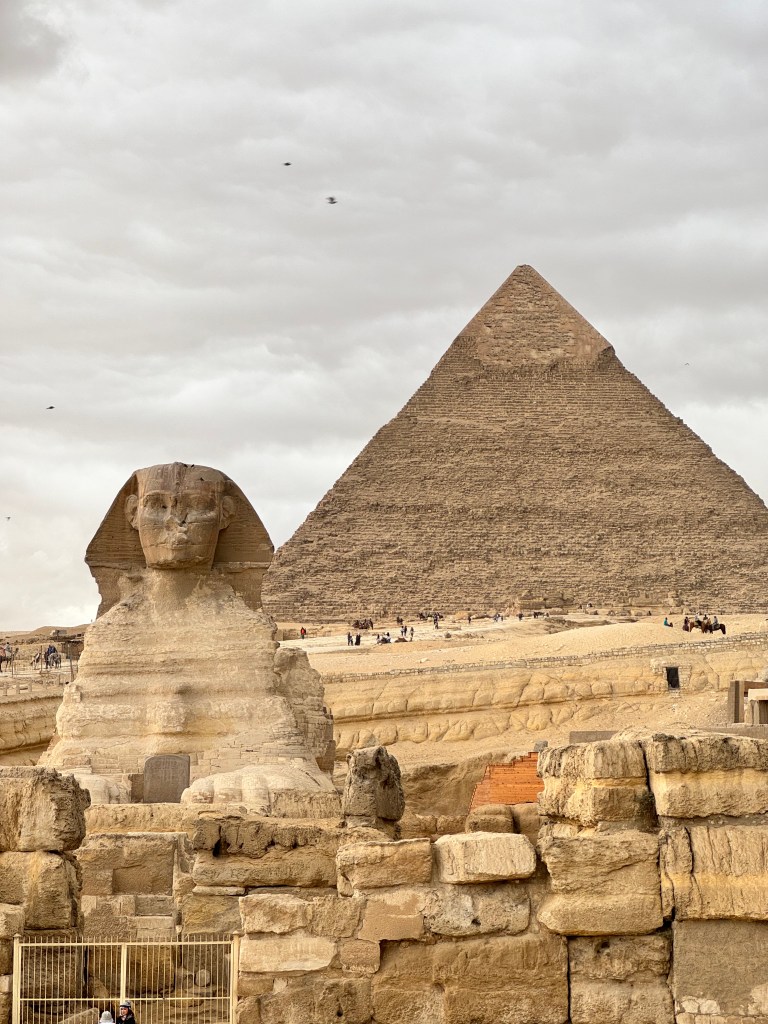
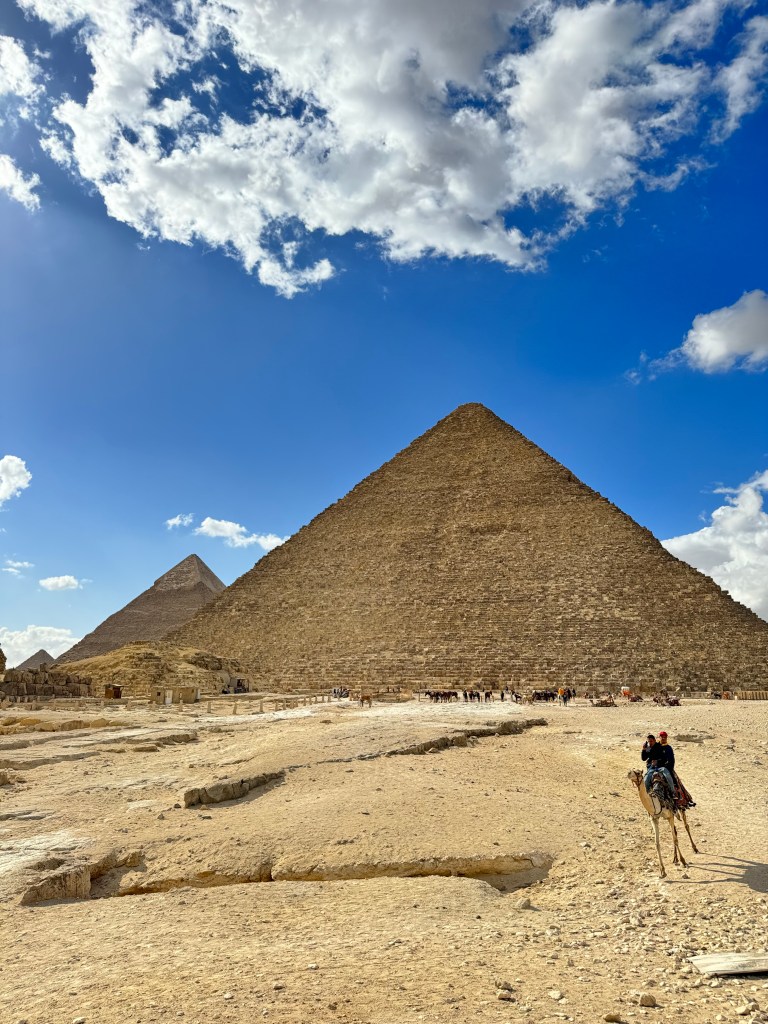
Three Pyramids and one Sphinx sit within the compound, the yellow cuboidal blocks are genuinely massive, and it’s hard not to marvel at the engineering behind them given the era. The full visit took about 2.5 hours.
Perfume and Papyrus Stops
Next was an Egyptian perfumery, stocked with oil-based versions of popular international perfumes. I picked up a 20ml Dior Sauvage sample for 20 USD after a well-rehearsed sales pitch, likely overpaid, but the experience itself was enjoyable.
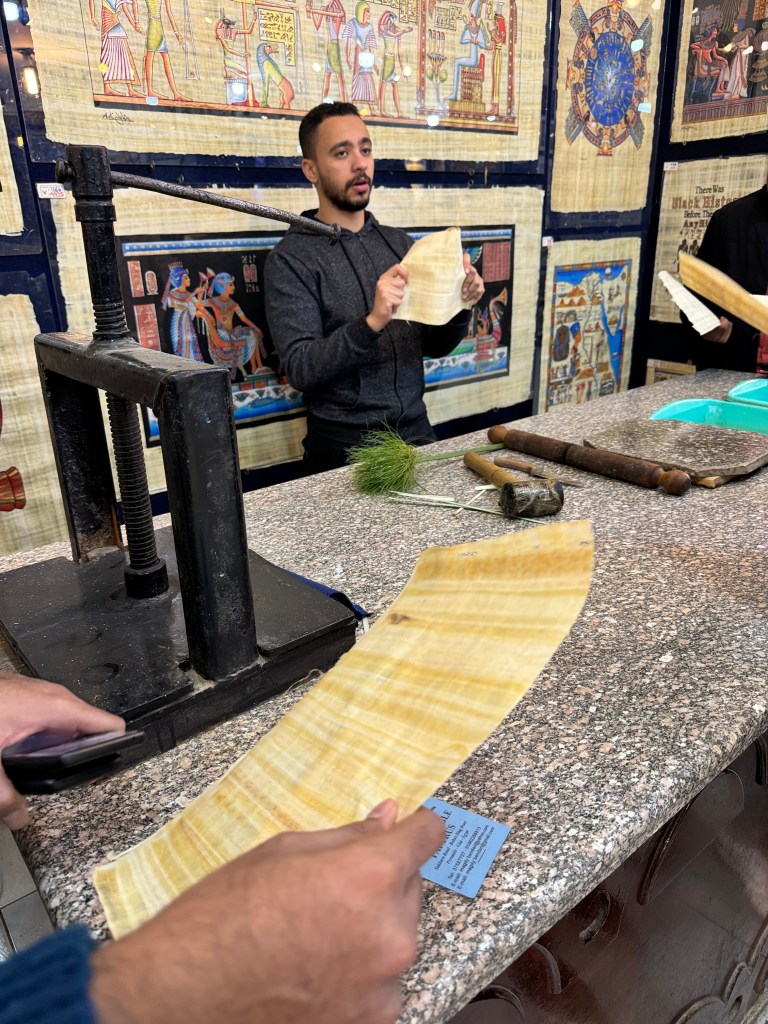
From there, a papyrus shop demonstrated the traditional paper-making process in detail. Worth watching and tipping for, but skip buying the paintings here, you’ll find them far cheaper at other stops later in the trip.
Flying to Aswan
After a late lunch in Downtown Cairo, we headed to the domestic airport for our evening flight to Aswan. Worth knowing: the domestic terminal has very few food options, and even the lounge is underwhelming. As vegetarians, we made do with Pringles and a few drinks. Internal flights in Egypt run more expensive than most things in the country, we paid roughly ₹10,000-11,000 per person for this one leg on Egypt Air.
Day 2 ratings: Pyramids of Giza: +4 | Perfumery: +2 | Papyrus Shop: +2
Nile Cruises: What to Expect
Dozens of operators run river cruises along the Nile between Luxor and Aswan, all following roughly the same itinerary in either direction. We travelled Aswan to Luxor, booked again through Dahab Day Tours (not a paid endorsement, just what worked for us). A word of caution: several fake agencies list Egypt tours online that are impossible to verify from India, and some will take your advance payment and disappear.
All cruises run similar rooms, service standards, and food options. Since we travelled during New Year’s week, we paid a premium, 600 USD per person, versus the usual ~350 USD, for a 4-day, 3-night Aswan-to-Luxor package. The same road trip takes just 3 hours by car; the cruise stretches it across 3 days.
Our honest take: these cruises suit laid-back couples, families, or large groups more than active travellers. We prefer back-to-back sightseeing, and this cruise had noticeably more free time scheduled than actual touring.
| Days | Aswan to Luxor |
|---|---|
| 1st day’s Morning | Philae Temple & Aswan High Dam Reservoir. (Cruise docked in Aswan) |
| 1st day’s Evening | Free Time. One can pay extra & visit the Nubian Village. (Cruise is still docked in Aswan) |
| 2nd day’s Morning | Free Time. One can pay extra & visit Abu Simbel (Cruise is still docked in Aswan) |
| 2nd day’s Evening | Cruise heads towards Luxor post lunch. We reach Kom Ombo temple around 7pm. (Cruise keeps moving North) |
| 3rd day’s Morning | We reach Edfu Temple at 5am. (Post that, the ship keeps sailing towards Luxor) |
| 3rd day’s Evening | In the evening, we reach Luxor and (the ship is docked here for good). Free Time in Luxor. |
| 4th Day | We check-out of the cruise and drive to Karnak Temple, Luxor Temple, Temple of Hatshepsut & the Valley of Kings |
25th December, Monday – Aswan & Around
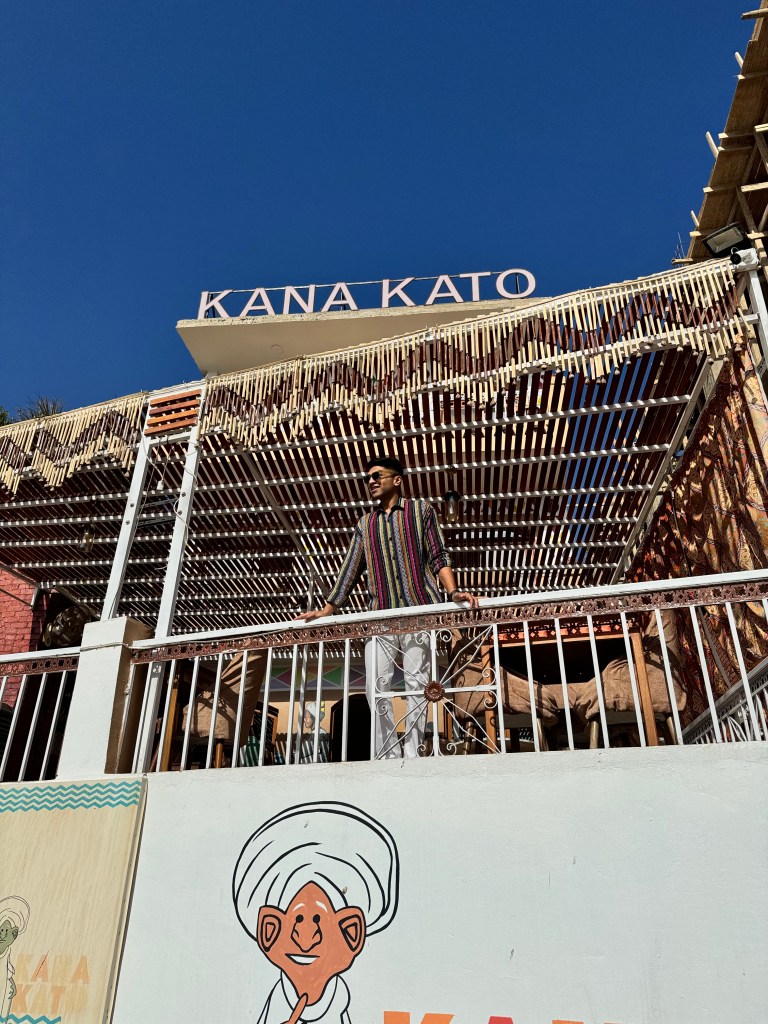
We landed in Aswan at midnight, starving, in a city too small to have much open that late. To our surprise, our cruise operator had arranged an airport pickup we weren’t expecting, and took us to a falafel and pita shop. The food was genuinely bad, but it was too late at night to care. We checked into our hotel, Kana Kato, and called it a night.
Aswan High Dam and Philae Temple
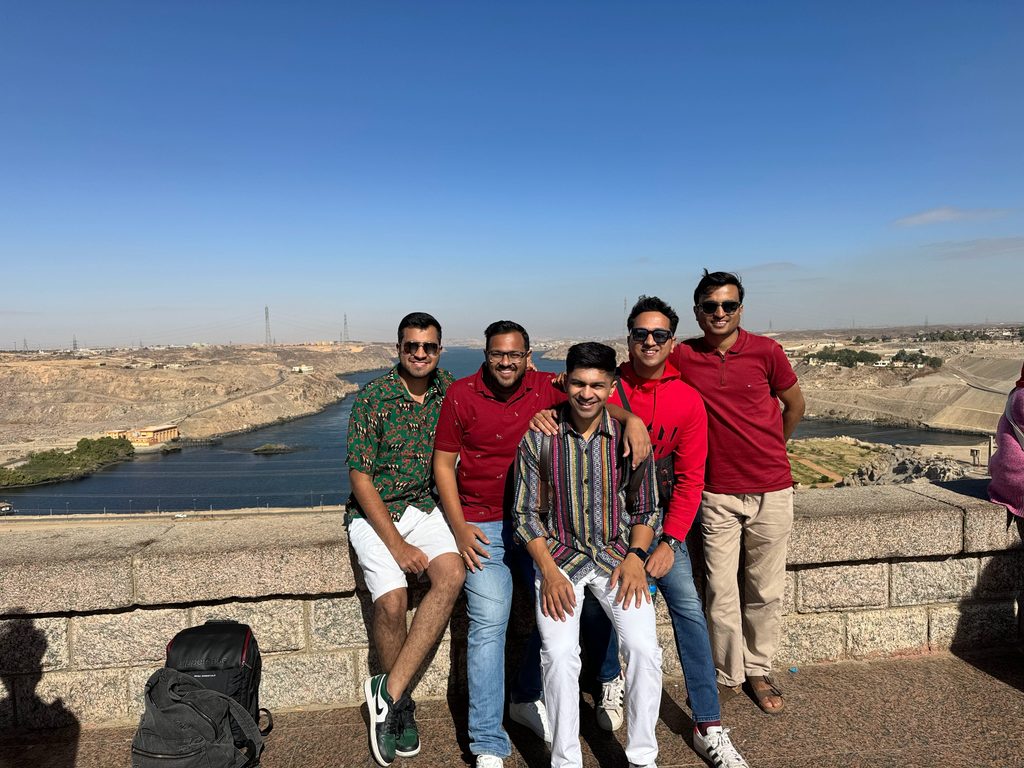
Morning brought free breakfast at the hotel, followed by pickup at 10 am for the Aswan High Dam, built by the Soviets in the 1960s. It has an impressively large reservoir, but honestly, I’m still not sure why it’s on the itinerary, feel free to skip it.
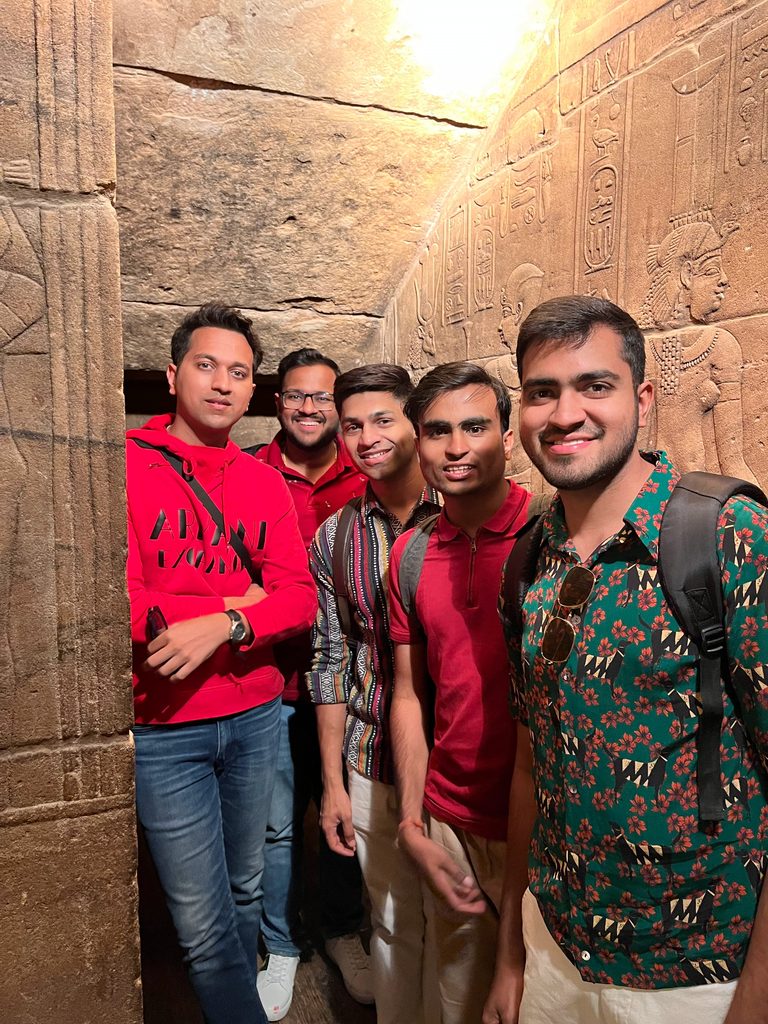
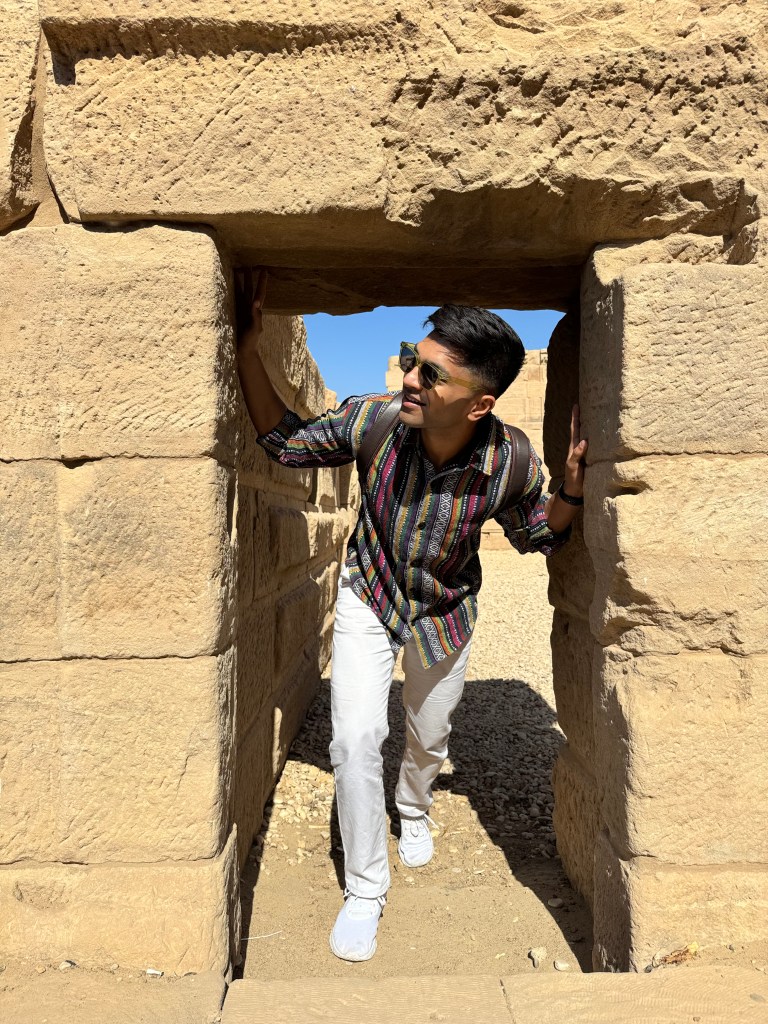
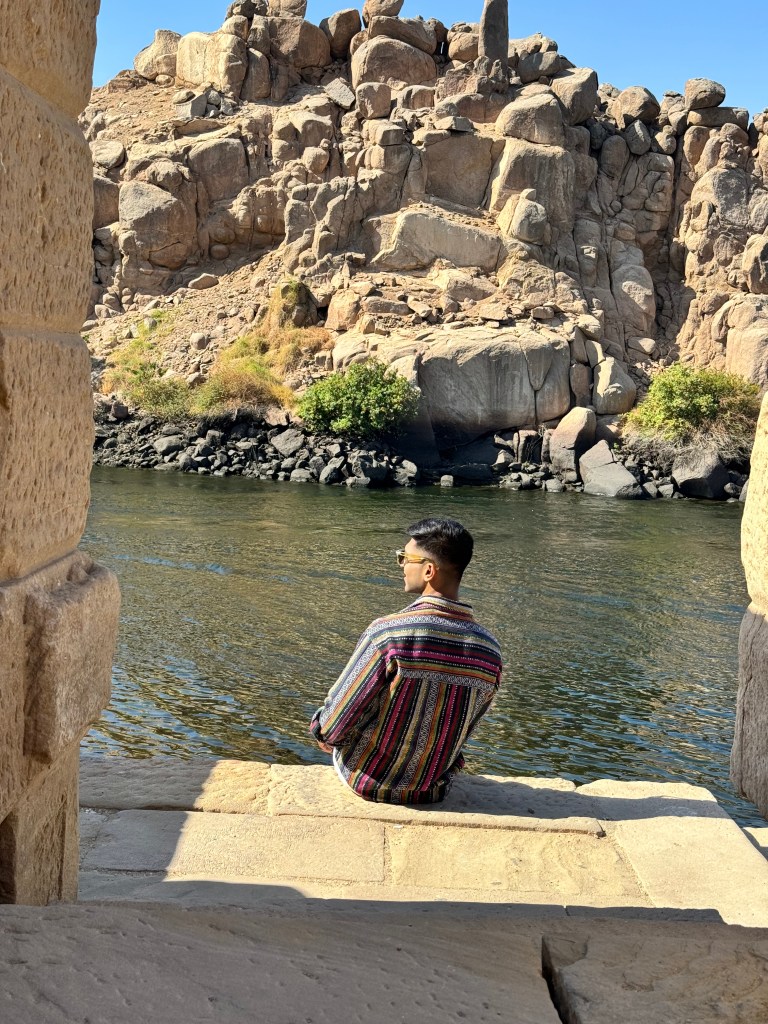
From there, we took a short ferry to the Philae Temple, genuinely lovely. Egypt’s guides, in general, stuck to the key historical points without over-explaining, which I appreciated, take a guide at every site here, or very little of what you’re looking at will make sense on your own. Philae is well-restored, beautiful, and historically interesting in equal measure.

Settling Into the Cruise
Back on board, lunch offered five main-course vegetarian options, plenty of desserts (most with egg), and a salad-bread counter. Not great by Indian palate standards, and definitely not Indian food, but decent given how low our expectations were going in.
We paid roughly ₹51,000 for the 4-day, 3-night package, about ₹17,000 per person per night. The rooms felt like an old 3-star hotel, Wi-Fi was paid, bar alcohol was expensive (bring your own bottles if you can), and the terrace had a small, decent pool. Staff were courteous, even organising a DJ night for guests, common areas stayed uncrowded, and housekeeping was solid. Every other docked cruise we peeked into looked nearly identical to ours.
The Nubian Village
In our free evening, we paid 15 USD extra per person for a private ferry to the Nubian Village. Today’s version is entirely commercial, fancy wall paintings, a small crocodile house, and rows of souvenir shops, with nothing historically authentic about it. Still, as tourists, we genuinely enjoyed the vibe, and the boat ride itself was calm and scenic.
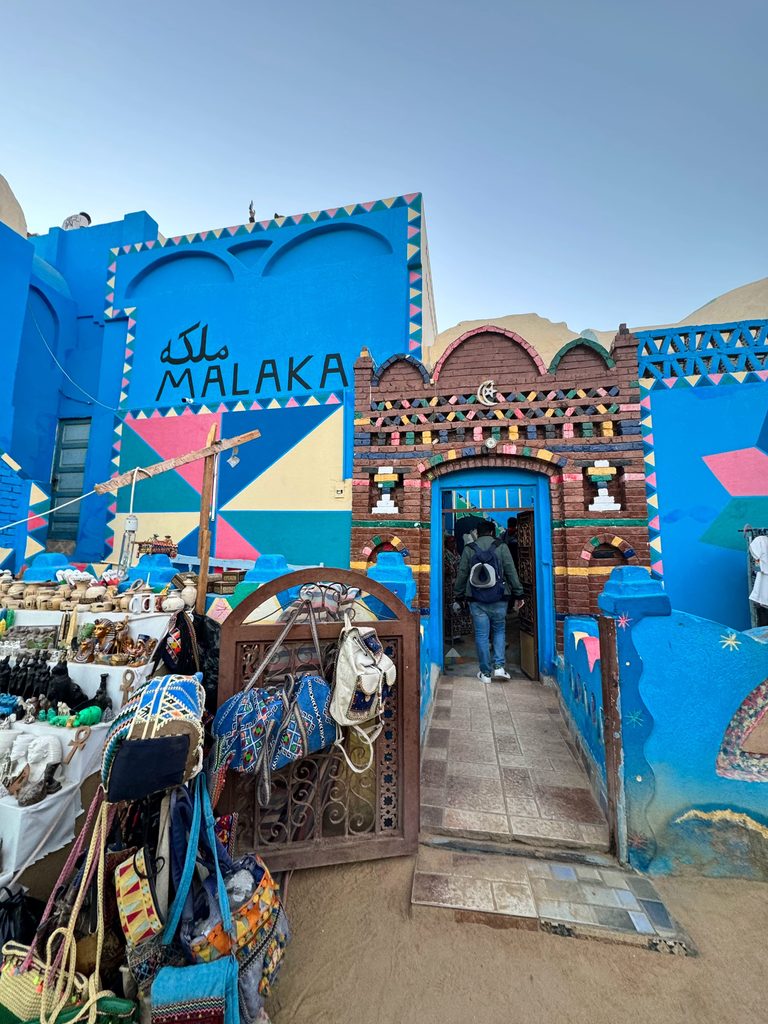
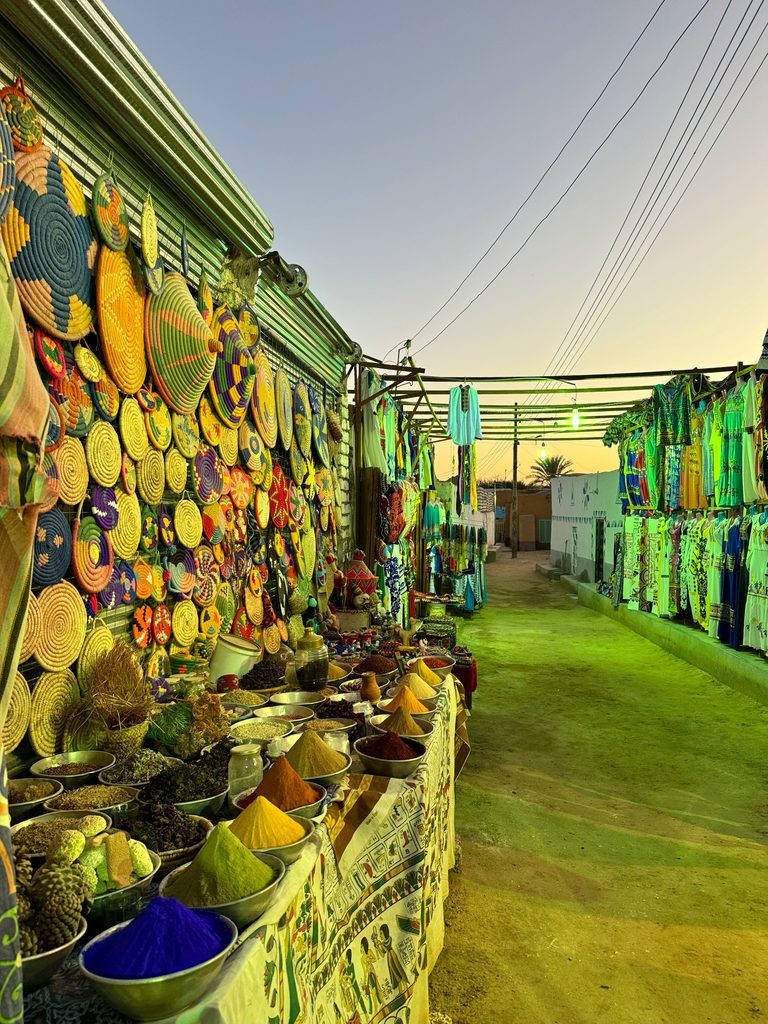
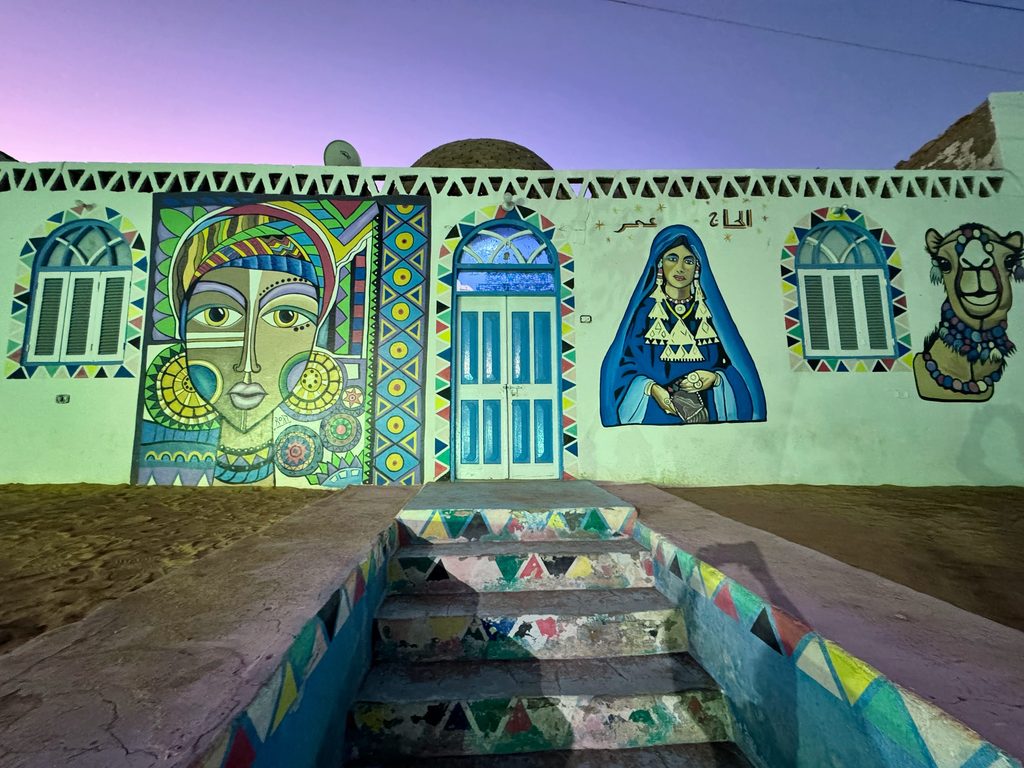
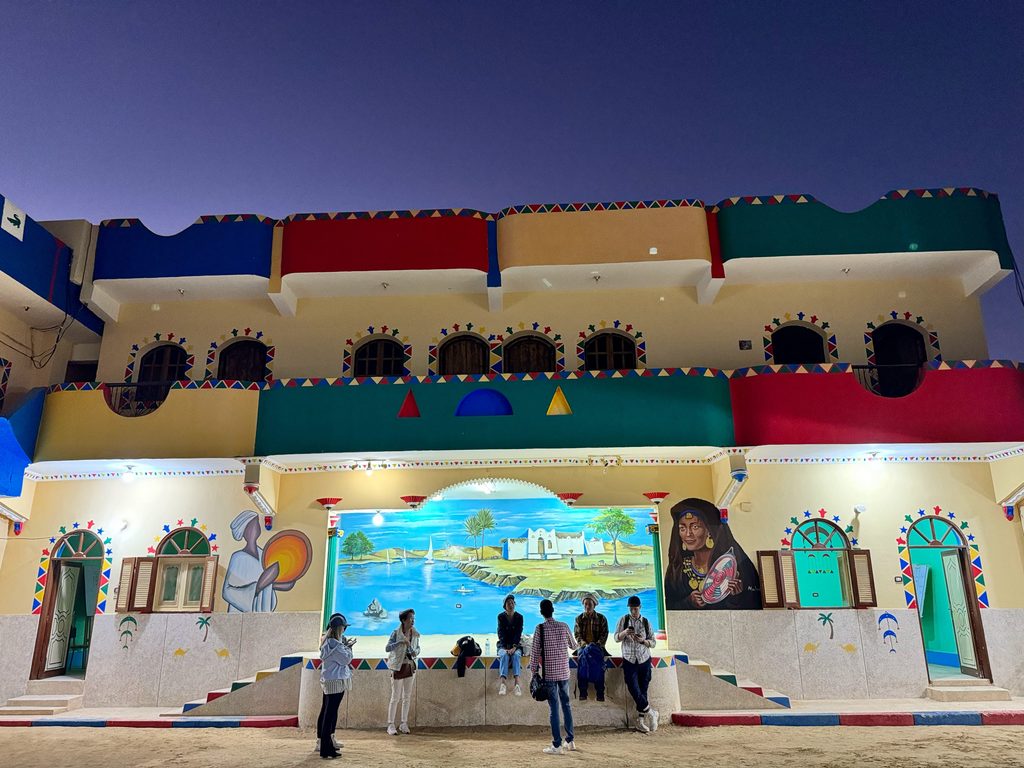
Back at the harbour, we found a bowling alley right next to our docked cruise and had a fun evening as a group of 8, nothing different from bowling back home. Dinner followed on the cruise, then a quick stop at a sheesha spot (the shisha quality was disappointingly poor), before cards and sleep.
Day 3 ratings: Aswan High Dam: -2 | Philae Temple: +3 | Cruise stay: +1.5 | Nubian Village: +1.5
26th December, Tuesday- Abu Simbel and Kom Ombo
The Long Drive to Abu Simbel
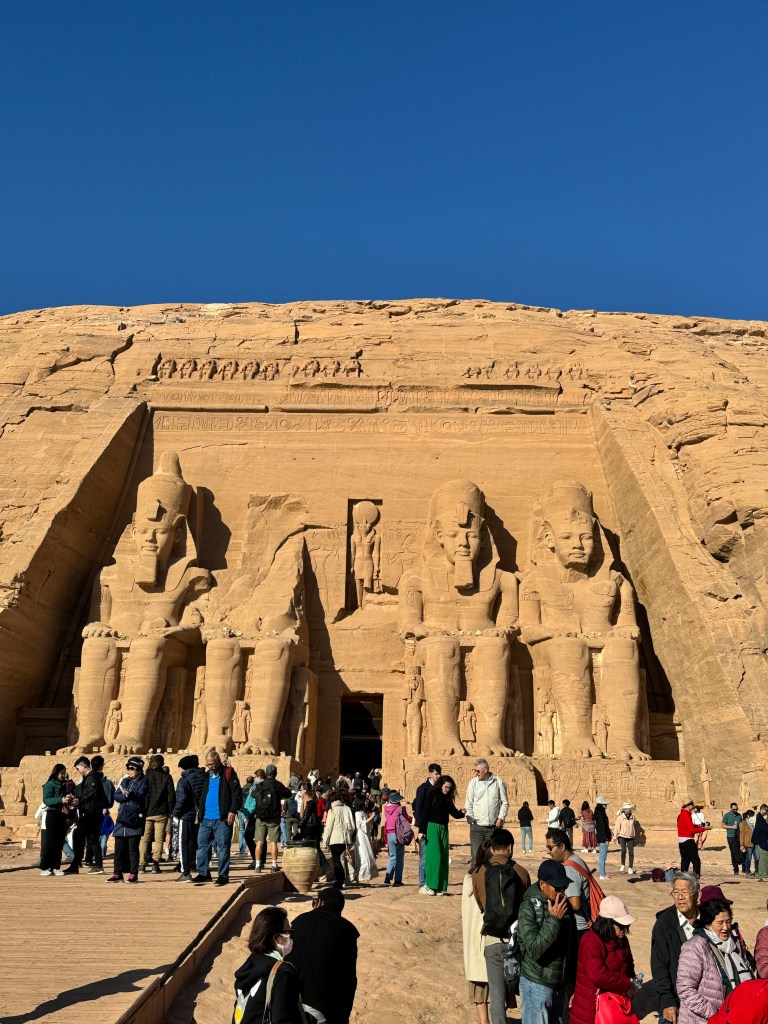
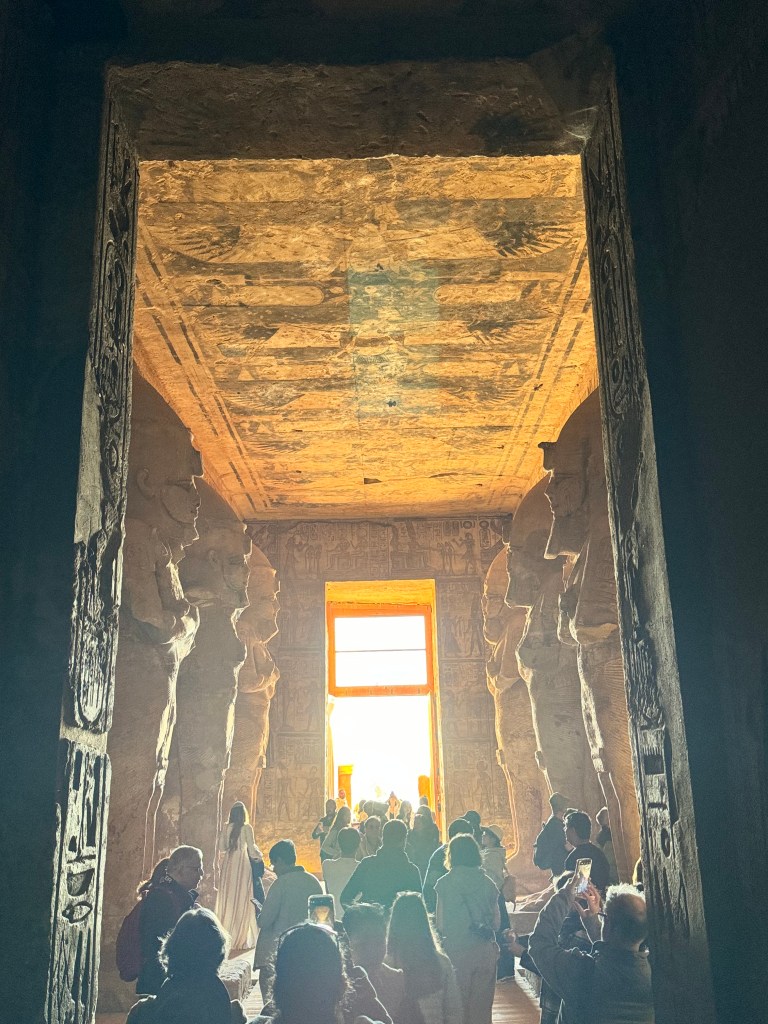
Abu Simbel sits roughly 300 km south of Aswan, close to the Sudanese border, a 3-hour drive each way. All in, it’s an 8-hour affair including visit time.
We were up at 4 am, paying 35 USD extra per person for private pickup, guide, and entry. The temple’s scale lives up to its reputation, the second-most visited Egyptian site after the Pyramids. Was the 4 am wake-up and 6 hours of driving worth it? Ask me the evening we got back, and it was a hard no. Ask me today, and it’s an easy yes.
Kom Ombo Temple and the Crocodile Museum
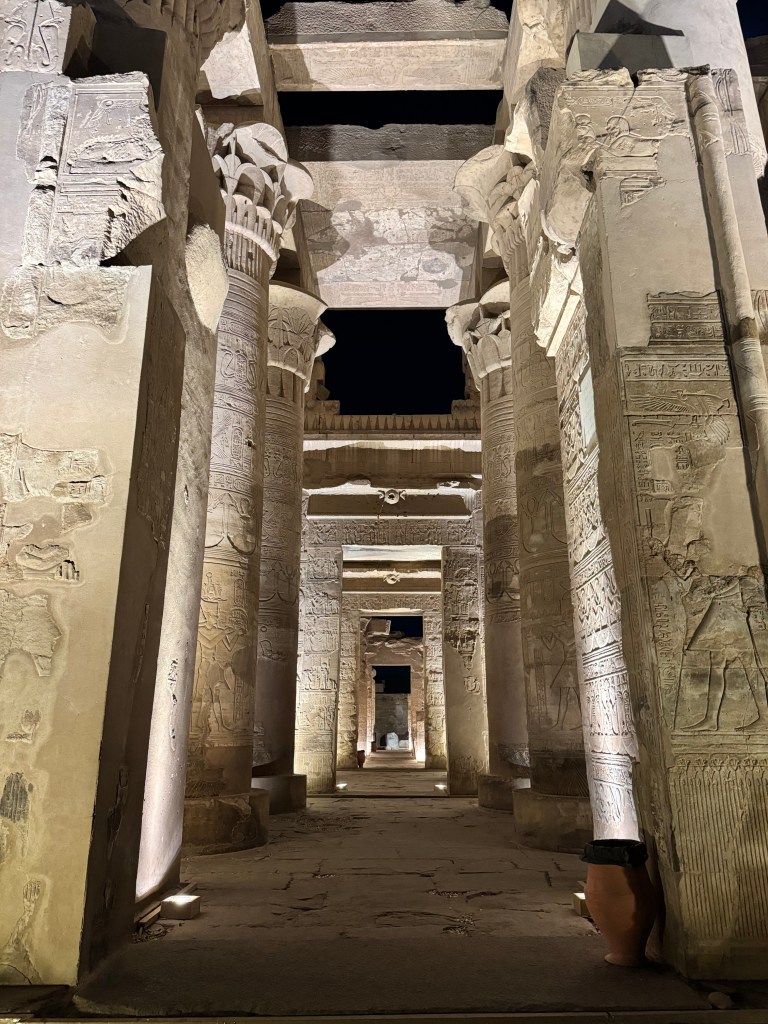
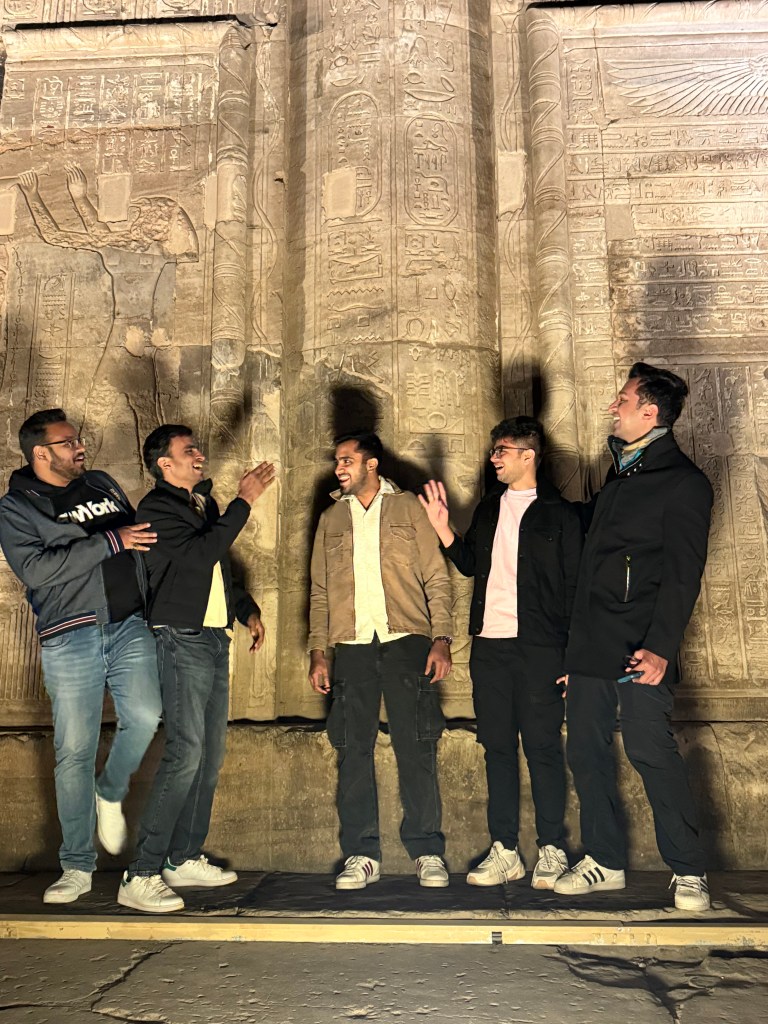
Post-lunch, the cruise finally began moving toward Luxor, reaching Kom Ombo Temple by evening. Beautifully lit at night, and among the best-restored temples we saw, my personal favourite for its inscriptions.
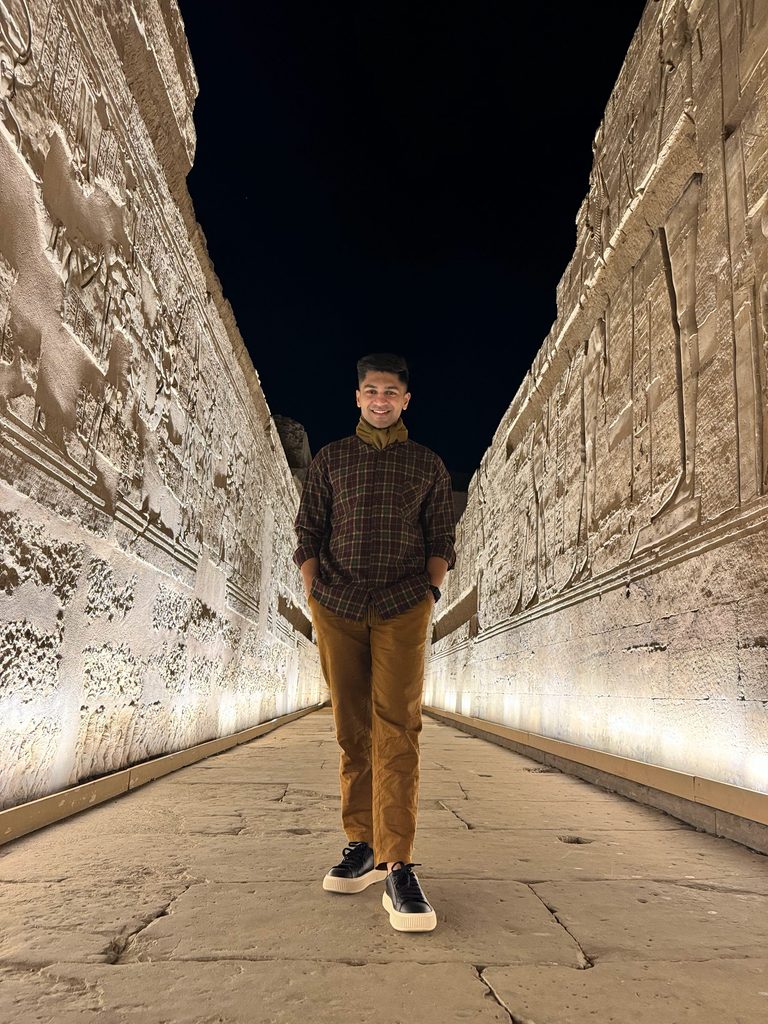
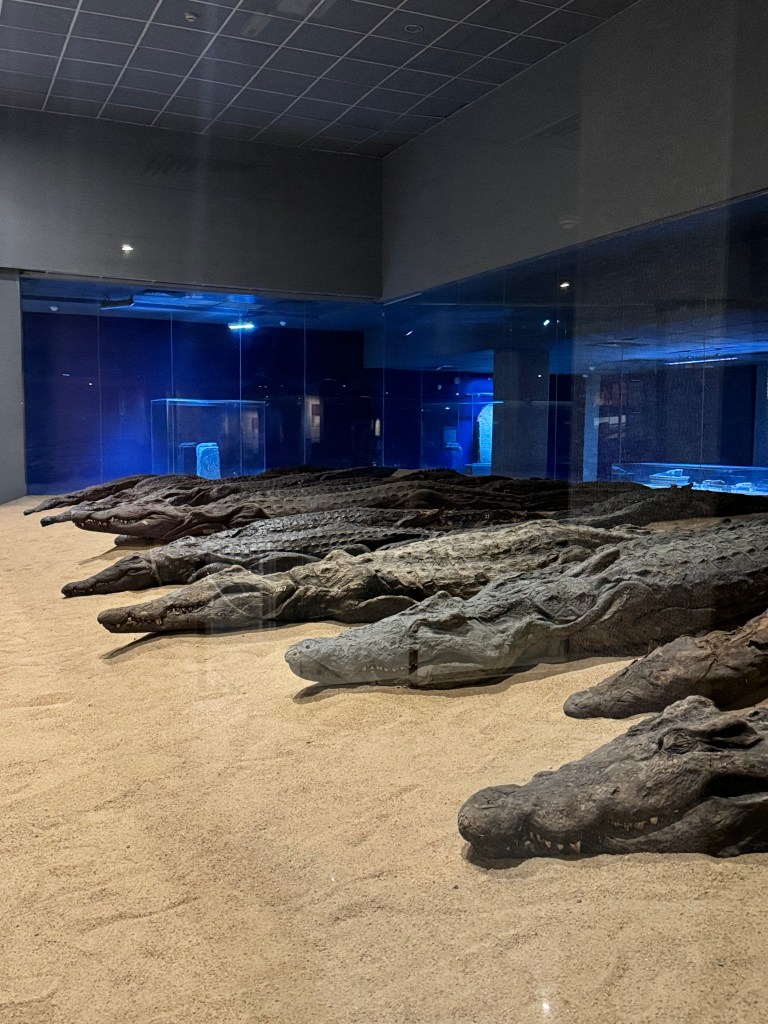
Right next door, a small crocodile museum houses mummified crocodiles, just one main exhibit and a couple of smaller ones, but included in the cruise cost, so worth the quick stop.
That night’s DJ set mixed Egyptian, Southeast Asian, and Indian songs once the crew clocked our nationality. Expect a lot of “Amitabh Bachchan” and “Shahrukh Khan” mentions, Indian soft power runs deep even here. Having brought our own alcohol (again, cruise drinks are pricey), we made a proper night of it and slept late, having napped through most of the day’s sailing.
Day 4 ratings: Abu Simbel: +2 | Kom Ombo Temple: +4 | Crocodile Museum: +2.5
27th December, Wednesday – A Slow Day and a Regretted Show
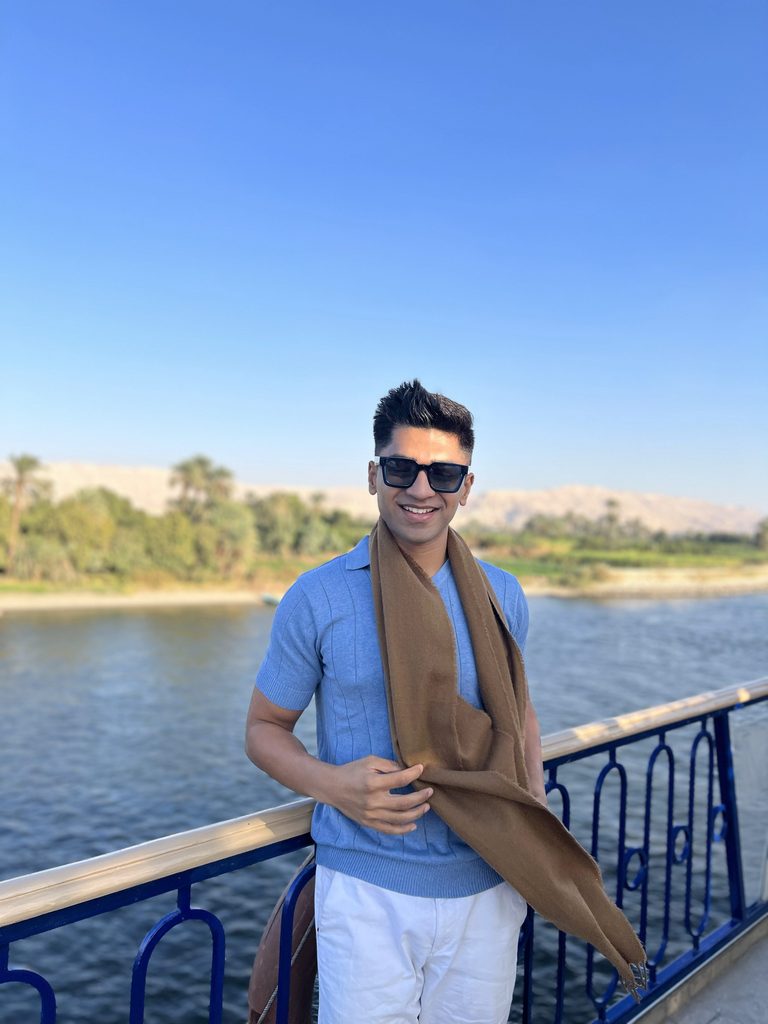
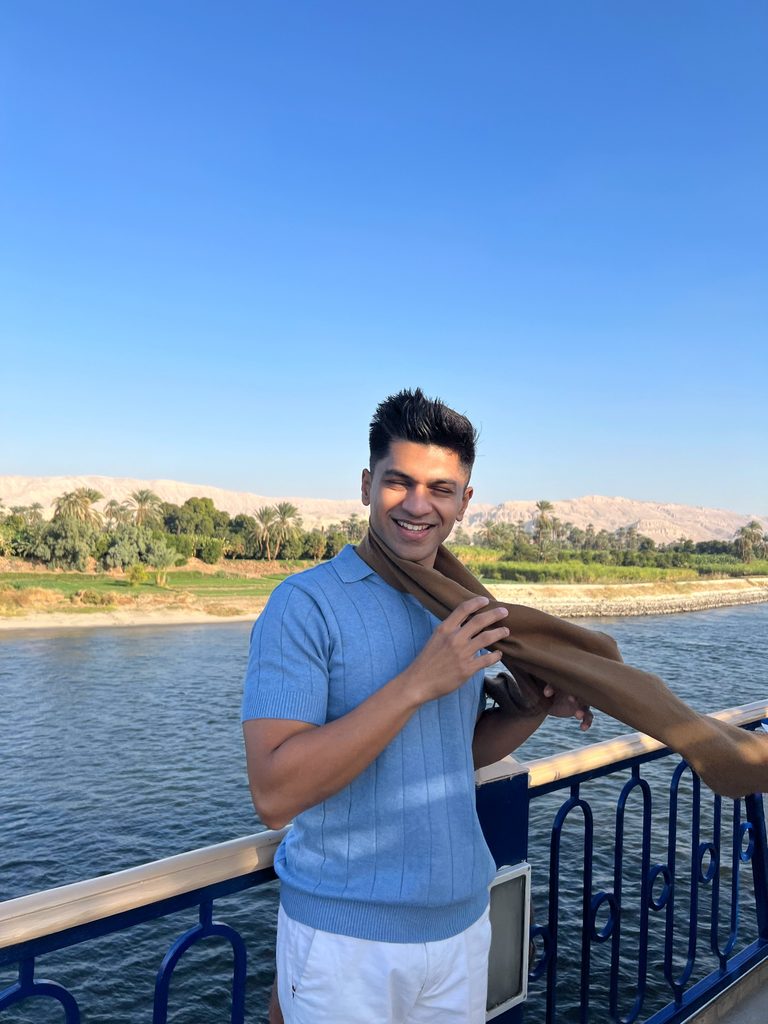
Having slept in far too late for the 5:30 am Edfu Temple stop, we spent the day on deck instead, watching the Nile banks pass by, playing cards, and soaking up the sun as the cruise continued toward Luxor.
We reached Luxor by dusk, where the cruise docked for good, and headed out to catch the Light and Sound Show at Karnak Temple that evening. One tip: skip third-party ticket sellers and buy directly at the counter, it’s cheaper. The show itself, though, was a genuine letdown. The temple looked stunning, but the narration (in whichever language you catch, ours happened to be English) was muddled and poorly recorded enough that none of the 8 of us understood a single sentence. Skippable.
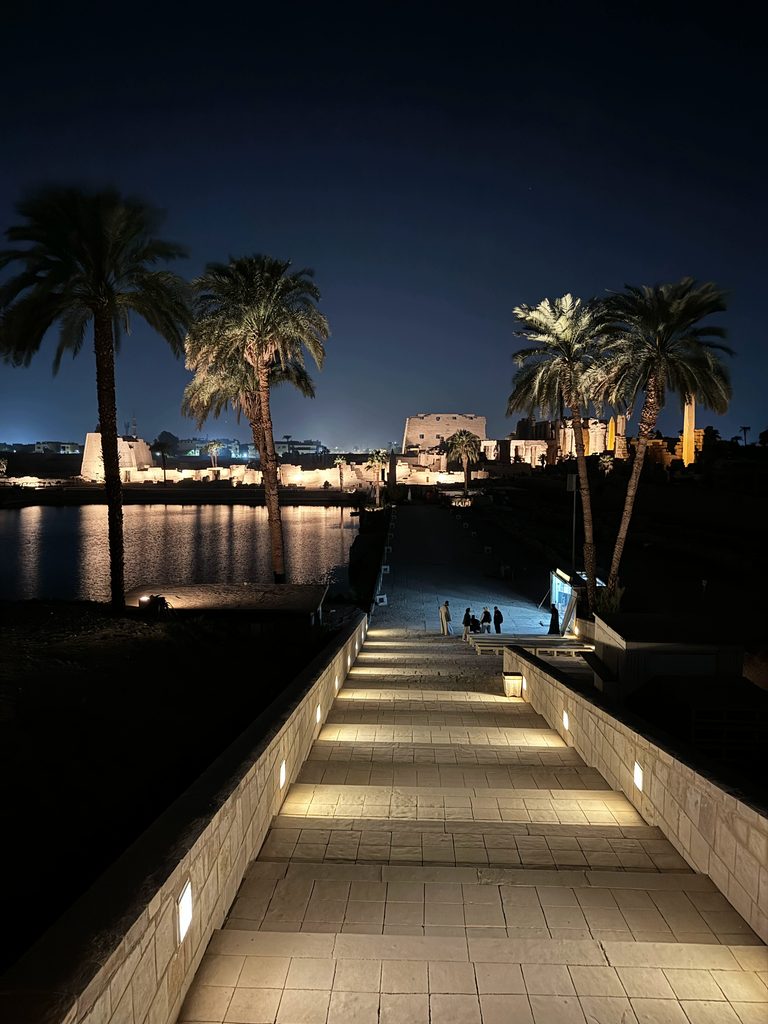
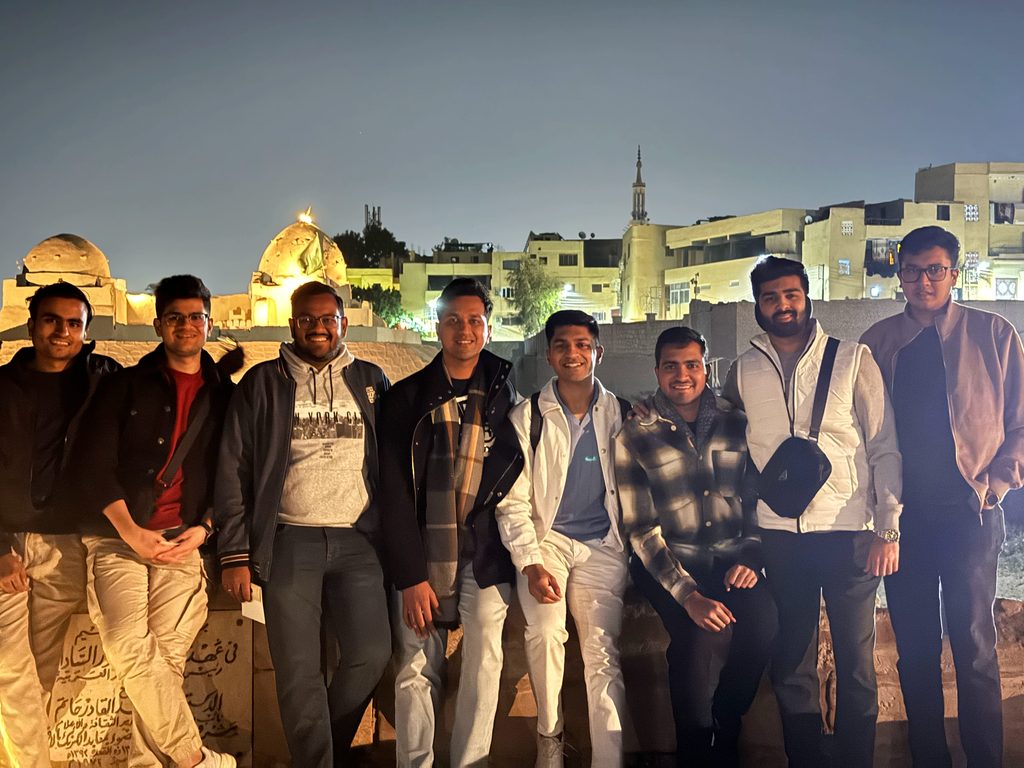
We were tired of the mediocre cruise food and looked for fancy restaurants in Luxor. There are unorganised taxi drivers all around with whom you can haggle a price. Their cars will be at least 30 years old and you will not be sure if they work but they will. We found the Hilton Hotel with some restaurants offering vegetarian food. We headed there. It was good and returned to our cruise, chilled for a while and then slept.
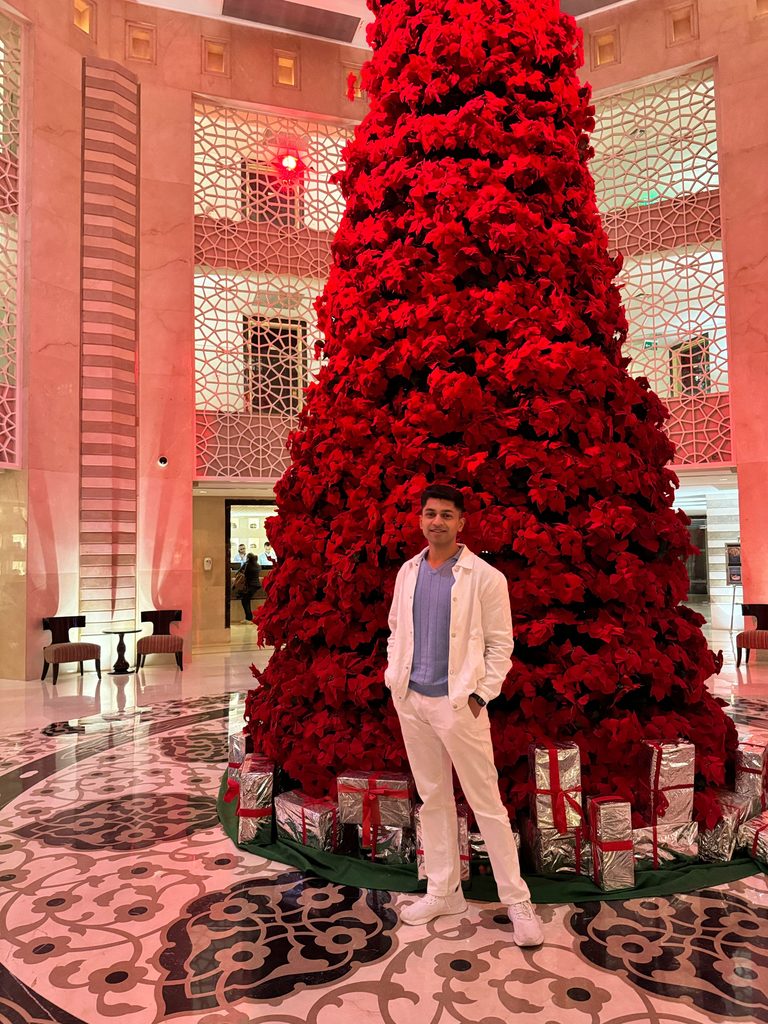
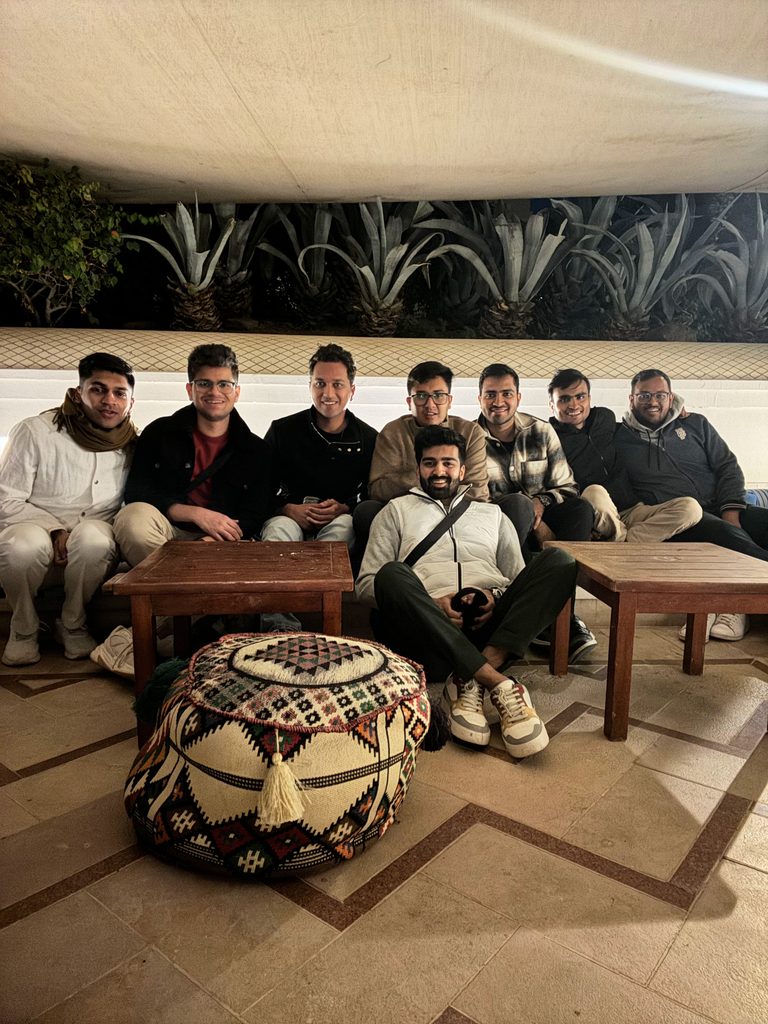
Day 5 ratings: Light and Sound Show: -5 | Hilton restaurants: +2
28th December, Thursday – Karnak, Luxor Temple & the Valley of the Kings
We checked out around 10 am, had breakfast, and set off for Luxor’s full city tour, Karnak and Luxor Temples on the East Bank, the Valley of the Kings and Temple of Hatshepsut on the West.
Karnak and Luxor Temples
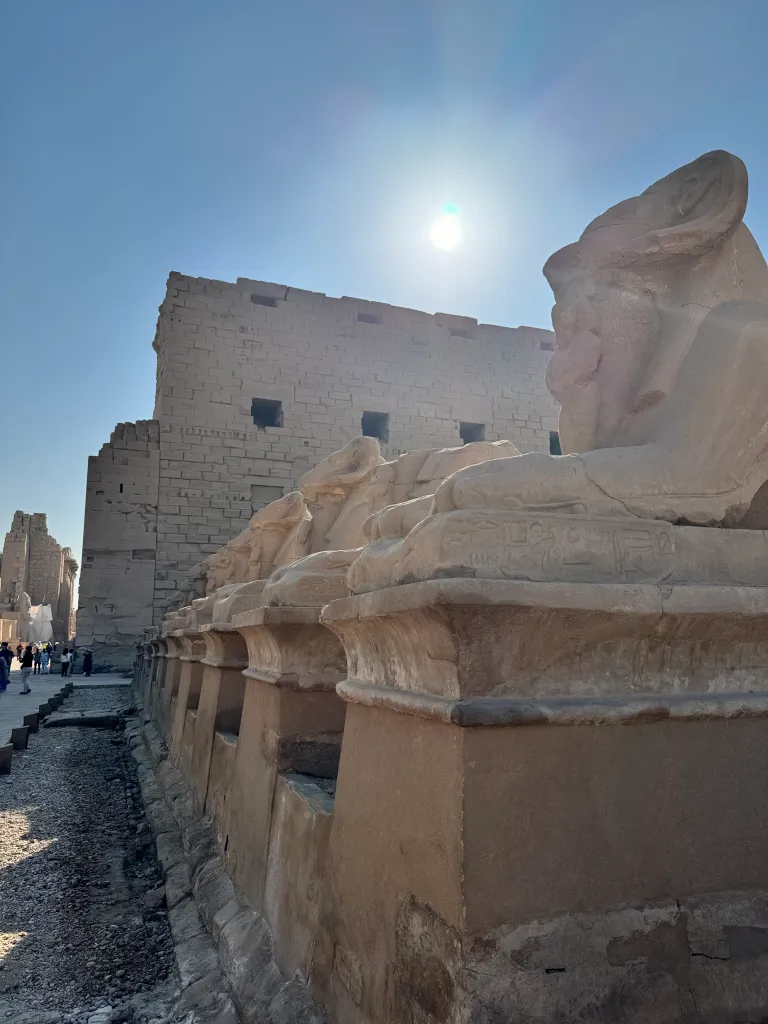
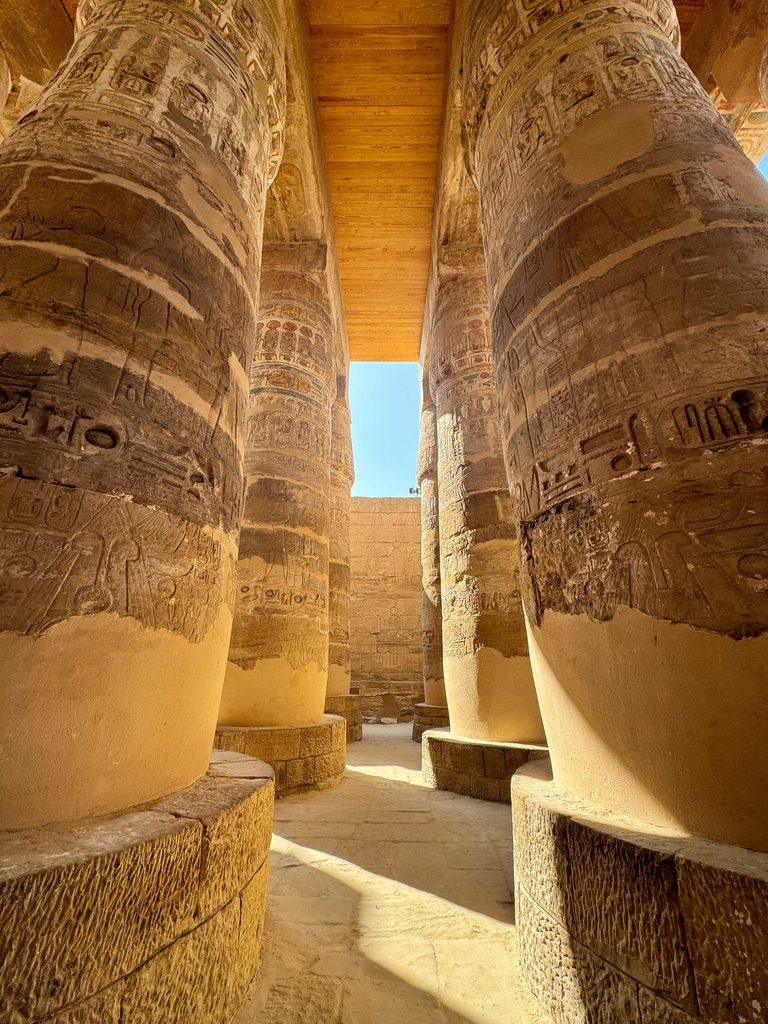
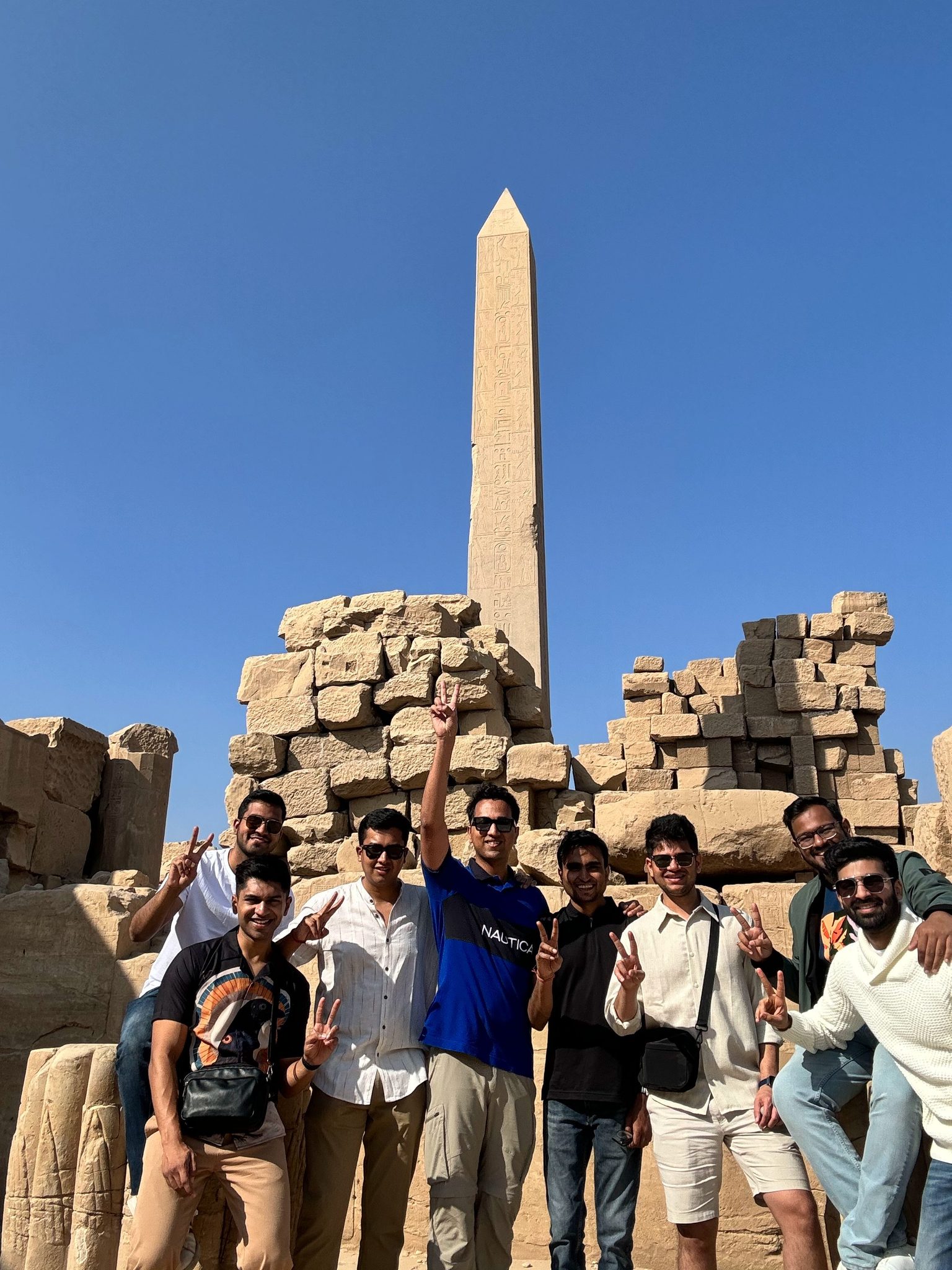
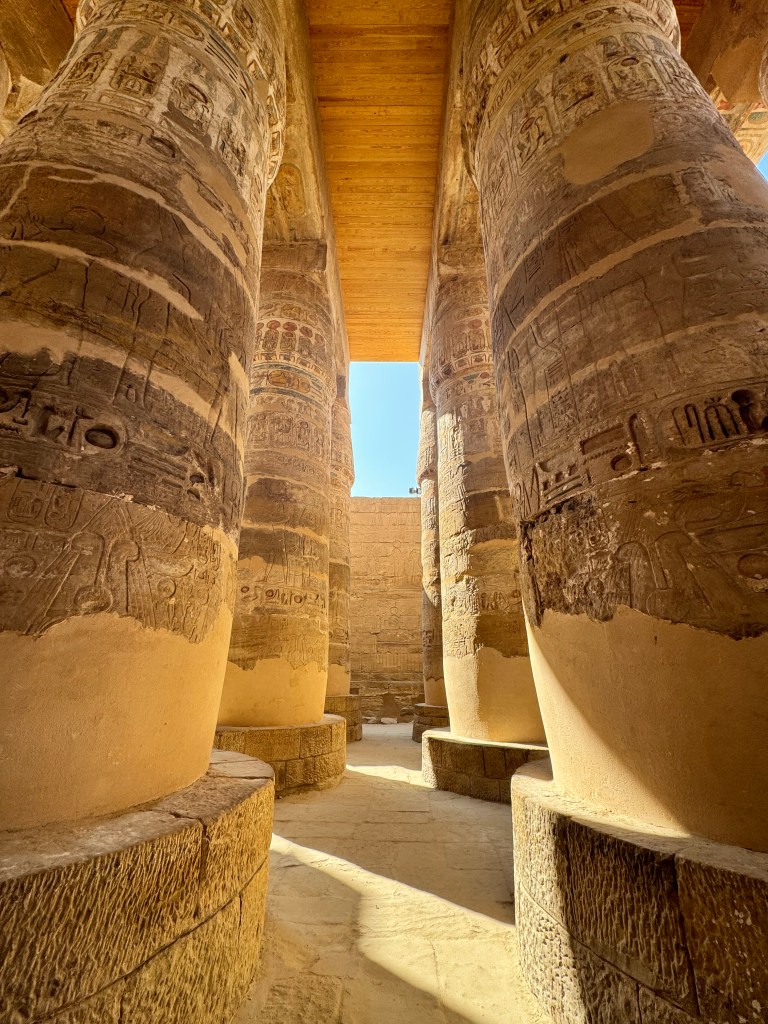
Luxor’s East Bank is the developed side, home to most shops and restaurants. We started at Karnak Temple, the same place we’d left disappointed by the light show the night before, and in daylight, with a good guide, it was transformed. Grand, detailed, and easily my favourite temple in the entire country. From there, the Luxor Temple followed, smaller in scale but impressive in its own right, and conveniently close by, keeping commute time short.
Lunch and Crossing to the West Bank
Hungry by midafternoon, we found the 5-star Steigenberger Nile Palace, home to both an Italian and a Mediterranean restaurant. Excellent Italian food paired with lovely Egyptian wine made for a well-timed break.
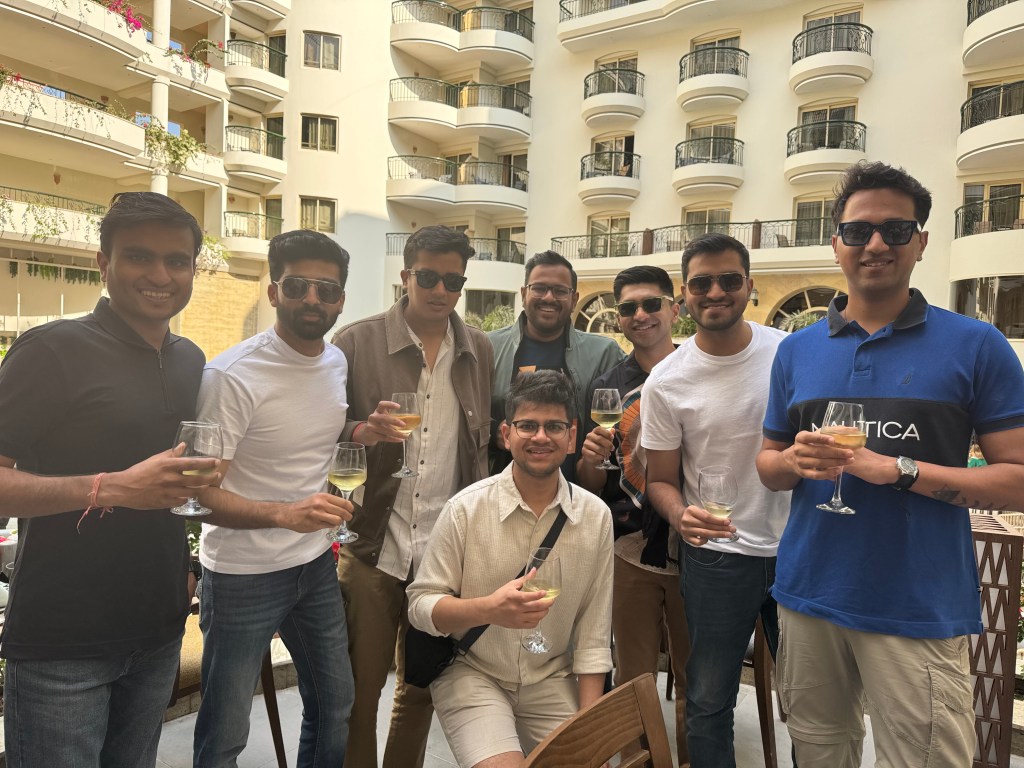
To reach the West Bank, you can drive 45 minutes or take a 10-minute ferry, we chose the ferry, having sent our car ahead to wait on the other side.
Valley of the Kings
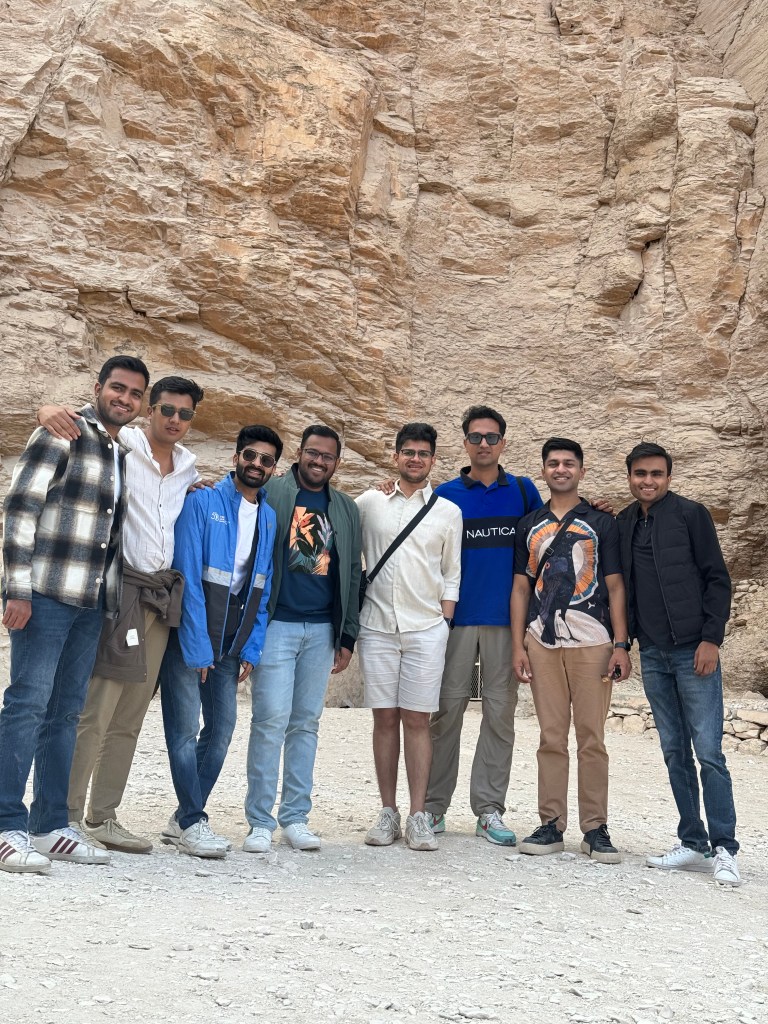
The Valley of the Kings, burial ground for Luxor’s pharaohs, holds numerous underground tombs, each with distinct wall art, length, and artefact history. Entry pricing depends on how many tombs you want to see; our tour included 3 paid tombs plus all free ones. We skipped the Temple of Hatshepsut, one historical site too many for a single day.
An Unforgettable Night on the West Bank
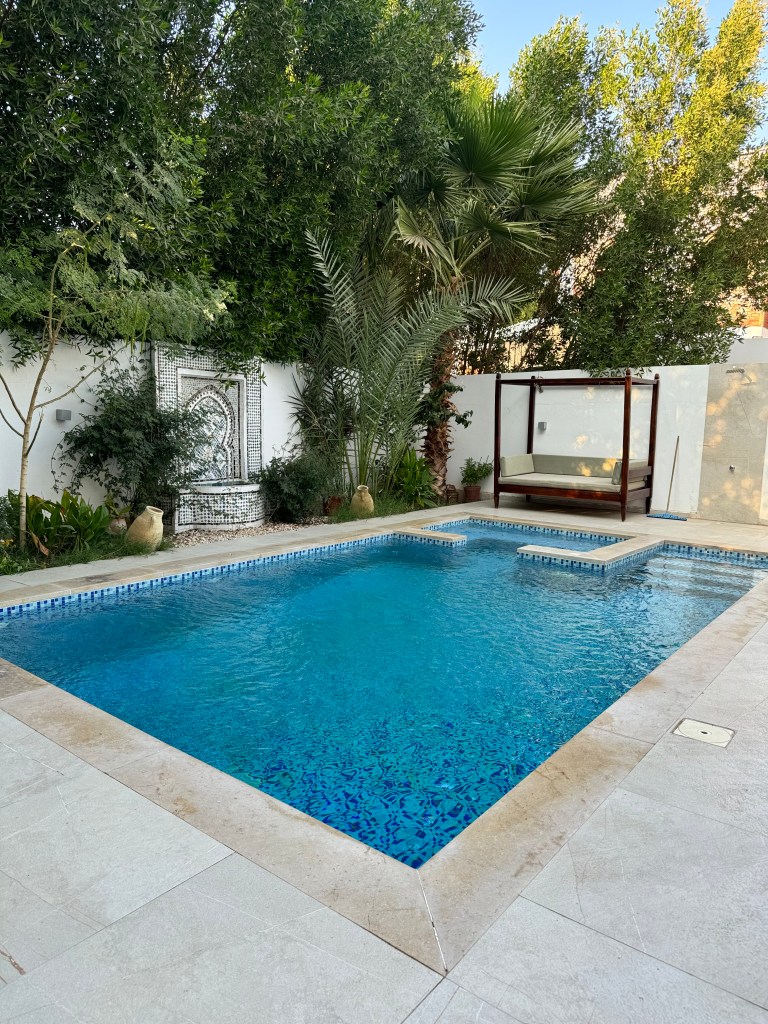
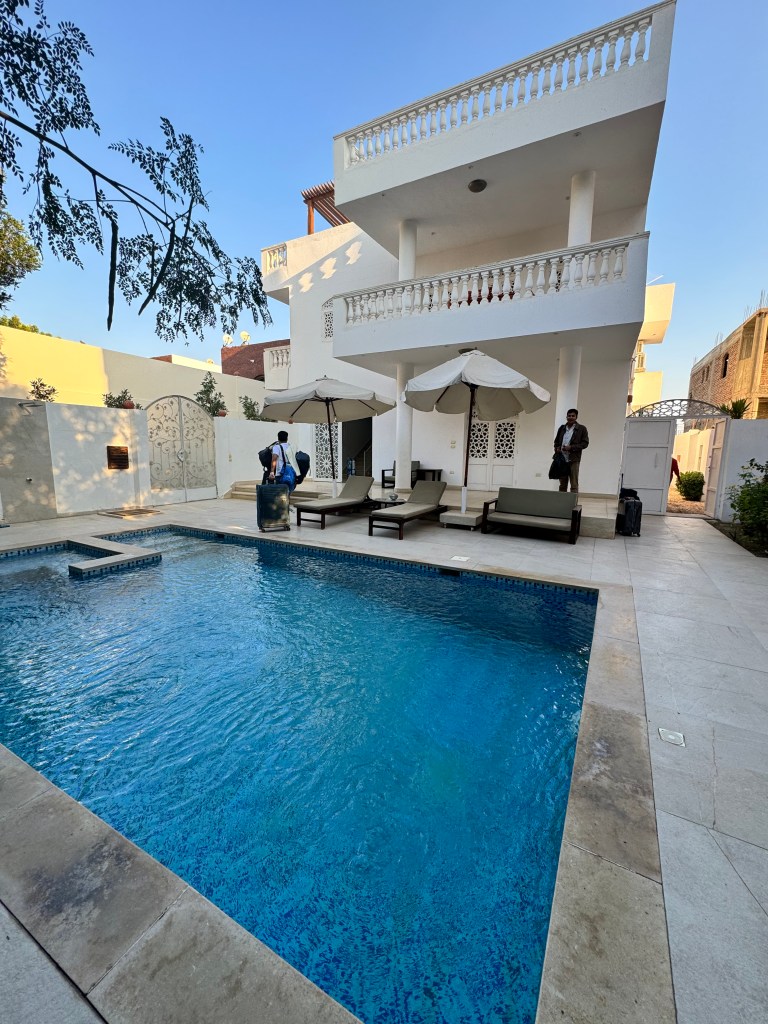
The West Bank has little in the way of restaurants or amenities compared to the East, and our BnB there left us entirely reliant on the caretaker for food and drinks. It turned into one of the best nights of the trip: veg pizzas, plenty of Egyptian wine, the whole villa to ourselves, and seven straight hours of drinking and singing. A genuine 10/10 evening.
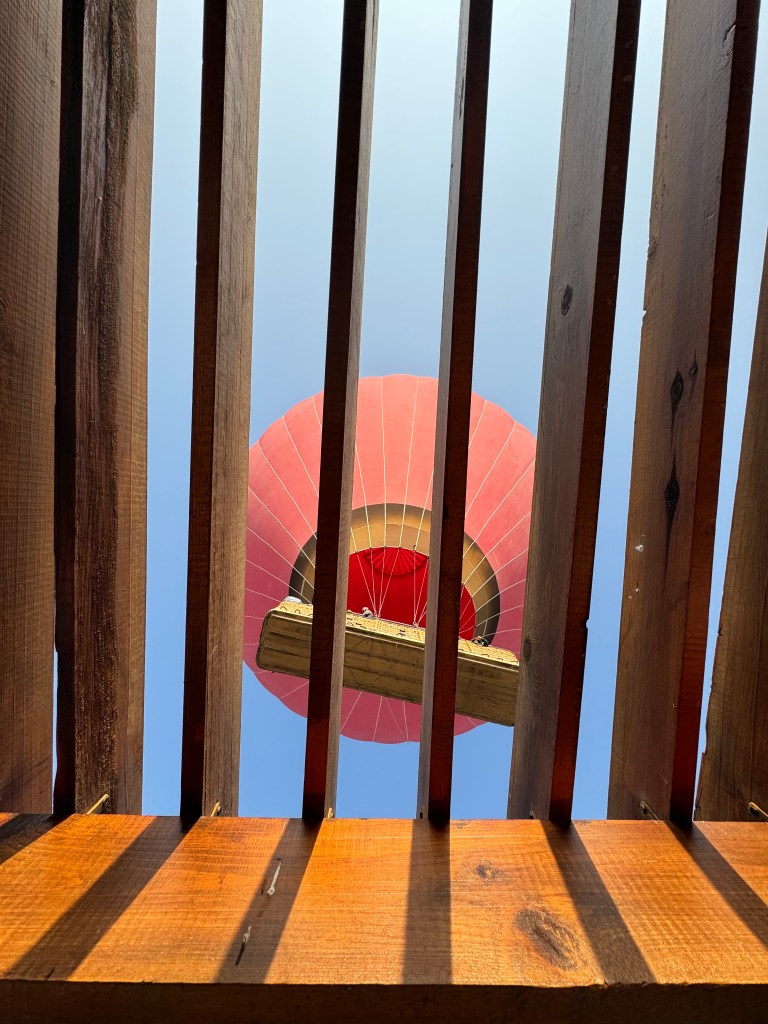
Optional add-on: A hot air balloon ride over Luxor can be booked alongside the cruise or separately. We skipped it this time.
Day 6 ratings: Karnak Temple: +4 | Luxor Temple: +2.5 | Valley of the Kings: +3 | Steigenberger restaurant: +3 | Our BnB: +5
29th December, Friday – Onward to Hurghada
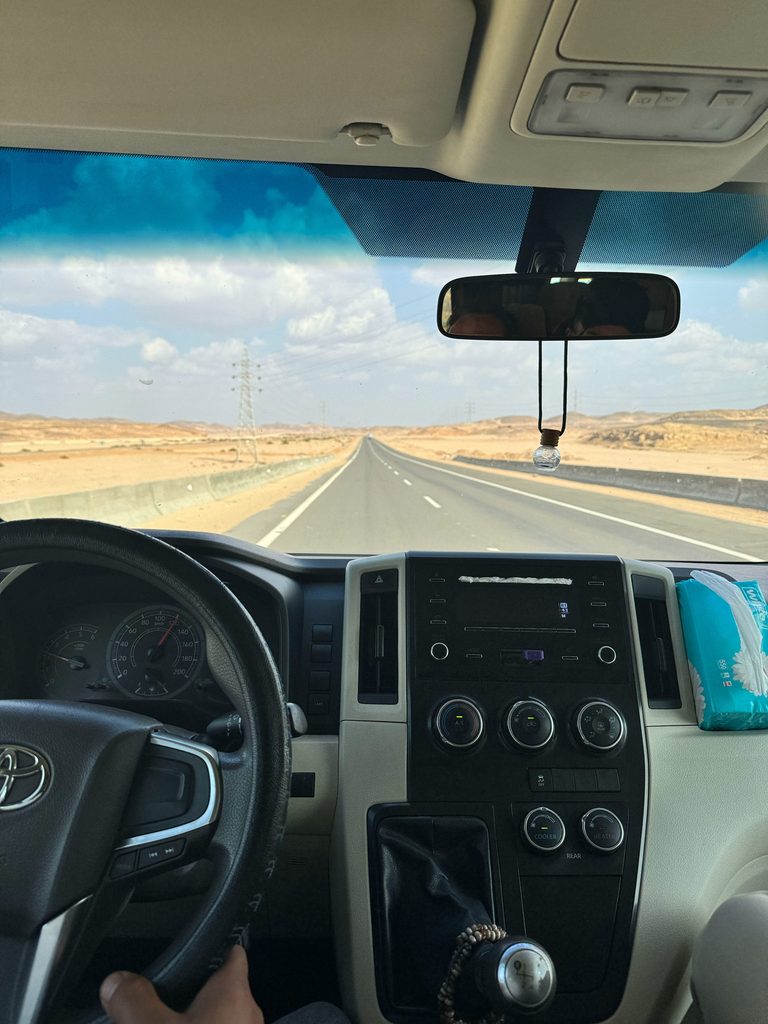
After our “wine-derful” night, we set off for Hurghada, a 4-hour private transfer through pure arid desert with no shops, restaurants, or stops along the way.
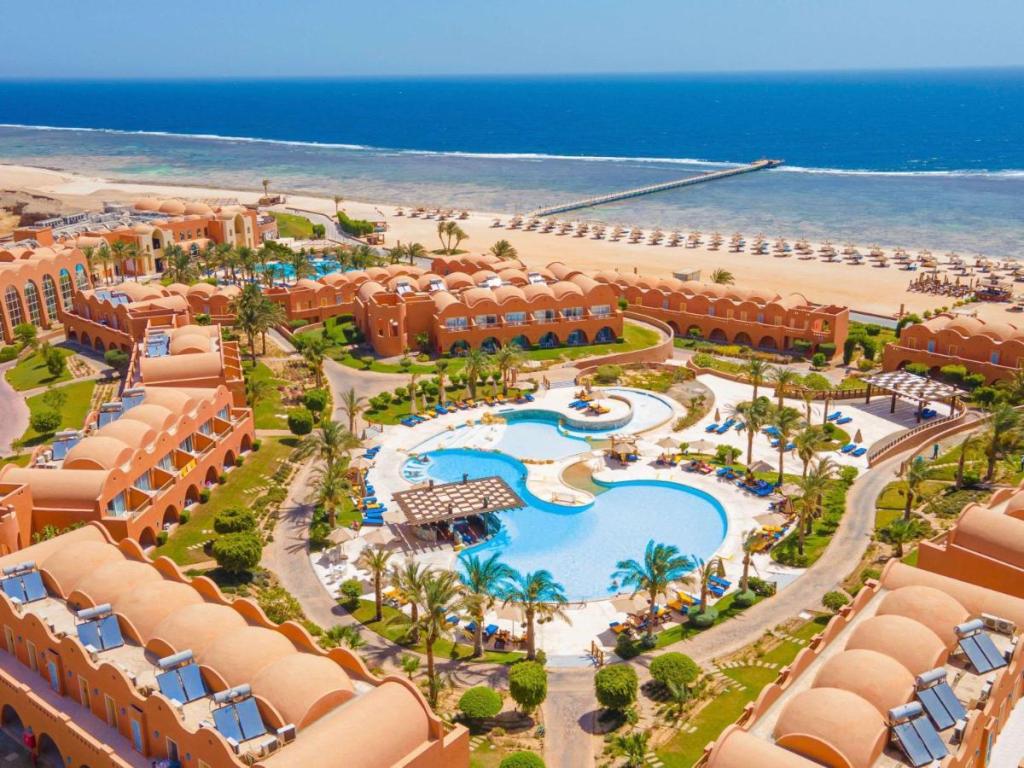
We reached the Sunrise Aqua Joy Resort by 3 pm, and it turned out to be one of our best decisions of the trip. At ₹5,500 per person per night, the resort included 4-6 pools, amusement-park-style water rides, all three meals (150+ items), free alcoholic drinks till 11 pm, and a poolside snack bar serving pizzas, sandwiches, pita, beverages, beers etc. running free from 3-5:30 pm. Cuisine-specific restaurants exist too, but need advance booking, we couldn’t get a slot.
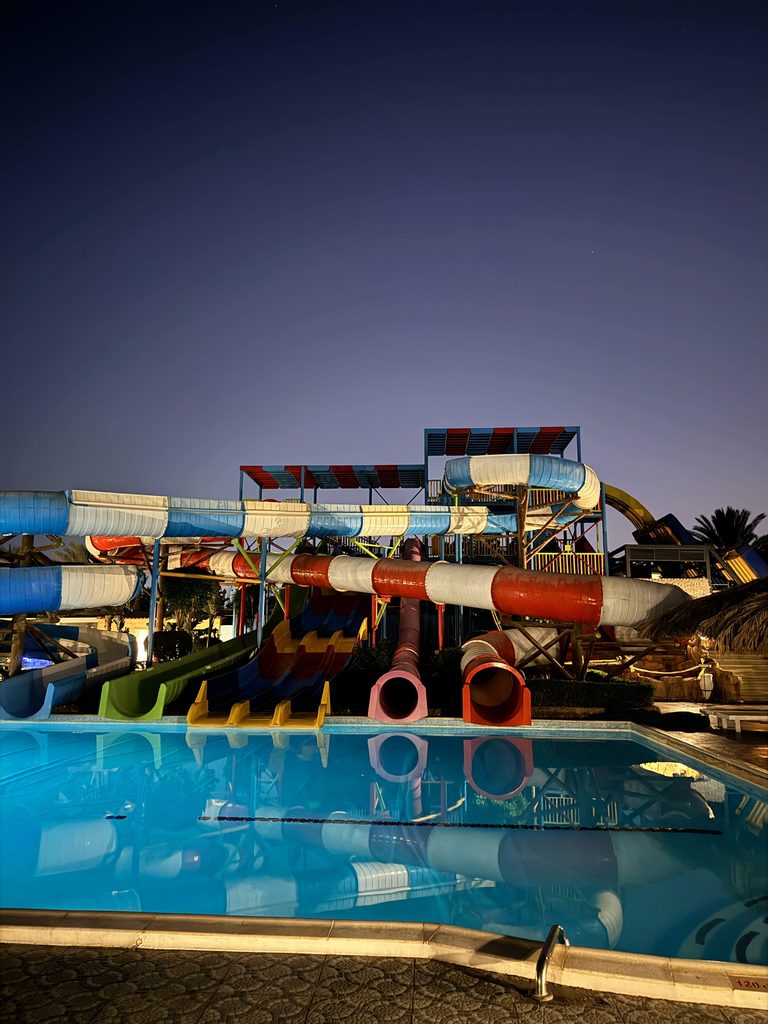
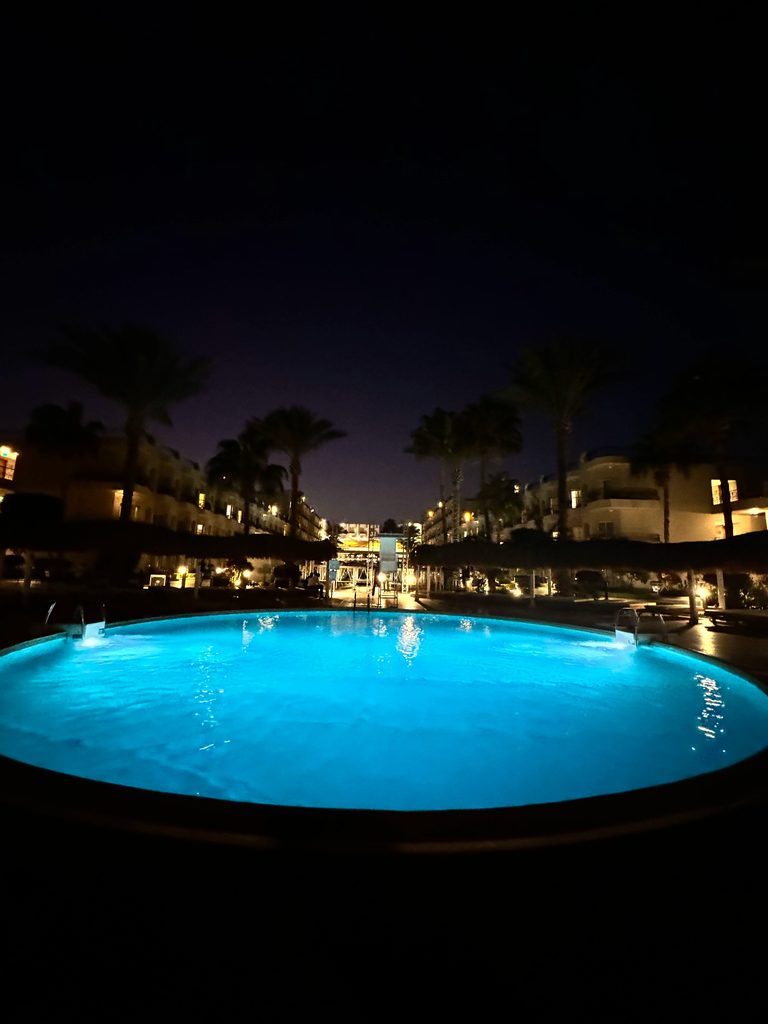
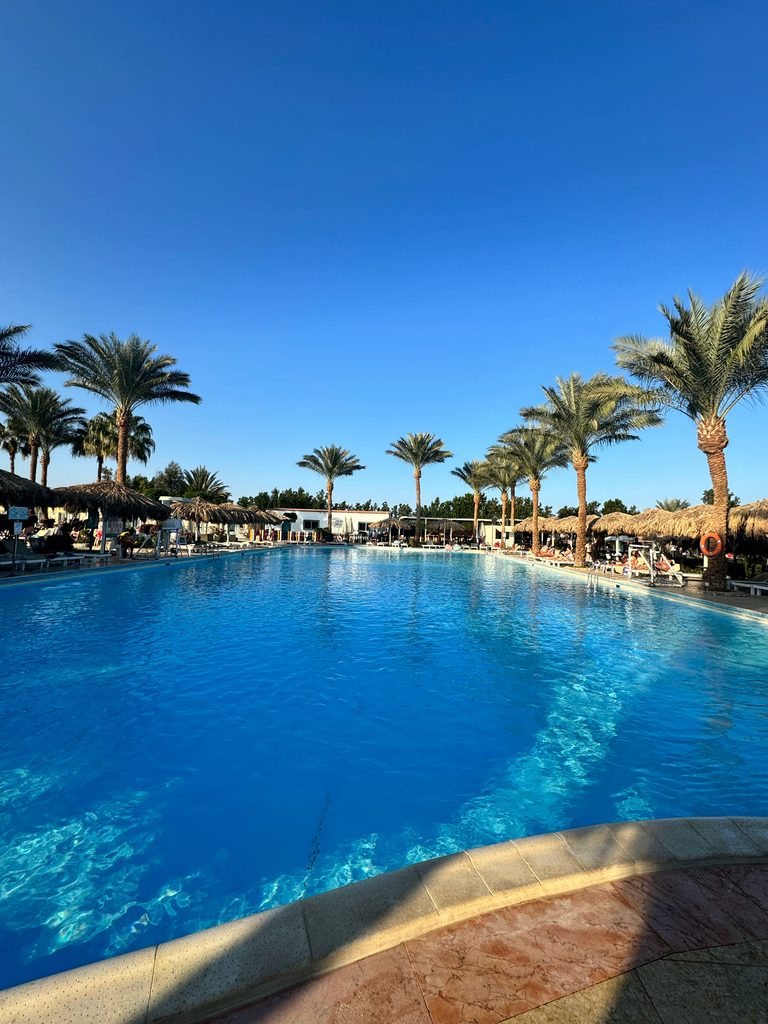
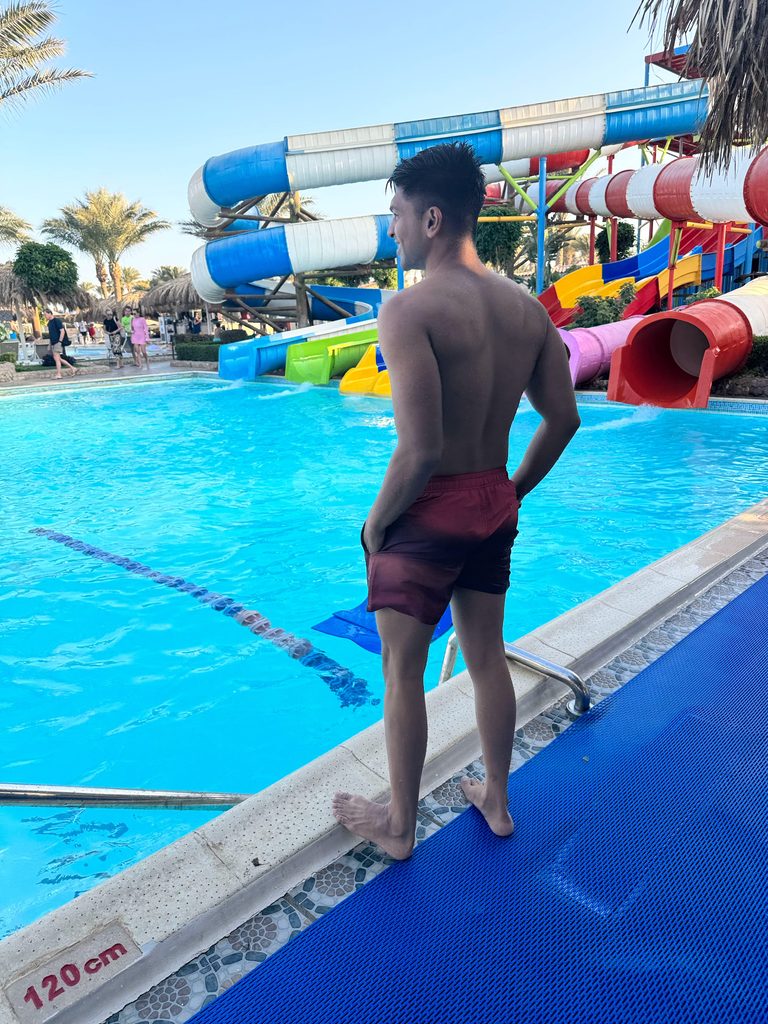
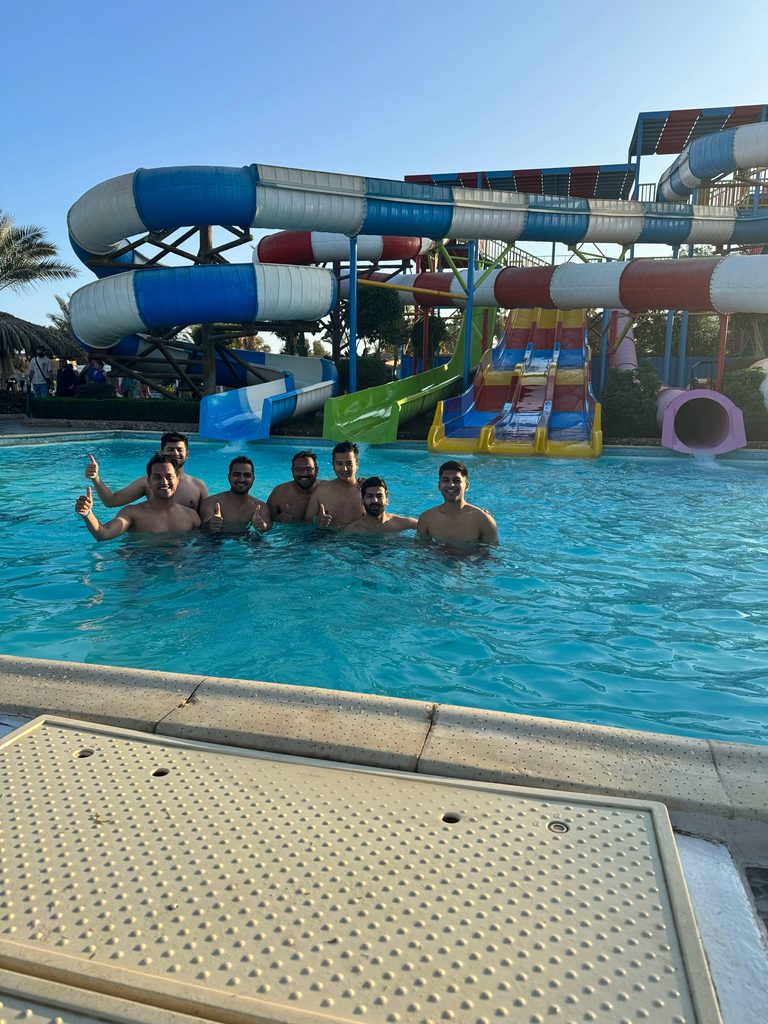
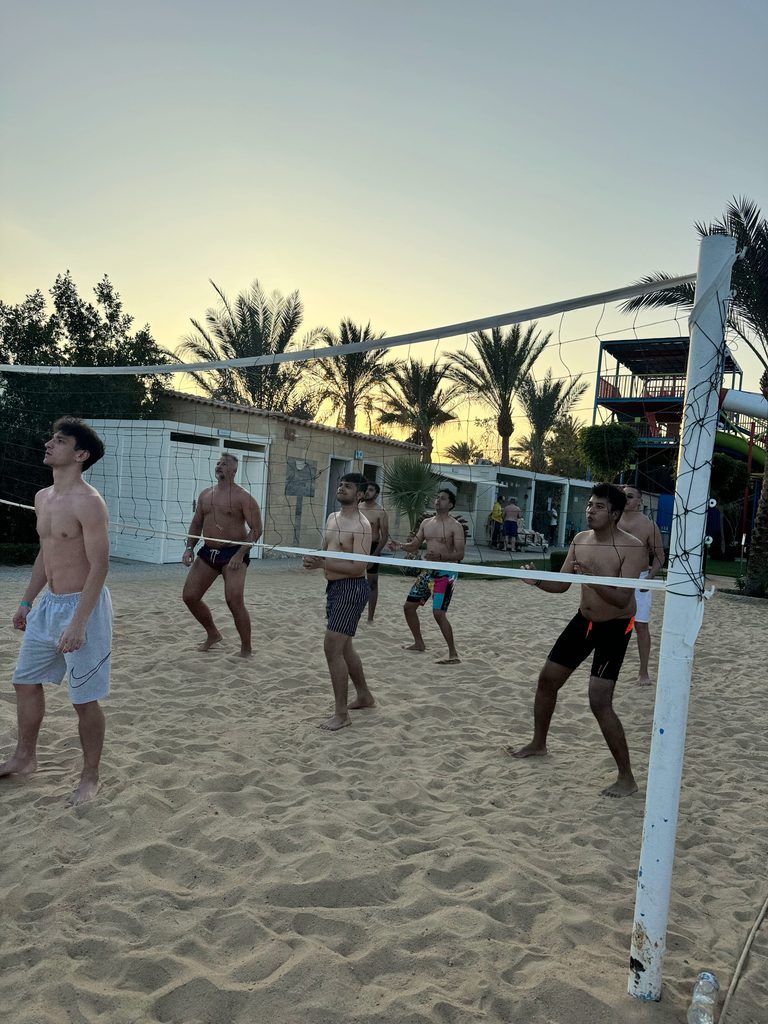
The rest of the day went to pool time, water rides (genuinely fun, very nostalgic), and beach volleyball, while we also lined up a scuba diving tour for the next day in the Red Sea.
Day 7 rating: Sunrise Aqua Joy Resort: +5
30th December, Saturday – Diving in the Red Sea
Dive day started early with pickup for two dives and lunch on board.
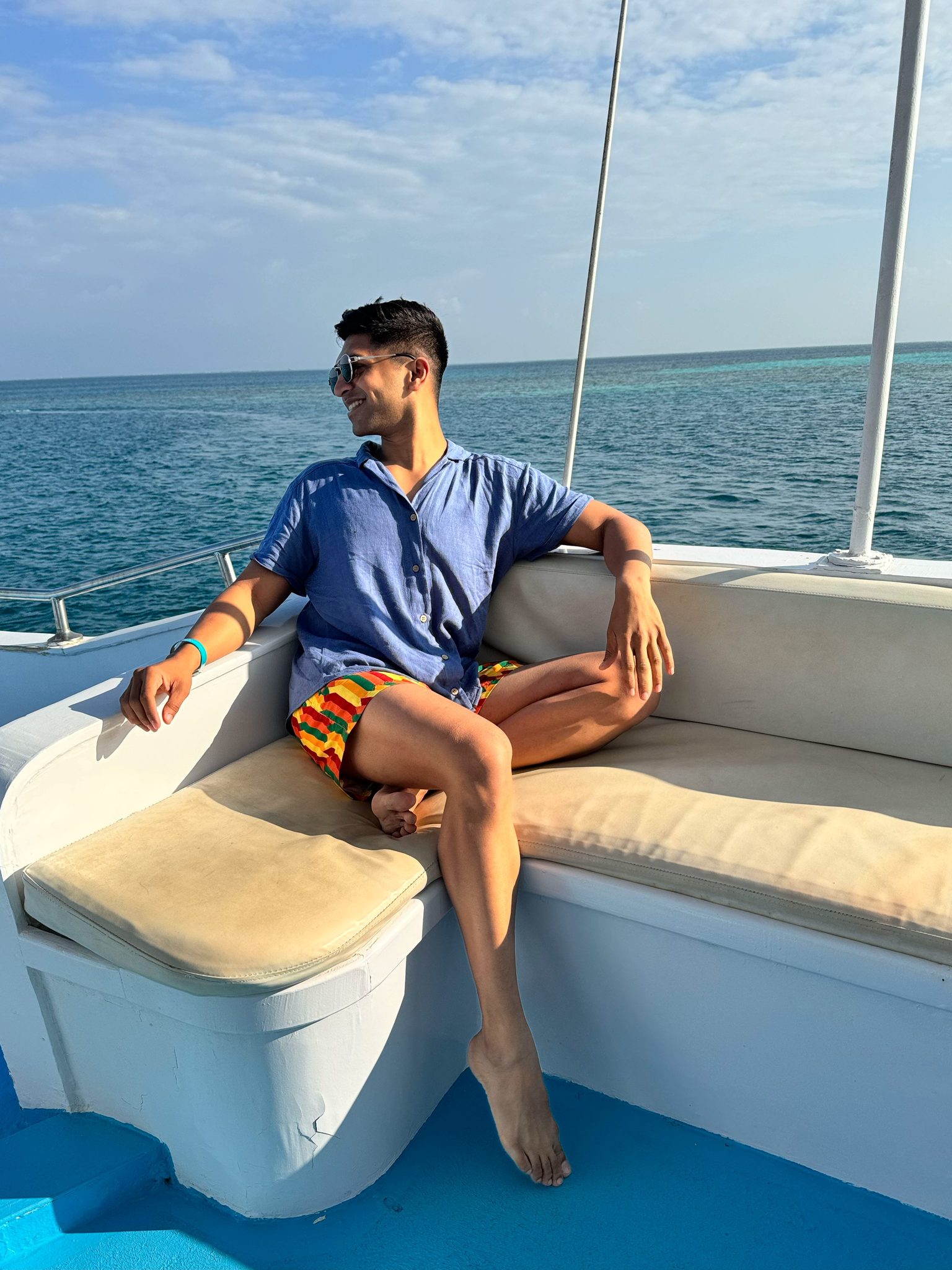
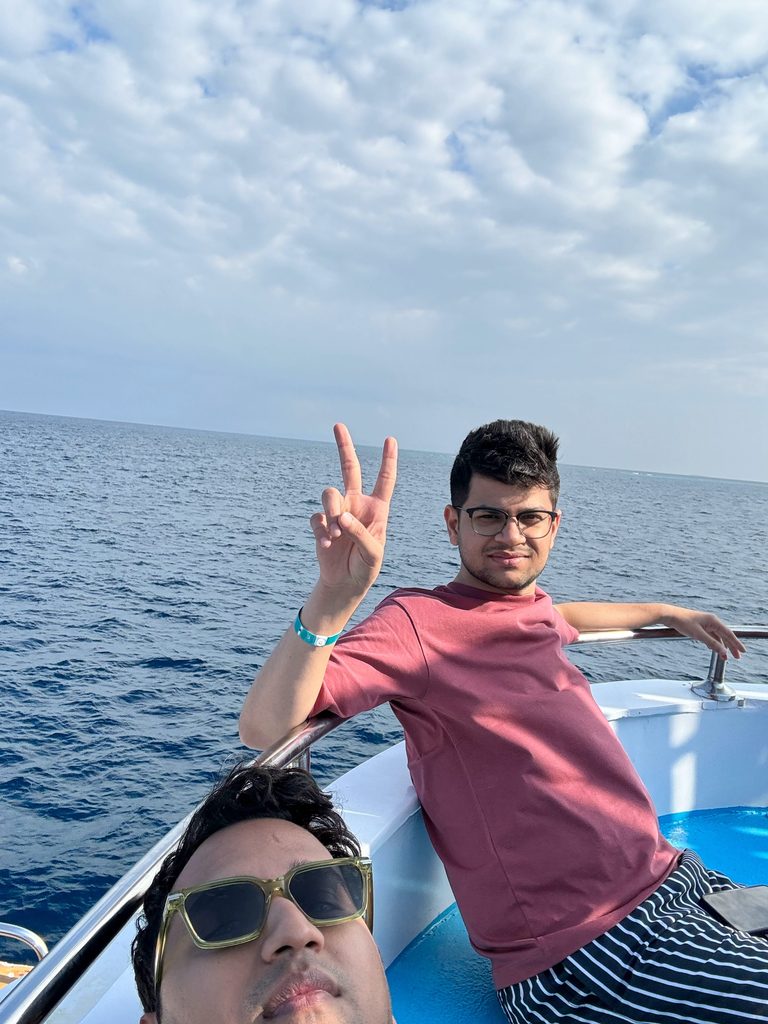
Marine life was rich, coral, fish, and, on our particularly lucky day, dolphins swimming alongside us mid-dive, a genuinely surreal experience. Having dived in Havelock (Andaman) and Sri Lanka’s west coast before, this was the best of the three.
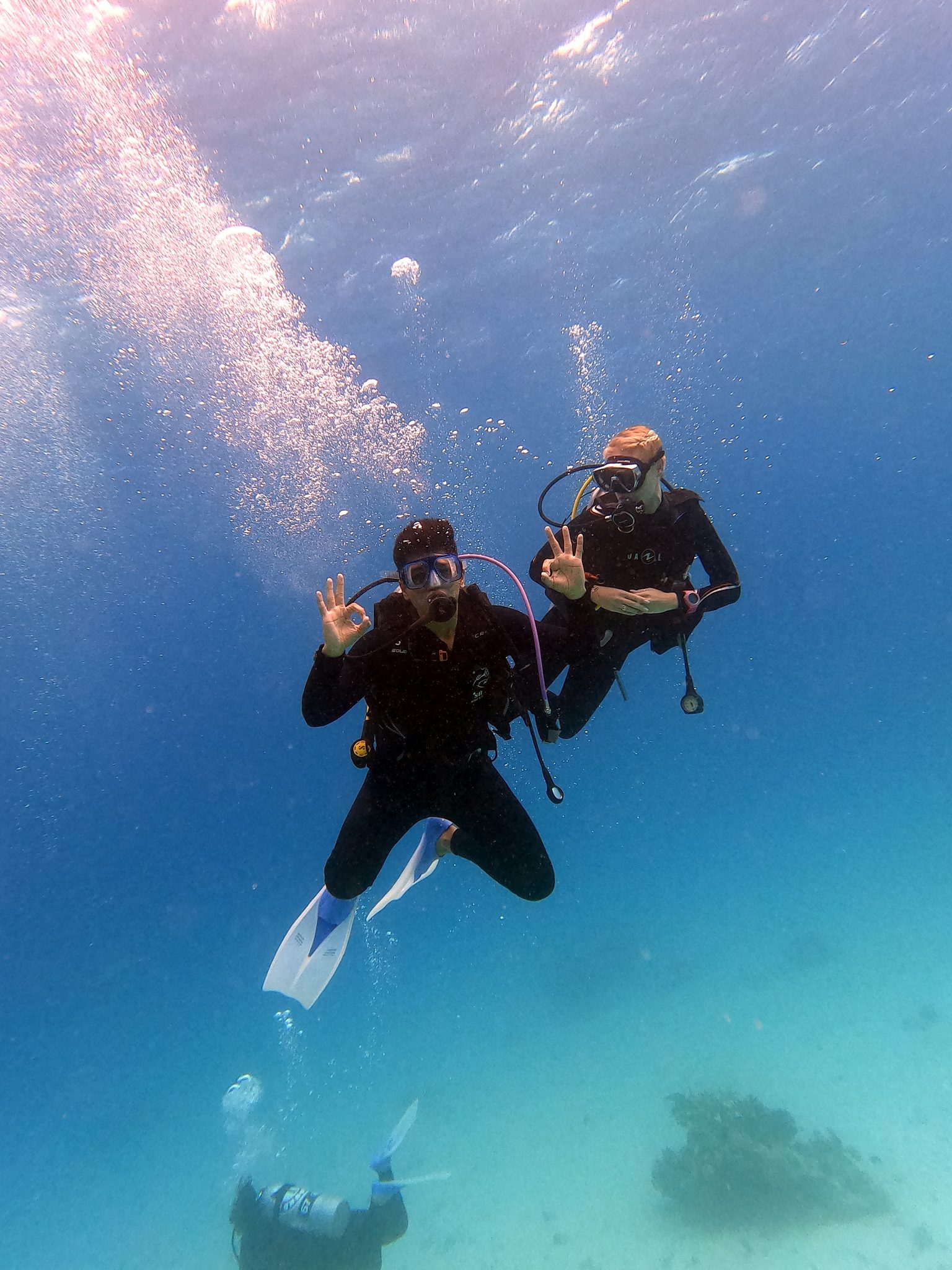
A relaxed lunch on the boat preceded the second dive, by then we were pleasantly worn out, so it felt less thrilling, though the marine life stayed just as impressive.
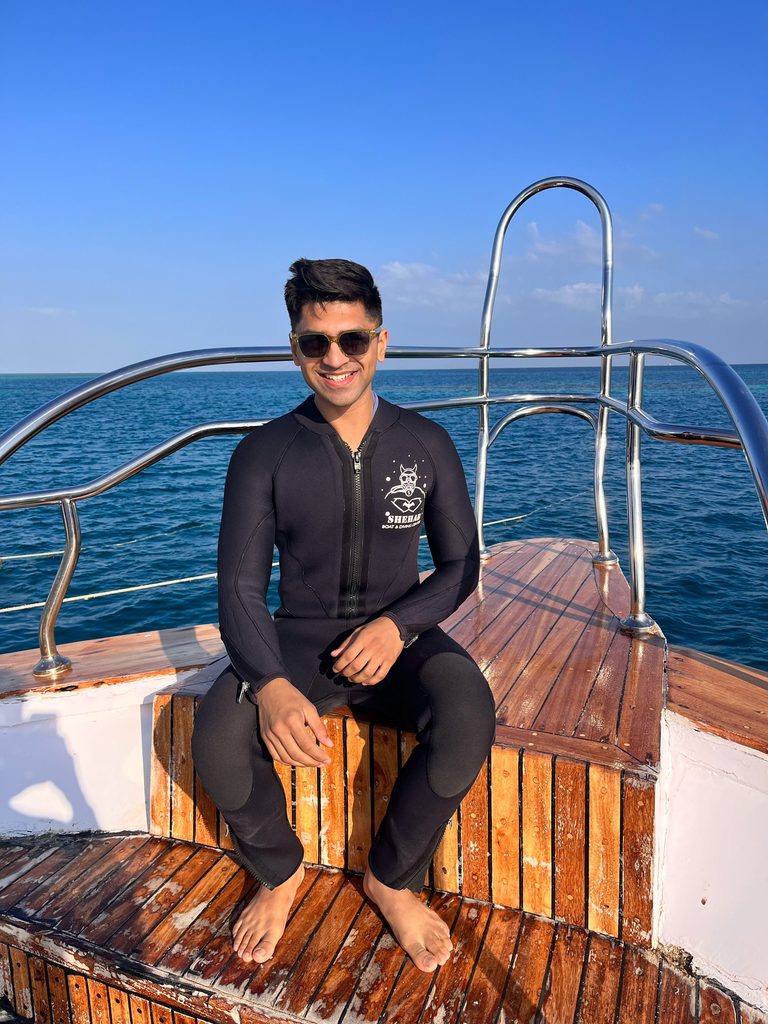
Back at the resort by evening, we explored Hurghada itself, essentially wall-to-wall resorts, hotels, and shops. Free drinks at the resort bar led to ambitious plans for a night out (clubs run till 4 am), plans that didn’t survive the pre-drinking.
Day 8 ratings: Red Sea scuba experience: +4.5 | Hurghada neighbourhood: 0
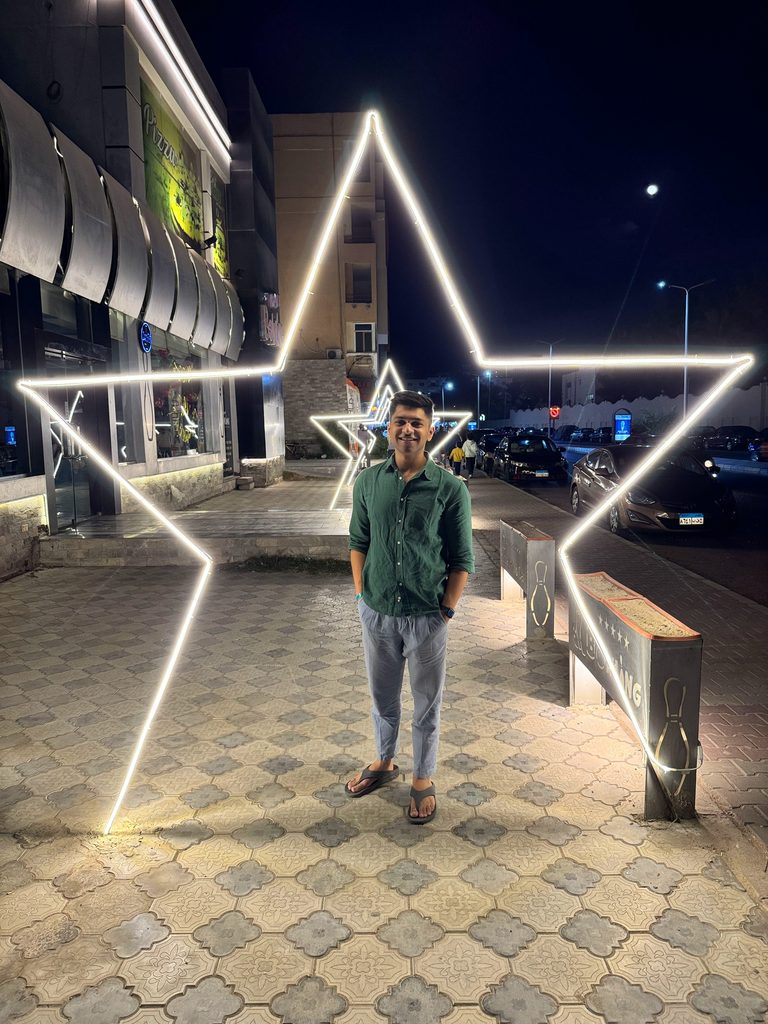
31st December, Sunday – Back to Cairo for New Year’s Eve
A short flight took us back to Cairo, where we checked into The Jewel Zamalek Hotel. Lunch, unsurprisingly, was koshari again, followed by kunafa from Al-Agha Restaurant, genuinely the best I’ve had, better than Turkey’s.
Souvenir Shopping
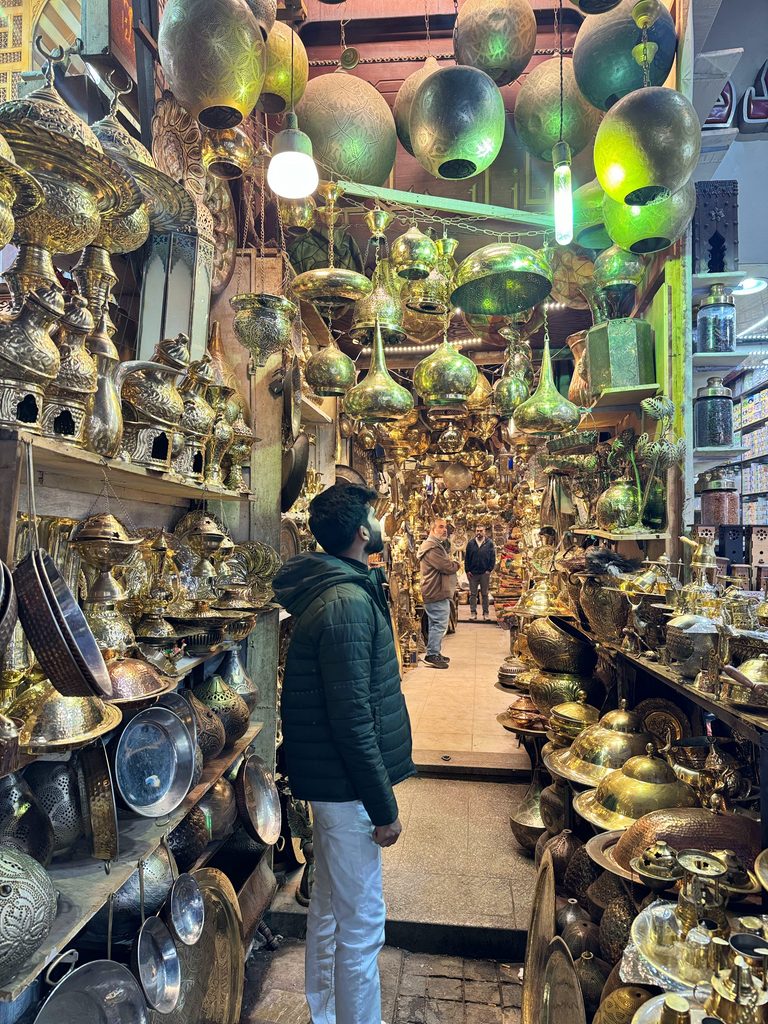
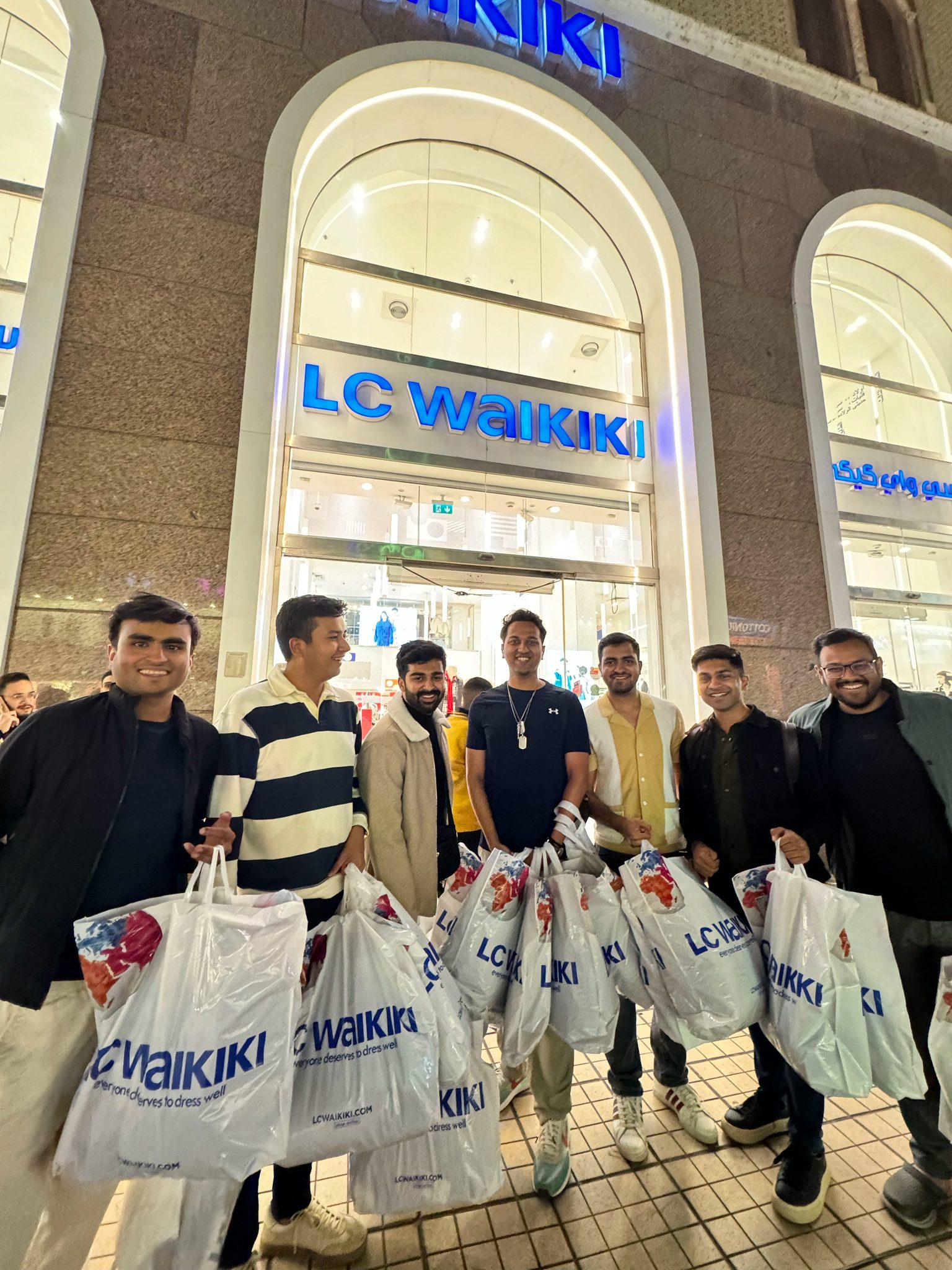
We spent the afternoon at Khan-el-Khalili market, packed with shops selling bags, perfumes, miniatures, carpets, and home decor. A stop at LC Waikiki, a Turkish fast-fashion brand priced like a budget Zara, led to over 20 kg of clothes shopping between us.
An Underwhelming New Year’s Eve
Cairo’s NYE options were disappointingly thin, alcohol is culturally frowned upon here, and New Year’s isn’t a significant local occasion. We landed at the Marriott Casino instead (local currency isn’t accepted, minimum roulette bets start around 5 USD).
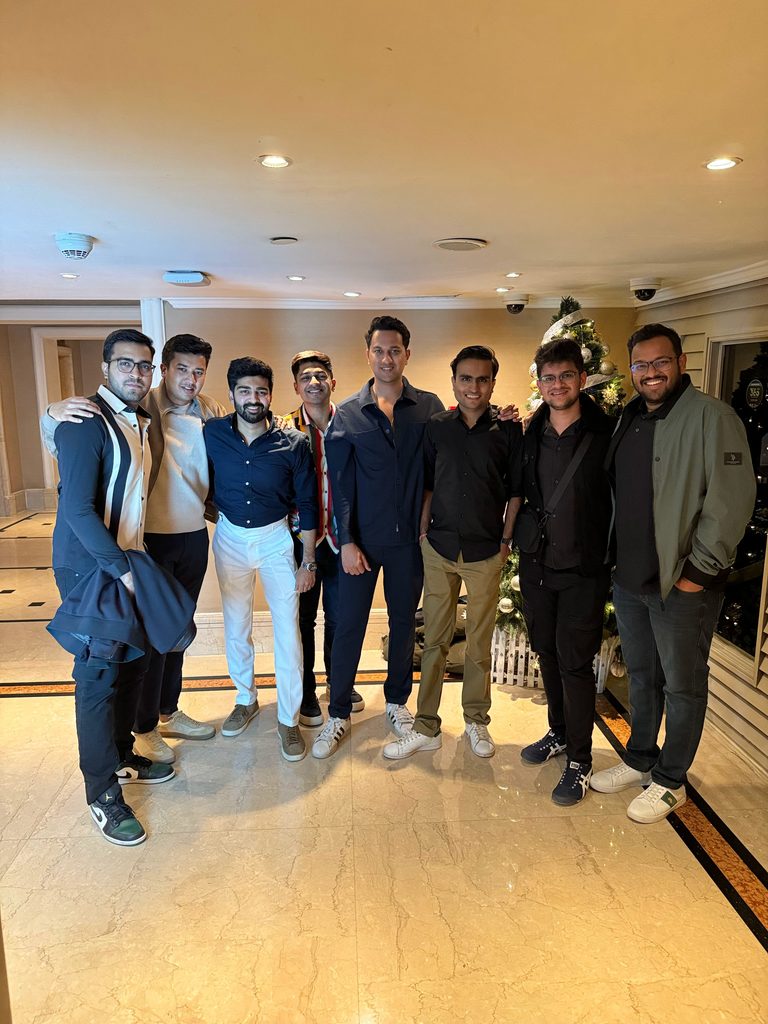
It was an expensive casino. We all played a little, ate a little, drank a little and then headed for parties. All the venues were docked ferries hosting a party. then checked out a few docked-ferry party venues afterward. Every one felt the same: an older crowd, a lone performer, and a steep entry fee for very little energy. Not the New Year’s we’d hoped for.
Day 9 ratings: Khan-el-Khalili market: -1 | Marriott Casino: -1 | NYE scene in Egypt: -4
1st January, Monday – Flying Home
Our flights home scattered us toward Bangalore, Hyderabad, Mumbai, and Delhi at different times. Cairo’s airport is reasonably sized, with a lounge accepting Diners and Priority Pass. A smooth, uneventful flight closed out this Egypt itinerary for Indians on a high note.
FAQ Section
Q: How many days do you need for an Egypt itinerary?
9 days works well for a complete Egypt itinerary covering Cairo, a Nile cruise between Aswan and Luxor, and a beach stop in Hurghada, though you could trim it to 6-7 days by skipping Hurghada.
Q: Are there direct flights from India to Egypt?
As of mid-2024, Air Cairo runs direct flights between Cairo and both Delhi and Mumbai. Earlier, most Indian travellers connected through Bahrain, Saudi Arabia, Kuwait, or Qatar.
Q: Do Indians need a visa for Egypt?
Yes, but it’s straightforward. Apply through the Atlys app with a scanned passport copy and a fee of around ₹2,000; approval typically takes 4-5 business days.
Q: Is a Nile cruise worth it for an Egypt itinerary?
It depends on your travel style. Nile cruises suit couples, families, or larger groups who enjoy a relaxed pace, but active travellers who prefer back-to-back sightseeing may find the free time on board excessive compared to a self-driven road trip between Luxor and Aswan.
Q: What scams should I watch out for in Egypt?
Common ones include currency-note switching, inflated taxi fares quoted in USD instead of EGP, and souvenir vendors who quote a low price and later claim they meant a much higher one. Always confirm currency and read back notes before handing over cash.
Q: Is Egypt safe for tourists, including women?
Generally yes, women were seen walking alone even at night in smaller towns like Aswan, and violent crime against tourists is rare. That said, groups of local boys targeting lone tourists for petty theft are worth being cautious of.
End Note
Egypt doesn’t ease you in gently, pyramids on day two, a Nile cruise by day five, ancient temples that outdate most religions still standing exactly where they were built. Nine days was enough to go from koshari on plastic stools in Old Cairo to a private villa night with a bottle of Egyptian wine on Luxor’s quieter west bank.
If you’re building your own Egypt itinerary, budget real time for Cairo’s old city, don’t rush the Nile cruise even if it tests your patience, and save at least two days for Hurghada’s Red Sea, the scuba alone is worth the detour.