 By Tarang Bansal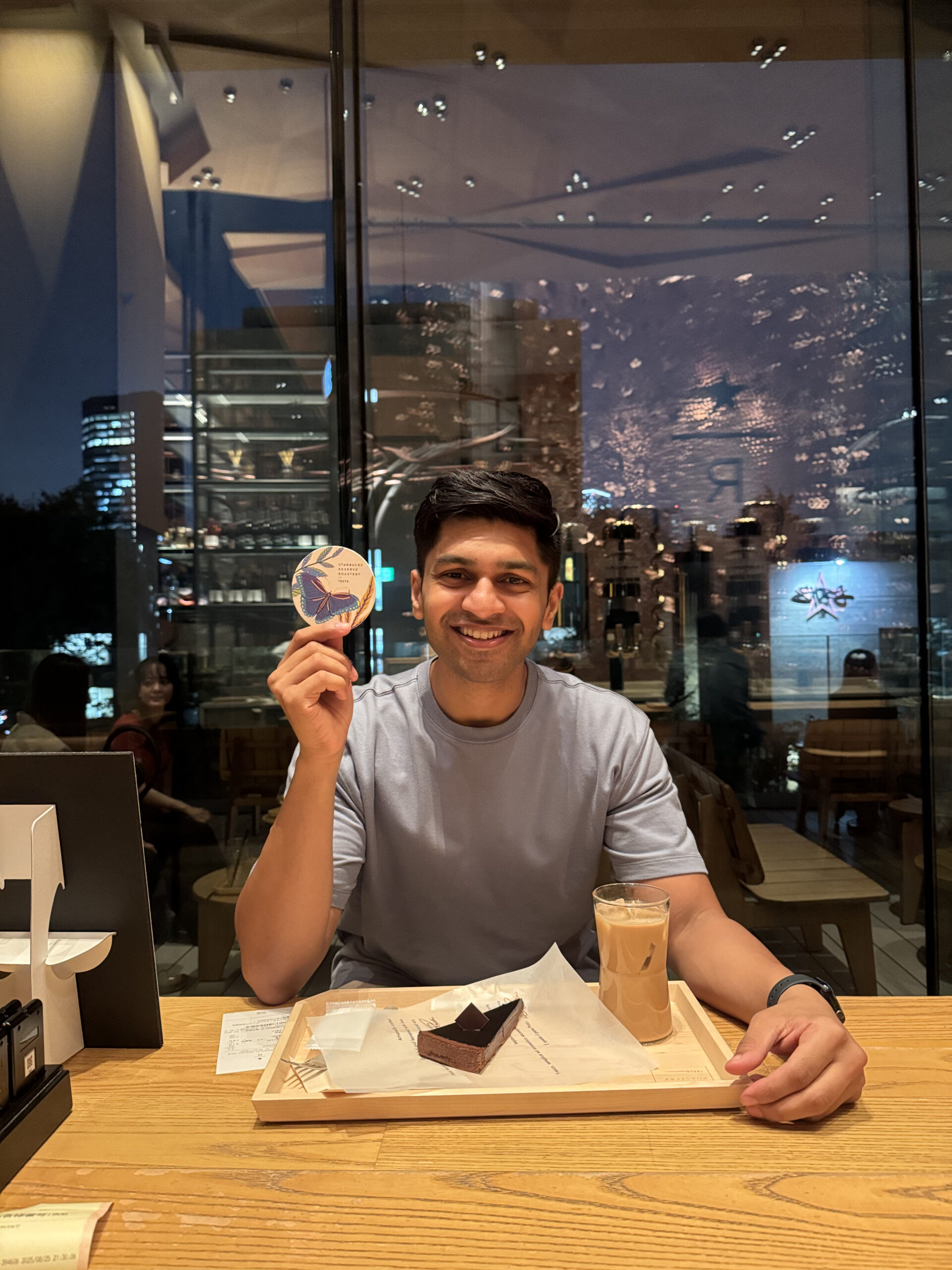
This Japan Starbucks guide for Indians covers the top 10 most unique stores and every Japan-only drink worth ordering.
I walked into a Starbucks in Kyoto and had to take my shoes off.
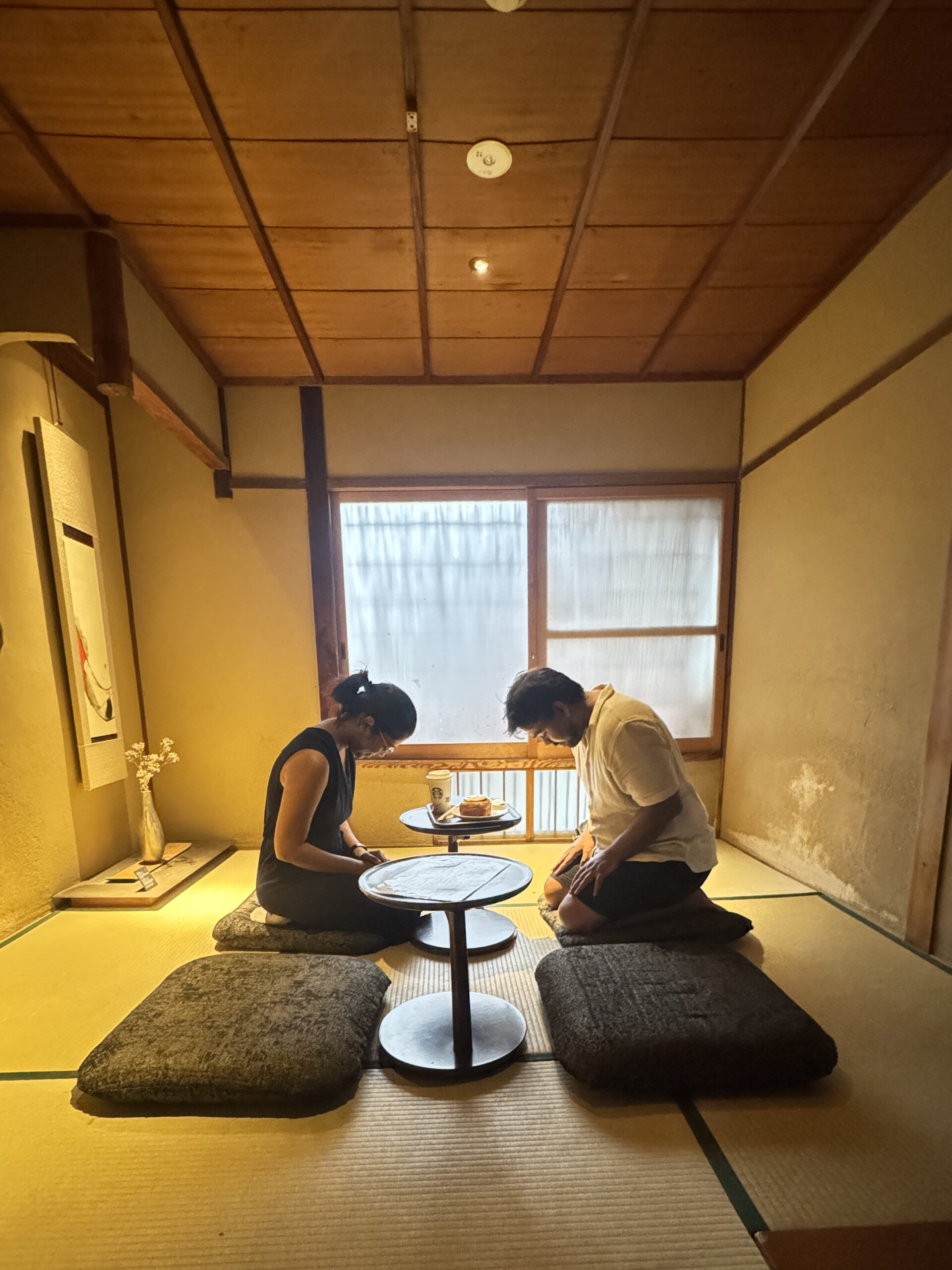
Then I climbed a narrow wooden staircase to a tatami-floored room with paper lanterns, hanging scrolls, and zabuton cushions. There were three tea-house-style rooms upstairs, each with hanging artwork depicting “the story of coffee beans from the time they sprout, are roasted, and then brewed.” I sat down on a cushion, sipped a regular matcha latte, and realized something important: Japan has reinvented what a Starbucks is allowed to be.
A few days before, in Tokyo, I had walked into another Starbucks, this one designed by Kengo Kuma, the architect behind the Tokyo 2020 Olympic Stadium. A 17-meter-tall copper cask rises through four floors. Each floor is a different concept- bakery on one, tea on another, cocktails on a third, an “inspiration lounge” on the fourth. It’s one of only six Reserve Roasteries in the entire world, and at 2,700-3,000 square meters, it’s one of the largest Starbucks anywhere on the planet.
Both of these are Starbucks. Both of them charge ¥600 for a basic latte. Both of them are technically the same brand you’ve ordered a sad iced coffee from in a Bangalore mall. And yet they are, by every measure of design and experience, on another level.
This post is a complete guide to Japan’s Starbucks- the two flagship experiences I had, the eight more I’d recommend across Tokyo, Kyoto, and Osaka, and the Japan-only menu items you absolutely have to try.
If you want the full Japan trip context, read my main 10-day Japan blog here.
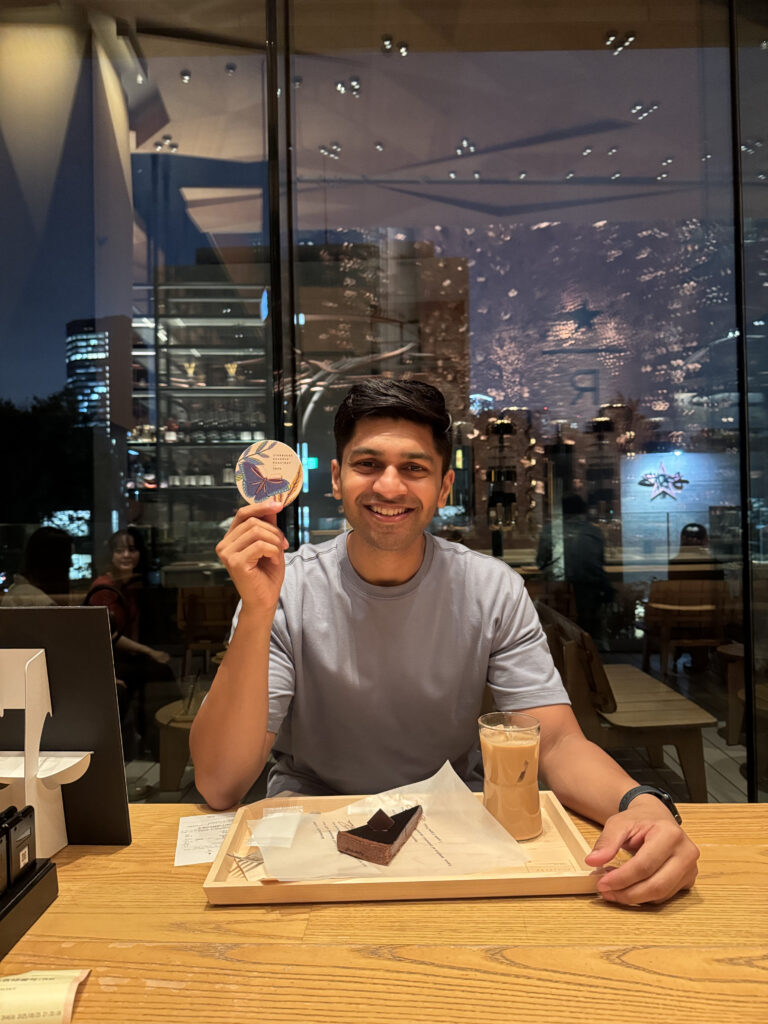
This Japan Starbucks guide for Indians covers both flagship experiences, eight more unique stores, and every Japan-only menu item worth ordering
The Two Flagship Starbucks Experiences
1. Starbucks Coffee Kyoto Ninenzaka Yasaka Chaya- The World’s First Tatami Starbucks
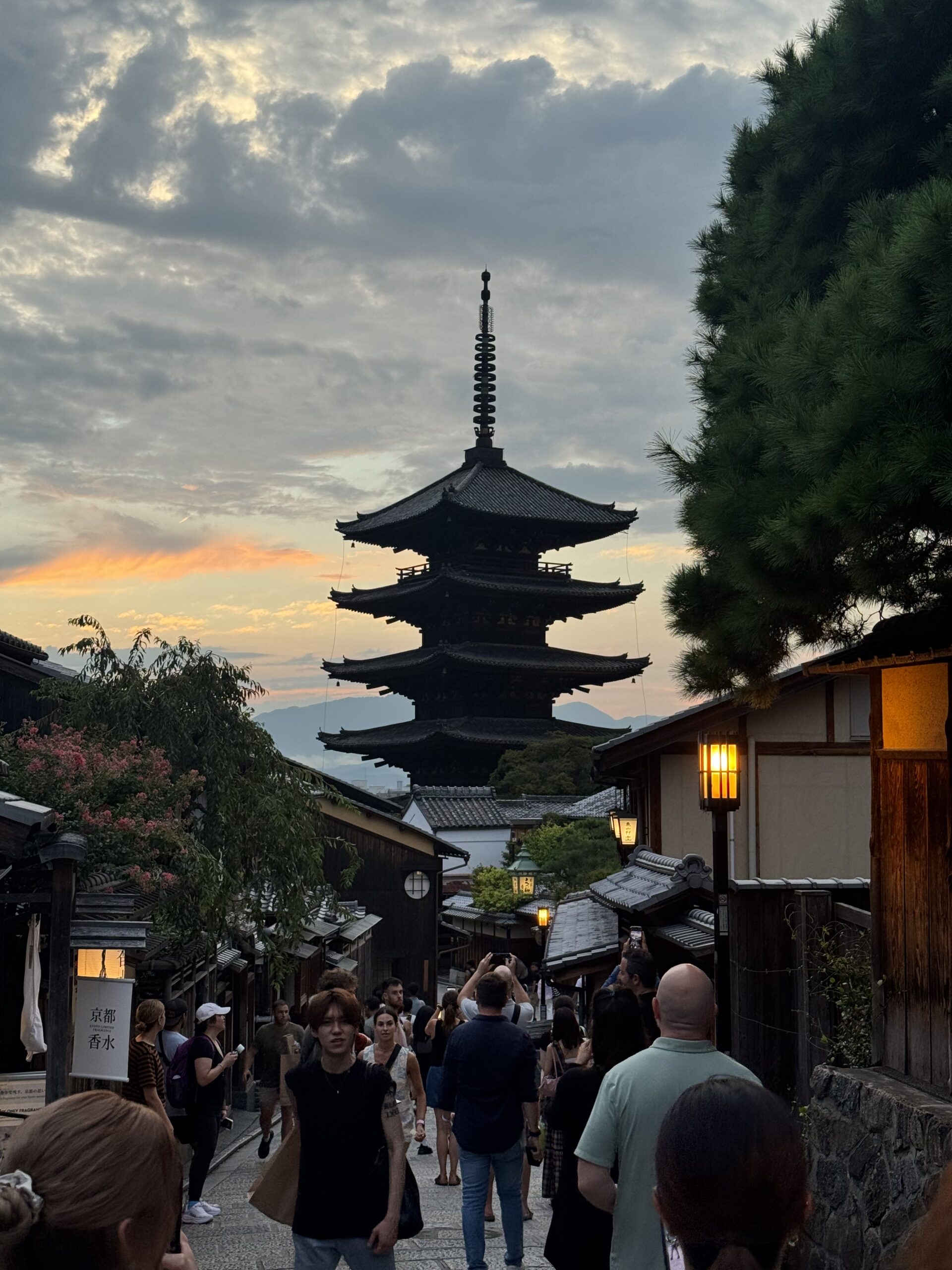
Most travel guides incorrectly call this the “Gion Starbucks.” It’s actually in Higashiyama, on the Ninenzaka stone-paved historic street that leads to Kiyomizu-dera Temple which is about a 10 minutes’ walk from Gion proper.
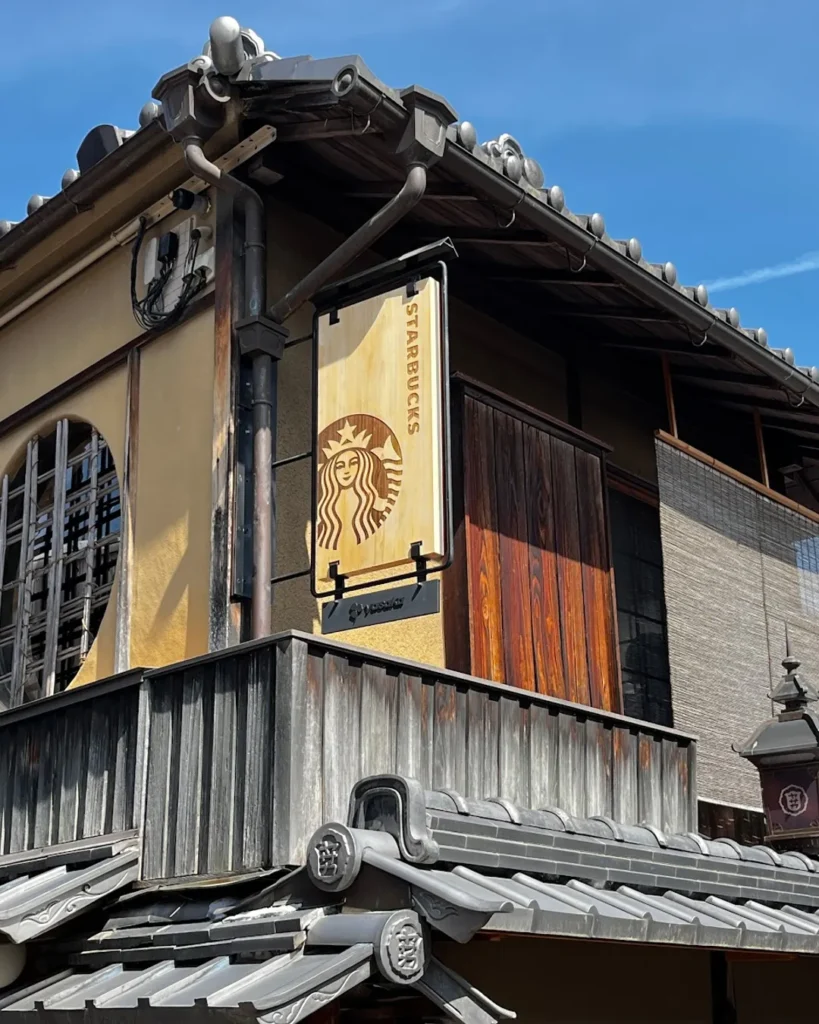
This Starbucks opened in 2017 in a renovated 100-year-old machiya (traditional Kyoto townhouse). It’s the first Starbucks anywhere in the world to have tatami flooring, designed to blend with regional history, traditional crafts, and culture.
What makes it special:
- Take your shoes off and sit on tatami floor cushions in three traditional rooms upstairs
- Ryukyu tatami mats with zabuton cushions made from Kyotango woven fabric
- Hanging scrolls depicting the journey of coffee beans, mounted using Kyo-hyogu traditional Kyoto craft techniques
- A small inner garden with a tsukubai (purifying washbasin)
- A green Starbucks noren curtain at the entrance instead of the usual logo signage
- Walk down the narrow passageway typical of Kyoto townhouses to reach it
- The exterior is so well-blended into the historic streetscape that most tourists walk past without realizing it’s a Starbucks
Address: 349 Banchi, Masuya-cho, Higashiyama-ku, Kyoto Best time: 8-9 AM (right when it opens; tatami rooms fill up fast) Wait time: Often 30-60 minutes during peak Kyoto tourism hours Pro tip: The menu is the same as any standard Starbucks in Japan has the same prices, same drinks. You’re paying for the space, not the coffee.
If you want to read about more sites and places of interest in Kyoto, here is a link for my Kyoto Guide.
2. Starbucks Reserve Roastery Tokyo (Nakameguro) – One of Six in the World
This one isn’t just a coffee shop. It’s an architectural temple to coffee.
Opened February 2019, designed by Pritzker Prize-winning architect Kengo Kuma, the building spans roughly 2,700-3,000 square meters across four floors, sitting along the Meguro River cherry blossom promenade in the trendy Nakameguro neighbourhood. It’s one of only six Reserve Roasteries in the world (Seattle, Shanghai, Milan, New York, Tokyo, Chicago).
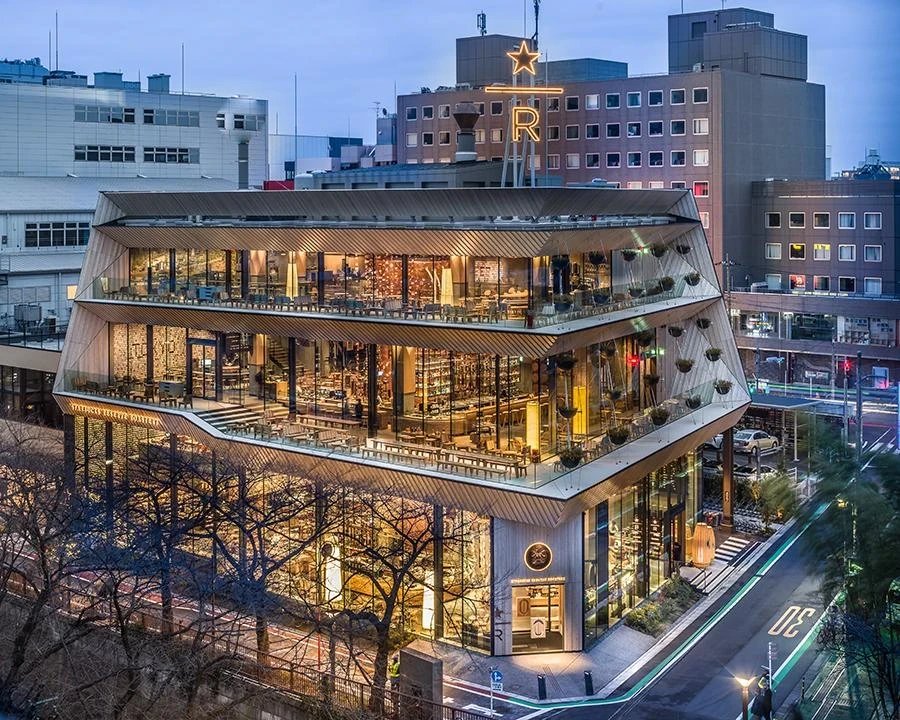
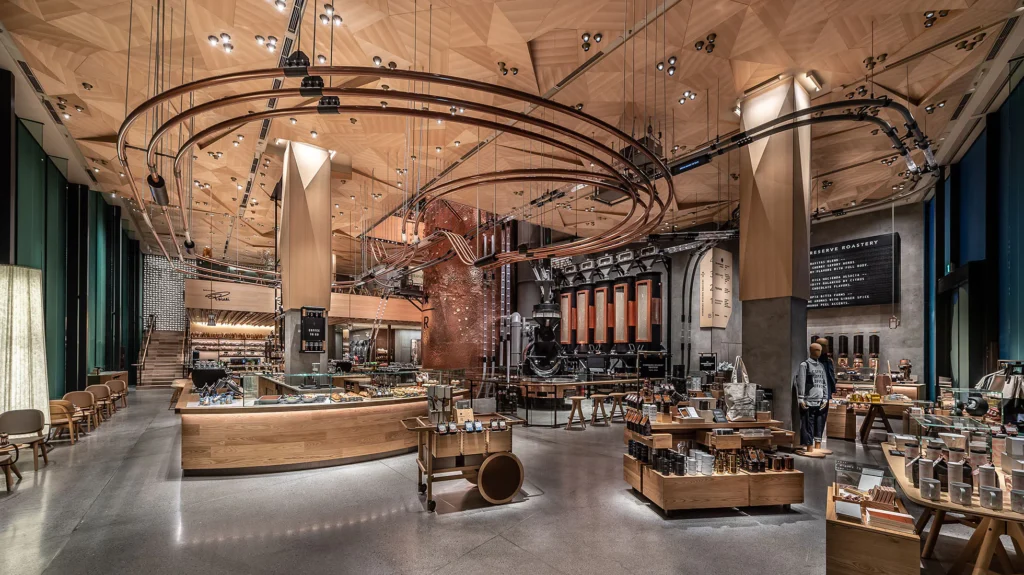
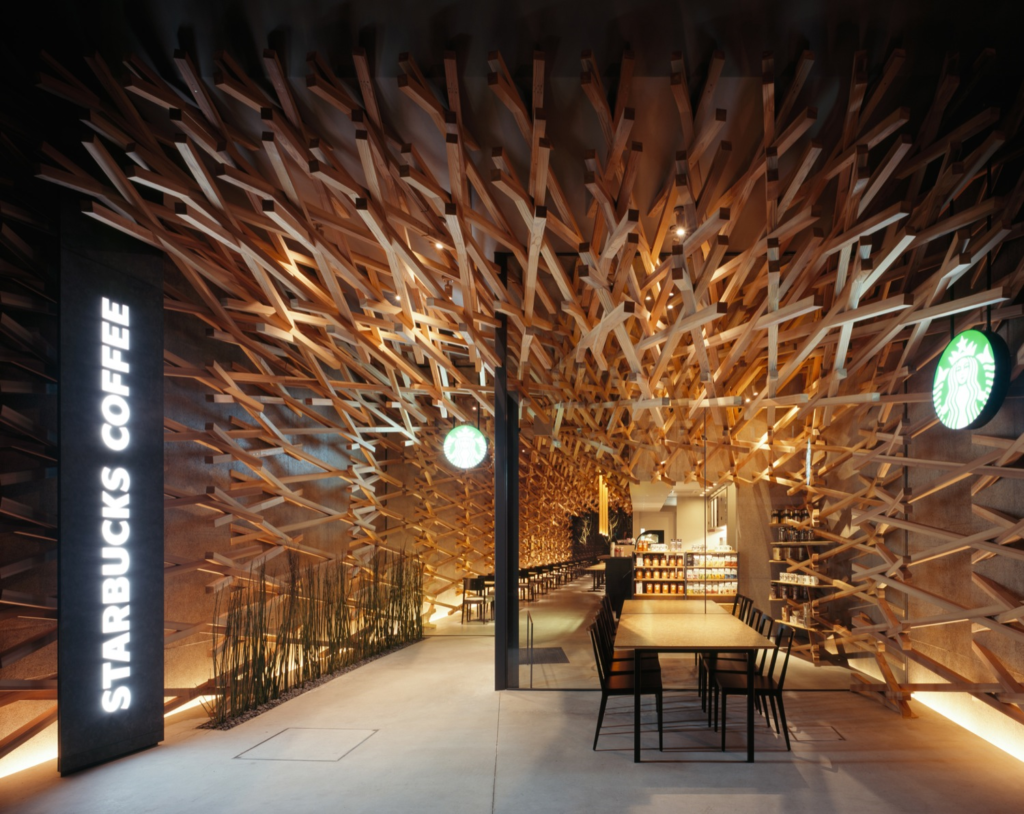
The interior centerpiece: a 17-meter-tall copper cask, hand-decorated with hundreds of hand-hammered cherry blossoms, rising through all four floors and acting as the structural and visual spine of the entire building. The blossoms are a tribute to the cherry trees lining the Meguro River outside.
The four floors:
- 1st Floor: Roastery & Princi Bakery: Watch coffee beans being roasted live; grab Italian focaccia, cronuts, and pastries from Milan’s famous Princi bakery
- 2nd Floor: Teavana: The world’s largest Teavana tea bar, with scientific-looking steeping mechanisms, rare Japanese tea blends, and retail tea boxes
- 3rd Floor: Arriviamo Bar: Coffee-based cocktails, espresso martinis, and cocktail flights served by trained mixologists
- 4th Floor: AMU Inspiration Lounge: An events and tasting space, with a stunning outdoor terrace that overlooks the Meguro River cherry blossoms (book ahead for sakura season)
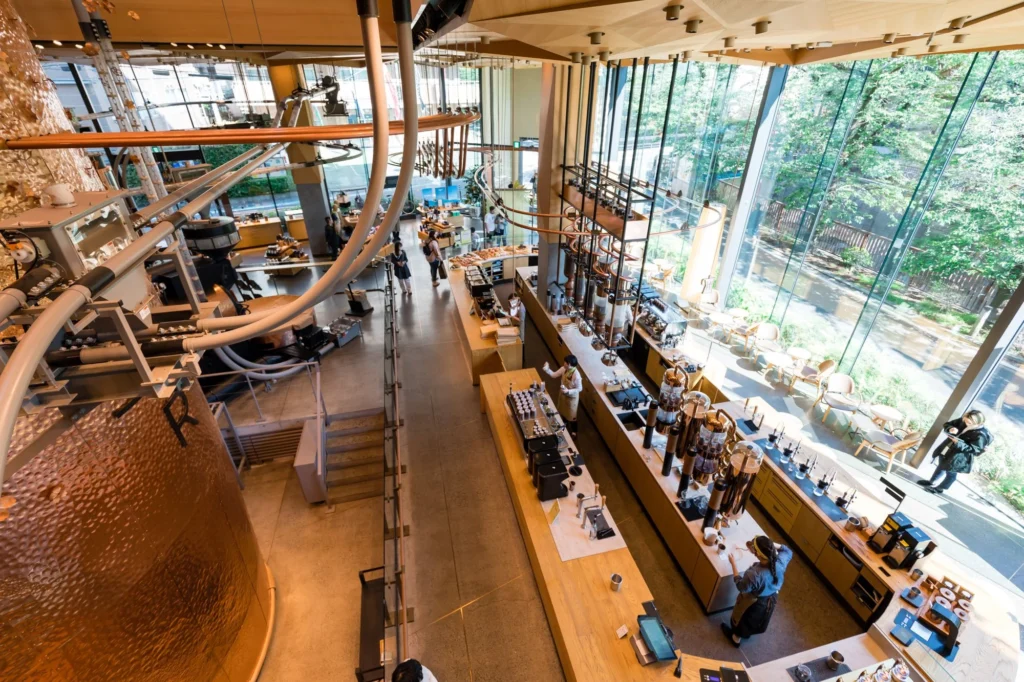
Hours: 7:00 AM – 10:00 PM, daily How long to spend: 1.5 to 2.5 hours minimum to do all four floors justice Cherry blossom season: Long queues, often 1-3 hours’ wait. The store has an electronic queue system so you can stroll Nakameguro while waiting Best non-sakura time: Weekday mornings, 8-10 AM; or weekday afternoons, 2-4 PM Address: 2-19-23 Aobadai, Meguro City, Tokyo
If you want to read about more sites and places of interest in Tokyo, here is a link for my Tokyo Guide.
If you are a food & drink lover, here is a link for a food tour in Tokyo and if you are vegan, here is your vegan option.
The Top 10 Most Unique Starbucks Across Tokyo, Kyoto & Osaka
Beyond the two flagships, here are eight more Starbucks worth a detour, each genuinely different from each other and from anything you’d find in India:
3. Starbucks Reserve Tokyo Ginza House- The Most Expensive Matcha in Japan
The newest premium experience, opened recently in Ginza. Sells the most expensive matcha frappuccino in Japan, plus exclusive matcha drinks you can’t get anywhere else. A premium concept store designed for matcha enthusiasts.
4. Starbucks Coffee Kyoto Sanjo Ohashi- Riverside Floor Seating
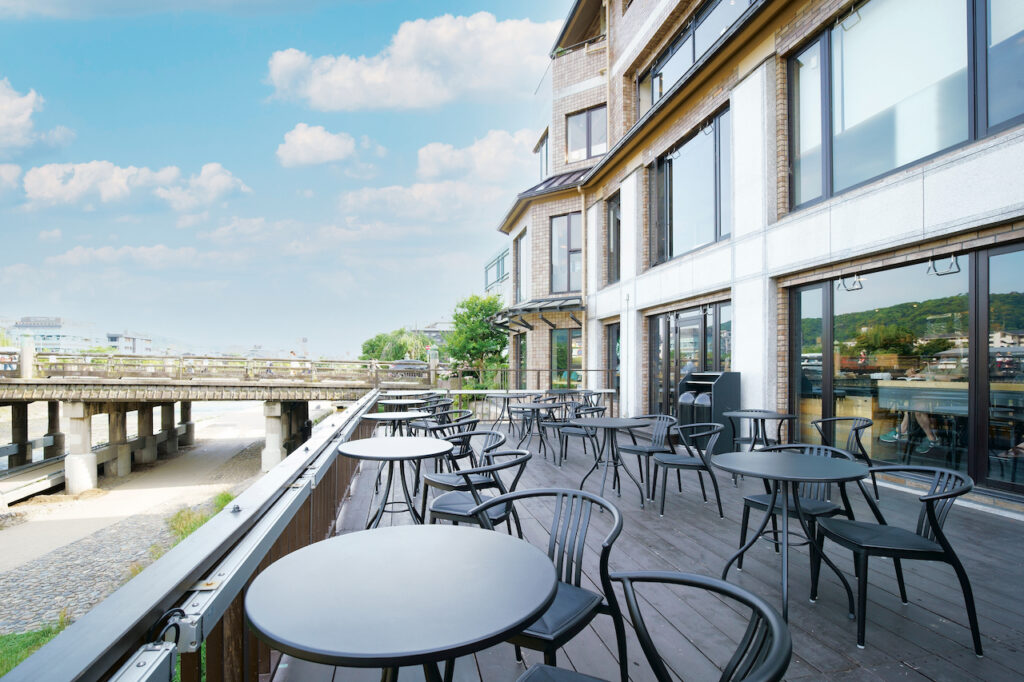
Located right on the Kamo River in central Kyoto. From May to September, this is the only Starbucks in the world where you can experience Noryo Yuka in the traditional Kyoto custom of elevated floor seating extending over the river. Around 100 restaurants and ryokan along the Kamo River set up these wooden platforms during summer; this Starbucks is the only café chain offering it. No additional charge when you buy a drink. A rare opportunity to sit on a wooden river deck with a coffee and the breeze coming off the water.
5. Starbucks Coffee Tsutaya Shibuya- The View That Filmed ‘Lost in Translation’
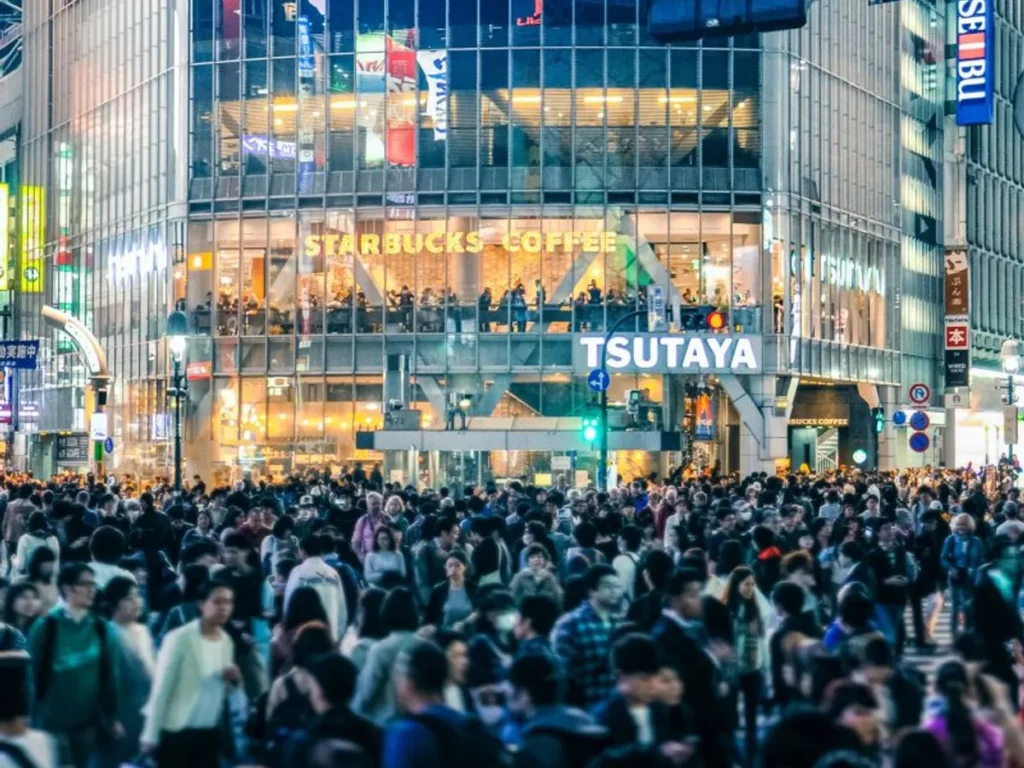
The 2nd-floor Starbucks inside Shibuya Tsutaya, with floor-to-ceiling glass windows directly facing the Shibuya Scramble Crossing. Around 100 seats. Operating since 1999. The single most iconic Starbucks for photographing the Crossing from above for the cost of a coffee. Window seats often have 30+ minute waits but turnover is constant.
6. Starbucks Coffee Tokyu Plaza Omotesando Harajuku- The Mirror Tunnel Entrance
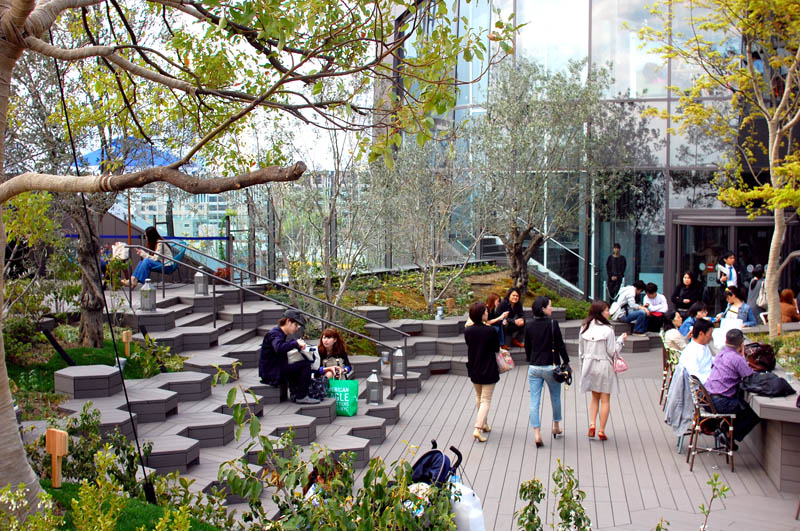
On the 6th floor of Tokyu Plaza. The entrance is a mirrored silver tunnel with an elevator embedded in it, designed to feel like you’re entering through a futuristic chasm. Inside, ample couches and counters look out over the streets of Harajuku and the youth-fashion crowds below. Worth it just for the entrance Instagram moment.
7. Starbucks Coffee Ueno Onshi Park: The Cherry Wood Stand-Alone
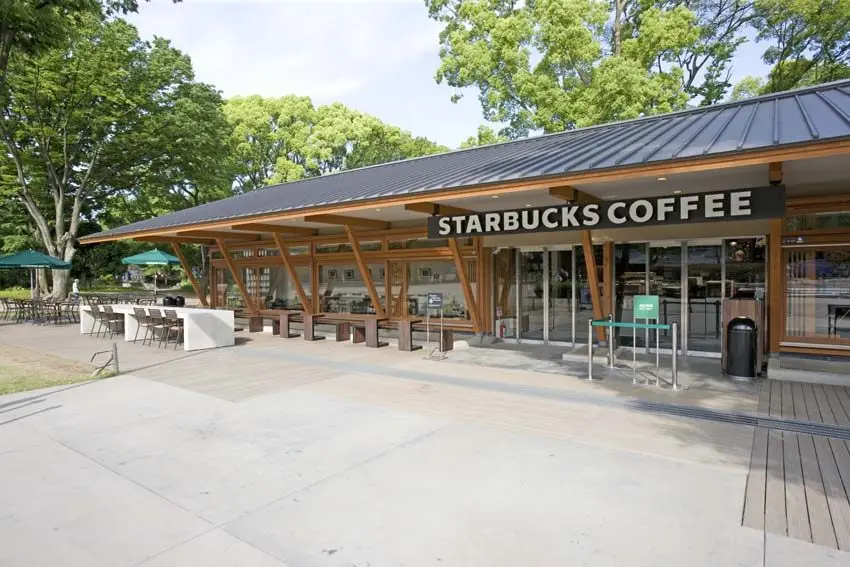
A standalone Starbucks inside Tokyo’s Ueno Park, designed to reflect the park’s identity. Cherry wood furnishings, leather seating made by Taito-district craftsmen (the historic artisan district of Tokyo), and large windows looking out at Ueno’s famous cherry blossoms. One of Tokyo’s most photogenic green-space Starbucks.
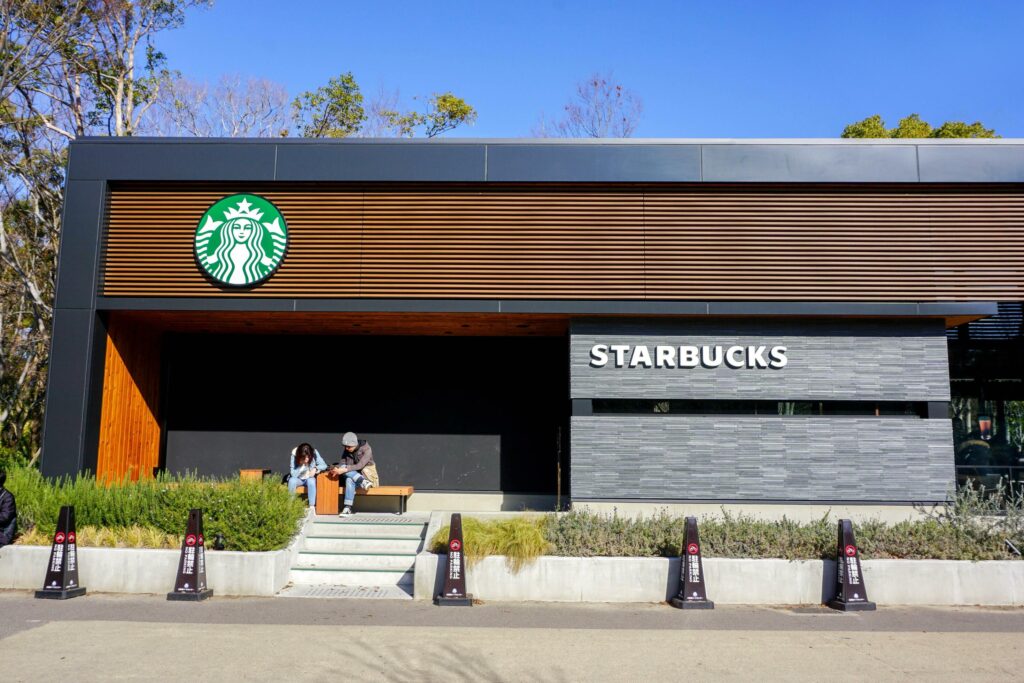
8. Starbucks Coffee Osaka Castle Park Morinomiya: Glass Walls Inside Osaka Castle Park
A standalone glass-walled Starbucks inside Osaka Castle Park, with design inspired by the stone walls of Osaka Castle’s main tower. Counter seats, terrace seats, and flooring all use stone materials referencing the castle. Glass walls allow panoramic views of the surrounding park. Get a coffee to go and enjoy it on the lawn near the fountains.
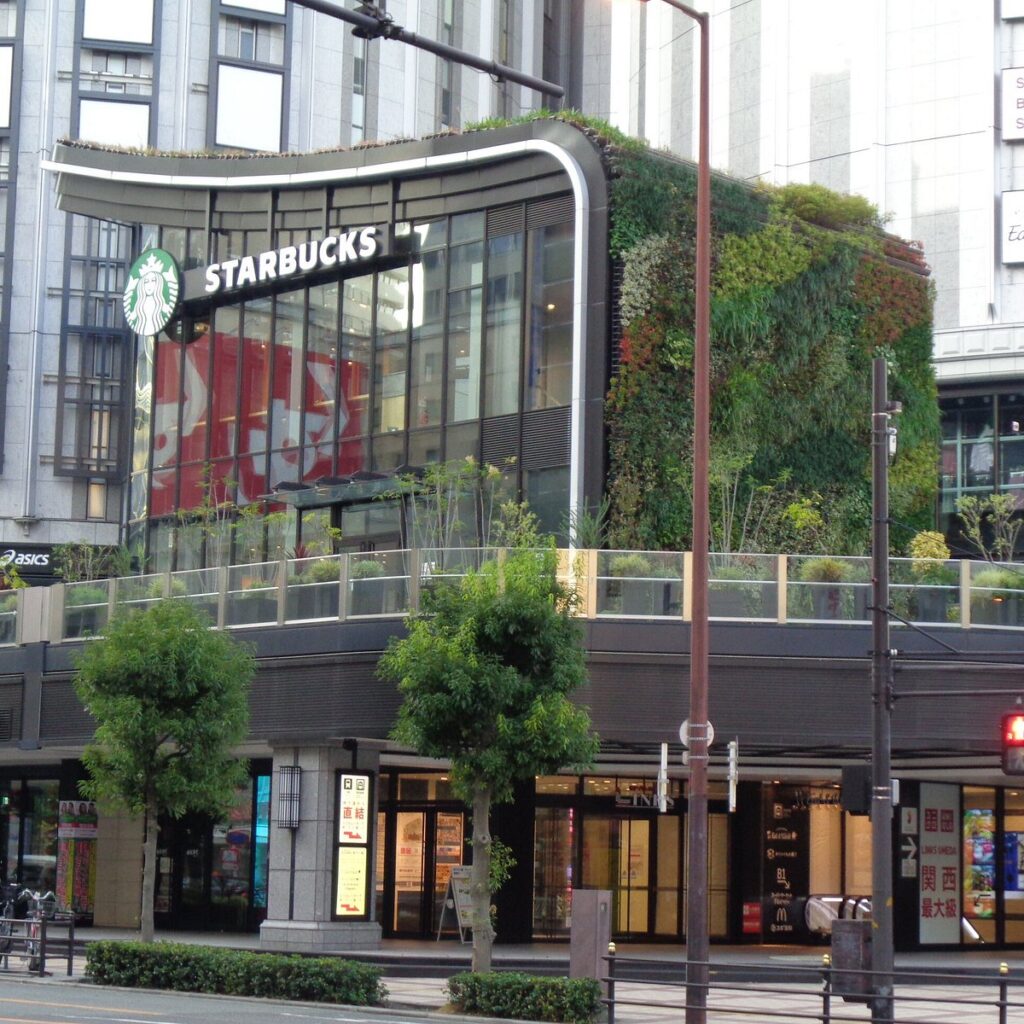
9. Starbucks Coffee Osaka Links Umeda: The Indoor Oasis
A second-floor Starbucks inside the Links Umeda shopping mall, designed to feel like a small forest reclaiming the space from the surrounding skyscrapers. Original artwork made from locally sourced Osaka wood, including driftwood from the Yodo River and end materials from local furniture manufacture. Bright sunlight through huge windows, an unusual airy feel for a mall Starbucks. Loved by locals, mostly missed by tourists.
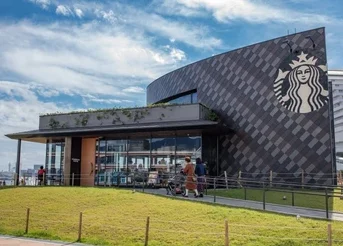
10. Starbucks Coffee Kobe Meriken Park (Day Trip from Osaka)
Just 35 minutes from Osaka by train. A waterfront Starbucks at Kobe’s Meriken Park, with sustainable architecture, panoramic harbor views, and an unusual luxury aesthetic. Worth the trip if you’re planning a Kobe day visit anyway.
Japan-Only Menu Items: What You Can’t Get Anywhere Else
This is where Japanese Starbucks goes from “interesting space” to “actually-different-product.” A non-exhaustive list of Japan-exclusive drinks and food items:
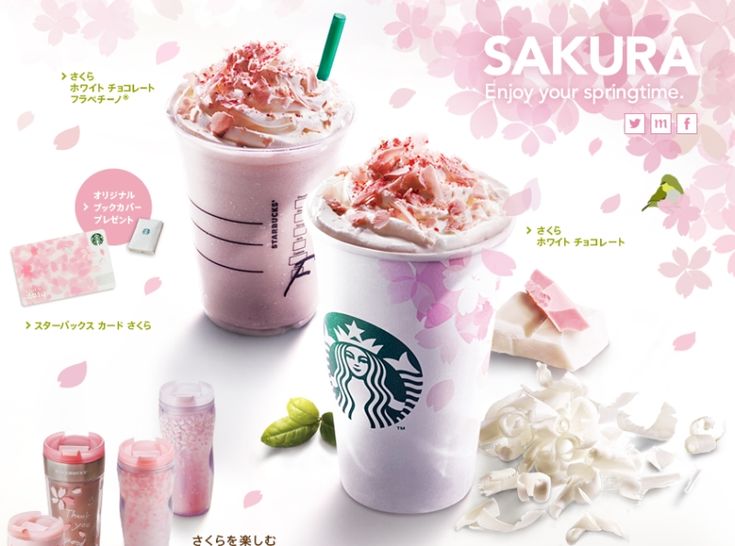
Sakura (Cherry Blossom) Seasonal Lineup from February to March Annually
Japan’s most famous Starbucks tradition. Every spring, around 3-4 limited-edition cherry blossom drinks launch alongside themed mugs and tumblers. Recent examples:
- Sakura Sakuyo White Peach Frappuccino is a pale pink Frappuccino with white peach jelly, milk pudding, and cherry blossom-flavoured sauce
- Matcha and Sakura Warabi Mochi Frappuccino is a matcha cream Frappuccino with cherry-blossom-flavoured warabi mochi at the bottom (~¥690 take-out)
- Hojicha & Classic Tea Latte with Sakura Warabi Mochi combines roasted green tea, black tea, white chocolate syrup, fresh cream, and salt-pickled sakura warabi mochi (~¥609-750)
- Sakura Strawberry Frappuccino is a pink-and-white cherry blossom themed with strawberry-flavoured chocolate chips
- Sakura Soy Latte is a soy milk + cherry blossom syrup
- Sakura & Matcha Doughnut is a bitter green tea + sweet sakura chewy doughnut
Year-Round Japan Exclusives
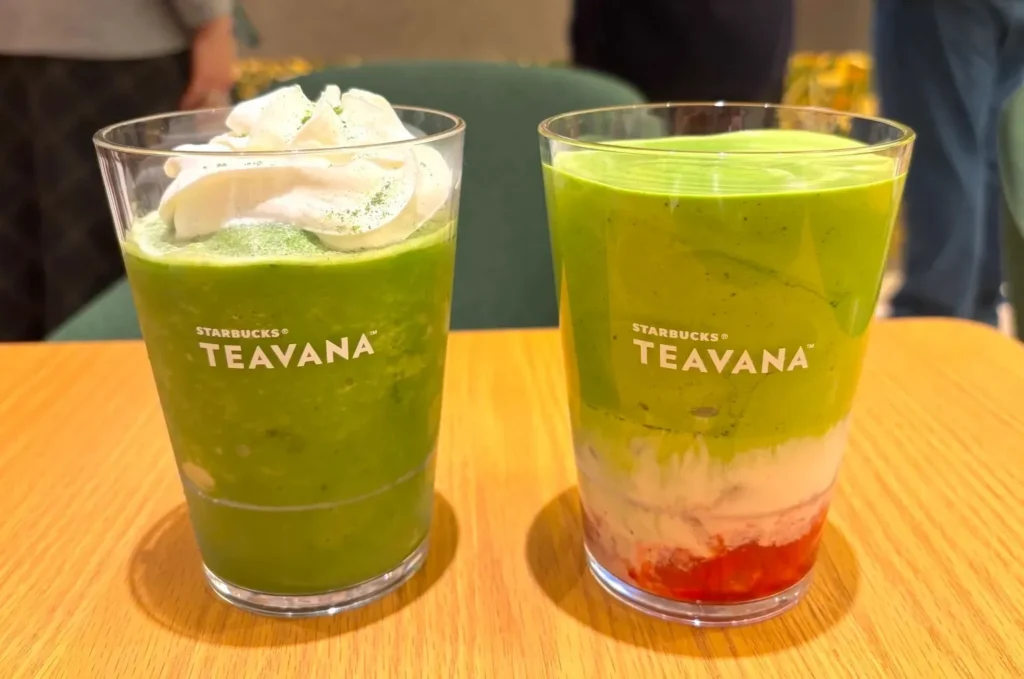
- Matcha Cream Frappuccino is Japan’s matcha is a different league from Western Starbucks matcha. Vibrant green, bittersweet, made with proper Japanese powdered green tea
- Hojicha Tea Latte is roasted green tea, smoky and warm, completely different from regular green tea
- Three-Matcha Tea Latte blends three types of matcha with genmaicha (brown rice tea)
- Goma (Black Sesame) Frappuccino, when in season, an absolute must-try
- Sweet Potato Drinks are autumn launches; baked sweet potato caramel Frappuccinos, sweet potato latte
- Pumpkin Spice variants with Japanese twists are the Japanese version of PSL has nuances Western Starbucks doesn’t replicate
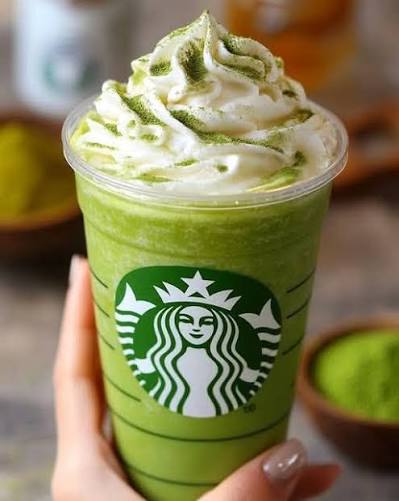
Choux Cream Series (Spring 2026 Launch)
A new Japan launch inspired by Starbucks Korea’s popular choux cream items, now in Japan:
- Choux Cream Frappuccino (Tall only) is vanilla milk caramel base, custard whipped cream, crunchy choux pastry pieces
- Choux Cream Latte (Hot, Tall only) is espresso + milk + vanilla milk caramel, with choux-pastry-style aroma and crunch
Jimoto Frappuccinos (Prefecture Exclusives)
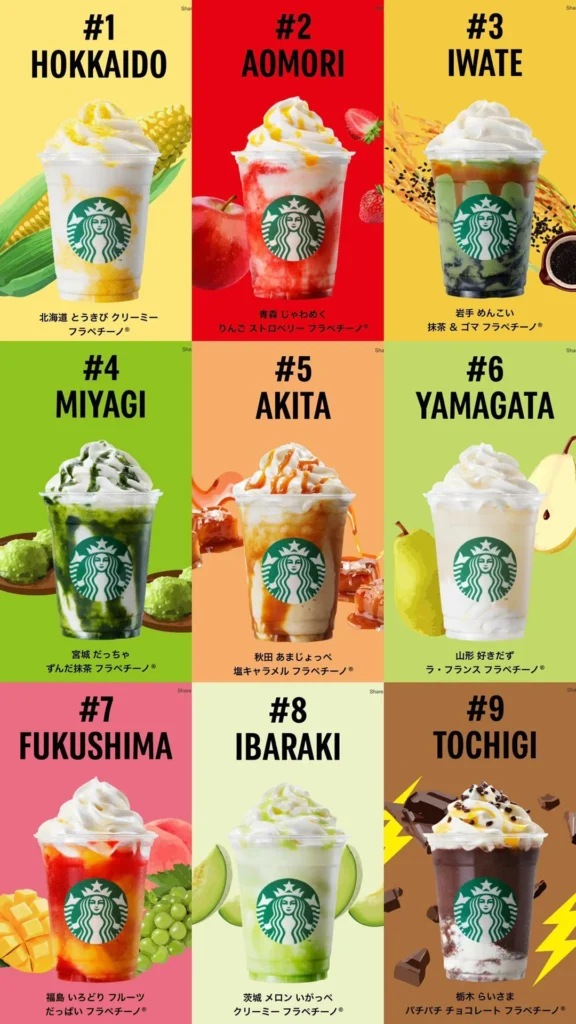
In 2021, Starbucks Japan released 47 prefecture-exclusive Frappuccinos is one for each prefecture, only available in that region. Each features local flavours and ingredients. Some have since been re-released nationwide due to popularity, but several are still ONLY available in their home prefecture is a reason to seek out smaller-city Starbucks if you’re traveling beyond Tokyo/Kyoto/Osaka.
Pudding-Flavored & Mochi-Themed Drinks
Japan’s pudding (purin) culture extends to seasonal Frappuccinos with caramel sauce, mango/apple/strawberry jelly, and red cherries. Mochi-themed drinks include matcha + mochi + warabi mochi combinations across seasons.
Vegetarian Food at Japanese Starbucks
Japanese Starbucks food menus are heavier on sandwiches than the Indian version, but veg-friendly options exist:
- Sakura & Matcha Donut (spring): soft, chewy doughnut with green-tea-and-sakura combination
- Chocolate Cream Cake: fluffy chiffon sponge generously coated with cream
- American Scones: standard veg, year-round
- Princi Bakery items at Reserve Roastery Tokyo: cronuts, focaccia (vegetarian without toppings), pasticcini Italian pastries, sourdough bread
- Cookies, brownies, baked goods (year-round)
- Seasonal warabi mochi (vegetarian Japanese sweet, often paired with sakura drinks)
- Warm vegetable wraps at select stores
- Cake slices in chocolate, matcha, sakura, chiffon (varies seasonally)
A useful trick: ingredient labels are in Japanese only. Use Google Translate’s camera mode to scan the label before buying fish/meat-based fillings can sneak into otherwise innocent-looking sandwiches.
Tokyo veg food walking and tasting tours
What Makes Japanese Starbucks Different From Indian Starbucks
A few honest observations after visiting maybe 8-10 different Starbucks across the trip:
1. Architecture matters. Japanese Starbucks isn’t a chain dropping a copy-paste store into a mall. Each store, especially Regional Landmark Stores, is designed for its location.
2. Pricing is comparable to India, not premium. A regular latte is ¥500-600 (~₹300-360). Frappuccinos with Japanese specialty syrups are ¥600-700 (~₹360-420). Reserve Roastery exclusives go higher, but standard Starbucks items are barely more expensive than at Phoenix Mall, Bangalore.
3. The flavours are seasonal and real. Sakura season drinks are made with actual salt-pickled cherry blossoms and warabi mochi. Matcha drinks use real ceremonial-grade matcha. The flavors aren’t just labels.
4. The customer experience is unhurried. Even at busy Reserve Roastery Tokyo, no one rushes you out. Tatami seating is meant to be lingered over. Some Starbucks have signs explicitly saying “feel free to stay as long as you wish.”
5. The mug and merchandise game is unmatched. Japan has dozens of Starbucks-exclusive mugs, tumblers, drinkware sets, sakura drinkware, regional drinkware, anniversary collections, prefecture-themed mugs. They make excellent souvenirs and many are available only here.
Frequently Asked Questions
Q: Where is the famous tatami Starbucks in Kyoto? Starbucks Coffee Kyoto Ninenzaka Yasaka Chaya in Higashiyama, on the Ninenzaka stone street leading to Kiyomizu-dera Temple. Address: 349 Banchi, Masuya-cho, Higashiyama-ku. Often called the “Gion Starbucks” but technically in Higashiyama, ~10 min from Gion.
Q: How many Starbucks Reserve Roasteries are there in the world? Six: Seattle, Shanghai, Milan, New York, Tokyo (Nakameguro), and Chicago. Tokyo opened in February 2019 and was the world’s largest until Chicago opened.
Q: Is the Starbucks Reserve Roastery Tokyo worth visiting? Yes, especially if you have 1.5-2.5 hours and like architecture. It’s free to enter, and even just walking through the four floors and admiring the 17-meter copper cask is a worthwhile cultural experience. Drinks are reasonably priced for what you get.
Q: How do I avoid queues at the Tokyo Reserve Roastery? Visit weekday mornings (8-10 AM) or weekday afternoons (2-4 PM). During cherry blossom season (March-April), use the electronic queue system and stroll Nakameguro while waiting.
Q: What is the most exclusive Japan-only Starbucks drink? The annual sakura (cherry blossom) seasonal drinks (Feb-March only) are the most iconic. Year-round, the matcha and hojicha Japanese-tea-based Frappuccinos and lattes are exclusive in flavor profile to Japanese Starbucks.
Q: Are Starbucks prices similar in Japan and India? Yes, surprisingly close. Standard latte ¥500-600 (~₹300-360), Frappuccinos ¥600-700 (~₹360-420). Reserve Roastery items are higher.
Q: Can I get vegetarian food at Japanese Starbucks? Yes, but more limited than India. Donuts, scones, cookies, cake slices, seasonal warabi mochi, Princi pastries at Reserve Roastery. Use Google Translate camera on Japanese labels to verify, since veg/non-veg isn’t clearly marked.
Q: What are Starbucks Regional Landmark Stores? A special category of unique Starbucks stores in Japan, each designed to incorporate local scenery, history, and traditional crafts. Many are housed in historic buildings or culturally significant sites. The Kyoto Ninenzaka tatami Starbucks is one example.
Q: Should I buy Japan-exclusive Starbucks merchandise? If you collect mugs or tumblers, absolutely. Sakura collections, prefecture-exclusive mugs, and Reserve Roastery-only drinkware are not available outside Japan and make for excellent souvenirs.
Final Word
Most travel content treats Starbucks as a backup option in foreign countries feels like a familiar comfort when you don’t know what else to order. In Japan, this assumption is wrong.
Japanese Starbucks isn’t backup. It’s destination. The Ninenzaka tatami Starbucks is a cultural experience disguised as a coffee shop. The Reserve Roastery Tokyo is an architectural pilgrimage. The Sanjo Ohashi store offers something along the riverside floor dining, that isn’t available anywhere else in the entire global Starbucks chain.
If you’re going to Japan, don’t skip the Starbucks. Visit at least 2-3 of the unique ones. Try the sakura drinks if you’re there in spring, the matcha Frappuccino any time of year, and the hojicha latte if you’re a tea person. Buy a mug. Take photos in the tatami room. Enjoy a coffee on a wooden platform over the Kamo River.
Some of the best moments of my Japan trip happened in Starbucks. Yours probably will too.
For the full Japan trip experience, read my main blog here.
Drop a comment with the most beautiful Starbucks you’ve visited, in Japan or anywhere, and which Japan-only drink you’d fly back for.