 By Tarang Bansal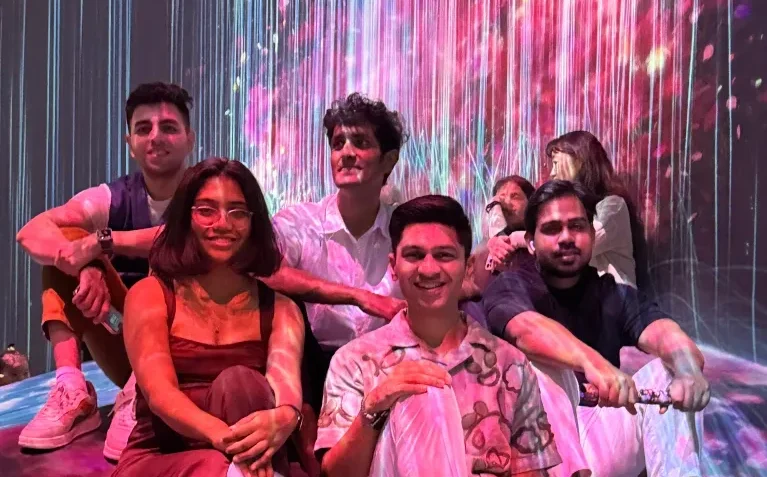

This teamLab Tokyo review for Borderless comes from a group of five who each experienced the exact same museum completely differently- what’s actually inside, who will love it, who will leave bored in 90 minutes, and how it compares to teamLab Planets, the new Kyoto Biovortex, and the world’s largest teamLab in Abu Dhabi. Written by someone who rated it 3.5/, and stands by that.
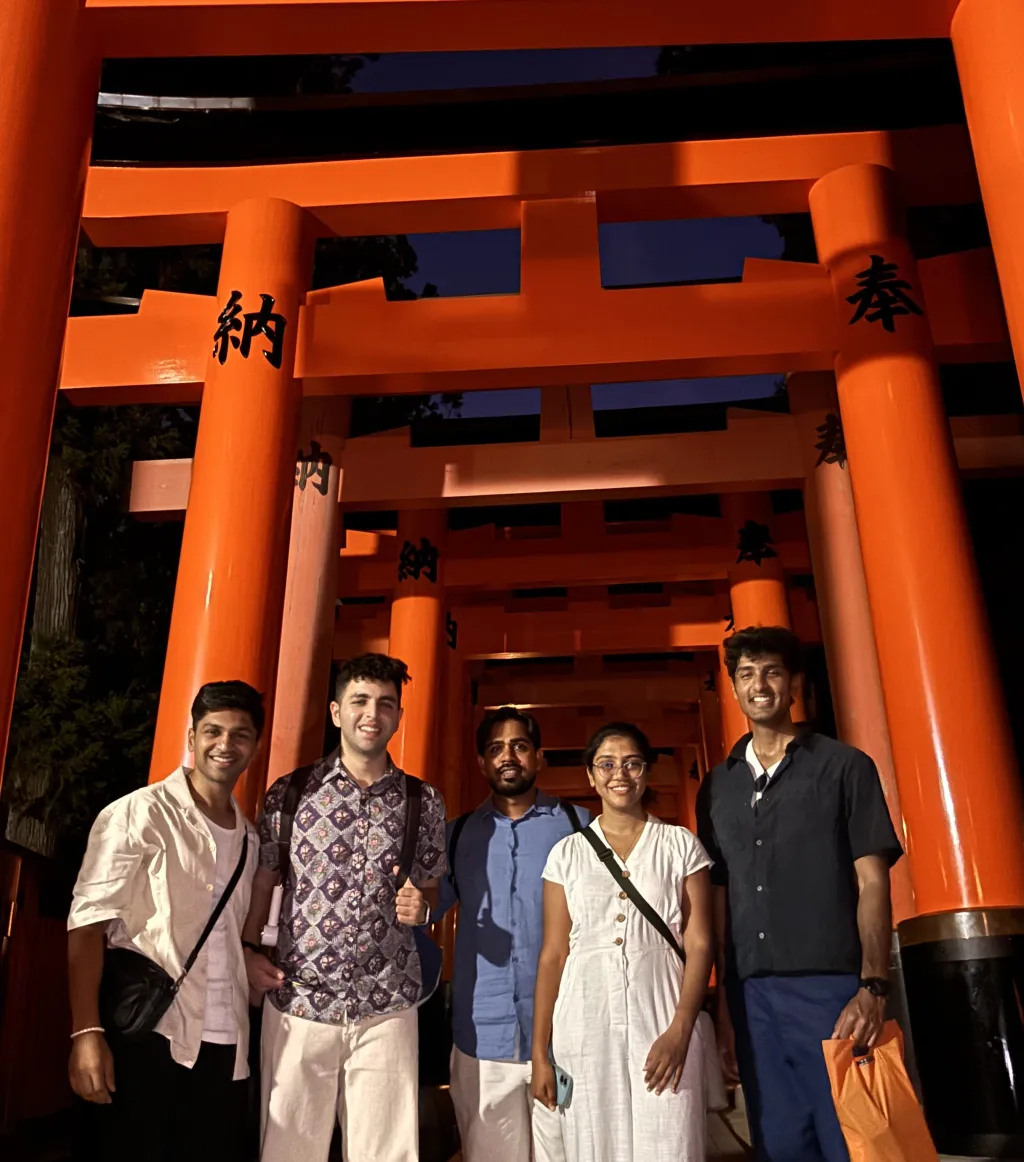
Among the five of us who visited teamLab Borderless in Tokyo, two were done in 90 minutes, two could have stayed another 30-60 minutes, and I sat squarely in the middle at 2 hours.
When we left after 2.5 hours and reconvened at the exit, the most interesting conversation of the day was about how differently we’d each experienced the exact same museum.
That divergence is, in a strange way, the most honest review I can give of teamLab Borderless: it’s a 3.5/5 experience that splits groups down the middle. Some people leave thinking it’s a +5 must-do. Others find it underwhelming. Both reactions are valid, and which side you land on depends almost entirely on what you came in expecting.
This post is a measured take on whether teamLab Borderless is worth your time, money, and Tokyo afternoon. Plus a quick comparison with the three other major teamLab locations you might be choosing between: teamLab Planets (also in Tokyo), the brand-new teamLab Biovortex in Kyoto, and the world’s largest teamLab- Phenomena, in Abu Dhabi.
If you want the full Japan trip context, read my main 10-day Japan blog here.
What is teamLab Borderless, Exactly?
teamLab is a Tokyo-based digital art collective that builds immersive, room-scale installations powered by projection mapping, sensors, and music. Their work isn’t paintings on walls- it’s entire environments that flow, change, and respond to your movement.
teamLab Borderless is the version where, as the name suggests, there are no walls and no path. You enter, and there’s no map, no signs, no recommended route. Rooms blend into each other through dark corridors. Digital crows might fly out of one room and lead you down a hallway into another. The entire experience is built around the idea of getting lost on purpose.
Borderless was originally located in Odaiba (closed 2022), and reopened in February 2024 in Azabudai Hills, central Tokyo, near Tokyo Tower. Across roughly 10,000 square meters and 50+ artworks, you wander through dark corridors and discover rooms with names like “Bubble Universe,” “Forest of Resonating Lamps,” and “Crystal World.”
There are 15-20 distinct experiences (the exact count is intentionally fuzzy because the layout shifts). The art reacts to where you stand, what you touch, and how slowly you move.
What’s Actually Inside (Without Spoiling It) – teamLab Tokyo Review
I won’t list every room- half the magic is discovering them on your own. But the categories of experience break down roughly like this:
The mirror-and-light rooms. Floors and ceilings of mirrors with thousands of lights or bottles or particles, creating the illusion of infinite space. Think: Crystal World, Forest of Resonating Lamps, Bubble Universe. These are the rooms that fill Instagram feeds.
The projection-on-wall rooms. Animated digital flowers, butterflies, waves, fish, or birds projected onto walls and floors that respond when you touch them- flowers bloom under your hand, fish swim around your shadow, butterflies multiply when you stay still.
The flowing-art corridors. Connecting passages where digital art literally moves with you between rooms. A digital waterfall on a wall might pour into the next room’s floor. A flock of crows might fly across multiple connected spaces.
The interactive activity rooms. Where you draw a fish or animal on paper, a staff member scans it, and your drawing appears moving across the projected ocean wall. Big hit with kids and adults alike.
The sit-and-meditate rooms. Quiet, dark, slow-changing visual environments with ambient music. Easy to spend 20 minutes alone in one of these.
The art here is genuinely beautiful. It is also, by design, the same art teamLab has been refining for over a decade- meaning the rooms feel polished but, if you’ve seen teamLab content before, somewhat familiar.
Why Our Group Split: A Closer Look
This is the most honest part of any teamLab review. Here’s why our group of 5 had different reactions:
The two who finished in 90 minutes were people who view museums efficiently. They walked through rooms, took 1-2 photos, observed for 60-90 seconds, and moved on. By the end, they’d seen everything in the building and were ready to leave. They rated the experience as “fine, glad I saw it once.”
The two who wanted more time were the slow, taking in the vibes travellers. They wanted to just immerse themselves in each mirror, sit for 10 to 30 minutes in the meditation rooms, and rediscover hidden corridors they’d missed the first time. They could have stayed another hour.
I was in the middle. I enjoyed it, took good photos in 5-6 rooms, sat in the meditation room briefly, walked the whole building once and a half, and was ready to leave at 2.5 hours. Net rating: 3.5/5.
What this tells me about teamLab Borderless:
- It rewards slow, contemplative travellers more than efficient ones.
- The “borderless” concept genuinely splits people- some find it magical, others find it confusing.
- 90 minutes is the absolute minimum; 3 hours is the upper end before it starts repeating.
Why I Rated It 3.5/5, Not Higher
Three honest reasons the rating isn’t a +5:
1. The art, while beautiful, is now globally familiar. Mirror rooms with infinite lights have become a saturated genre- teamLab pioneered much of this, but you may have seen versions of it before. The originality has been somewhat diluted by imitation. Aya in Dubai, or the horrible Space and Time in Manila.
2. The “no map” concept can feel chaotic, not magical. I get the design philosophy. But practically, it means you’ll walk past the same crystal room three times trying to find a different exit, and you might leave wondering whether you missed an entire section. Multiple reviewers report exactly this- “we may not have seen 100% of the museum.”
3. It’s expensive for what it is. Tickets cost roughly ¥3,600-¥5,600 per adult (₹2,200-₹3,400) depending on dynamic pricing. For an experience that some people finish in 90 minutes, that’s not cheap. If you’re a slow appreciator, the value compounds. If you’re efficient, it doesn’t. But this is not a big point.
But three reasons the rating isn’t lower than 3.5:
1. The rooms are genuinely stunning when you give them time. The room with images on fog/ smoke/ mist – whatever you call it is alone worth the ticket if you sit in it for 15 minutes. Some installations are jaw-dropping the first time you walk in.
2. Photography is incredibly rewarding. If you enjoy creative photography, this is a playground. The lighting, mirrors, and reactive elements give you opportunities you don’t get anywhere else.
3. The location is excellent. Azabudai Hills is central Tokyo. You can pair Borderless with Tokyo Tower, the Mori Art Museum, Roppongi, or the rooftop observation cafe in the same building. Easy to fit into a half-day Tokyo plan.
How to Book and Practical Tips
A few practical points so you don’t trip up:
Book online 15-20 days in advance. That’s what we did, and tickets were available. Closer to the date, slots sell out fast- especially weekends and holidays. The official teamLab Borderless website handles English booking; Klook is also reliable.
Tickets are timed, every 30 minutes. Pick your slot carefully- morning slots have fewer crowds, evening slots have moodier light, but both work.
Free lockers are available right at the entrance. If you’re carrying a backpack, shopping bag, or coat, drop them in a locker before entering. The rooms are dark and crowded; you don’t want to hit anyone with your bag, and several rooms have mirrored floors where you really shouldn’t drag anything.
Wear pants or shorts under skirts/dresses. Several rooms have mirrored floors. Plan accordingly.
Wear comfortable shoes you can walk in slowly. No barefoot rooms here (that’s the Planets museum- see below). But you’ll be on your feet for 1-3 hours.
Photos are encouraged. Flash is not. Most rooms work better in low light without flash. Phones with good night cameras (recent iPhones, Pixels, Galaxies) capture the experience perfectly.
The walking sequence matters. Most travelers do Borderless top-down or in a single sweep. There’s no wrong way, but try to walk slowly through the corridors, not just the rooms- the connecting passages are art too.
👉 [INSERT AFFILIATE LINK: teamLab Borderless tickets via Klook / GetYourGuide]
teamLab Borderless vs Planets vs Kyoto Biovortex vs Abu Dhabi: Which One to Choose
Here’s the part most travel guides oversimplify. There are now four major teamLab destinations, and they’re genuinely different experiences:
teamLab Borderless- Tokyo (Azabudai Hills)
- Concept: “Wander, explore, discover.” No fixed path. Get lost on purpose.
- Size: ~10,000 sq m
- Best for: Slow travellers, photographers, people who like surprises
- Time needed: 2-3 hours
- Watch out for: Easy to feel disoriented. Some find the lack of structure frustrating.
- Cost: ¥3,600-¥5,600 (~₹2,200-₹3,400)
teamLab Planets- Tokyo (Toyosu)
- Concept: Set linear path through themed zones. Includes water rooms (you walk barefoot through ankle-to-knee-deep water with projections).
- Size: Similar to Borderless after the 2025 expansion
- Best for: Families with kids, people who want a more “physical” interactive experience
- Time needed: 1.5-2.5 hours
- Closing: Scheduled to close in 2027- visit while you can.
- Watch out for: No backtracking on the set path. The water rooms mean specific clothing requirements.
- Cost: Similar to Borderless
teamLab Biovortex- Kyoto (opened October 2025)
- Concept: “Environmental Phenomena”- darker, moodier, more abstract. Includes a returning “Athletics Forest” physical-activity zone for kids.
- Size: Largest in Japan (~10,000+ sq m, 4 floors)
- Best for: People who want a more meditative, less Instagram-friendly experience. Also: anyone going to Kyoto who hasn’t done a teamLab before.
- Time needed: 2-3 hours
- Watch out for: Still relatively new, so reviews are evolving.
- Cost: ¥3,600-¥5,200
teamLab Phenomena- Abu Dhabi (opened April 2025)
- Concept: A new philosophy entirely- art created by environmental phenomena (temperature, humidity, airflow, body movement). The artworks don’t exist independently; they’re produced by the environment.
- Size: 17,000 sq m- now the world’s largest digital art museum.
- Best for: Anyone in or near the UAE; teamLab superfans who want to see the absolute pinnacle of the collective’s work.
- Time needed: 2.5-4 hours
- Watch out for: Not in Japan, but in UAE
Which Should You Pick?
If you’re going to Tokyo only and have time for one: Choose Planets for kids/families/water rooms, or Borderless for solo or couple slow-photo travellers.
If you’re going to both Tokyo and Kyoto and have time for one: Consider Biovortex (Kyoto) since it’s newer, larger, less crowded, and combines elements from both Tokyo locations.
If you’re traveling to the UAE: Phenomena (Abu Dhabi) is the most ambitious teamLab experience anywhere and may already represent the future of what they do.
If you’re a teamLab obsessive and have unlimited time: Do all four. They’re each meaningfully different.
Frequently Asked Questions
Q: Is teamLab Borderless worth it? For slow, photography-loving travellers who give it 2-3 hours: yes, easily. For efficient walk-and-go visitors: probably a 3.5/5 experience, fine but not life-changing. Set expectations correctly and you’ll enjoy it.
Q: How long should I budget for teamLab Borderless? Minimum 90 minutes; ideal is 2-3 hours; cap is around 3.5 hours before it starts repeating. Our group of 5 ranged from 1.5 hours to 3 hours. There’s no single right answer.
Q: Should I book teamLab Borderless tickets in advance? Yes, 15-20 days ahead minimum. Closer dates often sell out, especially weekends. Use the official website or Klook.
Q: Are there free lockers at teamLab Borderless? Yes, right at the entrance, free of charge. Drop your bags before entering.
Q: How does teamLab Borderless compare to teamLab Planets? Borderless is more contemplative and photographic; Planets is more physical and interactive (with water rooms). Borderless lets you wander; Planets follows a set path. Choose based on travel style.
Q: Should I visit teamLab Borderless or the new Kyoto Biovortex? If you’re already going to Kyoto, Biovortex is newer, larger, and currently less crowded. Borderless wins on Tokyo location convenience.
Q: Can children visit teamLab Borderless? Yes, but Planets is better suited for kids- more physical, easier to follow, and the water rooms are huge hits. Borderless can feel disorienting for younger children.
Q: What clothes should I wear? Closed shoes, comfortable pants. Avoid skirts and dresses (mirrored floors). No need for waterproof clothing at Borderless (that’s Planets).
Final Word
teamLab Borderless is one of those experiences I’d recommend with caveats. It’s beautiful. It’s worth seeing once. It’s not, in 2026, the world-changing wonder it might have felt like in 2018 when teamLab first launched. The art has been imitated globally, the “no map” concept doesn’t always work, and the dynamic pricing means you might be paying more than the experience supports.
But: if you walk in with realistic expectations, take your time, treat it as a meditative photographic afternoon rather than a rush-through, and pair it with the rest of central Tokyo’s offerings, it’s a solid 3.5-out-of-5 experience.
If you’re in Japan beyond Tokyo, especially Kyoto, the new Biovortex might be the better single teamLab to do. And if Abu Dhabi is on your travel list at any point, Phenomena is now the flagship of everything teamLab has been building toward.
For the full Japan trip experience and the things that genuinely lived up to their hype, read my main blog here.
Drop a comment if you’ve been to any of the teamLab museums; I want to hear which one you’d rate highest, and whether your group split as much as ours did.