 By Tarang Bansal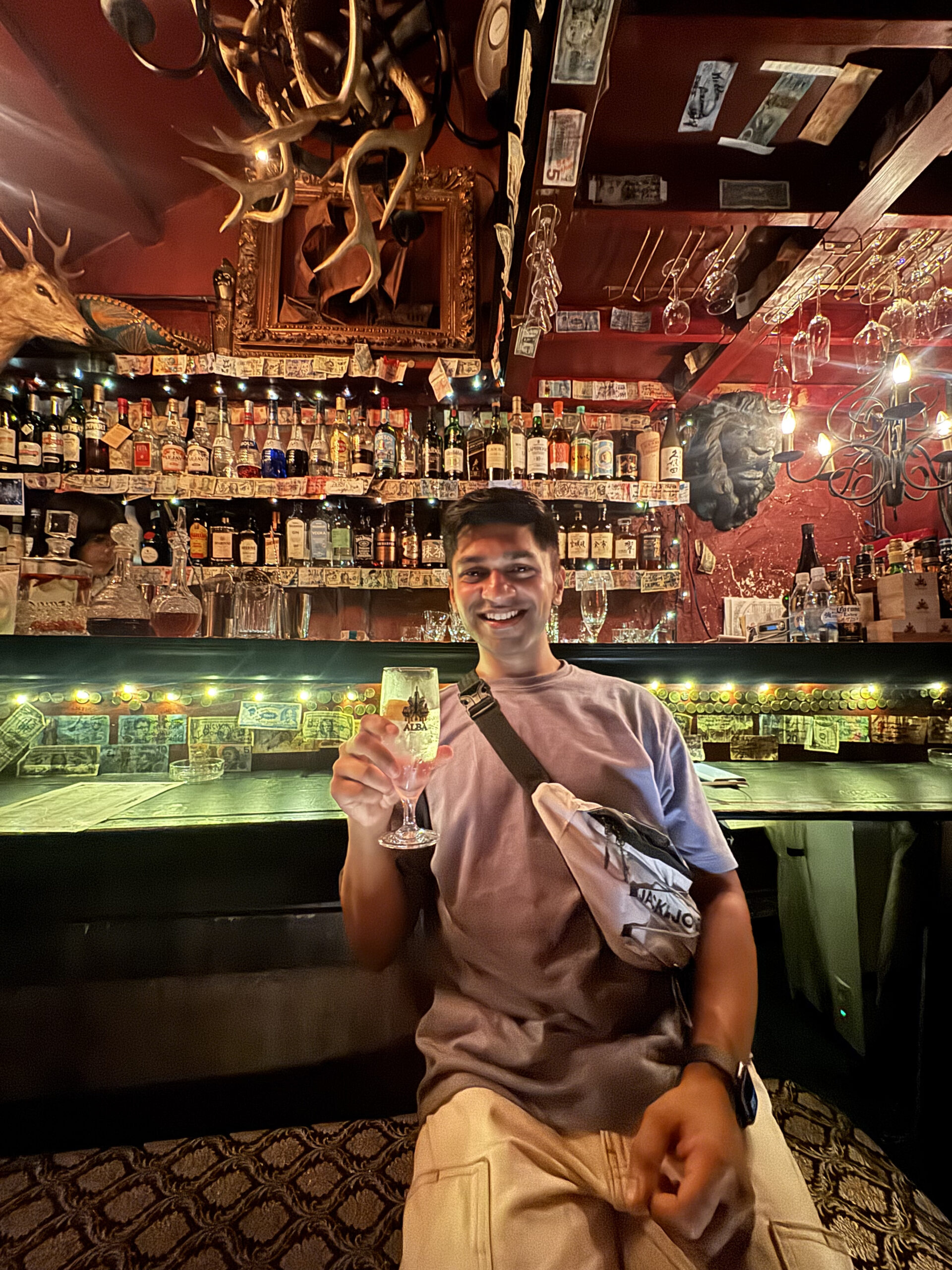
This Shinjuku Golden Gai guide covers everything from its wartime origins to the exact bars worth your first visit, plus every other major izakaya neighbourhood across Tokyo, Kyoto and Osaka.
In a country where convenience stores are spotless, trains arrive to the second, and waiters bow when you leave a restaurant, Shinjuku Golden Gai is the beautiful exception.
Six narrow, dimly-lit alleys. Over 200 tiny shanty-style bars built so close together their walls nearly touch. Stairs so steep they feel like ladders. Bars that fit five customers and an entire vinyl collection. The smell of yakitori smoke, old wood, and cigarettes. Walls covered in graffiti, posters, polaroids of past patrons. A neighbourhood that has refused to modernise for 70 years while the rest of Tokyo built skyscrapers around it.
This is the heart of Japanese drinking culture, distilled into one block.
This post is a complete guide to drinking culture across Japan- Golden Gai first, then the other iconic izakaya neighbourhoods you should know, then the best bars in Tokyo, Kyoto, and Osaka by what they’re famous for. Plus a quick honest take on speakeasies, cover charges, and the unspoken rules.
If you want the full Japan trip context, read my main 10-day Japan blog here. For sake and Japanese alcohol fundamentals, see my [sake and Japanese alcohol guide].
This Shinjuku Golden Gai guide is built for travellers who want the full picture, not just a photo stop
Shinjuku Golden Gai Guide: A Brief History
To understand why Golden Gai feels so different from the rest of Shinjuku, you have to understand what it was supposed to be.
In the chaos after World War II, the area east of Shinjuku Station became a black market– a survival economy of food stalls, cheap drinks, and unregulated commerce. Through the 1950s, it was a red-light district until prostitution was outlawed in Japan in 1958. After that, the bars stayed but the trade changed: Golden Gai became home to izakaya-style pubs frequented by writers, artists, filmmakers, and intellectuals. Through the 1960s and 70s, locals literally called it “Bunkajin no Machi”– the Town of Cultured People.
In the 1980s, Tokyo’s land prices exploded. Yakuza-linked groups began setting fire to old buildings to force redevelopment. Golden Gai survived because its bar owners took turns standing guard at night to prevent arson. Today’s Golden Gai exists because a few hundred people refused to let it burn.
In the 1990s, when Japan’s economic bubble burst, Golden Gai went quiet. Many bars closed. Then a younger generation of owners and patrons stepped in, restored the buildings, and brought it back. Today it’s livelier than ever- though now you’re as likely to hear English as Japanese in the alleyways.
This is why Golden Gai matters. It is one of the last remaining places in Tokyo where you can see what the city looked like before its economic miracle.
What Golden Gai Actually Looks Like
No Shinjuku Golden Gai guide is complete without describing this contrast between ramshackle charm and central Tokyo real estate. Six narrow alleyways, only wide enough for one person to pass at a time in some sections. Around 280 bars in total. Each bar typically seats 4-10 people. Many are stacked vertically- a tiny bar on the ground floor, another bar (or a single-room flat) on a steep staircase above. The architecture is ramshackle, the alleys are dim, and the colours of the neon signs feel like every Japanese movie you’ve ever watched.
Each bar has its own theme or personality. There are jazz bars, rock bars, anime bars, horror-themed bars (yes, really), bars covered in old film posters, bars that play only vinyl from the 1960s, bars that serve only whisky, bars that specialise in punk music. The owners are typically the bartenders. Many are characters in their own right- former filmmakers, retired chefs, and visual artists who run a bar as a passion project.
The vibe: Showa-era nostalgia. Old wood, low ceilings, cigarette smoke (smoking is permitted in many bars), warm yellow lighting, regulars who know each other by name, conversations that flow into the next bar an hour later.
The Rules: What Every Shinjuku Golden Gai Guide Should Tell You First
Golden Gai operates on a fragile ecosystem of mutual respect. Get this wrong and you’ll feel it. Get it right and the bars open up beautifully.
1. NO PHOTOS without permission. The alleys are private property. Photography for any purpose is forbidden without permission from the local business association. Many bars have additional “No Photo” signs- respect them strictly. Phones in pockets.
2. The Cover Charge (Otoshi) is real. Most bars charge a seating fee of ¥500-1,500 per person (~₹300-900). In return, you get a small snack- nuts, crackers, pickles, or a small bowl of stew. This is not negotiable. It’s how these tiny bars pay rent in central Shinjuku. Don’t argue. Some foreigner-friendly bars advertise “No Cover”- those exist, but the cover charge isn’t a scam, it’s the system.
3. Bar-hop, don’t camp. The point of Golden Gai is to visit multiple bars in one night. Order one drink, chat with whoever is around, pay, move on, find another. Most travellers visit 4-7 bars in a Golden Gai evening.
4. Some bars are members-only. A few establishments only serve regular customers and will politely turn tourists away. Don’t take it personally. Just move on. There are 270 other bars to choose from.
5. Engage with the bartender. Each bar’s character comes from its owner. Sit at the bar (it’s the only seating in most places), ask what they recommend, and make conversation. The drink is secondary; the human is the point. Even with broken English on both sides, this is where the magic happens.
6. Cash is king. Many small bars are cash-only. Carry ¥10,000-15,000 in yen for a Golden Gai night.
7. Drink slowly, pace yourself. With cover charges + bar-hopping, you’re potentially paying ¥1,000-2,000 (~₹600-1,200) per stop. Going to 6 bars adds up fast.
Recommended First-Visit Bars in Golden Gai
These are the bars any Shinjuku Golden Gai guide should point a first timer toward-
- Albatross– eclectic décor, antique furniture, rooftop seating (rare for Golden Gai), great cocktails and Japanese whisky selection. Excellent first stop.
- Bar Plastic Model– vintage memorabilia, classic vinyl records, retro vibe. Music lovers’ favourite.
- Deathmatch in Hell– horror movie themed, weird and wonderful, English-speaking staff.
- Champion– karaoke bar, free karaoke with drinks, party energy.
- Nomiya Shino– over 40 years old, traditional, welcoming to first-timers, large platters of homestyle dishes.
- Cremaster– punk rock and rock bar, dim, atmospheric.
👉 [INSERT AFFILIATE LINK: Tokyo Bar Hopping Night Tour in Shinjuku via Magical Trip / Klook]
Other Iconic Izakaya Neighbourhoods Worth Knowing
Golden Gai is the most famous, but Japan has several other historic alleyway-bar neighbourhoods. Each has its own personality. A proper Shinjuku Golden Gai guide has to go beyond Golden Gai itself.
Omoide Yokocho (“Memory Lane” / “Piss Alley”)- Tokyo
- Where: Right next to Shinjuku Station, west side
- What it is: A narrow street packed with tiny yakitori grills, ramen counters, and standing bars. The nickname “Piss Alley” comes from the post-war days when there was no plumbing- don’t worry, that era is long over.
- Vibe: Salarymen on tiny stools, smoke from open-flame yakitori grills, very Showa-era nostalgic
- What to drink: Highballs, draft beer, sake- paired with skewers
- Different from Golden Gai: Omoide Yokocho is more about food (yakitori); Golden Gai is more about drinks and conversation
- Best for: A quick drink and grilled food before heading to Golden Gai
Nonbei Yokocho (“Drunkard’s Alley”)- Shibuya
- Where: 3 minutes from Shibuya Station’s Hachiko Exit
- What it is: Around 38-40 tiny bars and izakayas dating back to 1952. Each bar fits 4-8 people. Red lanterns, neon signs, intimate atmosphere.
- Vibe: Smaller and cosier than Golden Gai, more residential feel
- Cost: ¥3,000-5,000 per person for 2-3 drinks
- Best for: A quieter alternative to Golden Gai, especially if you’re already in Shibuya
Pontocho Alley- Kyoto
- Where: A long narrow cobblestone path along the Kamo River, central Kyoto
- What it is: Lined with traditional wooden buildings, lanterns, upscale restaurants, and intimate bars and izakayas
- Vibe: Far more elegant than Golden Gai– geishas occasionally walk by, the atmosphere is hushed and theatrical
- What to drink: Sake, whisky, riverside cocktails (in summer, many bars have kawayuka– wooden platforms extending over the river)
- Best for: A romantic Kyoto night out, or for travellers who want yokocho atmosphere without the chaos
- Pro tip: Most Pontocho establishments have cover charges; some are members-only
Gion (Hanamikoji and surrounding lanes)- Kyoto
- Where: East side of the Kamo River, central Kyoto
- What it is: Historic geisha district with traditional teahouses (ochaya)- but increasingly home to upscale bars and modern speakeasies tucked into machiya townhouses
- Vibe: Traditional, refined, expensive
- Best for: A cultural/history-rich evening; well-budgeted travellers seeking exclusivity
Ura Namba- Osaka
- Where: Behind Namba Station, central Osaka
- What it is: A network of alleys behind the main station, packed with food stalls, tachinomi (standing bars), and izakayas
- Vibe: Famously boisterous and welcoming– strangers will start conversations with you. Osaka’s famous kuidaore (“eat until you drop”) culture in full effect.
- What to drink: Cheap beer, highballs, lemon sours, takoyaki on the side
- Best for: The most social, talkative neighbourhood in this list. You won’t drink alone here.
The Top Bars in Tokyo (by What They’re Famous For)
Beyond the alleyway neighbourhoods, Japan has world-class bars that deserve their own pilgrimages.
Cocktails
- Bar High Five (Ginza, Tokyo)– Run by master bartender Hidetsugu Ueno, regularly ranked among the world’s top 50 bars. Signature: any classic cocktail done to perfection.
- Bar Benfiddich (Shinjuku, Tokyo)– Bartender Hiroyasu Kayama uses fresh herbs and house-made ingredients. Genuinely unique cocktails.
- The SG Club (Shibuya, Tokyo) -Owned by Shingo Gokan, multi-floor concept bar with different themes per floor.
- Bar Trench (Ebisu, Tokyo)– Small, intimate, classic cocktails.
Japanese Whisky
- Aloha Whisky Bar (Tokyo)– Smoke-free, well-curated whisky selection. Easy intro for whisky beginners.
- Bar Caol Ila (Tokyo)- Named after the Islay distillery, with a strong scotch and Japanese whisky list.
- Zoetrope (Shinjuku, Tokyo)– One of Tokyo’s most famous whisky bars; over 300 Japanese whisky expressions.
Beer & Microbreweries
- Hitachino Brewing Lab (Tokyo)– Owl-logo Hitachino Nest beer at its source.
- Goodbeer Faucets (Shibuya, Tokyo)– 40+ taps of Japanese craft beer. The best beer destination in Tokyo.
- Spring Valley Brewery (Daikanyama, Tokyo)– Kirin’s craft offshoot, in a stylish industrial space.
Sake
- Marugin Sakaba (Various)– A sake bar chain genuinely focused on quality, English-friendly.
- Buri (Ebisu, Tokyo)– Standing sake bar, lots of regional sakes by the glass.
Wine
- Wine Stand Waltz (Tokyo)– Natural wine bar, by-the-glass focus.
- Ahiru Store (Yoyogi, Tokyo)– Cult-favourite natural wine and bread bar.
The Top Bars in Kyoto
Cocktails & Speakeasies
- Bar Alchemist (Pontocho)– Hidden above the bustling Pontocho district. Dark, polished, theatrical. Innovative cocktails like the Golden Negroni (gin + Suze + ginger).
- Bee’s Knees (Nakagyo Ward)– 1920s speakeasy hidden behind a yellow “Book Store” door. Classic cocktails done meticulously.
- L’Escamoteur Bar (Shimogyo Ward)– Magic-and-mixology themed, Victorian apothecary aesthetic, vintage charm.
- Kazubar (Nakagyo Ward)– Five tea lights, no menu, two bartenders who read your mood. The hidden speakeasy I rated +5, see my [Kazubar full guide blog].
- White Door Speakeasy (Nakagyo Ward)– 20-year-old establishment behind an unmarked white door. Living-room-sized, 10 seats, cassette and vinyl walls.
Whisky
- Bar K-Ya (Pontocho)– Machiya-inspired bar with single malt whisky, freshly squeezed fruit cocktails, leafy courtyard view.
- Bar Cordon Noir (Kyoto)– Whisky lover’s paradise with rare Japanese single malts (Mars Komagatake, Akkeshi, Nikka Taketsuru 21). 36 seats, English-speaking staff.
Sake & Specialty
- Pig & Whistle / Yume-ya / The Mother of Kyoto Bars– Famous for 1,200 different sake varieties + 600 single malts including rare Scottish whiskies. A mandatory stop for serious sake or whisky drinkers.
- Atlantis (Pontocho)– Riverside terrace bar (May-September), affordable, popular with younger crowds. Classic Pontocho summer experience.
Wine & European Style
- Finlandia (Gion)– Sleek, intimate Scandinavian-inspired bar in a former geisha house. 40+ years old, doubles as a spirits import business.
The Top Bars in Osaka
Osaka’s bar scene is famously less precious and more fun than Tokyo or Kyoto’s. The energy is louder, the prices lower, the conversations easier.
Whisky
- One Shot Bar Keith (Osaka)– Founded 1996, specialises in Japanese whisky with 400+ expressions. Owner Teruhiko Yamamoto is a legend. Smoke-free. Osaka is appropriately the home of Japanese whisky’s birthplace (Yamazaki Distillery is nearby).
- Bar Augusta Tarlogie (Osaka)– Old-school whisky bar, warm wood interiors.
Cocktails & Speakeasies
- Bar K (Osaka)– Intimate cocktail bar, ranked among Asia’s best.
- Cocktail Bar Nemanja (Osaka)– Master bartender, classic and signature cocktails, hidden upstairs.
Beer & Casual
- Craft Beer Base (Osaka)– 20+ taps of Japanese and international craft beer.
- Beer Belly (Osaka)– Minoh Beer’s flagship, Osaka craft beer royalty.
Standing Bars (Tachinomi)
- Various around Ura Namba– Order beer or shochu standing at the bar, eat tachinomi-style snacks, talk to whoever’s next to you.
A Quick Note on Speakeasies
Japan has some of the world’s best speakeasies. The country’s culture of hidden, members-only spaces dates back centuries (think tea ceremony rooms accessed only through specific paths). Modern Japanese speakeasies inherit this tradition.
The best ones I’d flag:
- Kazubar (Kyoto)– see my dedicated [Kazubar blog]
- Bee’s Knees (Kyoto)– yellow “Book Store” door
- L’Escamoteur (Kyoto)– apothecary-themed
- White Door Speakeasy (Kyoto)– unmarked white door
- Bar High Five (Tokyo)– not technically a speakeasy, but feels like one
But and this is important- don’t make speakeasies the entire focus of your drinking trip. Japan’s regular bars and izakaya neighbourhoods are objectively more interesting culturally. The speakeasy is the cocktail-cherry on top, not the whole drink.
Drinking Etiquette: The Unspoken Rules
A few essentials, applicable across all of Japan’s drinking establishments:
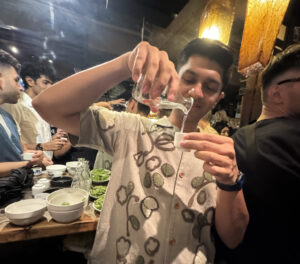
1. Pour for others, not yourself. When sharing sake or beer at a table, the polite thing is to pour for your companions. Someone else will pour for you. Pouring for yourself can feel awkward.
2. Hold the cup or glass with both hands when receiving a drink. Small gesture, big respect.
3. Wait for “Kanpai!” (cheers) before the first sip. Everyone says it together at the start of the meal/drink.
4. Don’t get visibly drunk. Public drunkenness is tolerated more than in many countries (you’ll see salarymen sleeping on the train), but loud, sloppy, disruptive drunkenness is frowned upon, especially for foreign tourists. Keep your behaviour controlled.
5. Don’t tip. Already covered in earlier blogs- tipping in Japan isn’t customary anywhere, including bars.
6. Smoking is often allowed indoors at small bars and izakayas. If you can’t tolerate smoke, ask before sitting down or check whether the bar is “no-smoking” (some Tokyo bars now are).
7. Last train timing matters. Tokyo and Kyoto’s metros stop running around midnight. Either plan to leave before 11:30 PM, or commit to staying out until first train (~5 AM). The “1 AM stranded in Shinjuku without trains” experience is real.
👉 [INSERT AFFILIATE LINK: Tokyo and Kyoto bar hopping tours via Klook / Magical Trip]
A Suggested Drinking Itinerary from This Shinjuku Golden Gai Guide
For travellers spending 3 nights across Tokyo and Kyoto:
Night 1- Tokyo, Golden Gai + Omoide Yokocho: Start with yakitori and beer at Omoide Yokocho around 7 PM. Walk to Golden Gai by 9 PM. Hit 4-5 bars, including Albatross and Bar Plastic Model. End by midnight or push through to first train.
Night 2- Tokyo, Cocktails & Whisky: Start with cocktails at Bar Benfiddich (Shinjuku) or The SG Club (Shibuya). Move to Zoetrope or Aloha Whisky Bar for Japanese whisky. End at a Goodbeer Faucets if you want craft beer.
Night 3- Kyoto, Pontocho + Hidden Speakeasies: Dinner along Pontocho around 7 PM. Move to Bee’s Knees or Bar Alchemist by 9 PM. Cap the night at Kazubar from 10 PM until… whenever it ends. (Often 3-5 AM.)
Frequently Asked Questions
Q: Is Golden Gai expensive? Cover charges (¥500-1,500) plus drinks (¥800-1,500 each) mean a Golden Gai night runs ¥5,000-10,000 (~₹3,000-6,000) per person for 4-6 bars. Not cheap, but not luxury either.
Q: Is photography allowed in Golden Gai? No. The alleys are private property and photography for any purpose is prohibited without permission from the area’s business promotion association. Many bars enforce additional “no photo” rules.
Q: When does Golden Gai open? Most bars open around 8 PM. The neighbourhood comes alive between 10 PM and 1 AM. Some bars stay open until 5 AM (first train).
Q: Can I go to Golden Gai alone as a solo female traveller? Yes. Golden Gai is generally safe, and many bars are friendly to solo women, especially Albatross, Champion, and Bar Plastic Model. Be aware of touts in the surrounding Kabukicho area- those are not Golden Gai.
Q: What’s the difference between Golden Gai and Pontocho? Golden Gai (Tokyo) is about Showa-era nostalgia, scrappy alleys, and themed micro-bars. Pontocho (Kyoto) is about elegance, traditional wooden buildings along the Kamo River, and refined drinking. Different vibes; both worth doing.
Q: How much is a typical bar night in Tokyo? Casual: ¥3,000-5,000 per person (Omoide Yokocho, draft beer + yakitori). Mid-tier: ¥5,000-10,000 (Golden Gai bar-hopping). Premium: ¥15,000+ (high-end cocktail bars in Ginza or premium whisky bars).
Q: Can I bar-hop in Kyoto the way I do in Tokyo? Yes. Pontocho Alley supports easy bar-hopping. Some hidden speakeasies (Bee’s Knees, Kazubar, L’Escamoteur) are within walking distance and pair beautifully into one Kyoto night.
Q: Are speakeasies the best bars in Japan? Not necessarily. Japan’s regular bars and izakaya neighbourhoods are equally good, and far less effort to find. Speakeasies are a great experience but shouldn’t be the whole drinking trip.
Q: What time should I arrive at Golden Gai? Best window: 9-11 PM. Earlier is too quiet; later it’s harder to find seats. If you’re committed to the full-night experience, plan to stay until first train (~5 AM) when leaving early.
Q: Should I pre-book bars? Most Golden Gai bars don’t take reservations. Some premium cocktail and whisky bars (Bar High Five, Bar Benfiddich) do. Book 1-2 weeks ahead for premium spots.
Final Word
Most travellers visit Tokyo and have a beer at a Shibuya rooftop bar or a sake at their hotel restaurant. Then they say “I had a great drink in Tokyo” and call it a night.
This is missing the point. This Shinjuku Golden Gai guide exists so your first night in Tokyo is spent the right way.
Japanese drinking culture is one of the country’s most distinctive cultural experiences. The narrow alleys of Golden Gai. The yakitori smoke of Omoide Yokocho. The riverside lanterns of Pontocho. The standing-bar conversations of Ura Namba. Each of these is a different version of what makes Japan, well, Japan.
If you’re going to drink in Japan, do it right. Go to Golden Gai. Bar-hop slowly. Talk to bartenders. Pay your cover charge with a smile. Skip the photos. Leave when the last train decides for you, or push through to first train.
For the full Japan trip experience, read my main blog here.
Drop a comment with the favourite bar or izakaya you’ve discovered in Japan and which neighbourhood you’d recommend a first-time traveller start with.