 By Tarang Bansal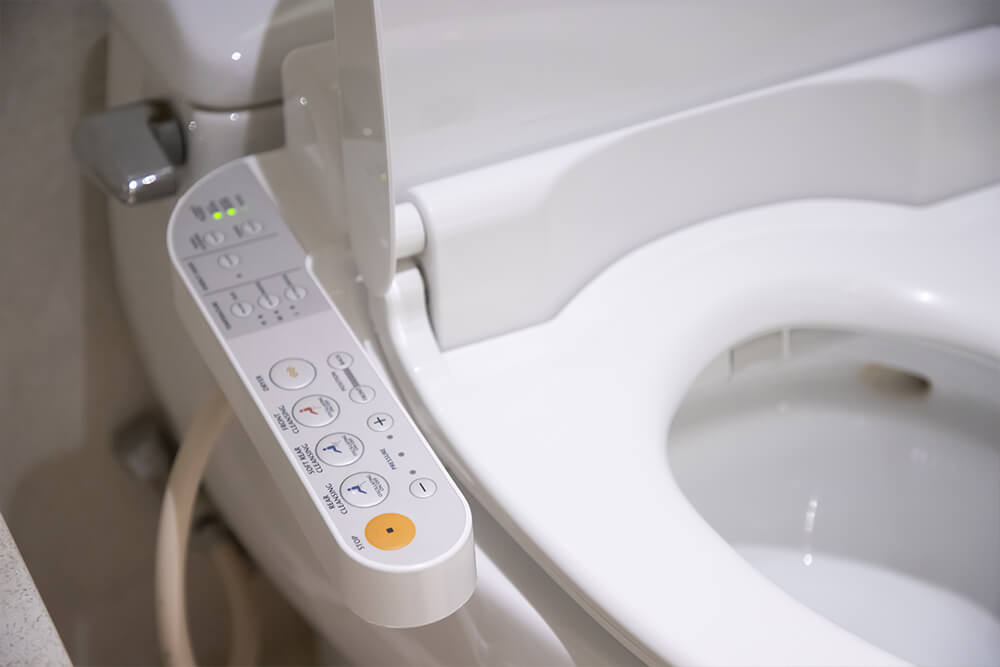
After 10 days in Japan, I came back to India and stared at my own bathroom for a full minute, emotionally compromised by a toilet & so here is your Japanese Toilet Guide. Japanese toilets have 10 jet settings, heated seats, and music. Indian and European toilets cannot recover. Here’s why the Japanese toilet experience will spoil you forever- plus how to actually use one without flooding the bathroom.
I want to start with a confession.
After 10 days in Japan, I came back to India and stared at my own bathroom for a full minute. The same bathroom I had used happily for years suddenly felt… inadequate. Sad, even. “Yaar, yeh kya cheez hai. Itne saal isi se kaam chala raha tha?”
I was emotionally compromised. By a toilet.
If you’ve been to Japan, you know exactly what I’m talking about. If you haven’t, sit down (preferably on a non-Japanese toilet, while you still can), because this is the one thing that no Indian travel blog warns you about: Japanese toilets will ruin every other toilet for you for the rest of your life.
This isn’t an exaggeration. It’s a public service announcement.
If you want the full Japan trip context, read my 10-day Japan itinerary blog here. This post is about the single feature of Japan that nobody markets but everybody remembers.
The Three-Way Toilet Showdown: India vs Europe vs Japan
Let me set the stage with a comparison that every well-travelled Indian instantly understands.
India: The Bum Shower Era
Every middle-class Indian home now has a bum shower (the jet spray) attached to the toilet. It’s a small flexible nozzle, you aim, you press, water comes out. It does the job. It’s the result of decades of Indian families looking at Western toilets and saying “yeh sahi nahi hai, kuch chahiye iske saath.”
Rating: Functional. Wet. Gets the job done. 6/10.
Europe: The Dark Ages
You go to Paris. You go to Rome. You go to Amsterdam. You walk into a bathroom expecting basic hygiene infrastructure, and what do you find?
Toilet paper. Just toilet paper.
No bum shower. No jet. No nozzle. Just rolls of dry paper that you’re supposed to use as your primary cleaning method.
As an Indian, you stand there confused, wondering if this is some kind of practical joke. You make do. You suffer in silence. You google “is this it?” and Reddit confirms yes, this is it.
Rating: Devastating. Spiritually offensive. 2/10.
Japan: The Future Has Arrived
You walk into ANY toilet in Japan- and I mean any. Airport. Train station. 7-Eleven. A small park in suburban Kyoto. A 200-year-old wooden temple.
You sit down. The seat is heated. Heated. In a public toilet. In a country where 90% of public toilets in India don’t even have soap.
There’s a control panel mounted on the wall or the side of the seat. It looks like the cockpit of a fighter jet. It has 8 to 12 buttons in Japanese, and tiny diagrams that look vaguely diagnostic.
You press one. A jet of warm water hits with surgical precision. You press another. The pressure changes. You press a third. The angle adjusts. There’s a setting for women, a setting for men, a “front wash” mode, an oscillating pulse mode, a drying function (yes, warm air), a deodorizing function, and on premium models, a button that plays soothing music to mask the sounds you’re making.
Rating: Religious experience. 11/10.
What Exactly Are These Magical Toilets Called?
These are called Washlets– a brand name from TOTO that became so iconic, “washlet” is now the generic Japanese term for any high-tech bidet toilet. About 80%+ of Japanese homes have one. And astonishingly, 100% of public bathrooms in Japan have one too.
Yes. The McDonald’s near Shibuya station has the same toilet technology as a 5-star hotel in Mumbai. The temple bathroom in Kyoto has heated seats. The train station toilet at 11 PM has a control panel that would embarrass a Boeing cockpit.
This is not a luxury feature in Japan. This is the default.
What All Those Buttons Actually Do? Japanese Toilet Guide
The first time you sit on a Japanese toilet, you’ll be paralyzed by the control panel. Let me decode it for you so you don’t accidentally launch a missile.
| Button (Symbol) | What It Does |
|---|---|
| Oshiri / 🚿 (back jet) | Standard rear jet wash |
| Bidet / 🌸 (front jet) | Female-specific front wash |
| Soft / Yawaraka | Gentler pressure |
| Pressure +/− | Adjusts water force |
| Position +/− | Moves the nozzle forward/back to align with your aim |
| Oscillating | Nozzle pulses back and forth |
| Massage | Pulses water rhythmically (yes, really) |
| Dry / 乾燥 | Warm air drying after the wash |
| Stop / 止 | Stops everything immediately. Most important button. |
| Flush (small) | Light flush for liquid |
| Flush (large) | Full flush for solid |
| Music / Sound | Plays flushing sound or music to mask any embarrassing noises |
| Deodorizer | Activates carbon filter for odour |
The first time, just press the Oshiri (rear) button at low pressure. Adjust from there. Always remember where the Stop button is. The first 5 minutes will feel like a science experiment. By day 3 of your Japan trip, you’ll be operating it like a NASA technician.
The One Critical Rule: You Must Be Seated
Here’s something nobody tells Indian tourists, and it’s caused many a wet bathroom embarrassment:
The jets only activate when there is body weight on the seat sensor.
Standing in front of the toilet and pressing the bidet button just to “see what happens”? Congratulations- you’ve just sprayed warm water across the entire bathroom, the floor, the wall, and most likely, yourself.
Sitting on the side bar or sanitary rail to investigate the buttons? Same result. The toilet thinks you’ve left and shoots water uselessly into the bowl, splashing wildly.
Rule: Sit fully on the seat first. Then press buttons. The sensor underneath needs to detect you. No weight on seat = no jet activation logic. Save yourself the embarrassment.
(Also, this is why Japanese toilets stop their function the moment you stand up- it’s the same sensor logic. Useful to know.)
The Public Toilet Revolution Nobody Talks About
Here’s where the real shock kicks in for Indians:
Public toilets in Japan are clean. Free. Available everywhere. And have these magical Washlets.
Let me list the places I used a perfectly clean, fully-functional Washlet during my 10-day trip:
- A random bathroom in Ueno Park
- The toilet at Asakusa’s Senso-ji Temple area
- A 7-Eleven in Shibuya
- Kyoto Station
- A small bathroom inside a Lawson convenience store at midnight
- Tokyo Disney Sea (where, despite everything else being terrible, the toilets were premium)
- Osaka’s Dotonbori district public toilet
- A temple bathroom in Nara that was older than my grandparents
Every single one had:
- Toilet paper
- Soap and running water
- Functional jets and bidets
- No queue
- No fee
- No attendant asking for tips
- Cleanliness levels matching a 5-star hotel in India
For Indians who associate public toilets with horror movies, this is the single most disorienting thing about Japan. Bhai, dimaag ghoom jaata hai.
In India, “public toilet” is a phrase that triggers anxiety. In Japan, it’s an upgrade over your home setup. This single fact- clean, free, advanced public toilets in every neighbourhood- does more for the country’s quality of life than any tourist attraction.
Other Bathroom Innovations That Will Blow Your Mind
While we’re here, let me list the other features of Japanese bathrooms that quietly enhanced my trip:
1. The hand-washing sink on top of the toilet tank Many older Japanese toilets have a small sink mounted on top of the cistern. When you flush, clean water flows through the sink first (where you wash your hands), then fills the tank for the next flush. Water gets used twice. This is 1960s Japanese engineering quietly mocking modern plumbing.
2. Slipper protocol In many Japanese homes and traditional accommodations, there’s a separate pair of slippers dedicated to the bathroom. You take off your house slippers, wear bathroom slippers, do your thing, and switch back when you exit. The bathroom slippers never touch the rest of the house. Hygiene through ritual.
3. The deep soaking bathtub (Ofuro) Japanese baths are typically deeper and shorter than Western tubs. You shower first (separately), get fully clean, and then soak in the hot bath. The same bathwater is used by the whole family because everyone enters already clean. Different mental model, deeply efficient.
4. Heated bathroom floors Premium homes and hotels have heated floors throughout the bathroom. So even in February, your bare feet hit warmth, not cold tile. This sounds like a small thing. It is not.
5. Anti-fog mirrors In high-humidity bathrooms, sections of the mirror are heated to prevent fogging while you shave or apply skincare. Why does this not exist everywhere? I do not know.
Can You Get These Toilets in India?
Yes, and I am personally considering it.
TOTO sells in India through select retailers, and Indian brands like Hindware, Kohler, Jaquar, and Cera now offer their own versions of bidet toilet seats. You can also retrofit your existing Indian toilet with a smart bidet seat attachment, which is a much cheaper way to get 80% of the experience.
Pricing roughly:
- Smart bidet seat attachments (replace your existing toilet seat): ₹15,000–₹35,000
- Full smart toilets with built-in Washlet functionality: ₹80,000–₹3,00,000+
Honestly, after experiencing Japanese toilets, even the basic bidet attachment feels like an upgrade. If you’re renovating your bathroom anyway, this is the upgrade I’d prioritize over fancier tiles.
👉 [INSERT AFFILIATE LINK: Bidet seat attachments on Amazon India] 👉 [INSERT AFFILIATE LINK: TOTO Washlet India retailers]
The Indian’s Five Stages of Japanese Toilet Acceptance
Every Indian goes through these emotional phases when introduced to Japanese toilets:
Stage 1: Confusion. “Why does this toilet have a remote control? Is this a TV?”
Stage 2: Caution. “I am not pressing any of these buttons. I will use it like a normal toilet.”
Stage 3: Curiosity. “Okay, fine, let me try one button. What’s the worst that could happen?”
Stage 4: Awakening. “Oh. Oh. OH. Why don’t we have this in India?”
Stage 5: Mourning. [On flight back home, staring at the airplane toilet, realizing the magic is over.]
I was firmly in Stage 5 by day 4. By day 10, I was googling whether you can ship a TOTO Washlet to Bangalore.
Frequently Asked Questions: Japanese Toilets for Indian Travelers
Q: Are public toilets in Japan really free and clean? Yes. Every one of them. Train stations, parks, convenience stores, temples- all free, all clean, all with Washlets. It’s the country’s quiet superpower.
Q: Do Japanese toilets work for everyone, or just one body type? They work for everyone. Position adjustment, pressure adjustment, and front/rear jet options cover all needs. Women travellers in particular find Japanese public toilets transformative.
Q: Is toilet paper still used in Japan along with the bidet? Yes, usually for drying after the bidet wash. Some toilets have warm-air drying instead, but most people use a small amount of paper to pat dry.
Q: What if I don’t want to press any buttons? Most Japanese toilets work fine as a regular toilet too. You can ignore the panel entirely and use it like a Western toilet. But once you try the buttons, you won’t go back.
Q: Are Japanese toilets hygienic? Doesn’t the same nozzle get used by everyone? The nozzle self-cleans before and after every use using a built-in cleaning cycle. The water is fresh tap water, not recirculated. They are arguably more hygienic than toilet-paper-only systems.
Q: Can I buy Japanese-style toilets in India? Yes. TOTO, Kohler, Hindware, and Jaquar all sell smart bidet toilets in India. Smart bidet seat attachments (which fit existing Indian toilets) start around ₹15,000.
Q: What’s the deal with the music and flush sound feature? It’s called the “Otohime” (Sound Princess) feature. It plays a flushing sound or music to mask the natural sounds of using the toilet- a Japanese cultural priority around personal noise. Very on-brand for Japan.
Q: Do all Japanese homes have Washlets? Around 80%+ of Japanese homes have a Washlet or similar bidet toilet. It’s considered a basic appliance, like a refrigerator.
Final Word
The Japanese toilet is the perfect metaphor for Japan as a whole.
While the world was busy debating whether to even add a bum shower to a toilet, Japan quietly built a connected, sensor-driven, climate-controlled, music-playing, self-cleaning marvel and put it in every public bathroom in the country. Then they made it the default. Then they stopped talking about it because to them, it isn’t even special.
This is what makes Japan different. It’s not just that they invented the future. It’s that they distributed it equally, even to public restrooms, and then forgot to brag about it.
Indian travellers, please be warned: the moment you sit on a Japanese toilet, your standards reset permanently. There is no going back. You have been warned.
For the full 10-day Japan trip experience that led me to this realization, read my main Japan blog here.
Drop a comment if you’ve experienced Japanese toilets- I want to hear which feature broke your brain first. And send this to a friend who once made fun of you for missing your bum shower in Europe.