 By Tarang Bansal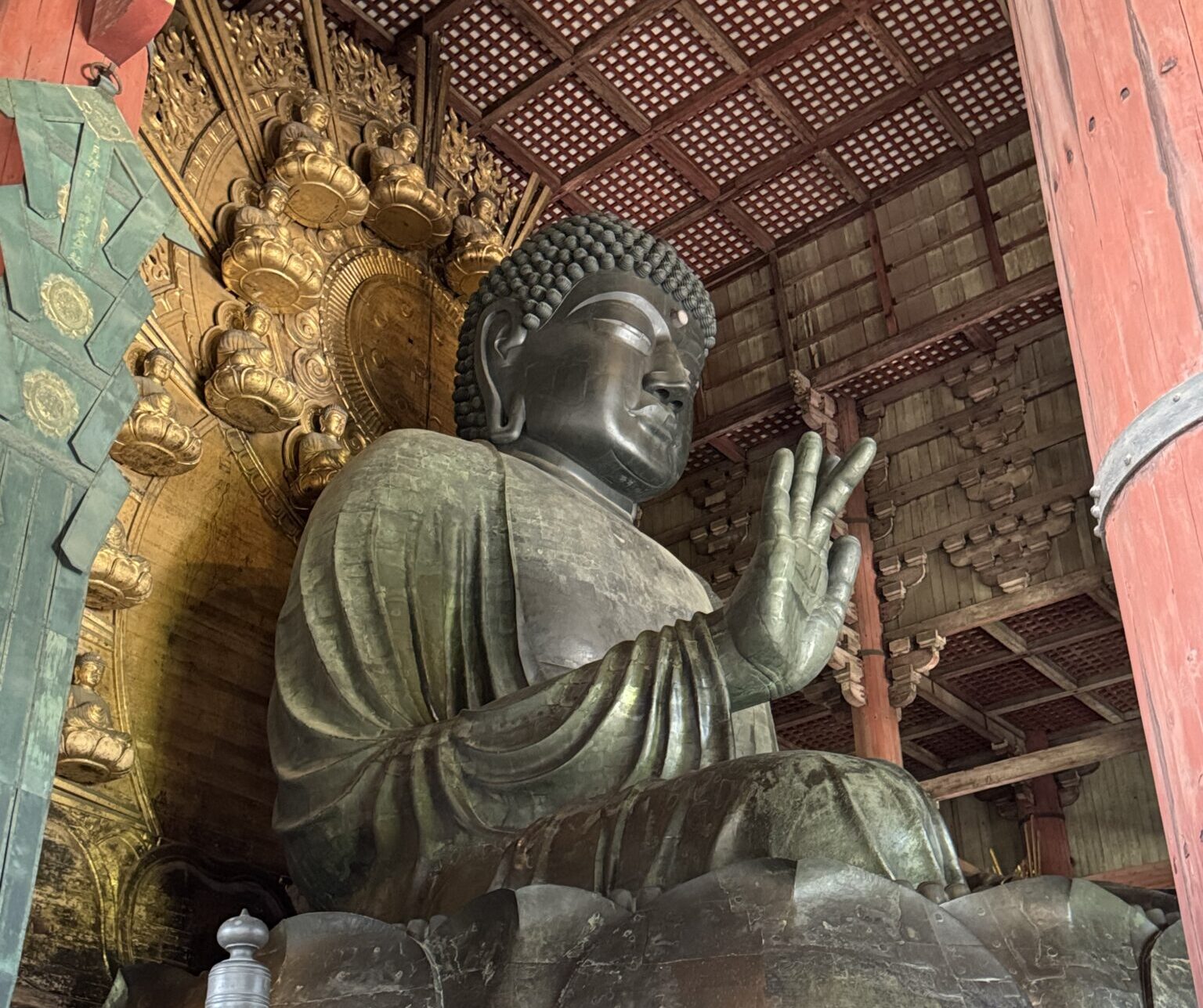
1200 wild deer in Nara Park have learned to bow for crackers, and this Nara Deer Park guide shows you exactly how to do it right. Yes, really. Here’s how to add Nara as a half-day stop between Kyoto and Osaka, where to feed the deer, the rules, the costs, and the moment that will instantly become your trip’s best photo.
There is a moment, on Day 9 of my Japan trip, when I held a small rice cracker over a deer’s head in Nara Park, and the deer bowed. A full, deliberate, head-down bow. Then it looked up at me, blinking, waiting for the cracker.
I gave it to her. She ate it. I bowed back. She bowed again, this time in expectation of more.
This continued for several minutes. There were two more deer behind her now, also bowing, also patient. We were all bowing.
Welcome to Nara Park, where roughly 1,200 wild deer have been informally trained, over generations, to bow to tourists in exchange for snacks.
This is your guide to doing it right- what to know, what to expect, how to slot Nara into your Japan trip without losing a full day, and why this might end up being the warmest memory of your entire trip.
If you want the full Japan trip context, read my main 10-day Japan blog here.
The Deer of Nara: A Quick History
Nara was Japan’s capital from 710 to 794 AD. The deer have been wandering its central park for nearly as long.
Local legend says that the Shinto god Takemikazuchi rode into Nara on a white deer from Kashima Shrine, which is why the city’s deer have been considered sacred and protected for over a thousand years. Until 1637, killing one was punishable by death. Today they’re designated a National Natural Treasure of Japan (since 1957) and protected by the Foundation for the Protection of Deer in Nara.
Most importantly: the deer are wild, not domesticated. They roam freely across the 500-hectare park, sleep where they please, breed seasonally, and only interact with humans because food is involved.
The bowing? That’s learned behavior. Generations of deer have figured out that a small bow gets them a cracker. Roughly 60-70% of adult deer in the busy areas will bow back. The rest are juveniles, antisocial, or just hungry enough to skip the formality.
The Crackers (Shika Senbei): What to Buy and How Much
You feed the deer with a special cracker called shika senbei, which translates to “deer crackers.”
- Cost: ¥200 (₹120) for a pack of 10 from one of the many cart vendors in the park
- From vending machines: ¥500 (₹300) for a boxed 10-pack- convenient if no cart is nearby
- Made from: Rice bran and wheat flour, sugar-free, no salt, no preservatives
- The wrapping: Edible too. If a deer eats the paper, it’s fine.
- Where the money goes: Vendors are licensed by the Foundation for the Protection of Deer; profits fund deer conservation and care.
Important: Do not feed the deer anything else. No biscuits, no fruit, no chips, no bread. The shika senbei are formulated specifically for them; everything else can make them sick.
The Bowing Technique (Yes, There’s a Technique)
This is not complicated, but doing it right makes the difference between a magical interaction and a deer headbutting you for being slow.
- Buy your crackers from a stall, then unwrap them quickly. Deer can smell crackers from 30 meters away and will be at your side within seconds.
- Hold one cracker up over the deer’s head– palm flat, fingers together (so the deer can’t accidentally nip your fingers).
- Bow your head slightly toward the deer. This is the cue.
- The deer bows back. It’s a learned behavior- they expect it.
- Immediately give the cracker. Don’t tease. Don’t pull it away. Don’t try for a second bow. Hand it over.
- Repeat with the next deer, working your way through your pack.
- When you’re done, raise both empty hands palm-up to show you have nothing left. The deer will mostly leave you alone.
What You Should NOT Do
A few warnings, all real:
- Don’t tease. Showing a cracker and pulling it away will get you headbutted. The deer remember.
- Don’t keep extra crackers in your bag. They will try to eat your bag. They’ve eaten passports, train tickets, maps, and shopping receipts.
- Don’t wave food in front of children. Adult deer can knock over a small kid even gently. Supervise closely.
- Don’t pet them aggressively. They’re wild. Some tolerate light pets; many don’t.
- Don’t visit during rutting season (October-November) if you can avoid it- males get aggressive. If you’re there in this window, stay further from antlered males.
Several dozen tourist injuries are reported every year. None are catastrophic, but a 70 kg sika deer can absolutely bruise you if it decides to.
How to Add Nara to Your Japan Itinerary
Nara is a half-day trip, not a full destination. The deer + Todai-ji Temple (which houses one of the world’s largest bronze Buddhas) takes 3-4 hours. Don’t book a hotel here. Just visit.
The smart way to do it: use Nara as a transition stop between Kyoto and Osaka, which is exactly what we did.
From Kyoto to Nara
- Kintetsu Nara Line (Limited Express): ~35-45 minutes, ~¥1,160 one-way
- JR Nara Line: ~45-50 minutes, ~¥720 one-way
- Both drop you within a 5-10 minute walk of Nara Park
From Osaka to Nara
- Kintetsu Nara Line from Osaka Namba: ~35-45 minutes
- JR Yamatoji Line from Osaka Station: ~50 minutes
The Best Routing: Kyoto → Nara → Osaka in One Day
This is what we did and it works perfectly:
- Morning: Check out of your Kyoto stay, take a train to Nara
- Drop your suitcases at Nara Station coin lockers (more on this below)
- Spend 3-4 hours in Nara Park: deer, Todai-ji, Kasuga Taisha Shrine
- Mid-afternoon: Pick up your bags, train to Osaka
- Evening: Check into your Osaka stay and head out for Dotonbori
You arrive in Osaka without losing a hotel night, you’ve covered Nara, and your day flows naturally.
The Coin Locker Hack at Nara Station
This is critical and most travelers miss it.
Nara Station has coin lockers in every size, from small (¥400-500) for a backpack to extra-large (¥800-1,000) for full check-in suitcases. They’re located on the ground floor and basement of both Kintetsu Nara Station and JR Nara Station. Most accept IC cards (Suica, Pasmo, ICOCA) for payment.
We dropped 5 large suitcases between us at the lockers, paid less than ¥5,000 total, and explored Nara hands-free for 4 hours. Picked them up before catching our Osaka train. Smooth.
The alternative: Use Japan’s brilliant luggage forwarding service (Yamato Transport, Sagawa)- drop your suitcase at any 7-Eleven in Kyoto in the morning, and pick it up at any 7-Eleven in Osaka by evening. Costs around ¥1,500-2,500 per bag. Worth it for groups, especially if you’re moving to a hotel that’s a long walk from Osaka Station.
👉 [INSERT AFFILIATE LINK: Japan luggage forwarding services / Yamato Hands-Free Travel]
What Else to See in Nara (If You Have Extra Time)
Beyond the deer, the park has genuinely worthwhile sights:
- Todai-ji Temple: Houses Daibutsu, a 15-meter-tall bronze Buddha statue from the 8th century. The temple itself is one of the largest wooden buildings in the world. Entry around ¥600.
- Kasuga Taisha Shrine: Famous for its 3,000+ stone and bronze lanterns lining the path. Free to walk; small fee for inner shrine.
- Kofuku-ji Temple: A five-story pagoda visible from across the park. National treasure.
- Naramachi: The old merchant quarter just south of the park, with wooden machiya houses and small cafés. Underrated and uncrowded.
Don’t try to do all of these. Pick the deer + Todai-ji as the must-do; add one more if time allows.
Practical Tips for Nara Deer Park Guide
- Best time to arrive: 7:30-9 AM. Far fewer tourists, deer are calmer, lighting is great for photos.
- Worst time: 11 AM-3 PM. Maximum crowds, maximum aggressive deer, hot in summer.
- Cash: Cracker vendors usually take cash only. Carry ¥1,000-2,000 in coins/small notes.
- Wear: Closed shoes, casual clothes you don’t mind getting nibbled. Avoid loose paper-anything in your hands.
- Photos: Bowing-back shots need quick reflexes. Have your phone ready before you raise the cracker.
- Toilets: Available at the park entrance and inside Todai-ji area.
Frequently Asked Questions
Q: Do Nara deer really bow to humans? Yes. Roughly 60-70% of adult deer in busy areas have learned to bow when they see crackers, in exchange for the treat. It’s a conditioned behaviour, not instinctive- generations of deer have figured out that bowing earns a snack.
Q: How much does it cost to feed deer in Nara? Shika senbei (deer crackers) cost ¥200 (~₹120) for a pack of 10 from cart vendors in the park. Vending machines sell boxed 10-packs for ¥500.
Q: Are Nara deer dangerous? They’re wild animals- they can headbutt, nip, or knock you over if you tease them or hide food. Several dozen tourist injuries are reported each year, but most are minor. Follow the basic rules and you’ll be fine.
Q: How do I get from Kyoto to Nara? Take the Kintetsu Nara Limited Express (~35-45 min, ¥1,160) or JR Nara Line (~45-50 min, ¥720). Both drop you within walking distance of the park.
Q: How do I get from Osaka to Nara? Kintetsu Nara Line from Osaka Namba (~35-45 min) or JR Yamatoji Line from Osaka Station (~50 min).
Q: Can I do Nara as a day trip from Tokyo? Technically yes, but not worth it- it’s 3+ hours each way on the Shinkansen. Pair Nara with Kyoto or Osaka instead.
Q: Where can I leave my luggage in Nara? Coin lockers at both Kintetsu Nara Station and JR Nara Station, in all sizes (¥400-1,000). Most accept IC cards. Alternatively, use Yamato luggage forwarding via 7-Eleven for inter-city transit.
Q: How long should I spend in Nara? 3-4 hours covers deer + Todai-ji + a quick walk through the park. A full day if you want to add Kasuga Taisha, Kofuku-ji, and Naramachi.
Final Word
Most travel content positions Japan around Tokyo’s neon, Kyoto’s temples, and Osaka’s food. Nara doesn’t fit any of those categories. It’s a half-day side trip whose entire pitch is “come bow at deer for a few hours.”
And yet, weeks after coming back to India, when I scroll through my Japan photos, the Nara shots are the ones I keep showing people. The deer bowing. The deer eating. The deer photobombing my friends. The pure animal joy of a wild animal politely greeting you for a snack.
Don’t skip Nara. Slot it between Kyoto and Osaka, drop your bags at the station lockers, buy a few packs of shika senbei, and let it surprise you.
For the full Japan trip experience, read my main blog here.
Drop a comment if you’ve been to Nara; I want to hear which deer interaction broke your heart in the best way.